

With big wins, Trump, Clinton inch closer to nomination
Democratic front-runner gets 4 states, Republican billionaire sweeps 3; Kasich beats real estate mogul in Ohio; Rubio quits race after Florida loss
 Add ToI as a Preferred Source on Google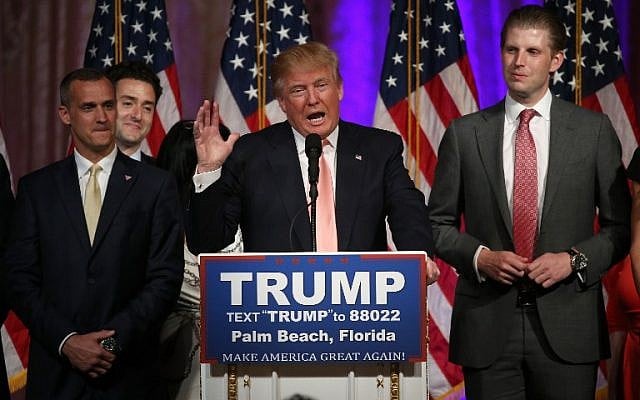
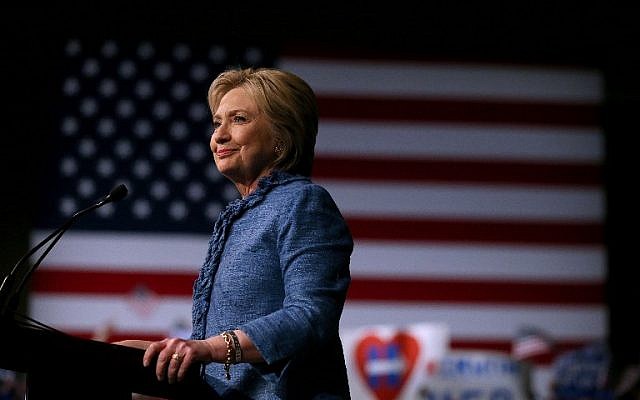
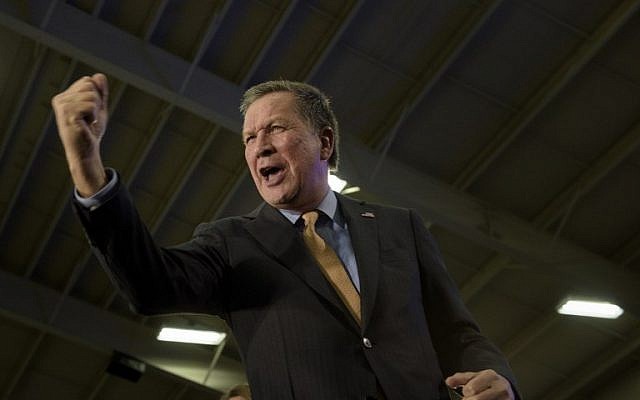
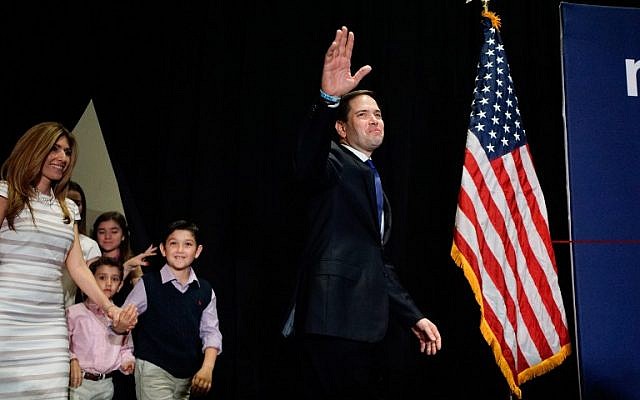
Donald Trump scored three victories Tuesday, including a decisive win in Florida, but lost Ohio to the state’s governor, John Kasich, as the billionaire’s rivals desperately tried to stop his march to the party’s presidential nomination. Hillary Clinton won four states, dealing a severe blow to Bernie Sanders’ bid to slow her march toward the Democratic nomination.
Marco Rubio, the Florida senator who staked his once-promising campaign on winning in his home state, dropped out of the presidential race shortly after the polls closed. That leaves Kasich as the last true establishment candidate running against Trump and arch-conservative Texas Sen. Ted Cruz.
The brash and controversial reality TV star has upended the political establishment by winning most of the state-by-state competitions for delegates who will choose the Republican nominee. He has seized on Americans’ anger with Washington politicians, winning over voters with his simply worded promise to make America great again.
Tuesday’s votes in five states had been viewed as a pivotal moment in the presidential campaign. For the first time, two states — Ohio and Florida — had winner-take-all contests. A Trump sweep could have given him an insurmountable lead in the delegate count.
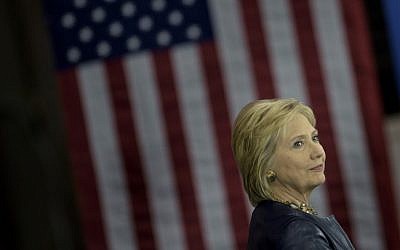
But the contests brought little clarity. Trump won the biggest prize — all 99 Florida delegates — as well as winning North Carolina and Illinois, and was locked in a tight race with Cruz in Missouri. He told a victory rally in Florida, “This was an amazing night.”
But Kasich’s win, capturing all of Ohio’s 66 delegates, was crucial to keeping alive the hopes of those trying to stop Trump.
While Trump had amassed the most delegates going into Tuesday, he’s won fewer than 50 percent of them. If that pace continues, he would fall short of the majority that he would need to assure him the nomination at the party’s convention in July. The result could be a contested convention, creating an unpredictable outcome.
This was the first victory for Kasich, whose upbeat message and long record of government service has had little resonance as his rivals seized on voter’s anxiety and disdain for Washington. While he could benefit from Rubio dropping out, he remains a longshot for the nomination. He is unlikely to overtake Trump, though he could help keep Trump below the 50 percent threshold.
With Trump’s win in Florida, he now has 568 delegates. Cruz has 370, Kasich 129 and Rubio left the race with 163. It takes 1,237 delegates to win the Republican nomination for president.
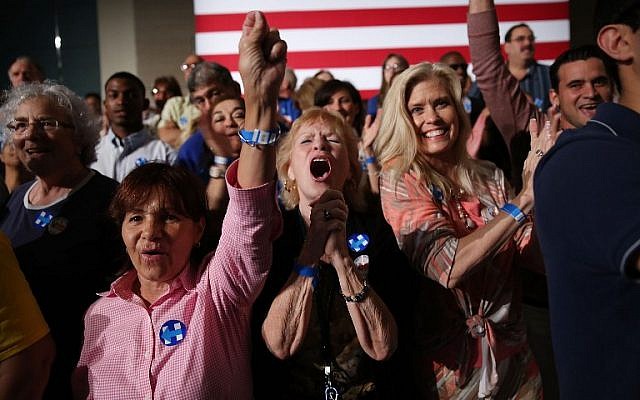
In the Democratic race, Clinton’s victories in Florida and North Carolina were expected, but Sanders, a Vermont senator and self-described democratic socialist, had hoped to take the industrial state of Ohio, which Clinton won. Clinton was later declared victor in Illinois as well.
“We are moving closer to securing the Democratic Party nomination and winning this election in November,” Clinton told cheering supporters at a victory rally in West Palm Beach, Florida.
A confident Clinton pivoted quickly to November by assailing Trump’s hardline immigration positions and support for torture. “Our commander-in-chief has to be able to defend our country, not embarrass it,” she declared.
Trump has alienated many Republicans and Democrats alike with his disparaging remarks about Mexicans, Muslims and women among others. He entered Tuesday’s primaries embroiled in one of the biggest controversies of his contentious campaign. He has encouraged supporters to confront protesters at his events and is now facing accusations of encouraging violence after skirmishes at a rally last week in Chicago that he ended up cancelling.
“I don’t think I should be toning it down because I’ve had the biggest rallies of anybody probably ever,” Trump said Tuesday on ABC’s “Good Morning America.” ”We have had very, very little difficultly.”
Rubio and Kasich have suggested they might not be able to support Trump if he’s the nominee, an extraordinary stance for intraparty rivals. All of the Republican candidates had earlier pledged to support the nominee.
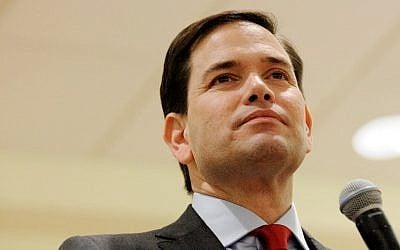
Rubio implicitly rebuked Trump throughout a speech in Miami announcing he was dropping out of the race, imploring Americans to “not give in to the fear, do not give in to the frustration.”
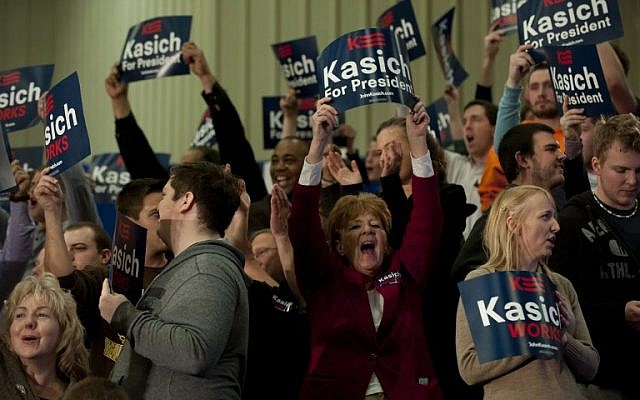
Now thrust into the center of a campaign that has been bitingly personal, Kasich vowed to cheering supporters in Berea, Ohio, that he would “not take the low road to the highest office in the land.”
Alluding to Trump, President Barack Obama said Tuesday he was dismayed by “vulgar and divisive rhetoric” directed at women and minorities as well as the violence that has occurred in the campaign.
Trump has been the target of millions of dollars in negative advertising in recent weeks, including one ad campaign that highlights his statements that appear to encourage violence — among them, “I’d like to punch him in the face.”
Overall, Clinton has at least 1,488 total delegates including superdelegates, who are elected officials and party leaders free to support the candidate of their choice. Sanders has at least 704 delegates when the count includes superdelegates. It takes 2,383 to win the Democratic nomination.







The Times of Israel Community.