

Will Hezbollah respond to alleged Israeli strike in Syria?
Terror group, Assad regime mum on reports IAF jets hit military missile depots near Lebanon border

 Add ToI as a Preferred Source on Google
Avi Issacharoff, The Times of Israel's Middle East analyst, fills the same role for Walla, the leading portal in Israel. He is also a guest commentator on many different radio shows and current affairs programs on television. Until 2012, he was a reporter and commentator on Arab affairs for the Haaretz newspaper. He also lectures on modern Palestinian history at Tel Aviv University, and is currently writing a script for an action-drama series for the Israeli satellite Television "YES." Born in Jerusalem, he graduated cum laude from Ben Gurion University with a B.A. in Middle Eastern studies and then earned his M.A. from Tel Aviv University on the same subject, also cum laude. A fluent Arabic speaker, Avi was the Middle East Affairs correspondent for Israeli Public Radio covering the Israeli-Palestinian conflict, the war in Iraq and the Arab countries between the years 2003-2006. Avi directed and edited short documentary films on Israeli television programs dealing with the Middle East. In 2002 he won the "best reporter" award for the "Israel Radio” for his coverage of the second intifada. In 2004, together with Amos Harel, he wrote "The Seventh War - How we won and why we lost the war with the Palestinians." A year later the book won an award from the Institute for Strategic Studies for containing the best research on security affairs in Israel. In 2008, Issacharoff and Harel published their second book, entitled "34 Days - The Story of the Second Lebanon War," which won the same prize.
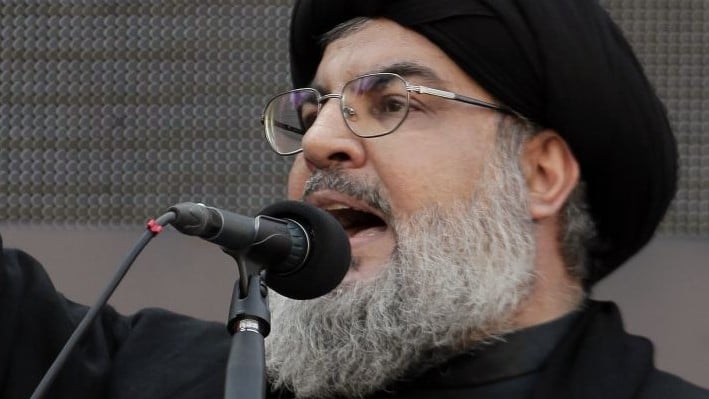
Two central news outlets in the Arab world on Saturday were reporting on a series of Israeli attacks on weapons depots belonging to the Syrian army and to Hezbollah in an area on the Lebanon- Syria border. The aerial attacks, according to al-Jazeera and al-Arabiya, began on Wednesday night when two targets believed to have been missile silos were struck. Overnight Friday-Saturday, several more airstrikes were reported in the Kalamun area in Syria, near the Lebanese border.
The area is known as one used by Hezbollah to transfer massive amounts of weapons into Lebanon. It is also known as a Syrian military site housing weapons depots and installations.
According to these reports, the targets weren’t moving convoys but military bases belonging to the Syrian army’s 65th and 155th divisions, both responsible for “strategic weapons”; in other words long-range Scud missiles. It’s hard to determine whether Israel decided to hit these targets for fear the missiles would be transferred to Hezbollah but it is certainly a possibility. Israel has in the past hit Syrian army targets, especially those that included weapons destined for the Lebanese terror group.
Strikes on fixed targets — if those were indeed the targets — prevent the possibility of an immediate escalation with Hezbollah. The weapons were not yet loaded for transportation and were not yet in Lebanese territory. The terror group, like the Assad regime, has also yet to respond to the reports of the attacks and it’s possible, given the bloody civil war in Syria, Hezbollah is not interested in an escalation with Israel at the moment.
[mappress mapid=”5076″]
(The mocking tones of the al-Jazeera and al-Arabiya reports may urge Damascus to respond, even with just a statement)
The blow dealt to Hezbollah this past in January in a strike attributed to Israel in which the son of Imad Mughniyeh was killed, along with several others including an Iranian general, was met with a restrained response from the group. They launched a rocket from Syria and then a cross-border attack along the Israel-Lebanon border on an IDF convoy, in which two soldiers were killed.
Among those killed in the alleged Israeli airstrike were Hezbollah commander Abu Ali Tabatabai, the head of the group’s offensive operations; Jihad Mughniyeh, the son of Imad Mughniyeh, a senior Hezbollah commander killed in Damascus in 2008, Mohammed Issa, responsible for the organization’s operations in Syria and Iraq, and Iranian general Mohammad Ali Allahdadi.
An Israeli report said the strike had targeted a team setting up a missile base to launch strikes against Israel.
Hezbollah settled for a restrained response in January and stopped further deterioration that could have easily descended into a war. But the possibility of a limited confrontation with Hezbollah exists and Israeli officials understand this very well. Especially as it is difficult to know what’s on the minds of Hezbollah chief Hassan Nasrallah, Qassem Soleimani, a shadowy commander of the Iranian Revolutionary Guards Corps’ Quds Force, and Syrian President Bashar Assad.
But after the incident, both Iran and its Hezbollah effectively outlined a new policy in which any Israeli operation in Syria would be met with a powerful response.



The Times of Israel Community.