

Chinese firms eye future sale of government-owned assets
Investors from China are attracted by Israel’s business opportunities but also to its culture and history
 Add ToI as a Preferred Source on Google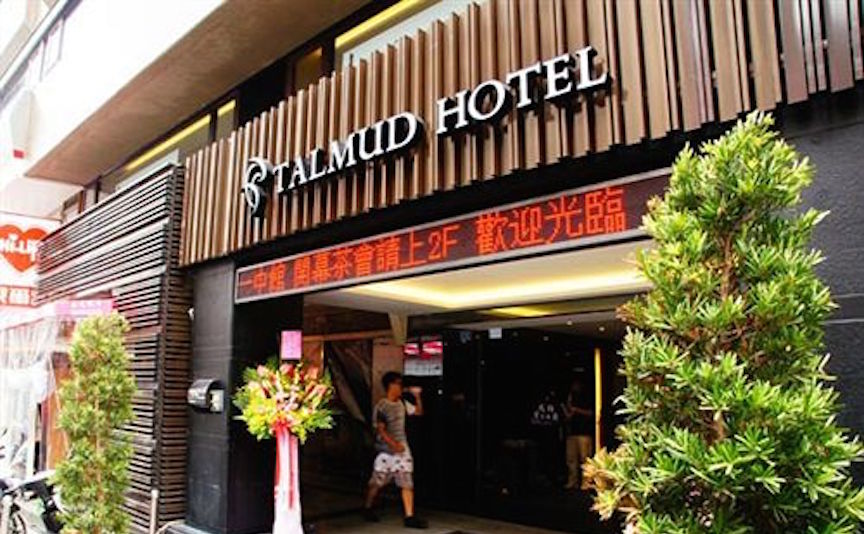
The Israeli government is about to conduct a “fire sale” of state-owned corporations – and lining up to take advantage of least some of those opportunities are Chinese investors, according to David Hodak, a partner at GKH (Gross, Kleinhendler, Hodak, Halevy, Greenberg & Co.), one of Israel’s largest law firms.
“China knows Israel for its technology,” said Hodak. “They weren’t very familiar with the industrial and infrastructure side of our economy, but they are very interested in hearing about what’s available.”
And while there are plenty of places the Chinese can invest the substantial sums at their disposal, there’s something about Israel that attracts them.
“They really like us,” said Hodak. “Every time I go there I get a very warm welcome. In fact,” he jokingly adds, “Israelis are not always known for their grace as travelers, so I hope we don’t ruin this affection.”
Last week, the cabinet approved a proposal to sell off many of the corporations it either owns outright, or in which it has a large majority stake, such as the Israel Electric Corporation, Israel Railways, Israel Aerospace Industries, water provider Mekorot, the Postal Corporation, Israel Military Industries, Israel Railways and dozens more.
Up to 49% of the companies will be auctioned off — the government will keep a majority interest to protect national security — but it is understood that whoever buys up large chunks of these corporations will have a large say in how they are run.
That is very important to Chinese investors, said Hodak. “They are very interested in investing, but they have one condition – they want to be involved in decision-making and policy-setting,” he said.

GHK attorneys have worked on some of the biggest Israel-China deals, such as the sale of Makhteshim Agam (now Adama) to ChemChina, and the prospective purchase of Tnuva by China’s Bright Foods.
“One of the biggest concerns Israelis have in doing business with China is, of course, protecting their intellectual property,” said Hodak. “I won’t say it’s not a problem, but they have gotten much better in dealing with it in recent years. A decade ago it was much harder to protect IP, and they have come to realize that they need to play by the West’s rules in that area.”
In general, when a dispute on IP or any other matter arises, the matter goes to arbitration, and is usually resolved in a more or less amicable manner.
Awash in money, Chinese investors have been seeking global assets, and on a recent trip to China, Hodak and members of the firm presented some of them with the possibilities Israel has to offer – with the investors giving them a warm welcome.
“The Chinese are very enamored of Israel, for a lot of reasons. Israel, and Jews, have a very good reputation among the Chinese. They admire Jews and Israelis for their accomplishments, their history, and their smarts,” said Hodak.
In fact, books, seminars and courses about how to think like a Jew – by learning the Talmud – are all the rage among the Chinese – to the extent that there is even a “Talmud Hotel” in Taiwan, where, “inspired by the Talmud theory, the owner uses red interior to add a splash of fashion and professionalism. In each room, there’s also a copy of ‘Talmud-Business Success Bible’ for anyone who would like to experience the Talmud way of becoming successful.”
Unlike in the West, there is nothing malicious in that attitude, according to Eli Barasch, a GHK partner who specializes in China.
“The affinity they have for us is exceptional, and I believe it is genuine,” said Barasch. “In many of my meetings in China they take great pains to talk about how they harbored Jews during the Holocaust. They are very proud of having given Jews a place to escape to from Europe, with the thousands of Jews settling in Shanghai and other cities, even as China was under Japanese occupation.”
Of course, being friends with China doesn’t mean Israelis are turning their backs on others – like the United States – nor should they, said Hodak.
“Our relationship with the US is a different matter altogether. The US is our strongest ally, and has a long and deep history with us, as Israelis and Jews.” As do the Europeans, added Hodak.
“But we can’t forget what we experienced as a people in those countries. The Chinese never persecuted us, and they are very happy to work with us, as long as the deal is fair. They’re willing to give, but they want to get. That’s as much as you can ask for in a relationship.”










The Times of Israel Community.