

Gaza faces takeover by youth more extreme than Hamas: Israeli defense official
COGAT head calls for ‘Gaza Marshall Plan’ that would leave terror group in power, but improve economic prospects for a desperate generation
 Add ToI as a Preferred Source on Google
Dov Lieber is a former Times of Israel Arab affairs correspondent.
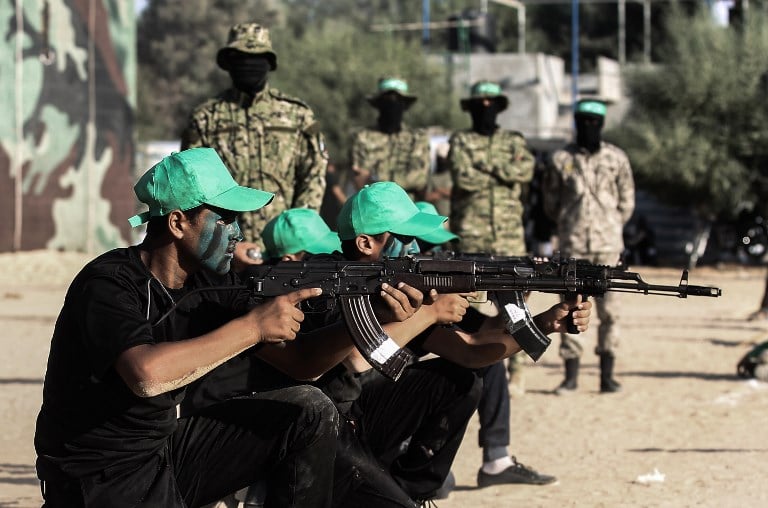
The Gaza Strip is in danger of being overrun by local youth who are even more extreme than the enclave’s current government run by the Hamas terror group, said a senior Israeli official who urged a “Marshall Plan” to improve the dismal living conditions in the embattled territory
Major General Yoav Mordechai, head of the Coordinator of Government Activities in the Territories (COGAT) unit, in an essay published October 26 by the Israeli Institute for National Security Studies (INSS), said that while Hamas is problematic for Israel, a far bleaker scenario remains around the corner if Gaza’s youth don’t see a chance for positive change.
The Hamas terror group took control of the Strip in 2007 in a violent battle with rival Palestinian faction Fatah, but since then it has been unable to lift “the Gaza population from the confines of poverty and neglect that they have long endured,” he wrote.
The United Nations believes that Gaza is in such bad shape environmentally speaking, due to power and water crises, that it could be uninhabitable by 2020.
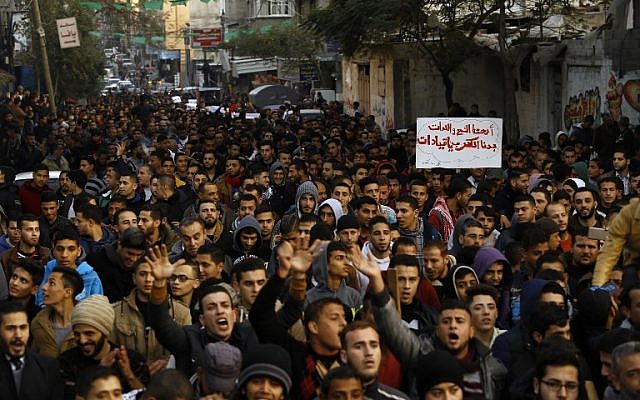
Mordechai emphasized that a new generation of Gazans are more educated than any past generation but face the worst employment prospects than in any other time.
Unemployment in Gaza stands at 44 percent, but is 1.5 times higher among college-educated youth, he wrote. Only around 17% of those entering the labor market in 2016 were able to find work, about 3,000 people, out of a population of 17,000, he further noted.
This generation, he wrote, is liable to perceive the Hamas government as a regime that does “not understand or speak its language and is not committed to provide for its needs,” and may seek to engender change itself.
After years of radicalization under Hamas combined with the feeling that militant action is the only way to engender change, Mordechai argued “that if something is not done that will bring about a genuine change in the Gazans’ bleak perception of reality, a situation may well arise whereby far more extremist entities, even compared to the Hamas movement, might overthrow the government in Gaza.”
He said the youth have not yet organized, but such a process could occur swiftly and without warning.
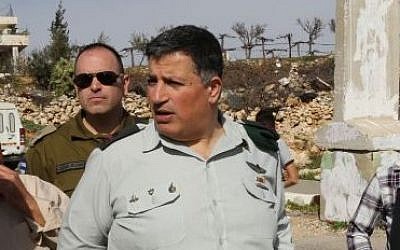
The solution he imagined is a “Marshall Plan for the Gaza Strip,” referring to the post World War Two program in which the United States government pumped billions of dollars into Western European countries in order ensure political stability by reinvigorating their economies.
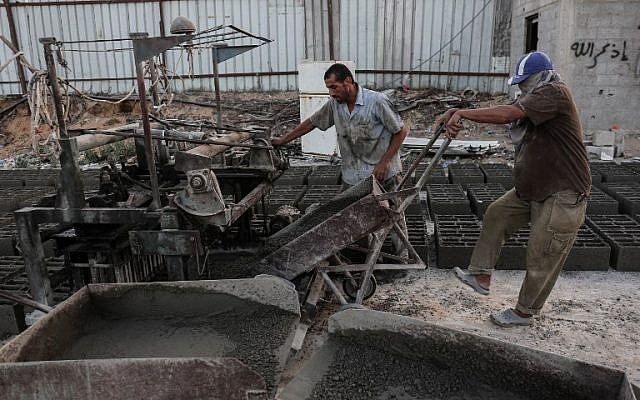
Mordechai calls for a process “to turn Gaza into a developing environment, with advanced industrial zones, tourist areas, innovative transportation solutions, and infrastructures that will meet the population’s needs.”
“The plan should include extensive international initiatives and investments that will enable rehabilitation and authentic change in Gaza – in terms of mindset and economics alike – without Hamas being able to oppose or obstruct the plan,” he wrote, adding that the plan should also take security arrangements into account, such as constraining the military growth of Hamas.
The plan should be carried out in such a way that “it would not be advantageous for any of the parties involved to oppose the process, and would be expedient for them to welcome it with open arms,” he wrote.
Hamas, he noted, would likely be the primary winner of such a process, as it would retain its control over Gaza.
The Israeli defense official did note that the recent Egyptian-backed Palestinian reconciliation deal, which allows for the Palestinian Authority to resume control of the Gaza Strip by December 1, raises a number of questions.
Chiefly among these is what role the PA should play in the Gaza Marshall Plan.
Mordechai argues this should be debated in the political track, as the PA may demand the process be extended into the West Bank before going along.





The Times of Israel Community.