

In an erstwhile yeshiva boy’s comedy club, Jewish jokes reign supreme
Are Jews funnier because they suffered? The Times of Israel asks three New York comics who regularly perform at Yeshiva University alum Dani Zoldan’s renowned venue, Stand Up NY
 Add ToI as a Preferred Source on Google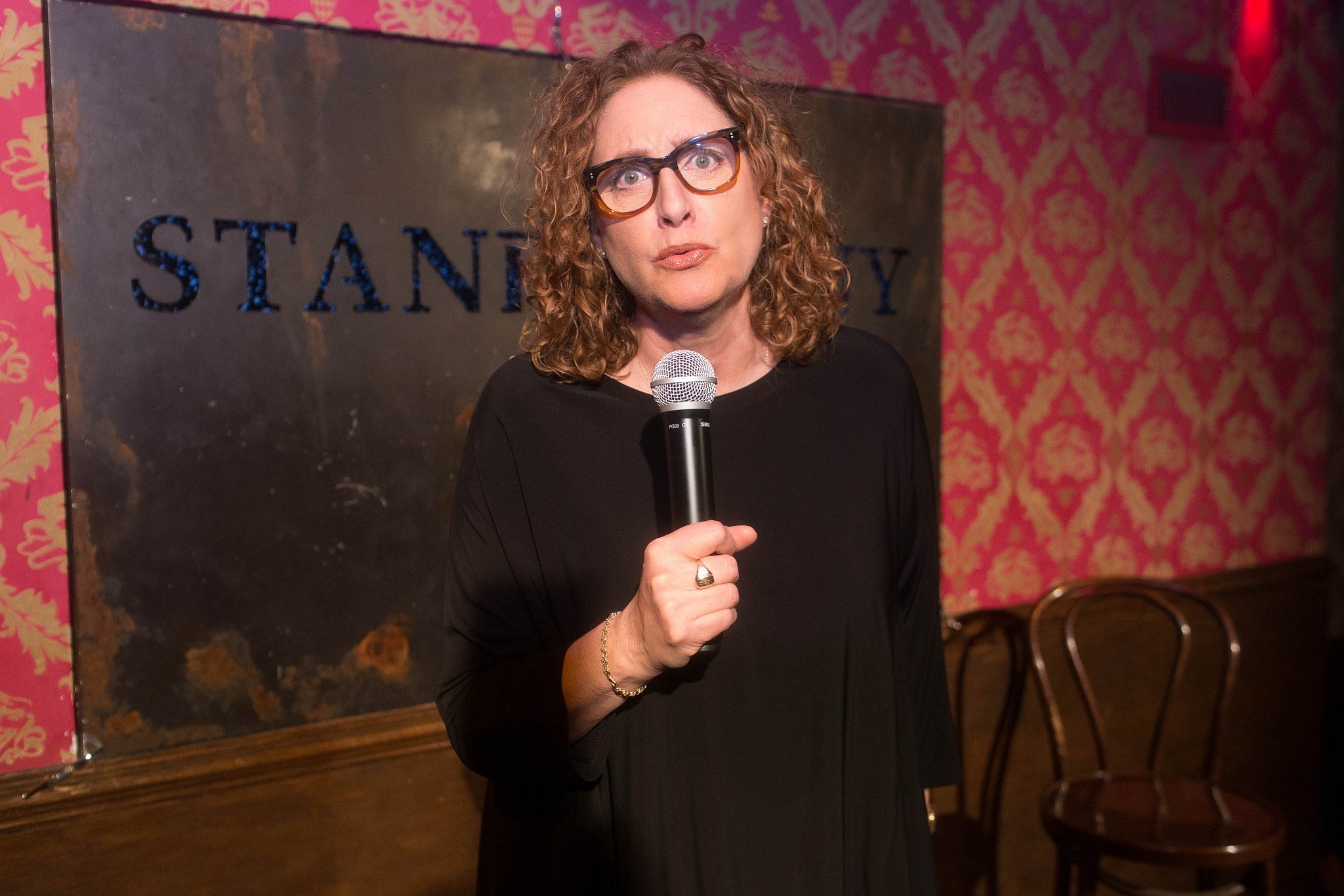


NEW YORK — Jewish comedy has been around for centuries, with sarcasm dating back to the Bible and Jewish comedians monopolizing the stage and screen since the days of vaudeville.
While there is an ongoing debate as to why Jews are so funny, the ingredients seem to be consistent: irony, self-deprecation, kvetching (complaining), sarcasm, wit and an interesting balance of self-praise and self-loathing.
Writer Saul Bellow once said “oppressed people like to be witty,” Freud suggested that Jewish humor was a survival mechanism, and Jon Stewart pointed out persecution as the Jewish comic’s fuel. But are Jews really any different than other comics? Or does a sarcasm that dates back to biblical times still shape us today?
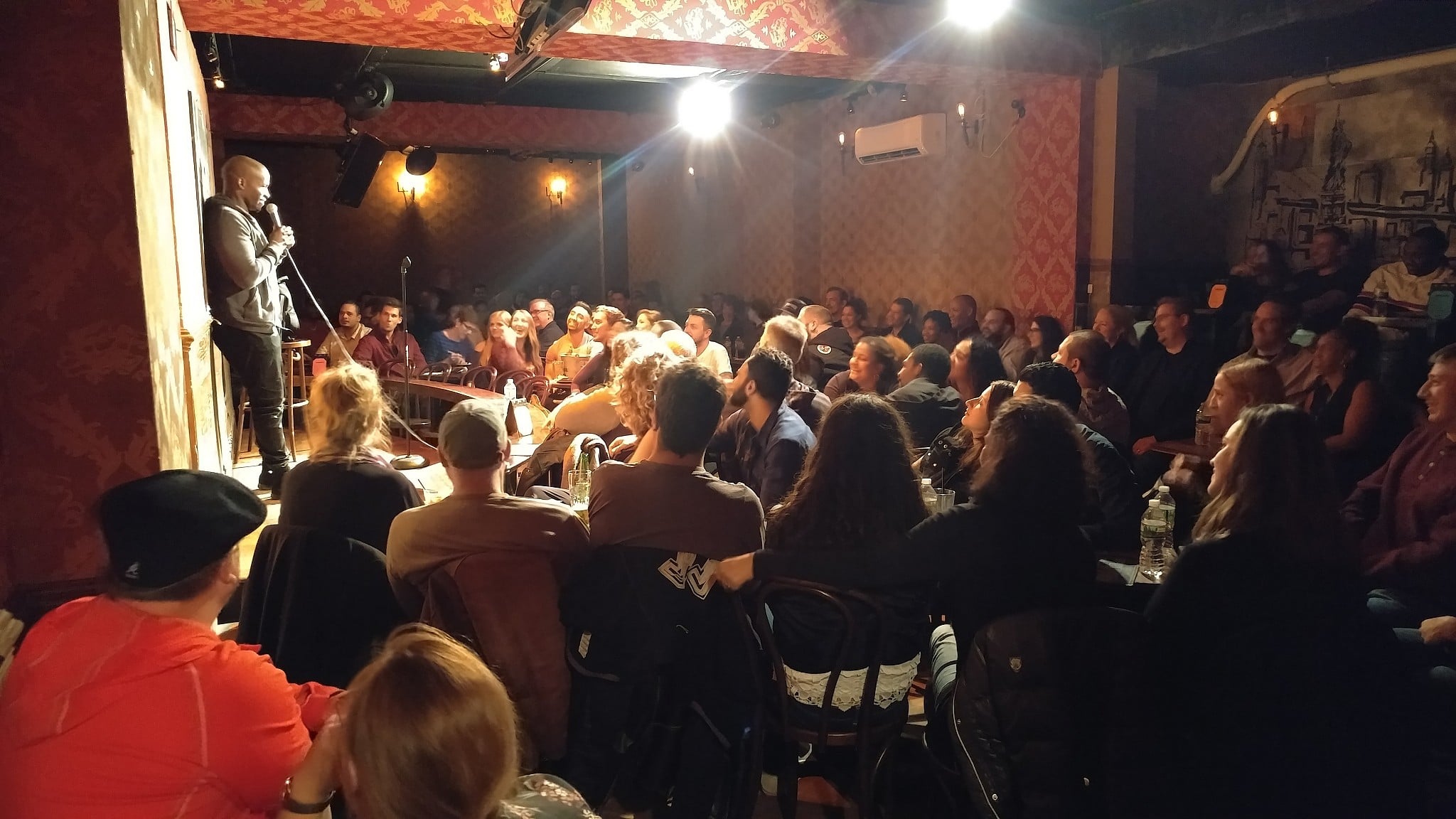
Ten years ago longtime comedy club Stand Up NY was financially struggling and up for sale. Located on Manhattan’s Upper West Side (coincidentally not too far from Jerry Seinfeld’s home), the club, which had been operating since 1986, was looking for new ownership and a second wind.
Yeshiva University High School graduate Dani Zoldan, who spent much of his teenage years frequenting Stand Up NY, decided to make an offer to join the club’s line of Jewish owners. Now, Stand Up NY has its own podcast recording studio, offers comedy workshops and hosts various events at its two-story venue.

While the question of whether Jews are funnier than average is up for debate — especially by Jews — it’s hard to ignore the significant percentage of Jewish performers. Twenty percent of Stand Up NY’s lineup consisted of Jewish comedians this past year, and similar numbers are seen at other clubs, clearly a disproportionate amount of funny Jews compared to the rest of the American population.
The Times of Israel spoke with three comedians who perform regularly at Stand Up NY and discovered that there’s more to funny people than meets the eye.
So, tell me about your mother
NAME: Judy Gold
AGE: 50s
YEARS IN THE INDUSTRY: 32
BIGGEST INSPIRATION: Joan Rivers
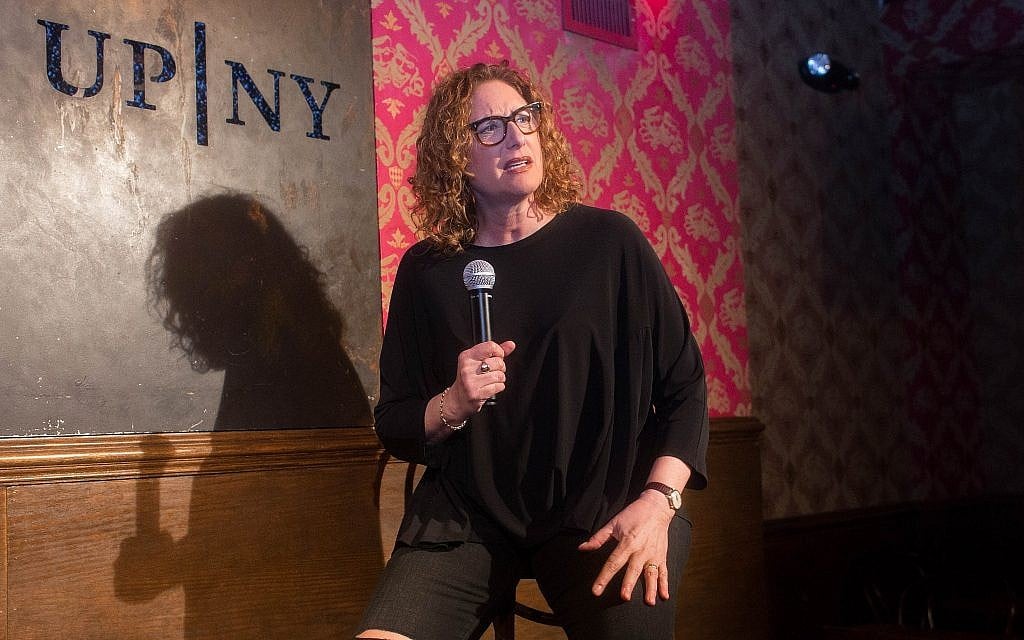
For many Jewish comics, inspiration comes from home. New York-based comedian Judy Gold, known on stage as “Jewdy,” has made a career talking about her mother, and mothers in general. Until her mother’s recent death, whenever Gold was looking for new material — “or irritation” — she simply picked up the phone.
Gold, who became a mother herself 21 years ago, sympathetically tells audiences about her children’s experience having four moms. After Gold split up with her first female partner, they each went on to move in with someone new — bringing the mom total to four. “Can you think of anything worse for a child?” Gold asks.
A 6’2″ liberal Jew and lesbian, Gold lives with her partner Alyssa on the Upper West Side. She has been so fascinated with mothers throughout her career that she has even written a play called “25 Questions for a Jewish Mother.” In it, she interviews moms from all Jewish streams, attempting to break down what makes these mothers so “lamentable, lovable and laughable.”
Gold’s career has been characterized as very Jewish, but ironically it was a “Secret Santa” dare that set her career in motion. Her good friend — and Secret Santa — asked Gold to perform a 10-minute standup routine that made fun of their entire college dorm floor. Following what she described as an “out of body experience” and ultimate (natural) high, the rest was history.
https://www.youtube.com/watch?v=4hQJBJKrKJg
Gold’s lampooning of her Jewish identity hasn’t always been well-received by her own community. Over the years Gold has been accused of promoting a Jewish stereotype, while her agents suggested she drop the “Jewish stuff” and consider dying her hair blonde in order to broaden her audience.
Gold takes pride in the seemingly disproportionate amount of Jewish comedians, and chalks the high number of funny people in the Tribe up to historic persecution.
“We’ve had to talk our way out of some crazy stuff from day one,” says Gold. “We’ve been kicked out of every country, and we’re taught to think differently which is what comedy is all about.”
Gold believes Jews are in general “funny characters,” and it seems she isn’t the only one, as audiences keep coming back to see her perform her mom-infused shtick.
Happily unmarried ever after?
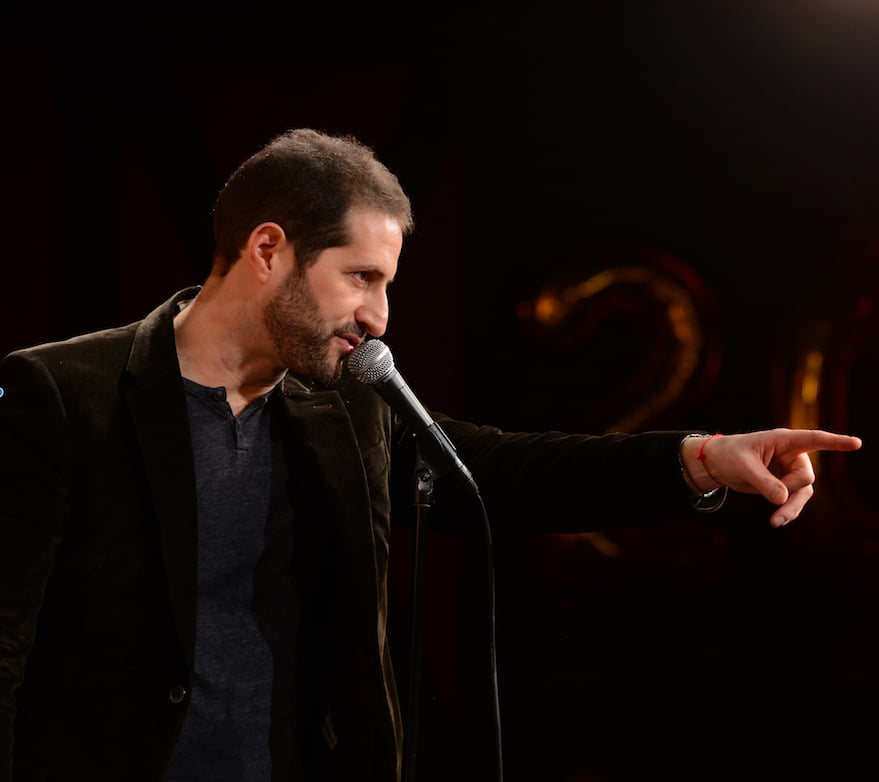
NAME: Modi Rosenfeld
AGE: 40, plus shipping and handling
YEARS IN THE INDUSTRY: 24
BIGGEST INSPIRATION: Feedback from fans, and the healing power of comedy
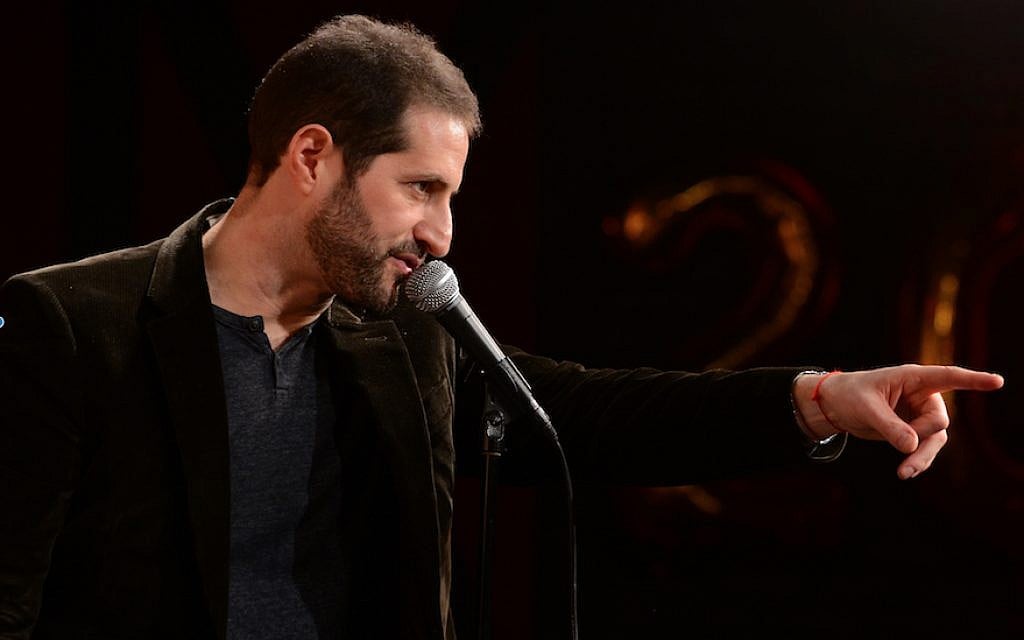
Someone who has been able to poke fun at his Jewish heritage without catching too much flak is comedian Modi Rosenfeld, who goes by the professional name Modi.
“Happily unmarried,” Modi lives on the Lower East Side of Manhattan and can be found conducting Shabbat Services, Kol Nidrei and private weddings when he isn’t on tour. Modi studied at the Yeshiva University Cantorial School but it was “only a hobby… I knew I wouldn’t pursue a career as a cantor.”
Weddings, however, were a completely different story. “It all started on the Howard Stern show when someone called in and asked if I do weddings,” Modi says.
Before becoming a performer Modi worked as an investment banker, and it wasn’t until 1993 that he would grace the stage for the first time at Stand Up NY. He did so at the behest of a friend who had heard Modi impersonating his clients and urged him to get into comedy.
While Modi has developed a Jewish voice as a comedian, he says the most important thing is to know your audience.
“When you start doing comedy you’re just looking for that laugh,” Modi says. “I’m very good at accents, so that’s what I did initially. But after years of performing, your real voice comes out.”
When performing in front of diverse audiences he adapts his act, and sees it as an opportunity to “offer a window into the Jewish world.”
Modi is popular within the Jewish community since he can offer nuanced performances with religious inside jokes. He has performed in Israel several times, is flown overseas for special occasions like birthdays and bar mitzvahs, and has stood on numerous ultra-Orthodox stages where the crowd is divided by a mechitza, or a barrier separating women and men.
Modi doesn’t think Jews are funnier than any other people. “If there’s any difference, it’s that Jews saw a way to make money out of it, just like schmattes,” he says.
‘Comedy is tragedy, plus time’
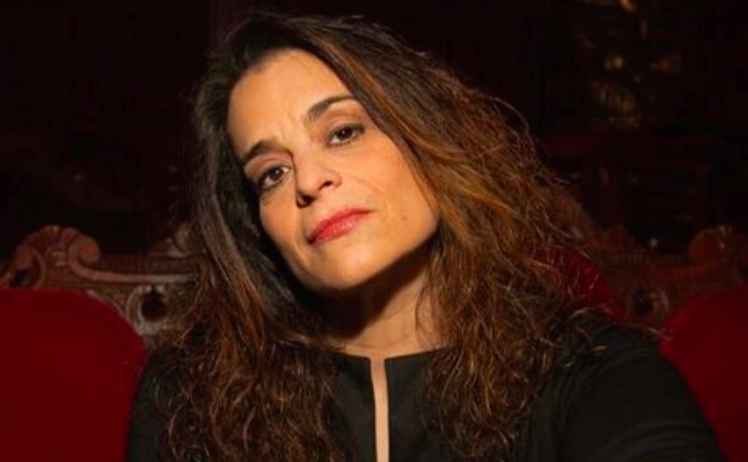
NAME: Jessica Kirson
AGE: 40s and stopped counting
YEARS IN THE INDUSTRY: 19
BIGGEST INSPIRATION: Lucille Ball
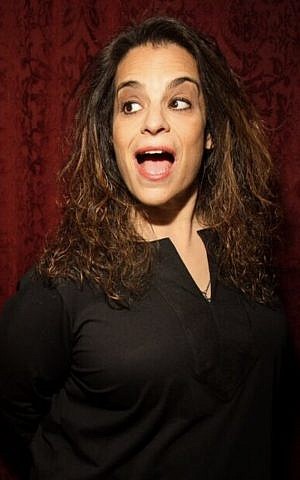
For comedian Jessica Kirson it isn’t about the money at all — comedy is her personal therapy. Kirson says comedians usually come from dark places and share their hardships through jokes.
“Nothing is more accurate than the saying, comedy is tragedy plus time,” says Kirson, who grew up in a Jewish liberal household in New Jersey.
Kirson claims to always have been the class clown, but if it hadn’t been for her grandmother, she may have never pursued a career in comedy. Kirson was about to begin her masters in social work when “Nana called me and said, ‘Jessica, you have to become a comedian.’”
Raised by a therapist and married to a therapist, Kirson has plenty of material from home. “I talk to my mom every day otherwise she thinks I’m dead,” she says.
Kirson’s Jewish identity is also apparent in her stand up, which she describes as an educating tool that disarms and connects people.
“I want to help others let go and be silly. There’s so much pain and craziness now, I want to help people deal with life and loss and depression and struggle,” she says.
Offstage, Kirson is a very private person. “After spilling my guts on stage I just want a simple conversation,” she says, noting that she would rather talk about something other than herself.
At the same time, she loves “seeing people’s reaction to craziness” — which can explain the incredible amount of videos she posts online with subjects ranging from Trump, to makeup tutorials, to “how to end any conversation.”
https://www.youtube.com/watch?v=7aVy6RCJrFw
But what she loves most about the job is giving people some relief from their everyday life. Gold and Modi can relate.
“When somebody says to me, ‘My son or a family member is sick, and we haven’t laughed in a really long time, thank you.’ Or, ‘We really needed this laugh,’ these are by far the best moments,” says Gold.
Modi shares the sentiment. “You never know what people are experiencing. You never know what people in the audience are suffering from, and you are able to give them some relief,” he says.
The similar answer from three Jewish New York comics may have more to do with a chosen lifestyle than a Chosen People, and reflect the fact that good humor really is universal.
“Audience members have come up to me saying their Indian mom sounds exactly like my mother,” says Modi.









The Times of Israel Community.