

In cross-examination, PM argues he was a ‘political corpse’ when he befriended Milchan
Netanyahu insists the Hollywood mogul didn’t expect anything from him in exchange for lavish gifts in early 2000s, as Milchan knew he had ‘no intention’ of returning to politics
 Add ToI as a Preferred Source on Google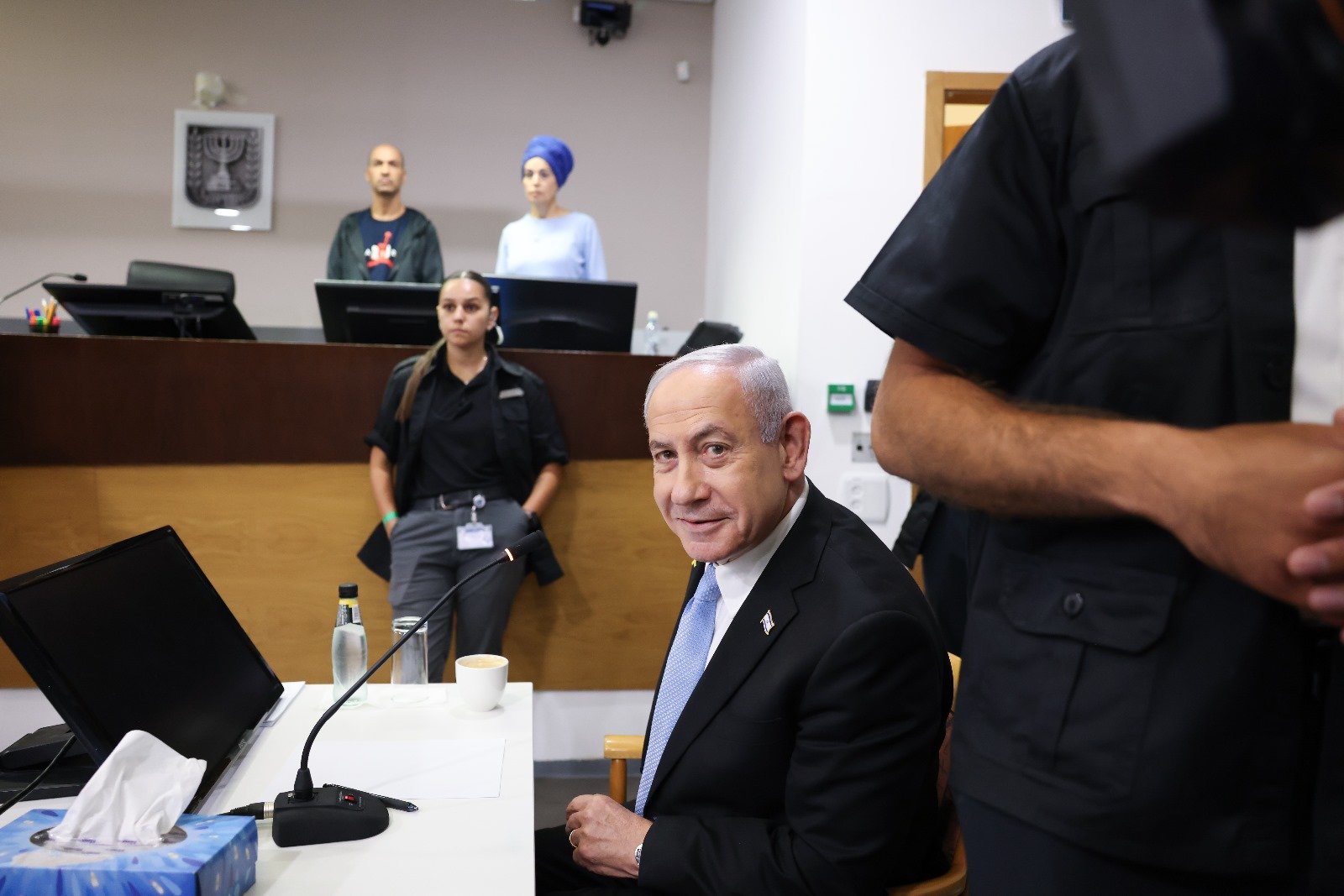
On the second day of cross-examination in his ongoing criminal trial on Wednesday, Prime Minister Benjamin Netanyahu acknowledged the wealth of luxuries and gifts he received from Hollywood mogul Arnon Milchan in the early 2000s, but denied any wrongdoing, as, according to him, he had been a “political corpse” during this period.
As it had on Tuesday, Wednesday’s cross-examination focused on Case 1000, in which Netanyahu is accused of fraud and breach of trust for accepting luxury gifts worth hundreds of thousands of shekels from Milchan and Australian billionaire James Packer. The indictment alleges that Netanyahu performed various favors and provided certain assistance to Milchan, in particular, in return.
On the first day of questioning, Prosecutor Yehonatan Tadmor of the State Attorney’s Office sought to establish that Milchan had sought out Netanyahu’s favor in order to obtain help from him in the future, and that the relationship was not a friendship — as Netanyahu has consistently asserted in response to claims that the gifts he received from the Hollywood mogul were reciprocated with gifts.
This line of questioning continued on Wednesday, alongside a focus on Netanyahu’s political ambitions throughout his friendship with Milchan in the early 2000s.
“He understood that I liked cigars so he would bring them for me,” Netanyahu said of Milchan, arguing that the gifts were presented with no strings attached. “Between 1999 and 2000, he brought me cigars, and champagne for Sara (his wife).”
He said that in his first meeting with Milchan, the mogul “saw that I liked cigars and would bring boxes of cigars and when we would meet in Israel, he would bring a box. Usually one, occasionally two boxes. That’s what happened.”
He portrayed Milchan as generous, saying that the two would meet at the billionaire’s mansion in Paris, and that the gifts were not given with the expectation of anything in return, as Milchan understood that he was a “political corpse” whose career had ended with his 2006 electoral defeat to Ehud Olmert.
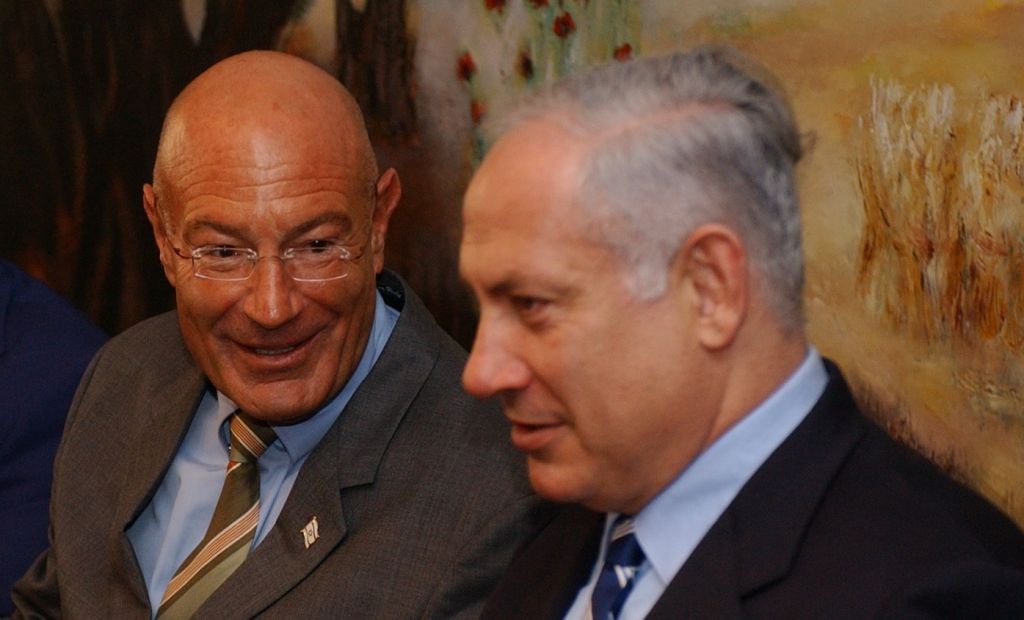
“I had no intention of returning to politics. He knew that,” Netanyahu said.
He said the two met in Paris several times, at Milchan’s invitation and “with his full hospitality, every trip.”
“Even at these meetings, he would bring cigars and champagne. I flew at his expense, time and time again,” Netanyahu recalled. “But not when I was in politics, because that is prohibited.”
Tadmor turned to challenging Netanyahu’s assertion that Milchan had no idea he would end up returning to politics, both after his electoral loss in 1999 and again in 2006.
After both of his electoral losses, Netanyahu said he had expressed to Milchin that his political career was over.
He portrayed the friendship as having been a comforting one, and one which he turned to in particular after his loss to Olmert in the 2006 elections.
Tadmor pointed out that in 2000, Netanyahu’s allies had tried to pass a piece of legislation, known as the Netanyahu Bill, which would have allowed him to run for prime minister against then-premier Ehud Barak despite not being a member of the Knesset. He questioned how the passage of this legislation could be perceived by the public, with regard to Netanyahu’s intentions to return to politics.
“I understood that there were people who submitted the law and wanted me to run,” Netanyahu acknowledged. “I knew I didn’t want to run. I told my good friend Arnon Milchan that I had no intention of returning.”
“I told Milchan that I had no intention of returning,” he reiterated. “When they enacted the Netanyahu Bill, I said I wasn’t returning. I had no intention of returning and did not return.”

Continuing to challenge Netanyahu’s perception of himself as a “political corpse” during this era, Tadmor asked if the premier had still considered himself as such after he lost the Likud primaries to Ariel Sharon in 2002, and when he was appointed to the role of finance minister under Sharon a year later.
He suggested that Netanyahu was, in fact, a public figure and thus could not be considered someone whose political career was over.
“That’s not true,” Netanyahu argued. “I was out of the political world from 1999 to 2002. When I chose to return…no one thought to themselves, ‘here is his path to prime ministership.’ You are making incorrect assumptions. I did not intend, could not, and did not want to return at that time.”
Tadmor inquired: “Whenever you are not prime minister, are you a political corpse? Aren’t you a public servant?”
Following the disagreement over the term “political corpse,” and whether one can be described as such when they still have a career in politics but no prime ministerial ambitions, the line of questioning turned to Milchan’s gift-giving practices.
“In the years that I wasn’t prime minister, Milchan brought me cigars and brought Sara champagne,” he said. “Arnon is a warm person…that’s what he would do, and it wasn’t unusual.”
Netanyahu is on trial in three corruption cases. He faces charges of fraud and breach of trust in Case 1000 and Case 2000, and charges of bribery, as well as fraud and breach of trust in Case 4000.
In Case 2000, the prime minister is accused of fraud and breach of trust over his alleged attempt to reach a quid pro quo agreement with the publisher of the Yedioth Ahronoth newspaper Arnon (Noni) Mozes, whereby Yedioth would give the prime minister more positive media coverage in exchange for legislation weakening its key rival, the Israel Hayom free sheet.
Case 4000, also known as the Bezeq-Walla case, is the most serious the prime minister faces, in which he is accused of authorizing regulatory decisions that financially benefited Bezeq telecommunications giant shareholder Shaul Elovitch by hundreds of millions of shekels. In return, Netanyahu allegedly received favorable media coverage from the Walla news site, which Elovitch also owned.
Netanyahu denies any wrongdoing and says all the charges were fabricated in a political coup led by the police and state prosecution.
Jeremy Sharon contributed to this report.






The Times of Israel Community.