

Artist’s ‘normal’ Barbie doll is modestly dressed, and can have cellulite too
Hitting the market this week, the Lammily doll may raise girls’ body image by mainstreaming realistic proportions — and even acne
 Add ToI as a Preferred Source on Google
Deputy Editor Amanda Borschel-Dan is the host of The Times of Israel's Daily Briefing, What Matters Now and The Reel Schmooze podcasts, and heads up The Times of Israel's features.
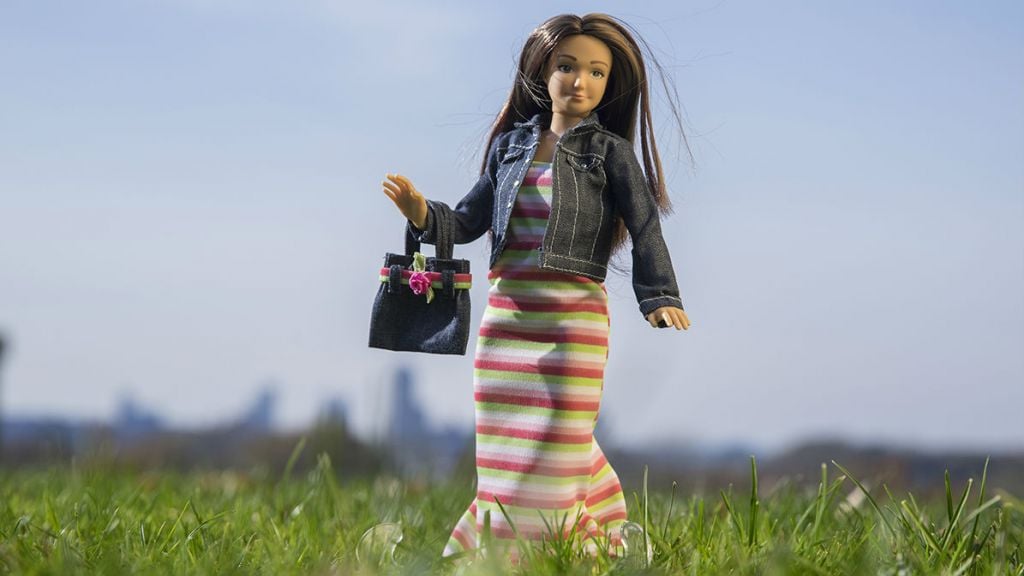
Looking for a special something for that little girl who has it all? Just in time for Chrismukkah, hot off the Chinese assembly line, the first edition Lammily doll is here.
The Lammily doll has journeyed all over the world to meet you, her new friend, and she has a wardrobe of cosmopolitan outfits, each tied to a different global city (sold separately). But make no mistake, Lammily is the company’s name, not the doll’s: the website allows you to download and print out her passport with her new personally chosen moniker.
She’s not the waif-like fashion-plate doll girls are used to. Based on the proportions of an average North American 19-year-old girl, the Lammily doll is sporty, strong, and, well, pretty normal looking.
For feminist thinkers and regular mothers around the globe, it is the Lammily doll’s normalcy that is its selling point.
“We tried to make her as relatable as possible,” says 26-year-old Jewish artist Nickolay Lamm, who was aided by his mother, the designer of the doll’s intricate packaging upon which the doll’s back story is told.
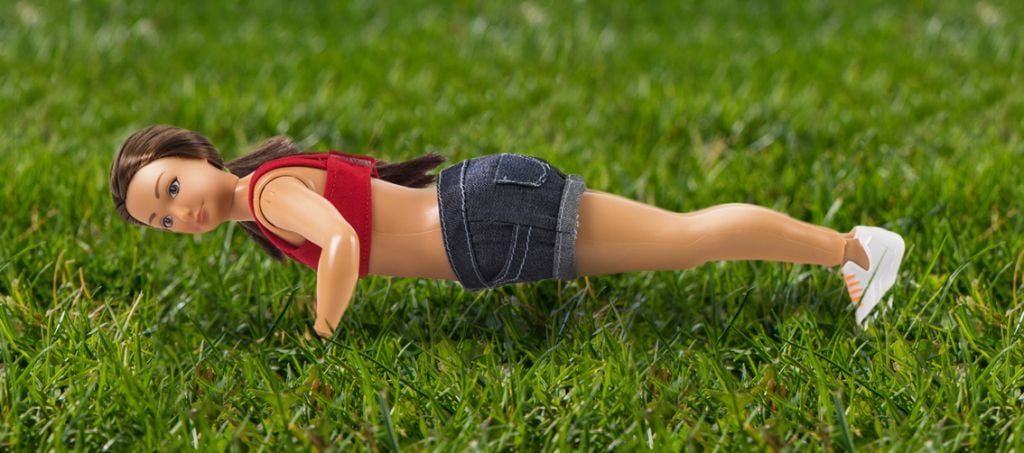
The digital artist sparked a media storm last year when images of his Regular Barbie went viral on social media. In this experiment, Lamm created a 3-D printed prototype doll of what Barbie, launched by Ruth Handler in 1959, would look like with realistic dimensions. Riding the crest of media attention, Lamm’s subsequent crowdfunding campaign on CrowdtiltOpen last spring exceeded his expectations five-fold, bringing in over $500,000 in pre-orders.
Now, the initial 25,000 dolls promised to micro-financiers in the crowdfunding campaign are set to ship on November 28, with another 25,000 well on their way to being sold out through website orders.
A wide-open market for diversified dolls
Lamm says he’s no “blogger feminist” and is “just a dude with a laptop.”

However, in an era of rising distorted image problems among increasingly younger girls, there are those who claim the unattainable pristine and thin beauty of a typical Mattel toy manufacturer icon Barbie doll has a lasting negative influence on the self-esteem of girls who play with her.
A recent Guardian story reports that were Barbie life-size, she would be 5 feet 9 inches tall and weigh 110 lbs, which would make her 35 lbs underweight. The article states that a group of scholars calculated that “the likelihood of having Barbie’s body shape is one in 100,000.”
In a telephone conversation with The Times of Israel from his Pittsburgh home, Lamm was clearly uncomfortable with the “feminist” label and says he saw an unfilled niche in the doll market and decided to go for it. He considers the doll as a gateway product into the wide-open market bracket of alternatives to the beloved Barbie.
‘I think Lammily can be friends with Barbie in the toy world’
“I guess I just do things and if they happen to be feminist that’s what they are… I just believe that there should be more diversity,” he says.
“It can only be good for kids to see that different body types are beautiful and real,” says Lamm. Plans are in the works for more styles of Lammily dolls, including a male version.
“People suggest I’m against Barbies, but I think Barbie is a great product, I’m just creating an alternative. It’s cool being a supermodel, but also cool not being a supermodel. Both are fine. I think Lammily can be friends with Barbie in the toy world,” he says.
Lamm immigrated to the United States from St. Petersburg at age six with his single-parent mother and twin brother. After an elementary education that included years at an Orthodox Jewish day school, he studied marketing at the University of Pittsburgh.
“The easy part is getting the media attention, the hard part is sustaining it,” says Lamm.
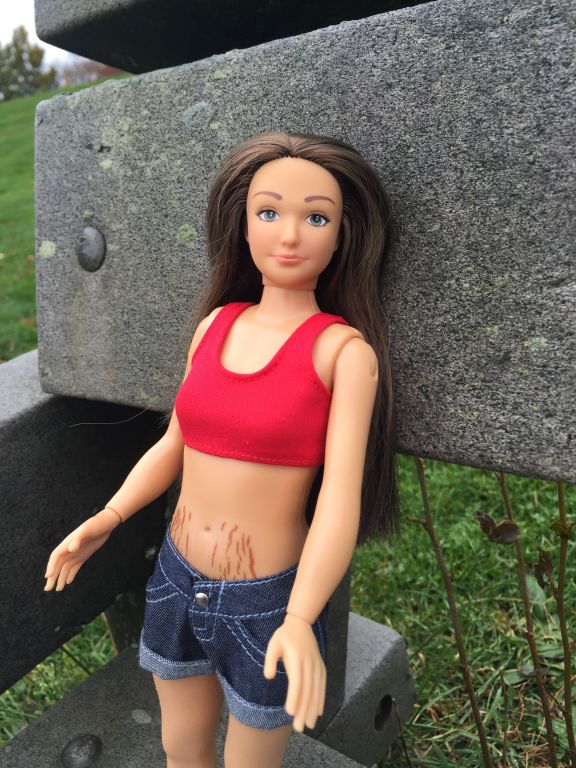
For the first edition Lammily doll, Lamm says he wasn’t targeting any specific demographic or ethnicity. Initially he focused on measurements, but in the end the goal was more about making the doll into a typical person.
To that end, he and his mother also designed the Lammily Marks, a $6 packet of reusable stickers that give the doll anything from grass stains to boo boos to cellulite and stretch marks.
“A lot of people say it’s going out of bounds. You never see stuff like this on a doll, but I want to make cellulite and acne more mainstream. If it’s more mainstream, it’s not a big deal if you have stuff like that,” says Lamm. He says even before it has officially hit the market, people with scars have written him, thanking him for creating something like this.
For Lamm, the whole project is one big study with a huge learning curve.
“The selling and marketing of it, a lot it is out of my control. I think of everything as an experiment so not to be disappointed if it doesn’t work out,” he says.
Body image is no plaything
A 2006 study published in the American Psychological Association publication Developmental Psychology called “Does Barbie Make Girls Want to Be Thin?” saw a causal relationship between the fashion doll and girls’ body image.
“Dolls like Barbie can serve as an imaginary point of view from which to see one’s own bodily self, through which young girls come to understand the meaning of beauty and perfection by pretending to be her dolls, which are embodiments of the cultural ideal of the female body… exposure to Barbie dolls causes an increase in girls’ body dissatisfaction and that this negative effect is specific to Barbie and not observed after exposure to dolls with a body size that resembles the average U.S. woman.”
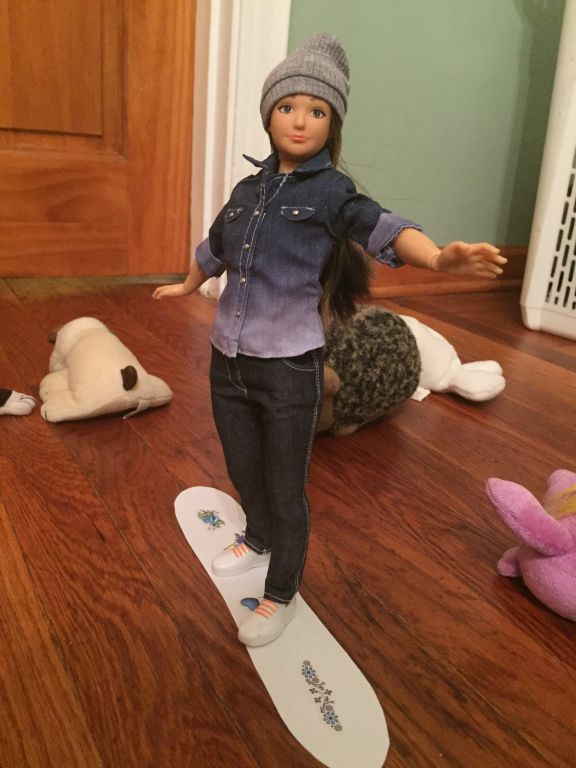
The Lammily doll is based on healthy 19-year-old female proportions found on the Center for Disease Control website.
“In reality, even the doll he made is actually a very skinny girl. Realistic relative to the old Barbie for sure, because a girl who looks like his doll can stand and move and actually exist,” says feminist thinker and author Dr. Elana Sztokman.
“It’s a plus for sure, relative to where we’ve been. But it is still telling girls to be skinny. I mean, it would be nice to have a doll where the girl has thighs or a big behind or a not-so-flat stomach,” Sztokman says.
But the doll’s more realistic optional Lammily Marks are a turn-off for Monica Strom Gellman, an Arizona-based attorney/Zumba instructor.
“I like the idea [of the doll] and especially like that the clothes are not skanky. I’m not so sure about the optional stretch marks and cellulite,” says the mother of two girls and a boy.
For Gellman, it is the doll’s hefty $25 price tag that has decided her against purchase.
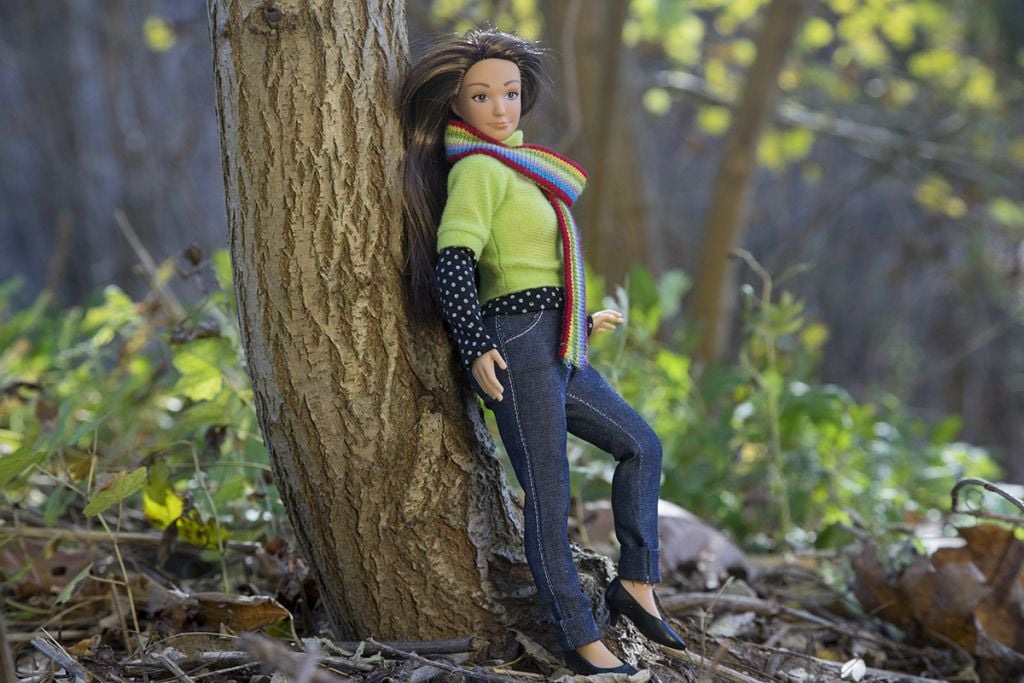
But in Israel, where even the most lowly Barbie has a comparable price, 11-year-old Avital Adest assesses the doll through its website and says it “looks like a Barbie but it looks like a normal girl. Less snobby looking than Barbie. Barbies are very thin but this one looks regular.”
Mother Abbi, who grew up in the United States but is raising her family in Israel, applauds Lamm’s effort and says, “I think it could go a long way to educating towards positive body image awareness.”
She has, however, a reaction similar to many accustomed to the 55-year-old Barbie doll.
“Although interestingly, I’m so used to seeing Barbie dolls that she looks fat to me. How sad is that?” says Adest.










The Times of Israel Community.