

Knesset passes law banning graduates of PA universities from teaching in Israel
Measure requires Israeli accreditation for teachers with PA degrees, drawing criticism from lawmakers who call bill discriminatory and warn of impact on Arab education
 Add ToI as a Preferred Source on Google
Ariela Karmel is a political correspondent at The Times of Israel. She previously reported for Calcalist and Haaretz. She holds an MA in Middle Eastern and African History from Tel Aviv University and a BA in Political Science from the University of British Columbia.
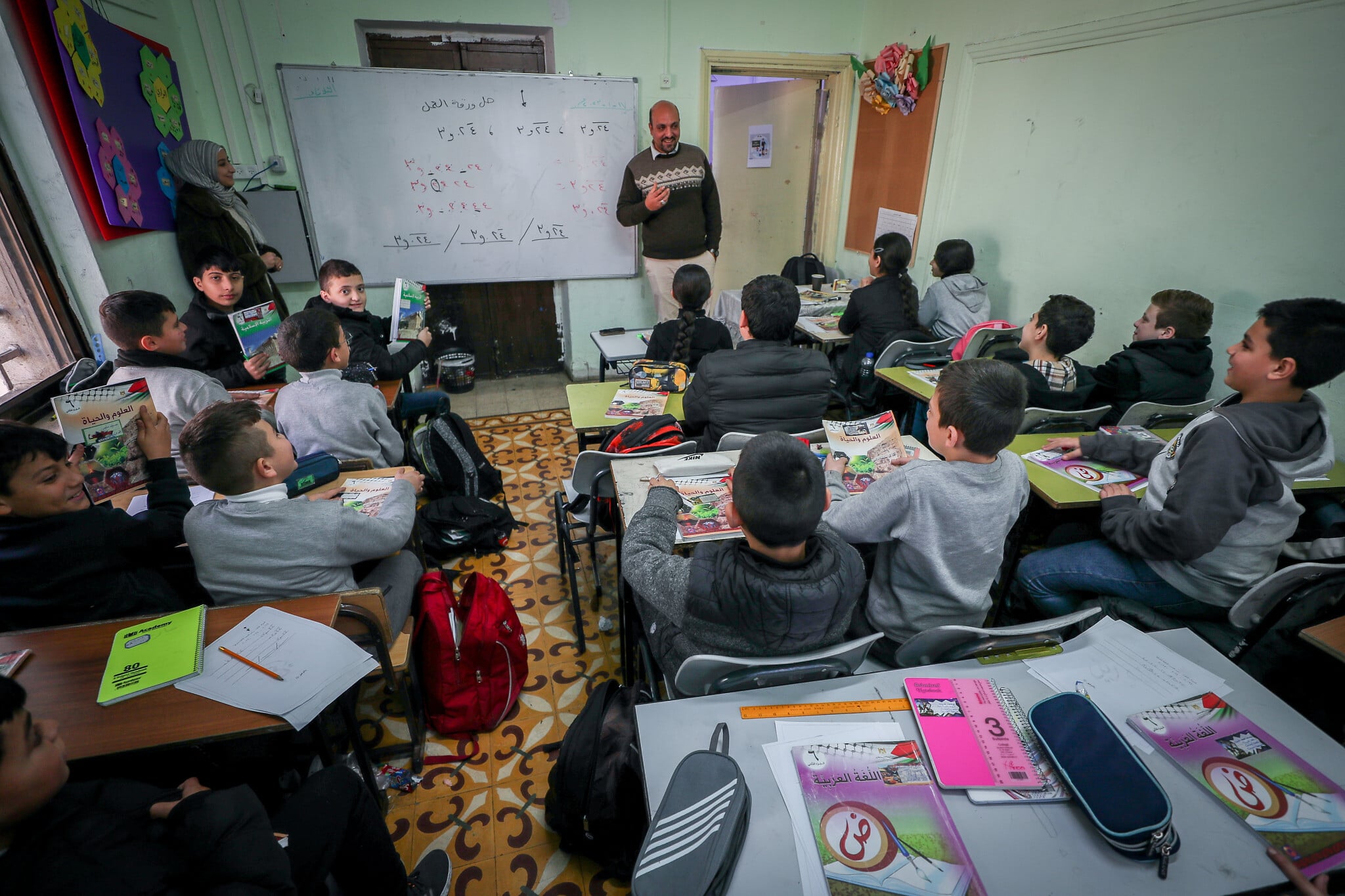
The Knesset passed a law on Wednesday to restrict people with academic degrees from Palestinian Authority universities from teaching in Israeli schools unless they also possess an Israeli accreditation, with 31 votes in favor and 10 against.
While proponents hailed the law as an effort to keep incitement against Israel out of schools, Arab Israeli lawmakers said it was another discriminatory act of legislation targeting the minority community, many of whom study in PA institutions.
The legislation — sponsored by Likud MK Amit Halevi and Avichay Buaron, among others — allows the Education Ministry’s director general to withhold accreditation from teachers with a degree from an institution within the Palestinian Authority, “provided that such a degree is required for his work as an education worker.”
The law says that its purpose is “to prevent the harmful influence of the Palestinian Authority, which is hostile to the State of Israel and its values, and to safeguard the educational values of the State of Israel as a Jewish and democratic state.”
“Studies at these institutions include, in many cases, antisemitic content and indoctrination whose purpose is to deny the existence of the state of Israel and to seriously incite against it,” the bill states — calling it inappropriate for such people to “expose helpless children” to such viewpoints.
According to the law, teachers who studied at a Palestinian institution but hold a degree from an Israeli university can be employed at Israeli schools unless “it is proven that their employment would have a harmful influence on students or minors.”
The law will not apply to teachers already employed by the education ministry. It will also not apply to those who have completed at least one academic year at a Palestinian institution, but they will be required to complete an Israeli teaching certificate.

While currently the law does not apply to principals, in three years it will be enforced against those who possess a Palestinian degree, so long as they don’t also have an Israeli university degree.
Palestinian Authority schoolbooks for children contain incitement to violence and hatred despite European Union pledges to work with the PA to revise them, a study by the Israeli nonprofit IMPACT-se found in 2022.
However, the legislation has been condemned and criticized by Arab lawmakers who see it as an attack on education in the Arab community, many of whom have studied in PA universities.
According to the Knesset Research and Information Center, of the 30,339 teachers who entered the Arab education system in the past decade, 11% held academic degrees from Palestinian institutions, and in East Jerusalem, more than 60% of teachers in the Arab education system hold degrees from Palestinian institutions. About a third of those teachers are in the Negev, teaching in the Bedouin community.
Ra’am lawmaker Waleed Alhwashla said Wednesday that he will petition the High Court of Justice over the law, which he called “discriminatory” and “a serious violation of the right to education and equality of opportunity.”
In addition to lawmakers, Knesset Education, Culture and Sports Committee legal advisor Tami Sella was critical of the bill when it was approved by the committee for a second and third reading in July.

At the time, she said that the committee heard no evidence for the “sweeping claim” that those who studied at Palestinian institutions had “a harmful influence on students.”
She argued during deliberations that “no sufficient factual basis for the bill was presented in the discussions,” to justify legislation which “infringes upon the right to employment.”
Talal al-Krenawi, the mayor of Rahat, Israel’s largest Bedouin town, has also been very critical of the legislation, and said when he appeared before the committee in July: “In my city, there are 2,500 teachers. If this law passes, what do you want? Unemployment? To return to 30 and 40% unemployment?”
Then Hadash-Ta’al MK Youssef Atauna called the bill “racist and harmful legislation intended to harm the Negev and East Jerusalem,” when he appeared before the committee in July.
Other opposition lawmakers also criticized the policy for harming employment in the Negev in particular, without providing any alternative solution.
Buaron said on Wednesday at the Knesset that the government was working to “establish a training program for teachers in the Arab community within the framework of the Israeli academy,” and claimed that there is money earmarked for programs but that the finance ministry had yet to release it. He gave no details as to what such alternative programs would look like.









The Times of Israel Community.