

 From the Liveblog of
Monday, November 10, 2025
From the Liveblog of
Monday, November 10, 2025
Citing her husband’s murder, MK lobbies for death penalty for terrorists
 Add ToI as a Preferred Source on Google
Sam Sokol is a former political correspondent at The Times of Israel. He was previously a reporter for the Jerusalem Post, Jewish Telegraphic Agency and Haaretz. He is the author of "Putin’s Hybrid War and the Jews"
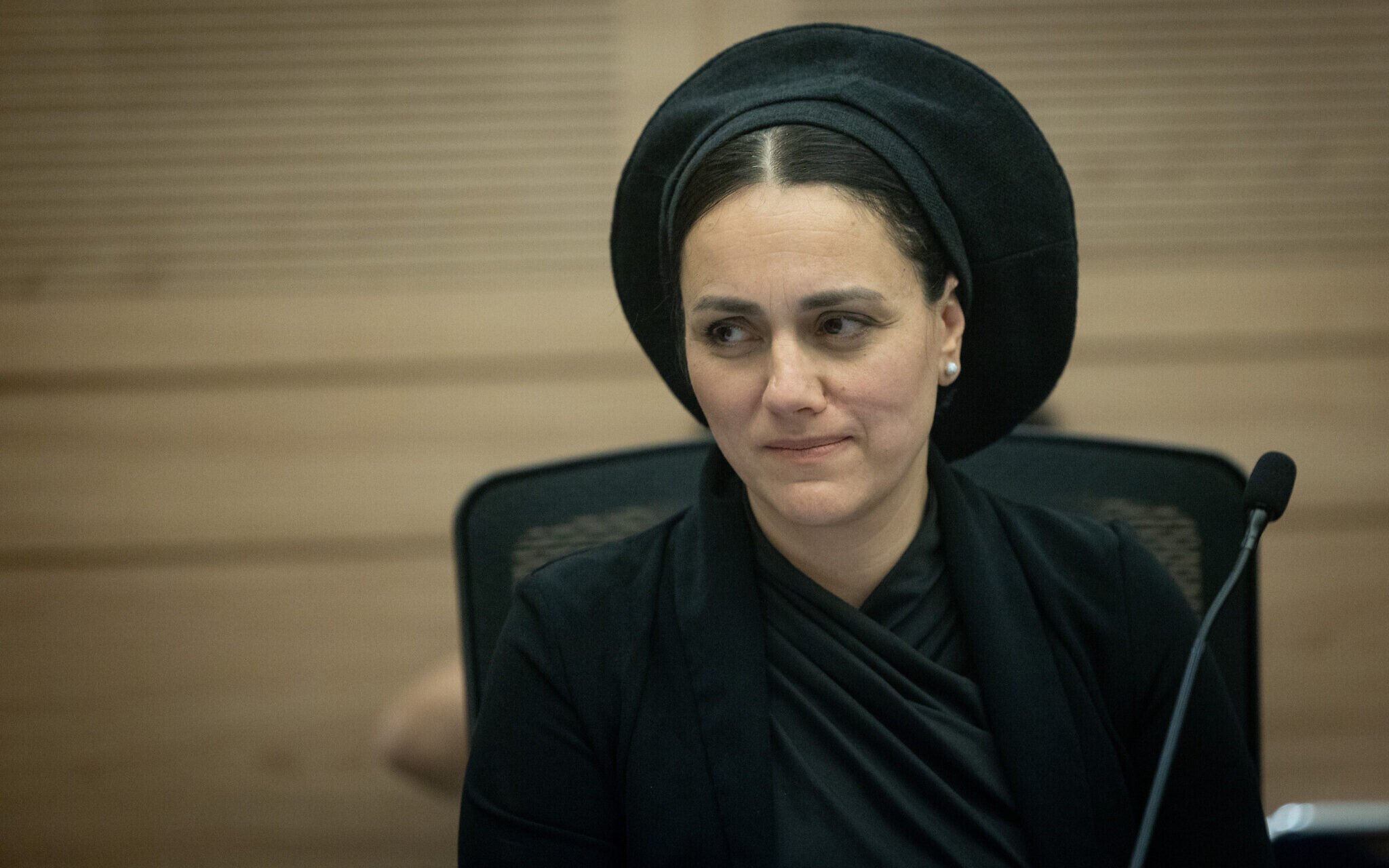
In an impassioned speech, Otzma Yehudit MK Limor Son Har-Melech calls on lawmakers to vote in favor of a government-backed bill that would impose the death penalty on terrorists who have killed Israelis.
Har-Melech’s bill stipulates that Israeli courts must impose the death penalty on those who have committed a nationalistically motivated murder of a citizen of Israel, while allowing judges serving on military courts in the West Bank to sentence offenders to death with a simple majority rather than unanimous decision. The bill would also remove the possibility of regional military commanders commuting such sentences.
The bill states that it applies to those who kill Israelis due to “racism” and “with the aim of harming the State of Israel and the revival of the Jewish people in its land,” leading to criticism that it would apply only to Arabs who kill Jews and not to Jewish terrorists.
Paraphrasing former attorney general Gideon Hausner at the opening of the trial of Adolf Eichmann, Har-Melech says that standing with her “are thousands of murder victims, but they cannot stand on their feet to point an accusing finger at the loathsome murderers and to cry out against the Palestinian terrorists — I accuse them.”
The far-right lawmaker says that she came to speak on behalf of “all the victims of Palestinian terror,” describing how she was moved to follow her current path following the murder of her husband in a terror attack in 2003.
“I stand here on behalf of an entire people who see the murderers of their nation released in deals [and] received [at home] as heroes,” she says. “At that moment, I promised myself that from now on my life’s mission would be to do everything in my power so that others would not join our bereaved family.”
The terrorist who led the cell that murdered Har-Melech’s husband Shalom went on to take part in other attacks, including October 7 — although two others implicated in the attack were released as part of the latest ceasefire deal, she says, asking how many people would have been saved had they been executed.
“And what about Yahya Sinwar — may his name and memory be blotted out — and the rest of his leadership in Hamas, many of whom were released in prisoner exchanges,” she continues, arguing that “the death penalty for terrorists is our personal and national duty.”
“When the message is unequivocal, without loopholes and without equivocation, the death penalty for terrorists law changes perception. It changes the paradigm. No more prisons. No more deals. No more suspended sentences. But a death sentence. Because it’s very simple: when a terrorist dies, he does not return to the circle of terror and will not be released alive,” she argues.
“No more mercy, no more hesitation. We choose life, and whoever chooses death will bear the consequences of his actions.”
Coalition lawmakers May Golan, Tally Gotliv, and Michal Woldiger hug her after her remarks.







The Times of Israel Community.