

NY governor Hochul, challenger Zeldin look to Jewish community for last-minute votes
Incumbent Democrat enlists Jewish lawmakers as she fights to hold her seat, while Republican opponent drums up support in Haredi communities with a focus on yeshivas and crime
 Add ToI as a Preferred Source on Google
Luke Tress is The Times of Israel's New York correspondent.
NEW YORK — New York Governor Kathy Hochul rallied union workers in Manhattan and her Republican challenger Lee Zeldin fired up supporters at a Queens subway station during Tuesday’s election as the two opponents sought to drum up last-minute votes in the hotly contested race.
The state has become an unlikely battleground during the pivotal US midterms, with Zeldin making the race competitive for incumbent Hochul by hammering her Democratic party on crime and inflation.
The Democrats have painted Zeldin and the Republicans as a threat to democracy and civil rights including abortion, women’s rights and health care.
Some 14,000 polling sites around the city opened at 6 a.m. and closed at 9 p.m., but anyone in line at that hour will still be allowed in to vote. The New York City board of elections said at 7 p.m. that over 1.4 million city residents had voted, including during early voting, which ended on Sunday.
Zeldin kicked off his morning on his native Long Island before heading into New York City, where both candidates canvassed the five boroughs in a last-ditch effort to get out the vote. Most of the final polls before the election put Hochul ahead by 10 points or less, and turnout in the city could prove crucial.
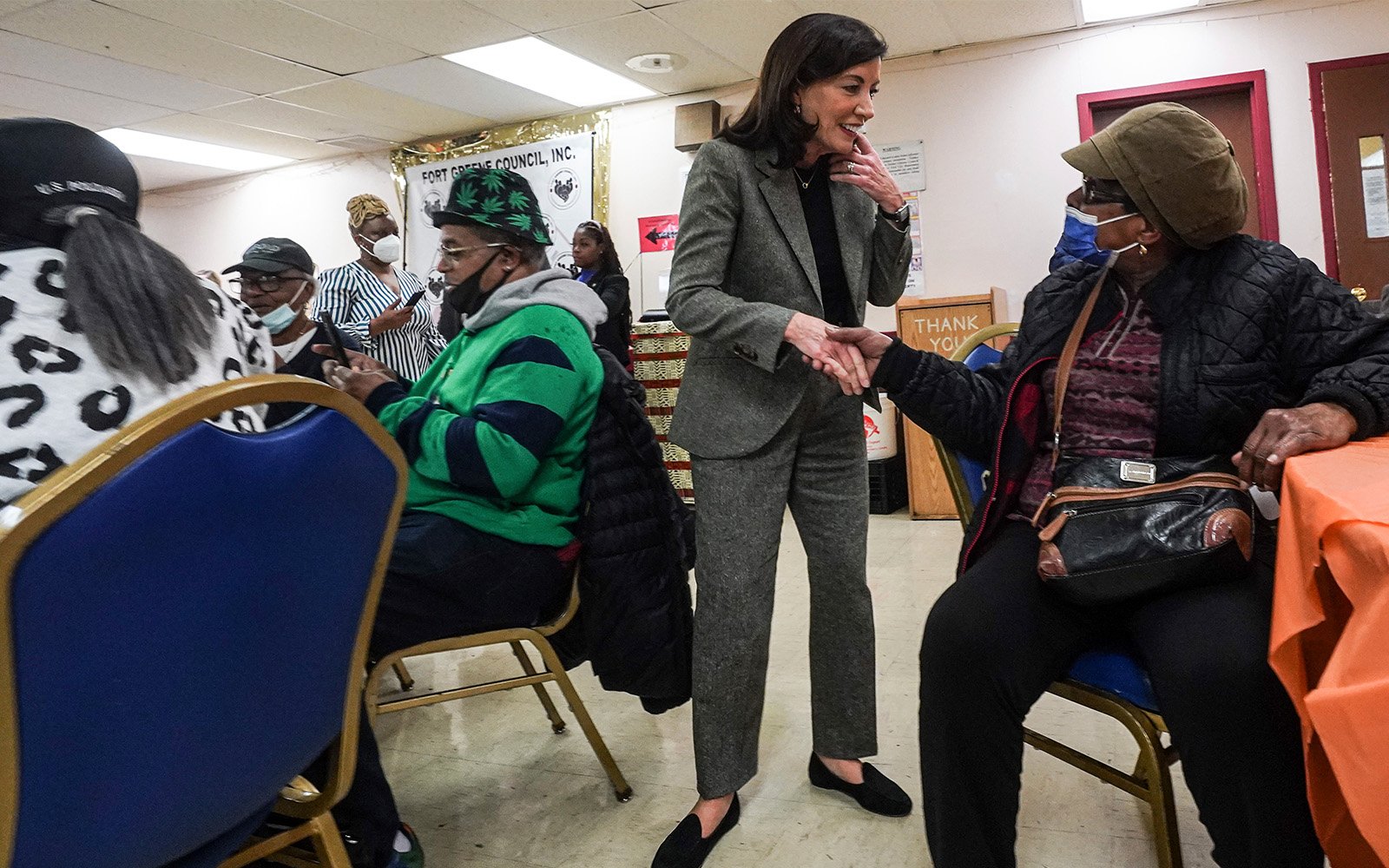
The Democrat has enlisted party stalwarts to boost her campaign in its closing weeks including US President Joe Biden, former president Bill Clinton, New York City Mayor Eric Adams and other popular city representatives. She appeared with Representative Alexandria Ocasio-Cortez and state Attorney General Letitia James in the city on Tuesday.
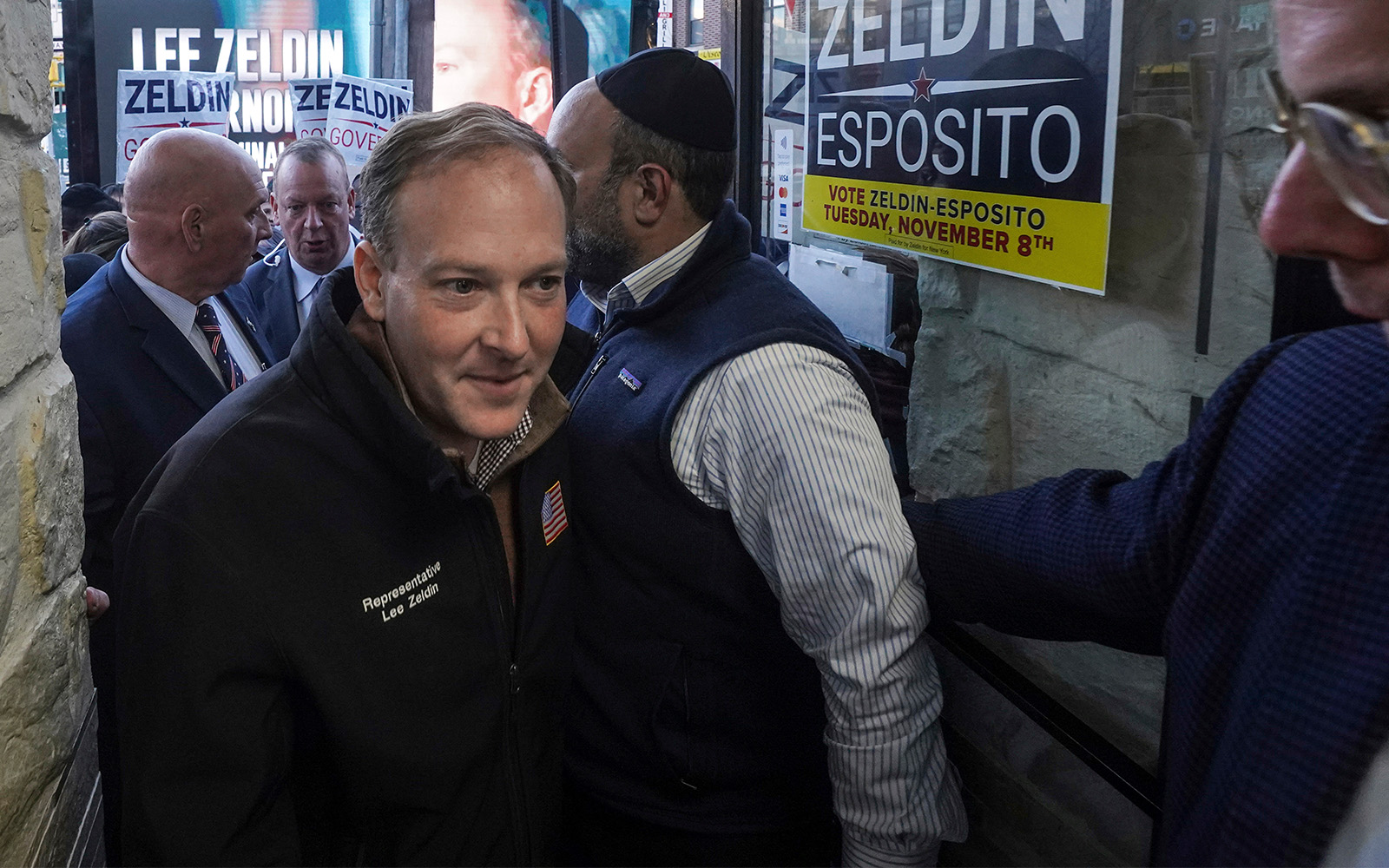
Zeldin’s campaign in the city has included enlisting support from Republican allies and outreach to minority communities including Haredi Jews and Asians.
Hochul is expected to handily win the overall vote in deep blue New York City but her margin of victory and turnout could determine the election. Republicans are reportedly aiming to win around 30% of the vote in the city, with a chunk of that support likely coming from conservative Jewish voters.
“This whole election could come down to turnout in Brooklyn,” Clinton told a Hochul rally on Sunday.
Zeldin’s anti-crime message has resonated with some Jewish communities, and he has hammered his opponents over a crackdown on yeshivas in the city, scoring big points with religious Jews and snagging a slew of endorsements from community leaders.
Long voting lines were reported in heavily Jewish areas of Brooklyn, including Boro Park, Crown Heights and Williamsburg; Jewish community leaders throughout the city implored constituents to get to the polls.
Zeldin signs peppered lawns in a Jewish area of Crown Heights, the home base of the Chabad-Lubavitch movement, and posters affixed to streetlights urged residents to “protect our children.”
“Even if you are a registered Democrat, you can vote for Republican candidates in this general election,” the signs said. “We cannot remain silent.”
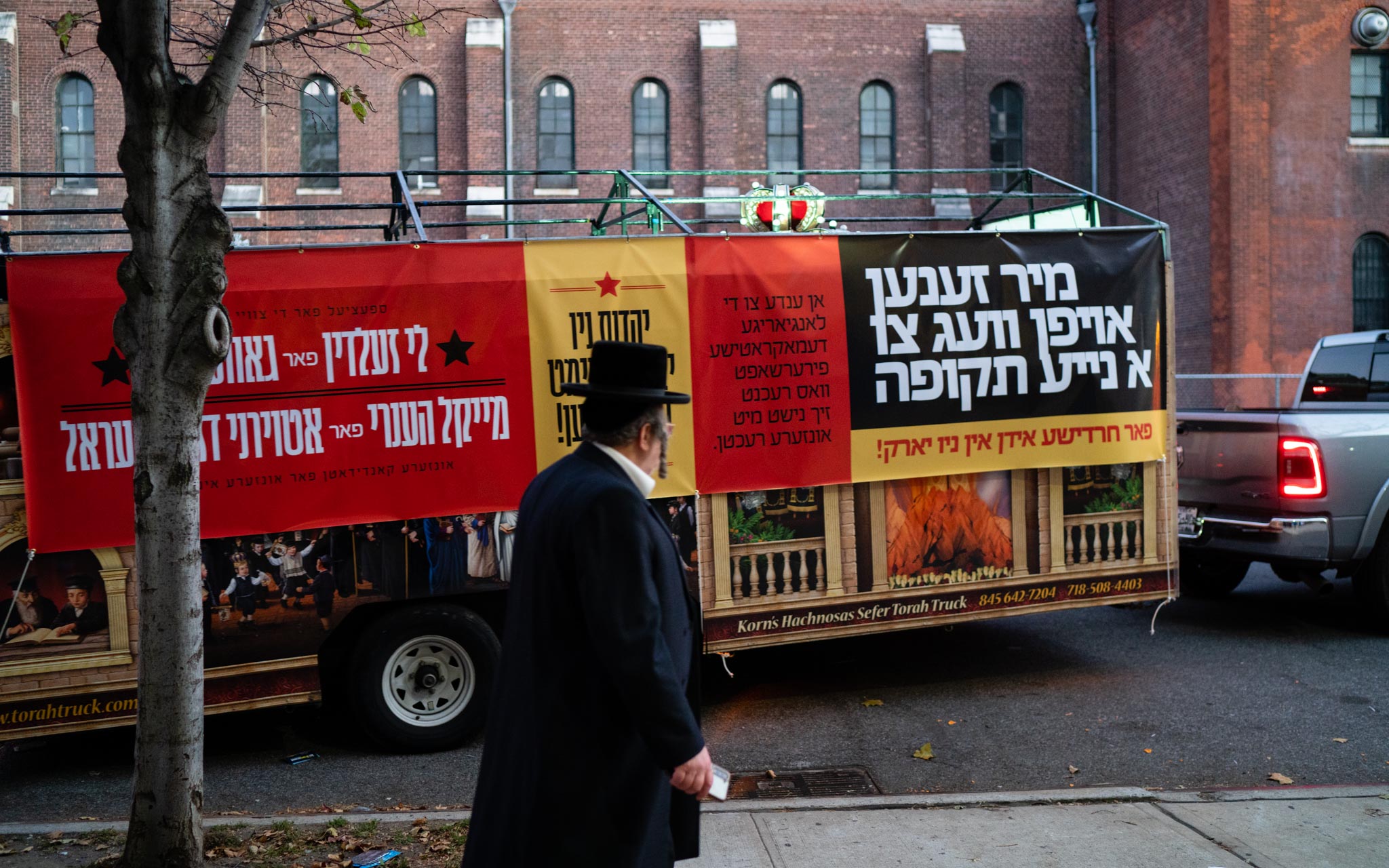
In a Haredi area of Brooklyn’s Williamsburg neighborhood, a grey pick up truck blared a pro-Republican recording and towed a trailer plastered with Yiddish Zeldin posters while it circled the area as crowds of children walked home from school.
“New York Jewry votes Republican,” the signs said.
A few blocks away, a truck draped with gold foil played Spanish-language music and displayed purple signs advertising for Hochul.
“Vote Hochul. Call your friends and neighbors,” the driver said through a speaker.
Several Haredi voters said most of the neighborhood was supporting Zeldin, but leaders of the Satmar movement have not officially endorsed the Republican.
One Satmar group based outside the city endorsed Hochul, and in Williamsburg, where the sect has a large presence, the leadership remained mum. Fliers and placards in the neighborhood conspicuously avoided endorsing anyone for governor, while urging residents to vote Democrat down the rest of the ticket.
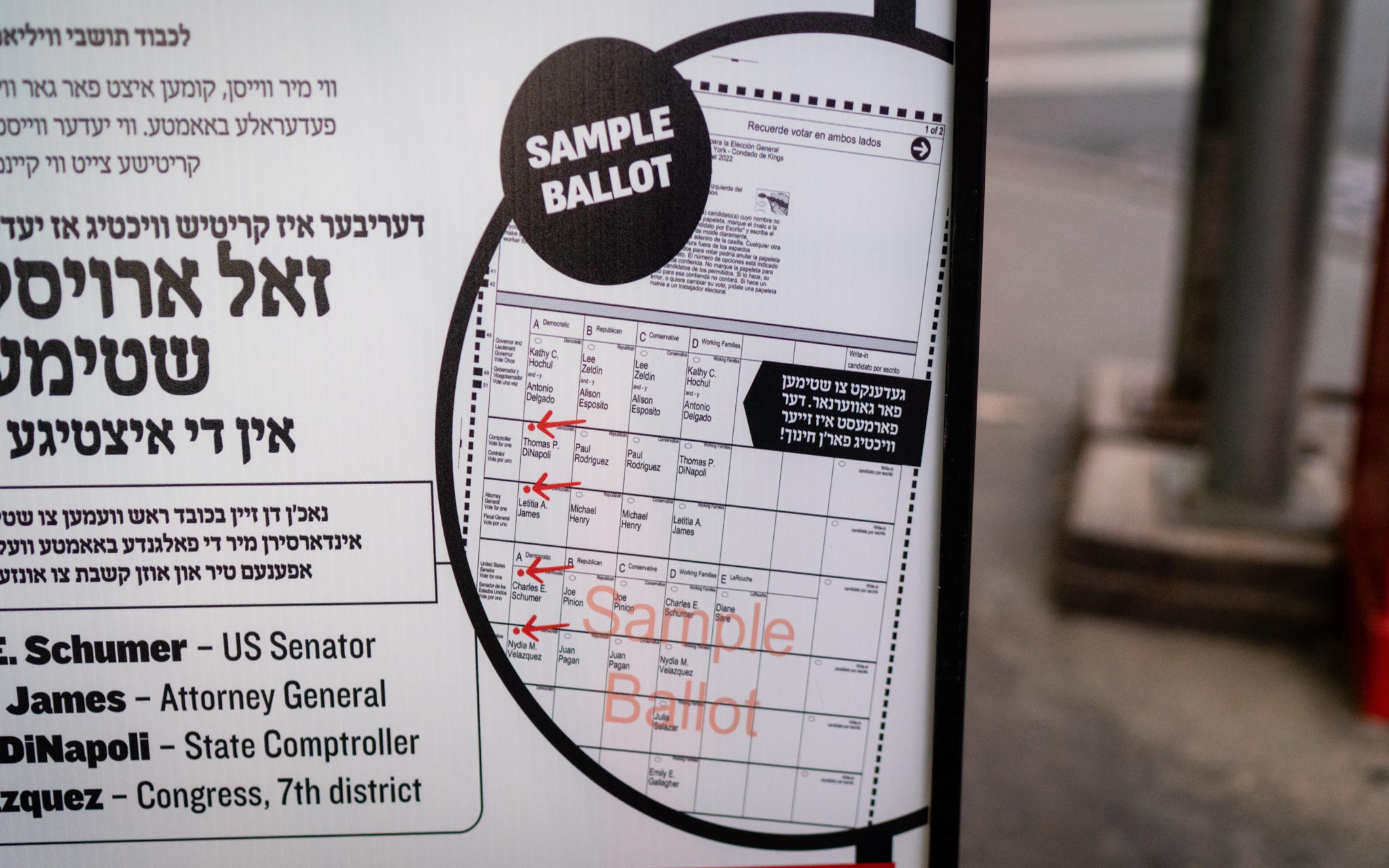
Posters around the neighborhood urged residents to “vote for education.”
One voter said he was a “strong supporter of Zeldin.”
“Most people are,” he said. “Our community is really fed about the Democrats’ liberal agenda.”
Some of the Haredi community remains bitter about synagogue and school closures under Democratic leadership during the early phase of the pandemic, restrictions that sparked riots in some Jewish areas of Brooklyn.
For both candidates, Jewish voters are only one part of a larger campaign strategy encompassing the state’s nearly 20 million residents. Non-Haredi Jews in New York, representing the vast majority of the Jewish population, are overwhelmingly Democrats, while the Haredi population only accounts for around one percent of the state’s population. The communities have long been players in New York City politics, though, with lawmakers courting community leaders for endorsements and leaders urging residents to vote for favored candidates.
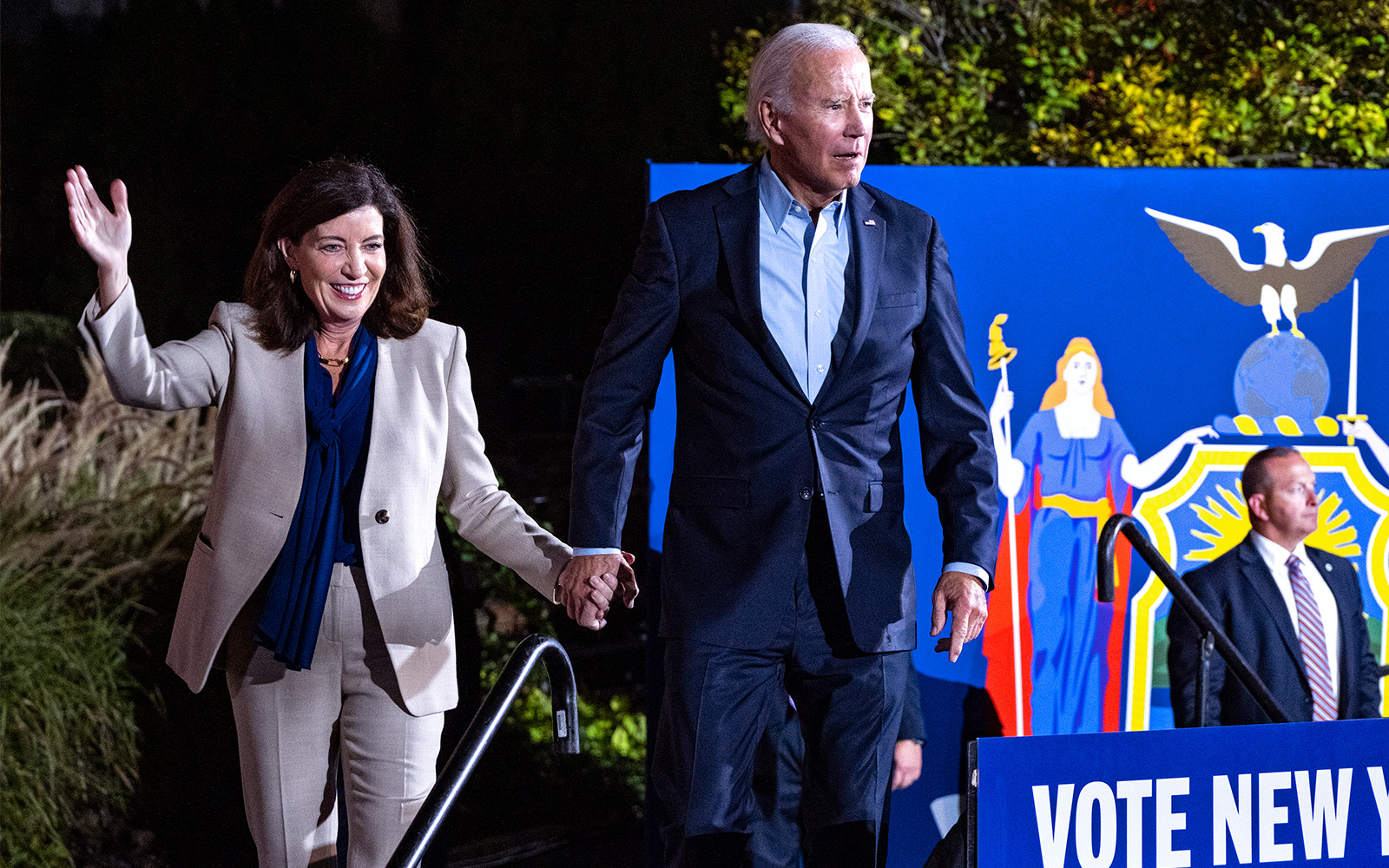
Hochul and other Democratic leaders including Adams and James have strong ties to Jewish communities. The governor has repeatedly spoken out against antisemitism and has provided support for Holocaust survivors and security funding, including $96 million for community organizations at risk of hate crimes announced on Monday. Jews are consistently the group most targeted in hate crimes in the city.
The education system is outside the purview of the governor, and she has sought to distance herself from the yeshiva issue, but her lack of support for the schools appears to have cost her with Haredi communities.
She has reached out to Haredi Jews during the campaign, including by visiting the gravesite of former Chabad-Lubavitch leader Menachem Mendel Schneerson last week, and sought support from community leaders in Rockland county outside the city as recently as Sunday, two sources said.
Hochul campaigned in the morning with the Jewish Manhattan borough president Mark Levine and held a rally on Saturday with US Senator Chuck Schumer, who cruised to reelection but may lose his post as majority leader if Republicans flip the upper chamber.
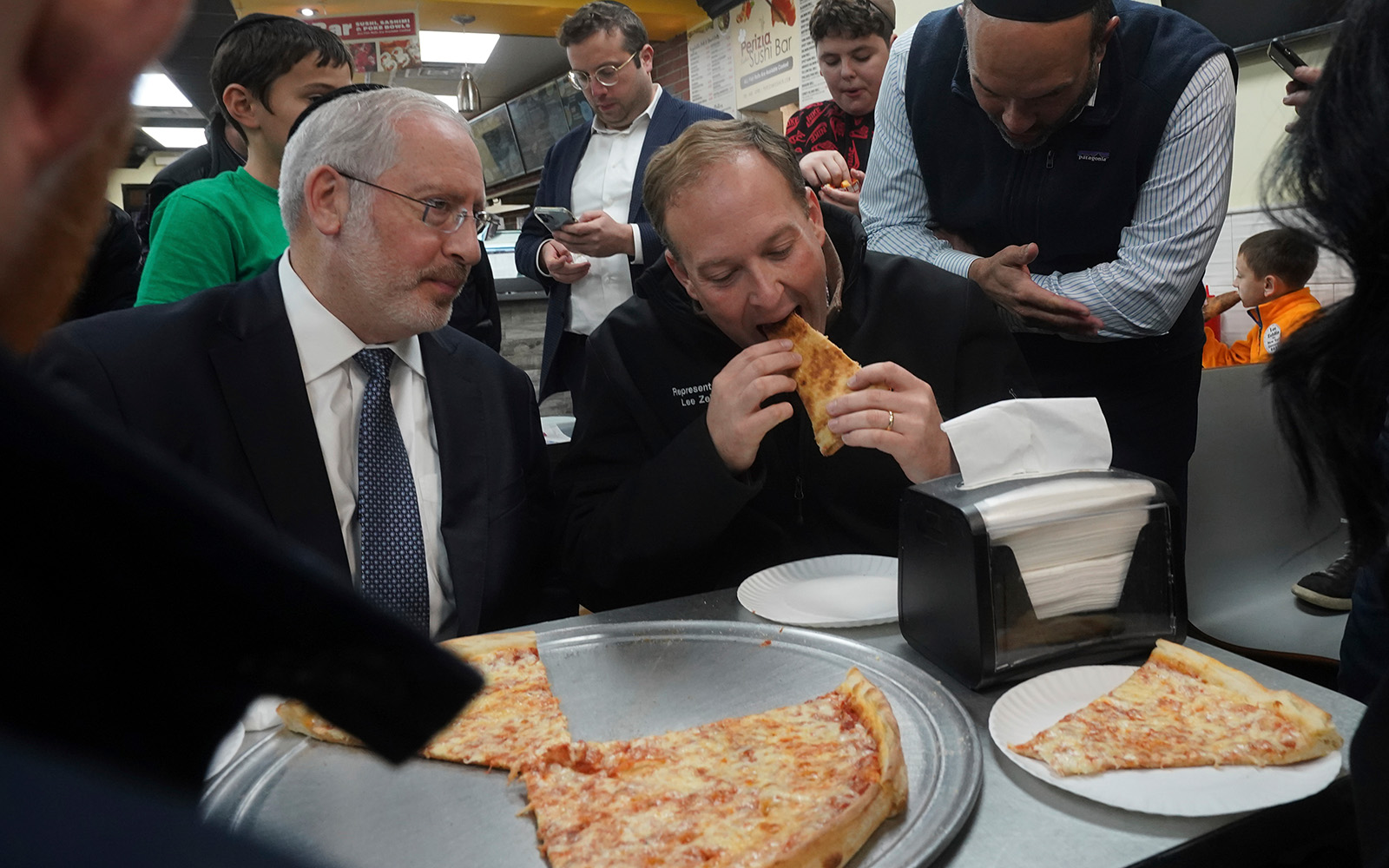
Zeldin on Tuesday drew crowds in Haredi areas of Brooklyn’s Flatbush and dined at a Kosher pizzeria with community leaders in Midwood. The candidate is Jewish, but not Orthodox, and has used his family background in his messaging. Both Zeldin and Hochul are firm supporters of Israel.
On Staten Island, Jewish Democrat Max Rose has been battling to regain his House seat from Republican Nicole Malliotakis, who dethroned Rose in 2020 to become the city’s only Republican in Congress. Rose’s campaign signs have been defaced with antisemitic graffiti several times during the campaign in the outlying, mostly Republican borough.
Republicans are expected to overturn Democratic control of the House, and possibly the Senate, which would allow them to snarl Biden’s agenda for the remaining two years of his term. Recent polls have put Malliotakis slightly ahead of Rose in the race.



The Times of Israel Community.