

NYC group provides a safe space to be Arab and gay
Coming from a world that rejects their sexuality, attendees at Tarab’s parties can celebrate their culture free from judgment
 Add ToI as a Preferred Source on Google
NEW YORK (AP) — With a loud hiccup and a hand over her mouth in coy embarrassment, Madame Tayoush mimics Lebanese diva Sabah in her performance of the sultry classic “Atshana” — or “I’m Thirsty” — as Arab Americans hoot and cheer. The burst of a trumpet vibrato sends her into a dramatic swoon, basking under applause and the warmth of stage lights.
The low neckline of her halter gown exposes a hairy chest.
Madame Tayoush is a man in drag, performing at a Tarab NYC event, at which lesbian, gay, bisexual and transgender Arab Americans can celebrate without judgment both their sexual orientation and Arab culture — a slice of society with customs that seldom allow for discussion of sex and gender.
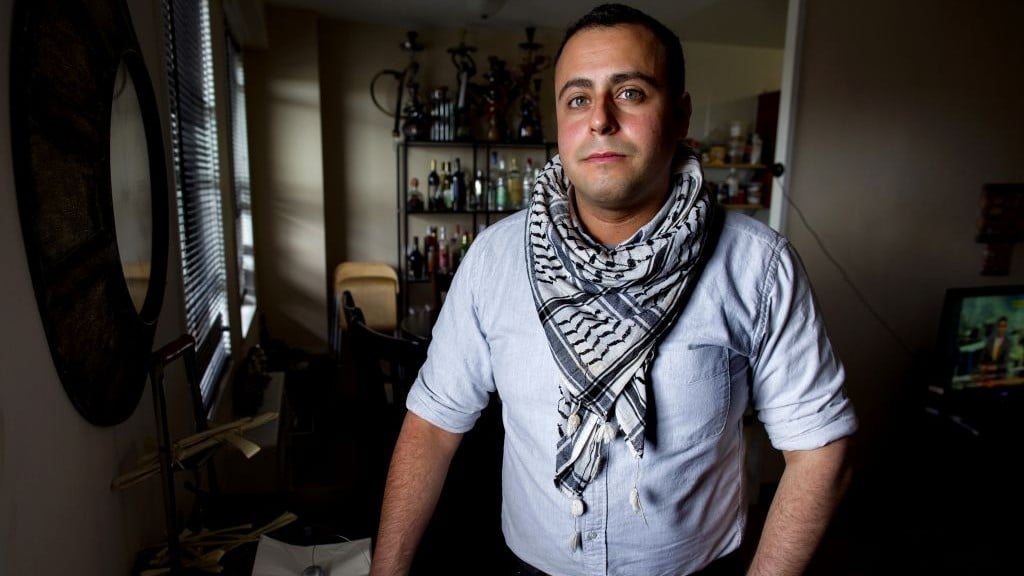
“I was craving community because there was this idea that I could only be one identity at a time,” said Tarab creator Bashar Makhay, who is Chaldean-Iraqi, American, Catholic and gay. He said he created Tarab — a series of parties, beach gatherings and other events for LGBT Arabs and Middle Easterners in New York City — because the community needed to be organized. The program will celebrate its second anniversary with an event Saturday.
Until Tarab came along, one of the few outlets for LGBT Middle Easterners in New York City was a monthly, more than 10-year-old party called Habibi. A handful of parties are also held in Arab-dense cities such as Los Angeles and Detroit, but Tarab is doing more than throwing a party — it is run by New York City’s LGBT Arab community and seeks to build a community outside of the nightclub scene.
It’s not clear how many LGBT Arab Americans there are. But among an estimated 3.5 million Arab Americans, they can find themselves isolated. Attendance at Tarab averages about 100 per event, Makhay said.
Adam Radwan, of Brooklyn, said people from Tarab helped him show his Egyptian father that a healthy gay Muslim community does exist.
“It piqued his interest,” Radwan said, that people could be gay and live a full life — that “there were others like me.”
His father, Abraham Radwan, originally from Port Said, Egypt, said that he believes sexuality is a private matter but that he is thankful for being in a country where people have the conversation.
“Here in America we have an open heart,” he said. “In Egypt we hide it; no one talks about it.”
Makhay said his struggle began when gossip reached his mother from the Chaldean community in his native Detroit. When he was 19, his mom gave him an ultimatum — “be straight or move out.” Makhay left home.
“I felt unsafe” because, he said, after Sept. 11 some Americans couldn’t separate Arab or Muslim from terrorist. “I was willing to give up parts of my identity to be in a safe space.”
To find acceptance in gay society, he stopped speaking Arabic. With light skin and green eyes, he could pass as white. The local gay center couldn’t address his cultural needs, and the Arab center couldn’t help on his sexuality. But soon, he discovered he didn’t want to talk to a counselor — he just wanted someone who understood him.
Makhay, who is trained in nonprofit management, eventually moved to New York City and in 2012 created Tarab, named for a type of soulful Arabic music.
“I can say ‘inshallah’ (God willing) and it’s not like a big deal,” said Hilal Khalil, who is Lebanese, Muslim, American, gay and serves hookah at Tarab. “I don’t have to go into a huge conversation about how it’s OK to be gay and Muslim at the same time.”
Tarab isn’t for everyone. Some US Arabs don’t see a problem with living a double life, said Amireh Kharchala, who attended Tarab with her girlfriend.
She told about a female friend who married a man while still in a long-term same-sex relationship. The woman cares for her husband as a companion and as the father of her 1-year-old son, Kharchala said.
“They see America has a desire to have this narrative that if you’re in the closet, you feel conflicted,” she said. But “she’s fine with it.”
Copyright 2014 The Associated Press.

The Times of Israel Community.