

Ousted chair of Knesset defense panel: Government pushing ‘exact opposite’ of a conscription law
Likud MK Yuli Edelstein, who backed stricter measure, says critics inside coalition of bill exempting yeshiva students from IDF service will face ‘threats’ ahead of vote on legislation

 Add ToI as a Preferred Source on Google
Sam Sokol is a former political correspondent at The Times of Israel. He was previously a reporter for the Jerusalem Post, Jewish Telegraphic Agency and Haaretz. He is the author of "Putin’s Hybrid War and the Jews"
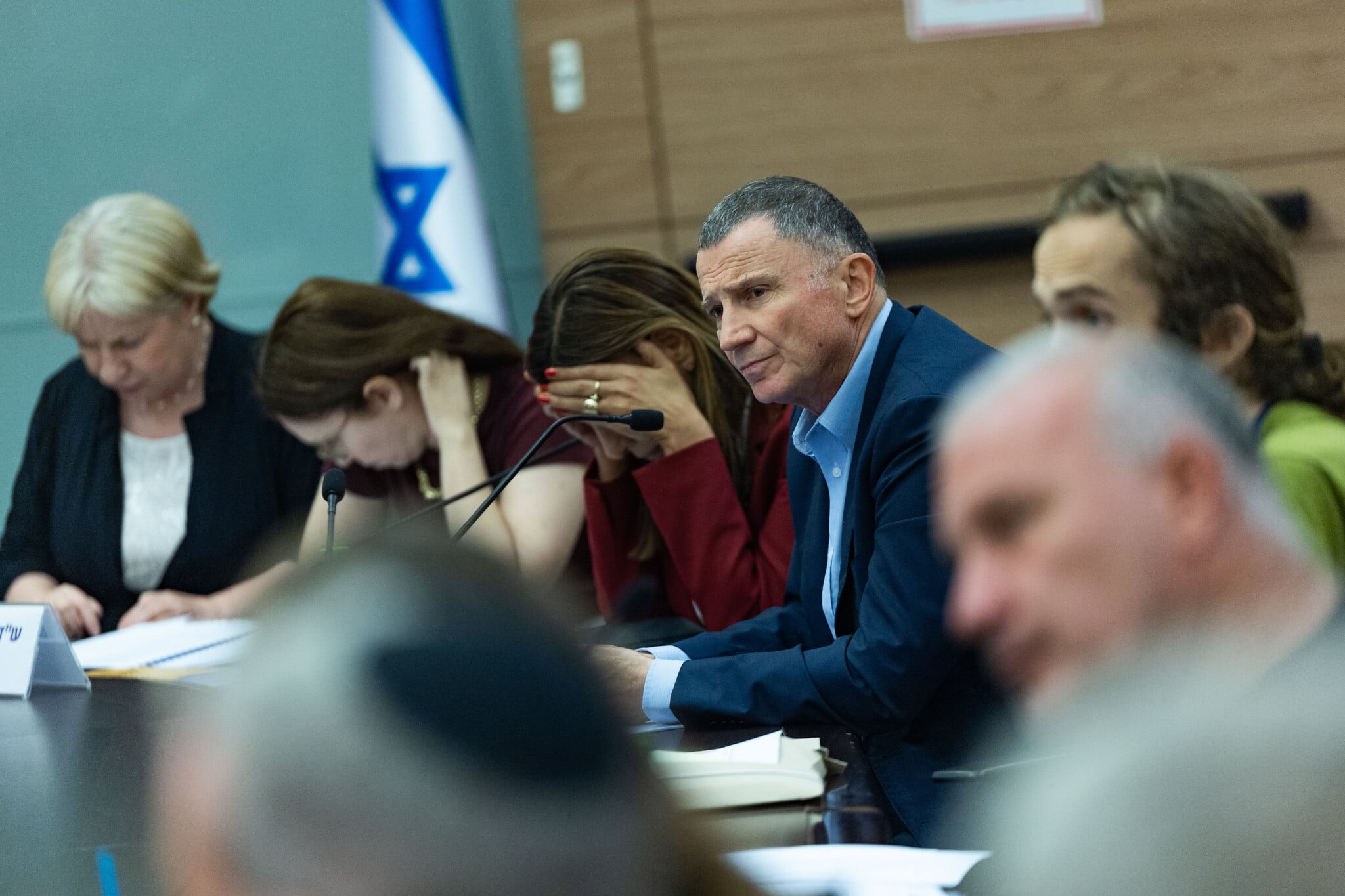
The government’s bill regulating ultra-Orthodox conscription is the “exact opposite” of the legislation he proposed on the issue, Likud lawmaker Yuli Edelstein said this week, shortly before the revised version of the bill was presented to lawmakers.
Edelstein spoke with The Times of Israel on Tuesday in his parliamentary office. He predicted that the bill, which was drafted by fellow Likud MK Boaz Bismuth, would be struck down by the High Court of Justice even if it were passed.
Edelstein was ousted as chair of the Knesset Foreign Affairs and Defense Committee in July after drafting a stricter Haredi conscription bill that angered Prime Minister Benjamin Netanyahu’s ultra-Orthodox coalition partners.
He was replaced with Bismuth, whose bill, presented Thursday, weakened proposed sanctions and continues to exempt yeshiva students from the draft. Edelstein had harsh words for his successor’s legislation.
“The bill is so terrible that it will be difficult for members of the coalition to really explain to themselves and to Likud voters how come they support it,” Edelstein said in the interview, adding that “what we are witnessing right now and what the coalition is trying to push through is the exact opposite” of the conscription bill he tried to pass.
But he warned that Netanyahu’s coalition is set to exert significant pressure on the few lawmakers from its own ranks who are “strongly opposed” to the controversial legislation.
“No one can tell what will happen when push comes to shove, how people will vote, because I know what pressure they will be under,” Edelstein said. “There will be pressure, there will be promises, there will be threats, there will be career opportunities.”

Some 80,000 ultra-Orthodox men aged between 18 and 24 are currently believed to be eligible for military service, but have not enlisted. The Israel Defense Forces has said it urgently needs 12,000 recruits due to the strain on standing and reserve forces caused by the war against Hamas in Gaza and other military challenges.
The issue has roiled Netanyahu’s coalition like few others, as ultra-Orthodox leaders have fought to preserve the sweeping exemptions from IDF service the community has enjoyed for decades. After the High Court ruled last year that the blanket exemptions were illegal, Haredi leadership pushed Edelstein hard to compose a law keeping its constituency out of the IDF.
Despite pressure from Prime Minister Benjamin Netanyahu, Edelstein held up the legislation in committee, arguing that he would “only produce a real conscription law that will significantly increase the IDF’s conscription base.”
That led to his ouster after the ultra-Orthodox Shas and United Torah Judaism parties quit the government over Edelstein’s own proposed enlistment bill, which levied harsh sanctions on draft evaders. He was later removed from the committee entirely.

After taking over the committee, Bismuth largely threw out Edelstein’s version of the bill and started over, indicating that his revised legislation would continue to exempt full-time yeshiva students from IDF service for the foreseeable future, and would gradually draft only half of the eligible members of the community not engaged in full-time Talmud study over the next five years.
The legislation’s progress was marked by repeated delays caused by ultra-Orthodox intransigence and internal opposition to the bill within the coalition.
But with the UTJ’s Degel HaTorah faction recently announcing that it supports the bill, Bismuth on Thursday evening finally revealed his revised version of the legislation. He announced a series of upcoming committee discussions — marking a renewed push to get the law over the finish line and bring the Haredi parties back into the government.
Edelstein was highly critical of Bismuth’s proposal, calling it a “political band-aid” that “does not answer the IDF’s needs” in a statement on Thursday.
“It’s a legislation that basically pretends to be about the draft,” he told The Times of Israel days earlier. “But as you hear the Knesset members saying themselves, this is not draft legislation. This is the legislation for [preserving the] status of the Yeshiva boys,” he said.

Even if Bismuth’s bill is passed, he said, it faces slim chances at the High Court. That’s because, Edelstein said, it lacks support from the legal advisers for the Knesset or the Foreign Affairs and Defense Committee.
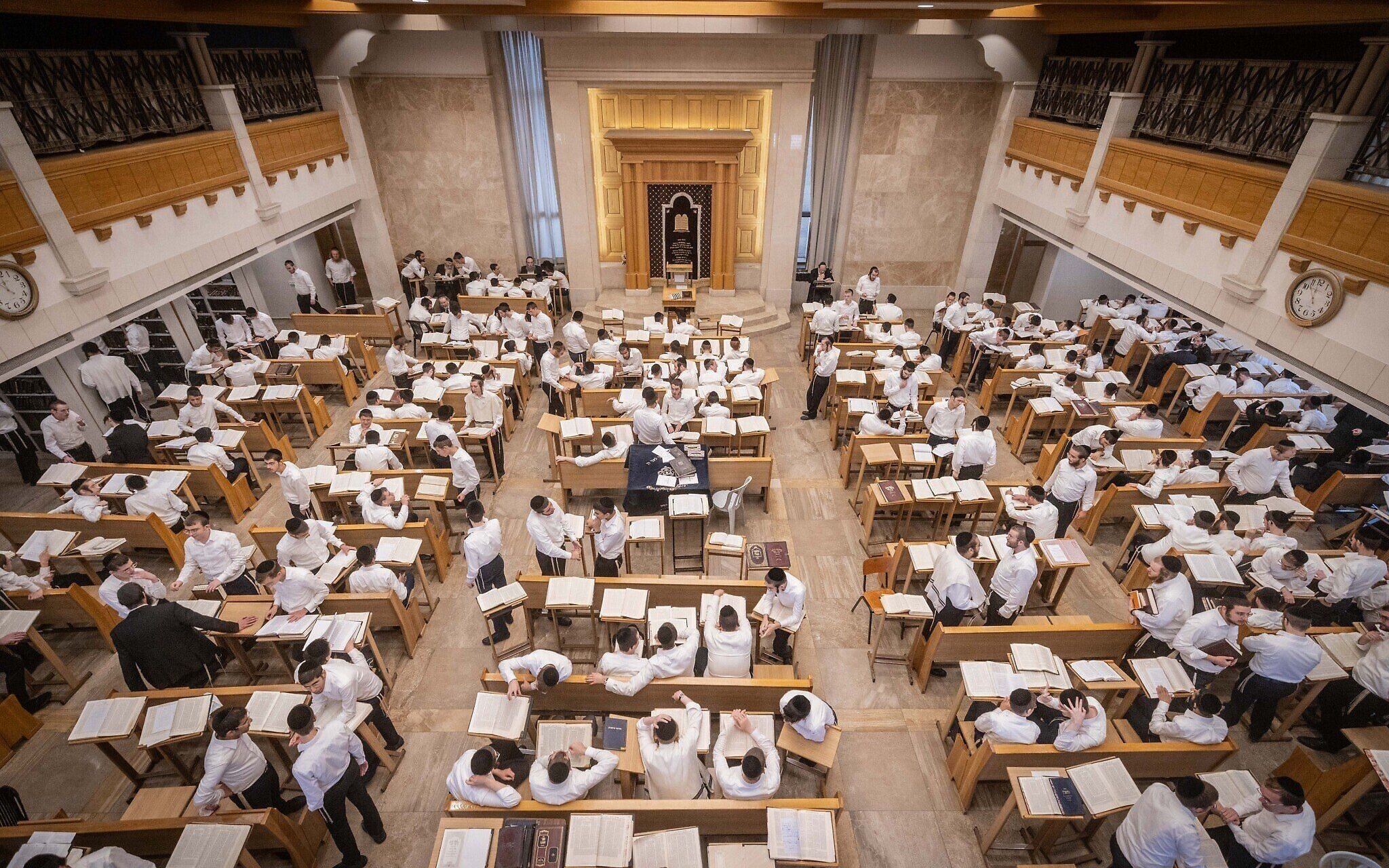
Ahead of their exit from the government this summer, both Shas and UTJ publicly sparred with Edelstein, accusing him of walking back promises he had made as part of a last-minute compromise reached in an effort to prevent the Haredi parties from toppling the government ahead of the war with Iran.
However, Edelstein pushed back on this narrative, telling The Times of Israel that while he was willing to bend on certain issues because he had been briefed about the pending attack, the ultra-Orthodox leaders misrepresented the extent of the agreement that had been reached.
(Shas leader Aryeh Deri and Degel HaTorah chief Moshe Gafni were also informed of the attack before it was carried out.)
Edelstein said that during the eleventh-hour negotiations prior to the 12-day Iran war, the Haredi representatives “just wanted to squeeze more and more and more.” Even though he knew that there was a limit to what he could compromise on, he said, the “number one priority was not to undermine the attack” by threatening the dissolution of the Knesset.
After a long night of tense talks, an agreement was reached on “maybe five central issues” but “never about the whole legislation,” Edelstein said, dismissing claims that there was an agreed-upon version of the bill.
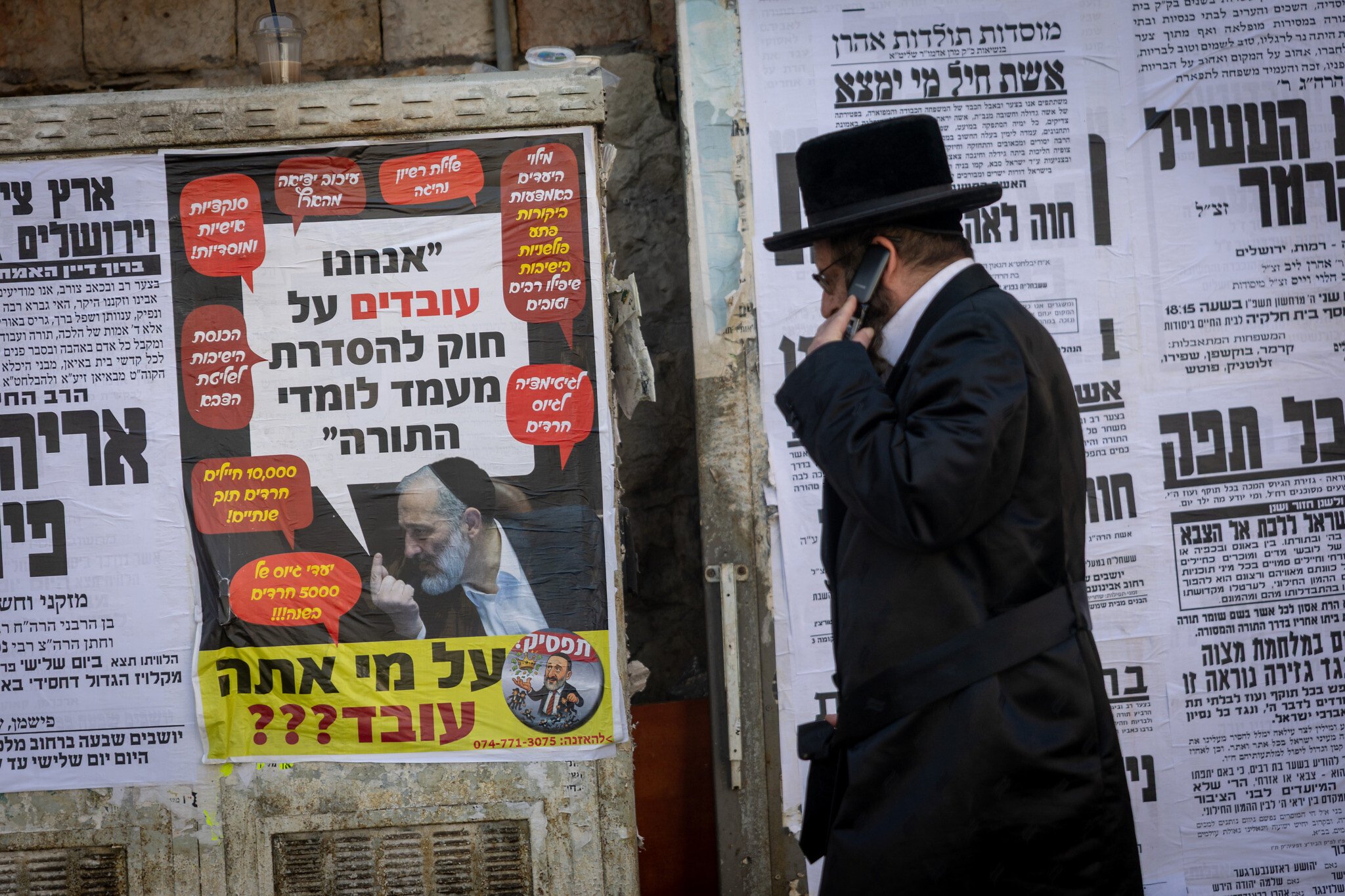
Once he presented his revised bill, “everything blew up,” and “I think that there was general understanding that removing me could buy some time” to salvage the legislation.










The Times of Israel Community.