

Pfinally some (almost) good news: What the press is saying on November 10
Results from Pfizer’s vaccine study give Israelis hope, but it’s tempered by the fact that the results are preliminary, and that Israel is not signed up to get any of the doses
 Add ToI as a Preferred Source on Google
Joshua Davidovich is The Times of Israel's Deputy Editor
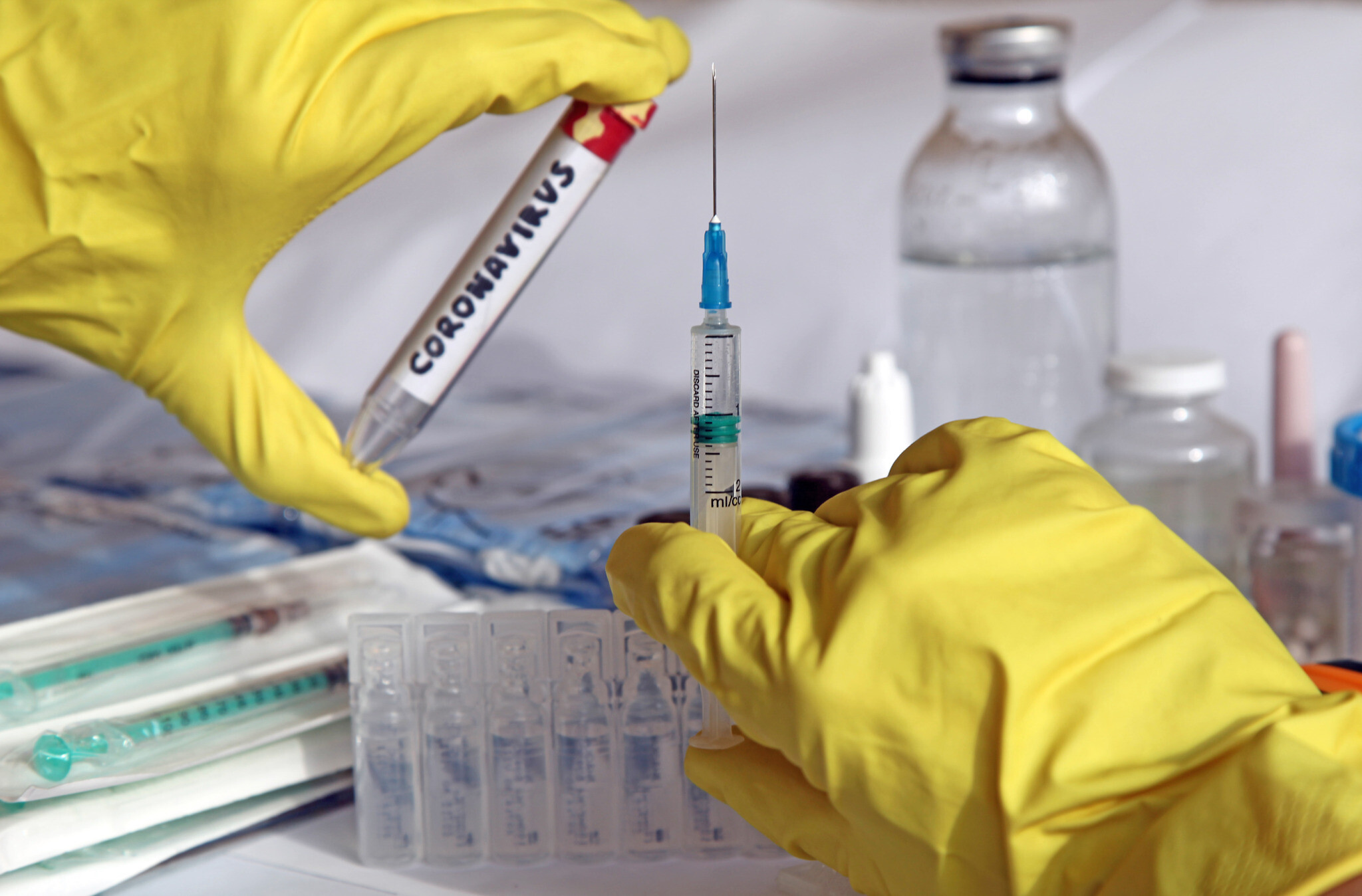
1. A shot in the arm: Like much of the rest of the world, promising early results from a study of Pfizer’s coronavirus vaccine have sparked hope and headlines in Israel’s press.
- “World hope,” reads the front page headline in Yedioth Ahronoth.
- The paper notes a statement from Prime Minister Benjamin Netanyahu in which he said he is working to bring the vaccine over. According to the paper, the Health Ministry plans on pushing for a law that would require all citizens to be vaccinated, though it will face an uphill battle.
- “In general, Israel has held back until now from requiring vaccination by law,” Adi Niv-Yaguda, a doctor and lawyer, tells the paper. “Israel has a very high response to vaccinations as it is, on a voluntary basis.”
- Haaretz’s top headline predicts that the results may be enough to allow “an exit strategy,” noting that Pfizer is the first but there are many more vaccine candidates also in the pipeline, including one being tested now in Israel.
- “The light at the end of the tunnel resides in these big firms and in the research institutes.”
- Nathan Jeffay for ToI reports that the Pfizer vaccine, like many others around the world, including the one in Israel, targets the spike protein, which is good news for everybody.
- “This gives cause for optimism regarding the Israeli vaccine,” says Ran Taube, a virologist from Ben-Gurion University of the Negev. “It gives some indication this is the right approach.”
- Bar-Ilan University immunologist Cyrille Cohen, a member of a Health Ministry advisory committee that deals with coronavirus vaccines, adds that “it’s a vote of confidence for Israel’s vaccine. And also, it’s good news as Moderna’s vaccine, which Israel is well placed to receive and which is also in the midst of testing, targets the same protein.”
- Israel Hayom excitedly crows that the news from the pharma firm “is what the world has been waiting for,” and credits it with “bringing a smile to billions of faces.”
- “This is an especially happy day, but it’s just a press statement,” Dr. Daniel Shepshalovitch tells the paper. “We need to wait for the full scientific results. What we have now is not scientific research. Pfizer ran to tell everyone about its success, and that’s totally understandable, but the vaccine is still not complete.”
2. Sorry to burst your bubbly: There’s plenty of more caution where that came from. Almost all of Yedioth’s coverage is couched in what it terms “cautious optimism” and then some.
- “According to the experiment, it seems the vaccine does protect, but it’s important to note that this is very preliminary,” Dr. Lior Nesher tells the paper. “When you take 44,000 people and just 94 are infected, you don’t know how many were exposed. So the link with the vaccine may be weak. I suggest we not open the champagne yet.”
- Cyrille Cohen has a similar message for Army Radio: “We can be happy but let’s keep the cautious optimism. Keep the champagne in the fridge for now. We still don’t know anything.”
- Yedioth columnist Nadav Eyal goes as far as to call Pfizer’s announcement dangerous. “This feeling that the end is near will untie the shackles, cause complacency and likely lead to people falling victim. The virus will not be forgiving of this end-of-course atmosphere,” he writes, referring to army slang regarding the lack of discipline that sets in as the end of a training course nears.
- “Pfizer says it’s just a matter of time, another two weeks, a month. It’s not so simple. First. They have not proven its effectiveness with kids, or with the elderly, high risk,” Kan’s Moav Vardi notes. “It’s a long way until we know that this is actually an effective vaccine.”
- Israel Hayom connects worries over the vaccine to worries over a supposed outbreak linked to minks. While the fact that minks can get and pass the virus is not new, Denmark has raised concerns that the mink mutation could reduce the effectiveness of a vaccine.
- Writing in the paper, Prof. Nadav Davidovitch says that “in my view, the link is much deeper and has to do with issues of economics, priorities, and sustainability.”
- “The culling of minks in Denmark demands that we rethink sustainability and the ties between humans and animals. The painful mass destruction of the minks demonstrates the problematic nature of the fur industry. Animals being kept in crowded, filthy conditions is fertile ground for outbreaks of disease such as the bird flu. In effect, COVID reached us because of contact between animals and humans. If we do not make far-reaching changes to the food industry and our relationship with animals, it’s only a question of time before we see different mutations that will cause the virus to spread,” he writes.
- The Marker brings up another problem, the fact that the vaccines need to be kept chilled (like the champagne) at 70 C below zero. “Thawing it could ruin it,” it reports, noting that Moderna’s vaccine only needs to be kept at 20 below.
- “The problem with the Pfizer vaccine occurs already at distribution. The doses need to be kept at -70 C. Most vaccines are kept in regular freezers nowadays. This will create complications in both giving it out and in obtaining suitable freezers.”
3. Frozen out: Luckily(?) for Israel, it has time to figure it out. Several news sites note that of all the companies Israel’s government has made vaccine distribution deals with, Pfizer is not one of them.
- Army Radio reports, oxymoronically, that “according to diplomatic sources, Israel will be among the first to receive the vaccine. That being said, the list is quite long.”
- In fact, it does not seem Israel is on the list at all. Kan reports that discussions have been ongoing with Pfizer for months, but they have only been assigned to “relatively junior staff,” meaning it was low on the priority list for Israel.
- “Now there’s a fear that due to the early results, Israel could fall further down the list of those getting the vaccine. In the health system there was criticism over the fact that the Health Ministry director did not give the matter enough weight, and instead devoted most of his attention to dealing with lockdown restrictions.”
- That director, Chezy Levy, denies any wrongdoing, telling the station: “Never happened. We’ve been working on vaccines for months at the level of director, minister and even higher. We already have deal with a few companies and have agreed on not a small amount of money to not be last in line.”
- Haaretz reports that Israel has pumped NIS 405 million into two firms it has deals with: Moderna, which happens to have an Israeli chief scientist, and Arcturus, which is quite early in testing.
- But the paper notes that Israel is not looking for a lot from Pfizer, which may help in its favor: “Although the demand for COVID-19 vaccines will be enormous, and many countries have already signed agreements with vaccine developers, Pfizer Inc. has vast manufacturing capabilities, and Israel needs only a relatively small quantity of the vaccine. Israel wants to vaccinate 2 million to 4 million people, including health system employees and at-risk groups. It is possible that Pfizer is capable of supplying Israel with such a small quantity of vaccinations – even at a relatively early date – though this may only arrive in the country late 2021.”
4. An open-shut country: In the meantime, Israel is lurching in and out of lockdown town, opening stores and threatening to close them back up.
- Yedioth reports that ministers are expected to vote against the planned opening of malls and shopping centers due to the fact that infection rates have stopped falling. Instead, according to the paper, ministers are looking at putting more cities under localized lockdowns, and imposing curfews or weekend-only lockdowns.
- ToI sister site Zman Yisrael looks at the confusion over the fact that street stores are allowed to open, but a similar store in an outdoor shopping center is not. Some are taking matters into their own hands.
- “As we see it, there’s no difference between a store on the street and one in an open shopping center, and this morning we opened our stores in most shopping centers, wherever there were not reports of special problems with cops and inspectors,” the head of the Scoop shoe chain tells Zman. “We haven’t gotten any fines yet. Most cops don’t understand the difference themselves, so they are not enforcing it. They also don’t really want to enforce it and cause harm to stores and peoples’ livelihoods.”
- Want some more confusion? Channel 12 news reports that the Health Ministry may change its traffic light plan, doing away with ratings for individual cities and instead breaking the country into 13 cantons, which will then be broken up into quarters of 50,000 people each. Cities with more than 200,000 will be broken into quarters of 30,000 to 50,000 people.
- “Within certain quarters, they will be able to impose ‘exceptions’ for commercial or other purposes, with no regard for the infection level of the larger ‘commuter zone’ it is inside of,” the channel reports. Infection rates and other data will also begin to be reported by zone and not city, according to the report.
- Kan reports that a study of sewage in certain cities shows higher infection rates than has been reported. Among the offenders: Netanya, Elad and our old friend Bnei Brak.
- “According to sources knowledgeable about the research, the results show hidden infections among those who have not been tested, or a future outbreak. For comparison, in Pardesiya, the sewage is almost totally clean of the virus, which is in line with the green status of the town.”
5. Still cloudy in Eilat: Also having to swim through crap, according to the press, is Eilat, which thought it was on its way to becoming a tourist island free of coronavirus exemptions, until the plan was pulled from a Knesset vote by Health Minister Yuli Edelstein at the last moment.
- Channel 12 news reports that the problem came when Knesset members tried to go beyond the contours of the plan, which was tailored for Eilat and the Dead Sea.
- “This is a great example of how populism can kill a good initiative,” Edelstein tells the channel. “Eilat is collapsing. Everything is built around tourism. We came with a proposal, but the second it went to the Knesset, it got filled with other areas, things unconnected to tourism, everyone is an expert.”
- Walla reports on numbers showing the depth of the economic morass in Eilat in particular.
- “The Employment Service emphasizes that though the economy has gradually returned, during October Eilat remained the only city of at least 50,000 residents with unemployment above 40%,” it reports.
- “This is a very sad day for Israel,” the head of the Fatal hotel chain tells Yedioth. “This is irresponsible behavior that has created a dismal outcome for the residents of an entire city who are being held hostage and all due to ego.”
- ToI’s Shoshanna Solomon writes that for those out of work, Israel’s plan to pay for laid-off employees, taking the burden off the employers, may be too sweet a deal and hurt hiring. That’s made even worse by the fact that there’s no part-time option.
- “Part of the concern with the binary option we have in Israel is that employers have a strong incentive to put workers on furlough, amid the high economic uncertainty. And once they have furloughed a worker, and that worker hasn’t been coming to the office for 3-6 months, it is easier psychologically to let them go,” says Prof. Yotam Margalit. “It becomes both logistically and psychologically easier, because as time goes by the employer becomes more accustomed to managing without that worker. You come up with solutions for that missing worker, and that sort of sets the stage for companies then to manage without them.”
- It’s not all bad for hotels, though. Now that they are closed again, some are using the opportunity to build out, or at least not abandon their existing expansion plans, Haaretz reports.
- “The coronavirus has been a roller-coaster ride for the Israeli tourism industry,” writes Haaretz’s Hadar Kane, noting that hotels first suffered, then got a boost when they could reopen but Israelis could not go abroad.
- “It’s simply impossible to stop. The cost of doing so is higher than the gain,” says Danny Lipman, whose Atlas chain is developing two new properties. “What we did stop is investing in renovations of existing hotels. Can you say I’m optimistic? No. I have no expectations for 2021. It will be a bad year and I think it will stay that way for several years afterward.”









The Times of Israel Community.