

PM promises inquiry into Ethiopian claims of police excesses
In first meeting of committee on integrating Ethiopian Israelis, Netanyahu calls for ‘rapid work’ on issues once they’re verified
 Add ToI as a Preferred Source on Google
Judah Ari Gross is The Times of Israel's religions and Diaspora affairs correspondent.
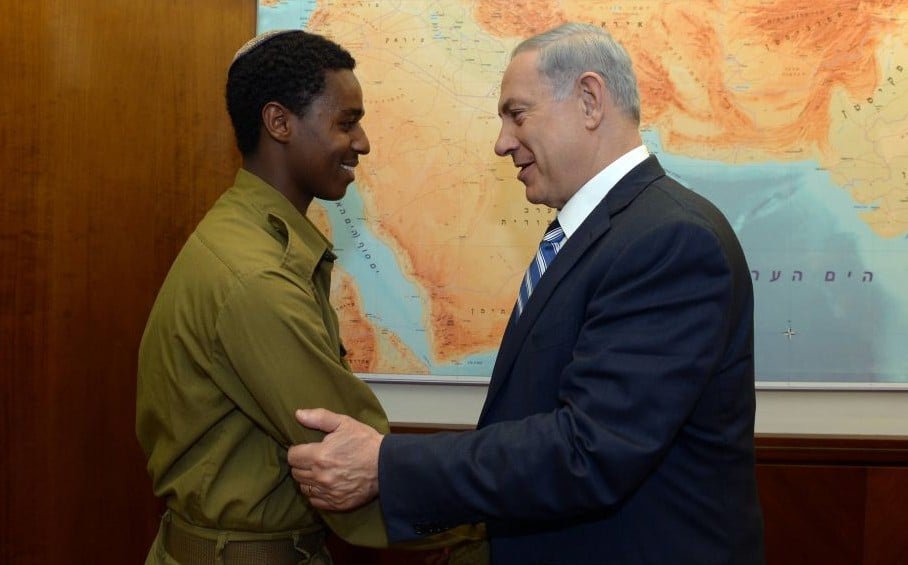
Prime Minister Benjamin Netanyahu officially launched the ministerial committee for the integration of Israelis of Ethiopian descent Tuesday, promising quick action and an inquiry into the community’s claims of “excessive enforcement” by the police.
Netanyahu’s committee was set up in response to protests across the country by citizens of Ethiopian descent against discrimination and racism that they claim has been going on since their arrival in Israel. The sometimes violent protests were sparked by a video released in April showing two police officers beating an Ethiopian soldier.
“There are claims of discrimination by law enforcement authorities,” Netanyahu said at the start of the meeting. These claims need to be addressed, but first they need to be verified, he said.
“The law is the law,” the prime minister said. “Enforcement is — of course — enforcement, but there is a question if there are any steps we can take to correct excessive enforcement, if this indeed exists.”
Many members of the Ethiopian community have said in recent weeks that police in many cities single them out for scrutiny and conduct unwarranted searches on their person and property.
Once the committee determines if there is a problem with “discrimination by law enforcement,” Netanyahu said, “to the extent that corrections are necessary, we will indeed make them.”
Netanyahu’s reserved statement was seen as backpedaling somewhat on his more forceful and direct comments from a month ago.
“The police will do what must be done to fix itself,” the prime minister said on May 4. “We must also fix Israeli society because we love you. We love the Ethiopian community, and all Israelis are in this together.”
The committee comprises government ministers, including Absorption Minister Ze’ev Elkin and Interior Security Minister Gilad Erdan, various members of the Knesset and representatives of relevant government agencies.
Netanyahu told the committee at the meeting’s start that he expected quick, decisive action.
“I want rapid work,” he said in a statement. “I do not want things to drag out. I want us to hold discussions, to decide and to proceed.”
The ministerial committee is meant to discuss problems the Ethiopian-Israeli community faces in education, housing, employment, state funding for culture and religious rights for the Ethiopian Jewish community’s distinctive tradition.
During Tuesday’s two-hour inaugural committee meeting, Israel Police’s human resource head Gila Gaziel briefed attendees on the efforts the police have undertaken on the issue since it hit national headlines last month.
“In our next meeting we will monitor the implementation of the points raised during the meeting,” Netanyahu said, “and we will discuss problems related to education.”







The Times of Israel Community.