

Rachel Azaria eyes national stage for family-friendly reforms
Jerusalem deputy mayor’s run for Knesset is next step in promoting what she calls today’s Zionism: ‘making sure that living in Israel is possible’
 Add ToI as a Preferred Source on Google
Renee Ghert-Zand is the health reporter and a feature writer for The Times of Israel.
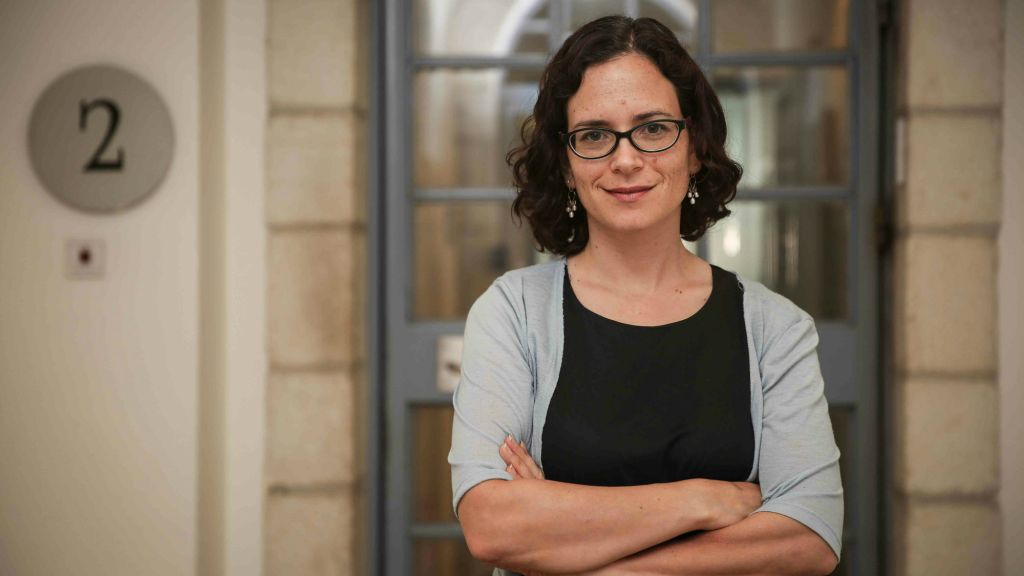
Six and a half years after entering municipal government, Jerusalem Deputy Mayor Rachel Azaria is ready to exchange her city council seat for one in the Knesset. Recognized throughout Israel and beyond for protecting women’s rights and reducing the financial strain on young families in the capital, Azaria believes it is time for her to advance her socioeconomic agenda on the national level.
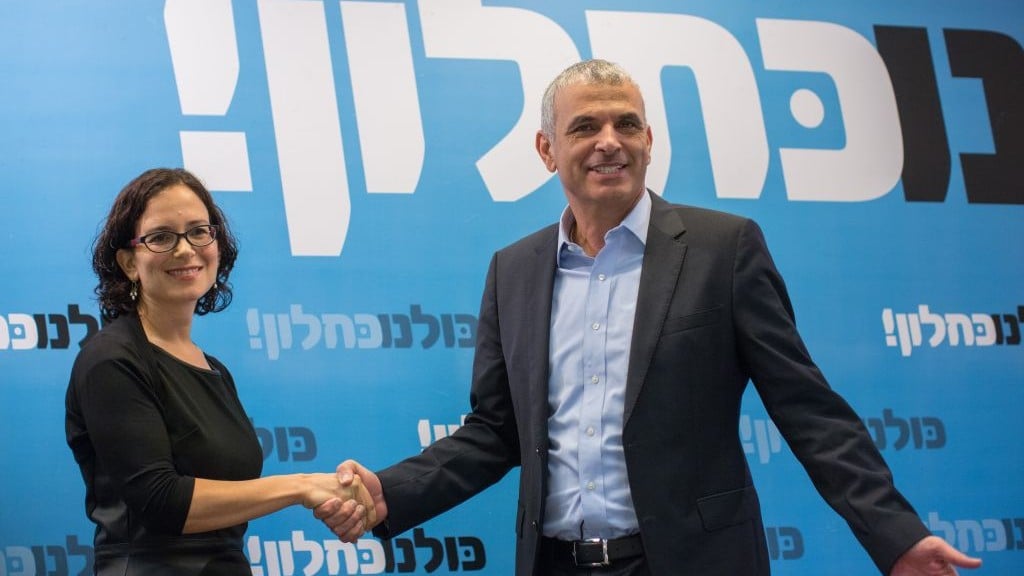
Azaria, who heads the Yerushalmim (Jerusalemites) faction on the Jerusalem City Council, holds the fifth spot on the list of Kulanu, the new party formed last November by former Likud minister Moshe Kahlon. If current pre-election polling predictions giving Kulanu between seven and nine Knesset seats prove accurate, Azaria will switch her title from deputy mayor to member of Knesset come March 17.
Azaria is not the only member of the Kulanu list currently serving in local government. She is joined by Kiryat Shmona City Council member Yifat Sasha-Biton and at-risk youth advocate and Tel Aviv City Council member Merav Ben Ari.
Running with Kahlon feels right to Azaria, 37, who has long been impressed with the former minister’s ability to get things done in the economic sphere, including leading Israel’s “cellular revolution,” which brought more competition to the mobile communications service industry and a consequent huge decrease in consumer costs.
Azaria’s position, like that of Kahlon and his Kulanu party, is that the most pressing issues facing Israelis today are socioeconomic, and that the interests of average citizens must be put before those of monopolies, cartels and interest groups — be they private or nonprofit.
“If you ask me what Zionism is today, it is making sure that living in Israel is possible. It has to work, to be easy. It can’t be so hard,” she said recently in a wide-ranging interview with The Times of Israel in her office at the Jerusalem Municipality.
“Making this happen is the responsibility of the leaders. We need leaders like Moshe who know how to make things happen. A lot of people want to make things better, but they don’t know how to actually do it.”

Azaria, who identifies as religious and is a married mother of four, has acquired a reputation for knowing how to make things happen in Jerusalem. She’s racked up a considerable list of accomplishments since her initial election to the Jerusalem City Council in November 2008. Among them are successful political and legal campaigns against the exclusion of images of women from advertisements and public spaces. She has also ensured that more streets in the city’s capital are named for women.
In her efforts to make life in Jerusalem better for young families, Azaria extended the preschool year to 11 months for the benefit of working parents, and she made afterschool care free or subsidized for low-income families. Azaria also got school food service companies to take unhealthy items off their menus and replace them with nutritious fare.
To the envy of the spouses of IDF reservists in other cities, last summer Azaria organized a comprehensive support program for the families of reservists from Jerusalem fighting in Operation Protective Edge. The IDF is now considering adopting it broadly for future reservist call-ups.
It was the phone calls and emails the deputy mayor received from people around the country asking, “Why don’t we have a Rachel Azaria in Rehovot? “ and “Why don’t we have a Rachel Azaria in Modiin?” that made her decide it was time to run for national office.
‘There are simply some issues I can’t work on only at the municipal level’
“There are simply some issues I can’t work on only at the municipal level,” she explained.
Public transportation is one of them. Currently, municipalities have no authority to even change a bus route; all decisions are made on the national level.
“One of the biggest solutions for all of the traffic jams is public transportation…What we need to do is to make sure the government gives the municipalities the authority to take care of local transportation planning. This change can only be done on the national level,” Azaria said.
She also wants to tackle the cost of childcare for children ages zero to three, which soared 50 percent between 2001 and 2011, and a whopping 25 percent between 2009 and 2011 alone — a major reason that parents took to the streets to demonstrate in 2011. Azaria was a key leader of those demonstrations, which became known as “The Stroller Protest.”

“Childcare for 20 percent of children is paid for by the government, but childcare for all families remains very high-priced because there is no competition and no accountability,” Azaria said.
“The prices of the government-subsidized childcare centers keep rising because they collude in price setting. Once the fees for these centers rise, the private childcare centers start charging more. The entire market is affected.”
According to Azaria, there are no set solutions to problems like these, nor is there a one size-fits-all answer when it comes to privatization versus government. She believes some services and activities should be privatized, while others should remain public.
Azaria wants to see each individual issue cracked open and examined in order to find the right solution.
‘Solving problems can involve standing up to people with power and making enemies. You end up paying a price’
“It’s about looking at each issue and figuring out what the problems are and then solving them. It’s about mapping out situations, opening them up. You need to figure out who the different stakeholders are, and who is with you and who is against you,” she said.
Having people against her as she tries to make change is something Azaria has gotten used to.
“Solving problems can involve standing up to people with power and making enemies. You end up paying a price,” she said. “There will always be someone who doesn’t understand what you are doing and they may be loud about it.”
But Azaria has developed a thick skin and has learned on the job during her years in the Jerusalem Municipality how to work the system.
“The fact that you are right is not enough. Other people have to be convinced. You have to get all the players together and on board,” she said.
For Azaria, being an effective leader also means managing expectations while getting the job done. She knows that change takes time. She cites as an example her “revolution” to make the food served in kindergartens healthier. It took her almost six years to make that happen.
When asked about whether she would work on issues of peace and security once she got to the Knesset, Azaria said she would leave those to others on the Kulanu list, like former Israeli ambassador to the US Michael Oren and IDF general Yoav Galant.
‘If you ask me what Zionism is today, it is making sure that living in Israel is possible. It has to work, to be easy. It can’t be so hard’
In response to a questions about her personal position on a two-state solution to the conflict with the Palestinians, as well as on expansion of Jewish settlements in the West Bank, Azaria preferred to offer the Kulanu party line, echoing recent statements by Kahlon.
“The Kulanu party will support an agreement that keeps the main settlement blocs under Israeli rule, a secure Jerusalem, recognition of Israel as the Jewish state, and denies the right of return. These guidelines are quite clear, and are accepted by a majority of Israelis. I think it is evident that the current atmosphere among people in the region, before leaders, is not yet ripe for reaching an agreement and therefore I don’t see it happening just yet, unfortunately,” she said.
Azaria is laser-focused on the socioeconomic issues. “These elections are not about right wing and left wing. They can’t be and they shouldn’t be, and the voting public is showing they agree,” she said.
“Eight million people live here in Israel. I want to make their lives better.”









The Times of Israel Community.