

Roy Moore rides to poll on horseback as Alabamans vote in bitter Senate race
Republican candidate expresses confidence he will win election dominated by accusations of child molestation against him
 Add ToI as a Preferred Source on Google
Republican Senate candidate Roy Moore rode his horse to the polls to cast his ballot on Tuesday, as Alabaman voters chose between the embattled but well-known Republican accused of child molestation and a Democrat who hopes to break the GOP’s lock on the state and uphold “decency.”
Moore was accompanied by his wife Kayla Moore, also on horseback, as he voted at a rural fire station in the northeast Alabama community of Gallant. Moore has rode his horse to vote in past elections.
Dozens of members of the media surrounded the couple, making it difficult for them to get through on their horses.
Moore spoke briefly to reporters, talking in generalities and not discussing allegations that he sexually molested teenage girls decades ago.
Moore expressed confidence that he will win.
He also said that after the election will be the time to discuss whether he’s allowed to take a seat in the Senate.
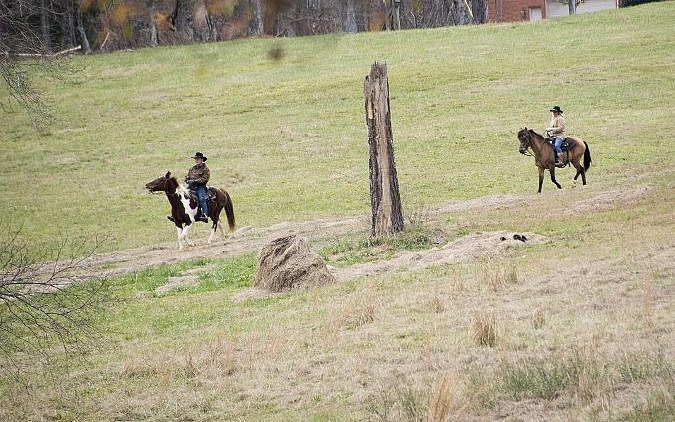
The 70-year-old GOP nominee, who was twice ousted as state Supreme Court chief justice after flouting federal law, was attempting another political resurrection amid the accusations of sexual misconduct with teenage girls when he was in his 30s.
Democrat Doug Jones, 63, is best known for prosecuting two Ku Klux Klansmen who killed four black girls in a 1963 church bombing. He’s being backed by former US president Barack Obama.
The winner will take the seat previously held by Attorney General Jeff Sessions. Republicans hold a narrow 52-48 Senate majority. A routine election in Republican-dominated Alabama would not normally be expected to alter that balance because Alabamians have not sent a Democrat to the upper chamber of Congress since 1992. US President Donald Trump notched a 28-point win in Alabama in 2016 and remains popular in the state.
Teresa Brown, a 53-year-old administrative assistant at the University of Alabama at Birmingham, said she’s voting for Jones.
“We don’t need a pedophile in there,” said Brown, who was among more than two dozen people in line in the chilly morning air at Legion Field, a predominantly black precinct in Birmingham.
“We need someone that’s going to represent the state of Alabama, work across party lines … just be there for all the people, not just a select few of the people.”
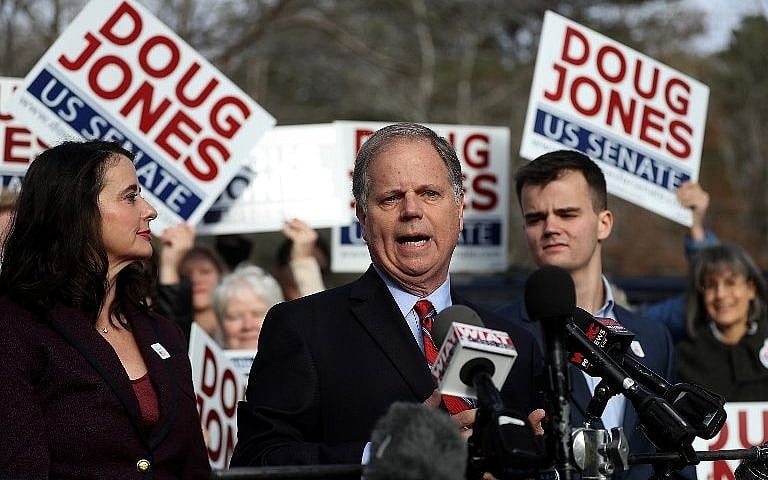
Al Bright, 63, who does refrigeration repair, voted for Moore.
“I just believe regardless of the allegations against him, I believe he is an honorable man,” Bright said.
Bright said he realized that Moore was removed from office because of actions he took to try to block same-sex marriage in the state.
“I don’t think there’s anything wrong with that because I believe in that as well,” he said. “I feel the same — marriage is between a man and a woman.”
Mary Multrie, 69, who works at a children’s hospital and voted for Jones, said she was not influenced by accusations of sexual misconduct against Moore because she already did not like him.
“He’s not a truthful man,” Multrie said. “He talks about God, but you don’t see God in his actions.”
Alabama Secretary of State John Merrill said turnout could be as high as 25 percent of registered voters.
The allegations against Moore created enough doubt about the outcome that both Trump and Obama weighed in with last-minute robocalls trying to sway voters.
The intensity of the campaign also spawned a steady stream of fake news stories that filled social media feeds in Alabama and beyond.
An Associated Press analysis, in cooperation with Facebook, counted as many as 200 false or misleading reports heading into the weekend. One website claimed one of the women who accused Moore of sexual misconduct had recanted. She did not. Meanwhile, Moore’s detractors took to social media to claim he had written in a 2011 textbook that women should not hold elected office. He did not.
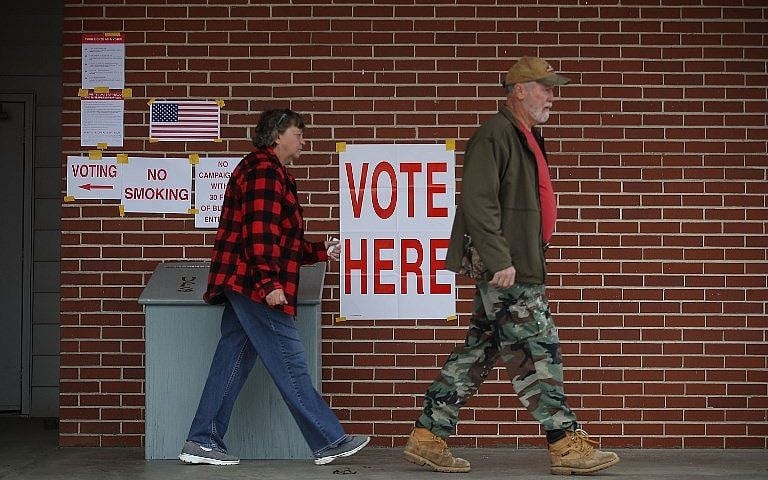
In his final pitch before polls opened across the state, Jones called the choice a “crossroads” and asked that “decency” prevail.
“We’ve had this history in the past, going down the road that … has not been productive,” Jones said. “We’ve lagged behind in industry. We’ve lagged behind in education. We’ve lagged behind in health care. It’s time we take the road that’s going to get us on the path to progress.”
At his own election eve rally, Moore again denied the allegations against him, calling them “disgusting” and offering voters a clear measure: “If you don’t believe in my character, don’t vote for me.”
Earlier in the day, Moore cast himself as the victim. “It’s just been hard, a hard campaign,” he said.
For Alabama, the outcome could be defining.
Democrats and moderate Republicans see an opportunity to reject a politician who is already regular fodder for late-night television.
Alabama’s senior senator, Richard Shelby, confirmed publicly that he wrote in a “distinguished Alabama Republican” rather than vote for Moore.
Many Republicans, however, see an opportunity to defend the state’s conservative, evangelical bent in the face of liberal criticism while delivering another victory for Trump and sending an anti-establishment senator into a federal government that has been reflexively unpopular among Alabama majorities for generations.
Trump’s campaign architect and former White House adviser Steve Bannon told Moore supporters Monday evening that the race will determine whether the “Trump miracle” continues. Moore says he is aligned with the president, and he makes similar arguments to Trump, blasting “the elite” in the “swamp” of Washington, DC.
Also Monday, Moore’s wife fought back against accusations that her husband does not support blacks or Jews. Speaking at a rally, Kayla Moore pointed out that her husband appointed the first black marshal to the state Supreme Court. She said the couple has many friends who are black and that one of their attorneys is a Jew.
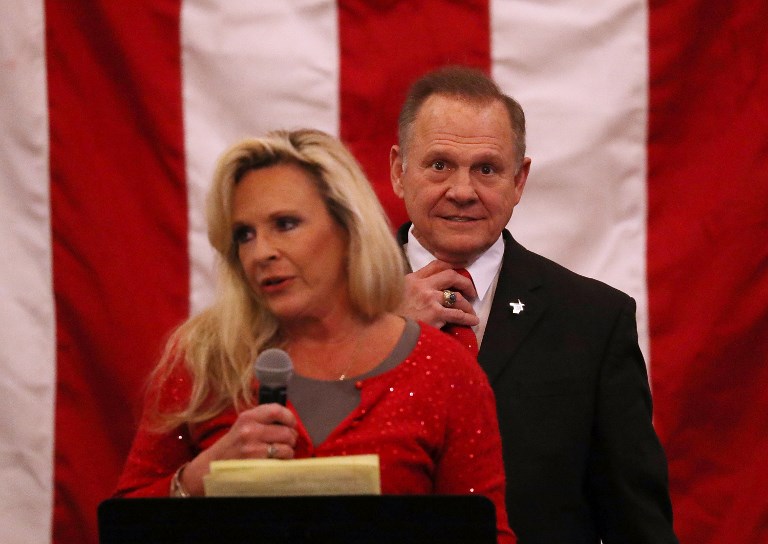
For Jones to win, he must build an atypical coalition, maximizing turnout among African-Americans and white liberals who often do not combine for more than 40 percent of the electorate, while coaxing votes from enough white Republicans who cannot pull the lever for Moore.
One of Jones’ celebrity backers framed the choice as being much less complicated.
“I love Alabama,” said former NBA basketball star Charles Barkley, a Leeds native who has talked in past years about running for governor. “But at some point we’ve got to draw a line in the sand and say, ‘We’re not a bunch of damn idiots.'”



The Times of Israel Community.