

The nonexistent rise and tragic plateau of PA President Mahmoud Abbas
Journalist Amir Tibon’s latest book examines exactly what makes Arafat’s replacement so tragically ineffectual
 Add ToI as a Preferred Source on Google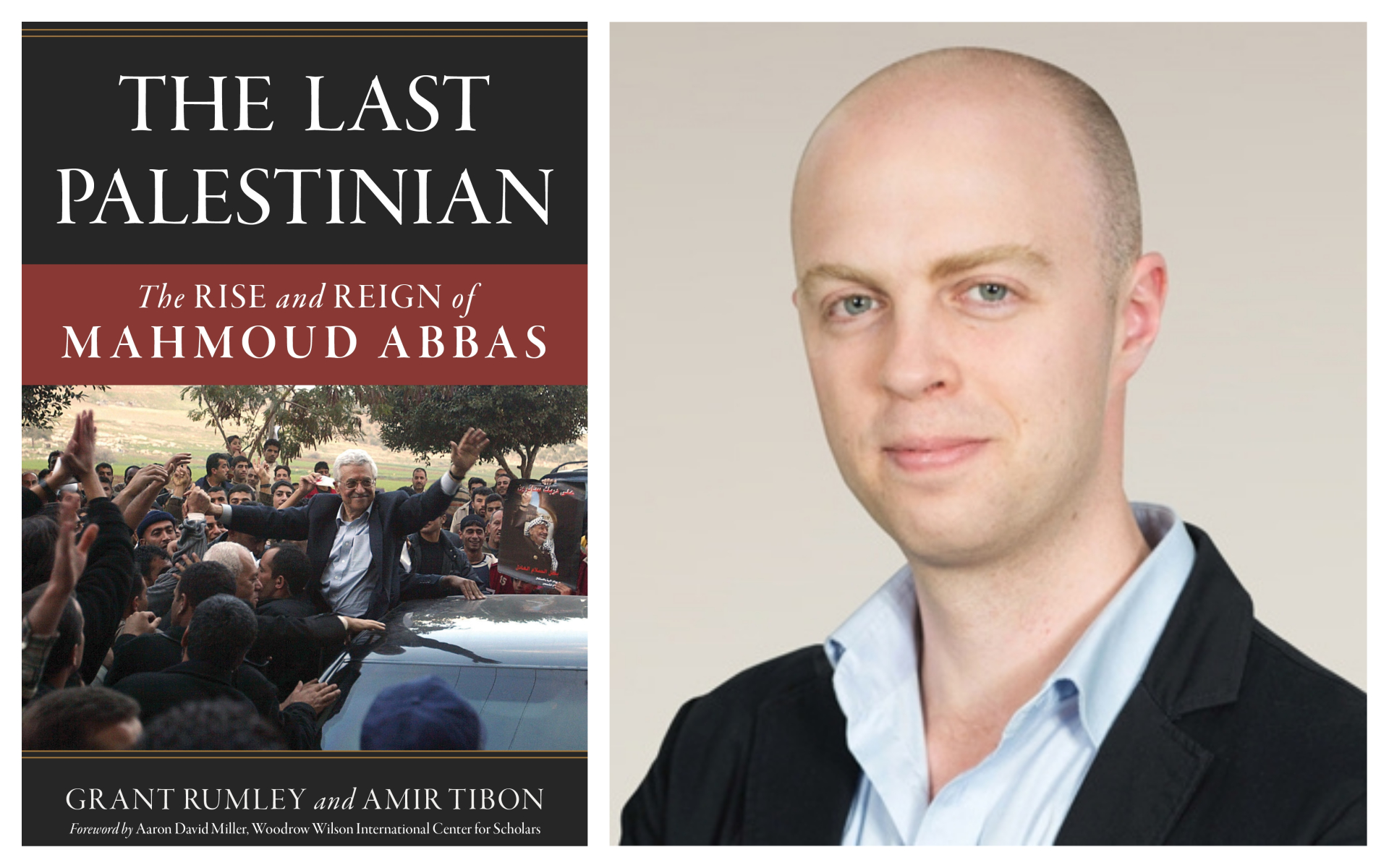
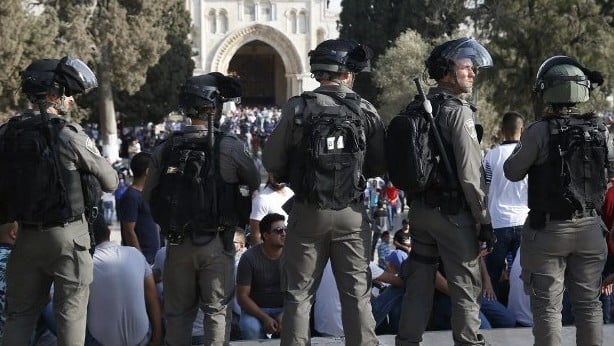
The murder of two Israeli police by a Palestinian gunman on Jerusalem’s Temple Mount in July led to an escalation of violence that caused Israeli security to place metal detectors at entrances to the sacred Al-Aqsa Mosque compound. In retaliation, Palestinian Authority President Mahmoud Abbas called off all talks with Israel indefinitely.
It’s not the first time Abbas has expressed his continual frustration with the current Israeli leadership, or with the latest American mediation efforts for an Israeli-Palestinian peace agreement.
According to award-winning Israeli journalist Amir Tibon, who recently published a book entitled “The Last Palestinian: The Rise and Reign of Mahmoud Abbas,” Abbas’s defiant stance is actually reflective of a more general stalemate within President Donald Trump administration.
“Some of the officials in the Trump administration are not acting as neutral arbitrators [between Israelis and Palestinians], but more as Israel’s lawyers,” says the Washington, DC, based Ha’aretz correspondent. Tibon specializes in the Israeli-American relationship and America’s policy in the Middle East and writes regularly for publications such as the New Yorker, Foreign Affairs, the New Republic, and Walla News.
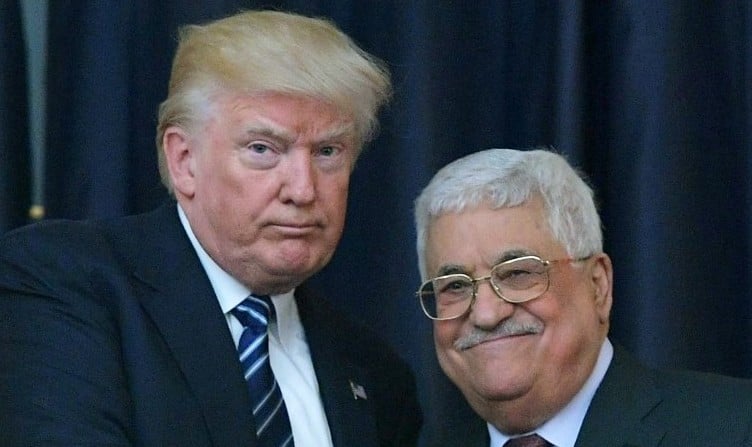
“[Nine months] into its peace initiative, the Trump administration is still afraid to say the words ‘Palestinian state’ or ‘two-state solution,'” Tibon says. “President Trump declared that Israeli-Palestinian peace is a top priority for his presidency, but it remains to be seen if he [is] truly committed to that agenda — or if [he is] committed to just helping Netanyahu and avoiding any possible friction with him.”
He warns that “from the Palestinian leadership’s point of view, this leads to a conclusion that there is no political horizon, and that conclusion can lead to dangerous consequences.”
Tibon says that the Temple Mount episode highlighted two things: Both Netanyahu and Abbas have a tendency to act irresponsibly in times of political crisis, and, the fragility and tension of the political situation right now in Jerusalem, the West Bank, and Gaza.
“Netanyahu and Abbas are both obsessed with their own political survival, allowing extremist elements within their parties and coalitions to dictate their next moves,” says Tibon.
“The Last Palestinian: The Rise and Reign of Mahmoud Abbas” was co-authored with Grant Rumley, a research fellow at the Foundation for Defense of Democracies. The unauthorized biography is based on numerous interviews with key figures in Ramallah, Jerusalem, and Washington, and attempts to figure out just what makes the 82-year-old president of the Palestinian Authority tick — both politically and ideologically.
The book explains how Abbas started his presidency of the Palestinian Authority in 2005 with good intentions, as a man of peace who could bring stability and harmony between Israelis and Palestinians.
However, Tibon concludes with the prediction that Abbas will end his career as just another regional autocrat in the Arab world desperately trying to hold onto his last vestiges of power.
Tibon says Abbas’s true political intentions are hard to define and that his lack of success in diplomacy has meant he’s turned to a more conservative form of rule.
“Abbas’s interpretation of what needs to be done is cracking down on any form of dissent or opposition within the party, from other political forces, and this has become a major feature of his rule,” says the journalist.
Furthermore, Tibon claims that Abbas’s ability to take fateful and brave decisions for the PA are forever limited by political realities that he simply does not have the power to change.
That said, Abbas has been consistent on two things, Tibon believes.
Firstly, in is his opposition to violence, which he has always paid a heavy price for; and secondly, in his negotiations with Israel for a two-state solution.
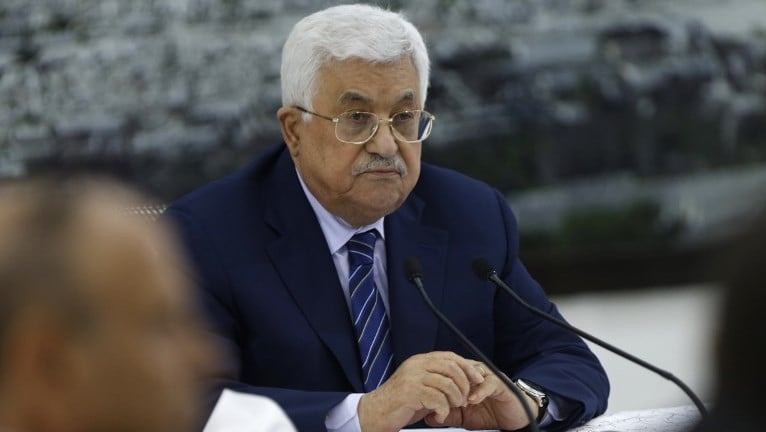
“But whenever Abbas taken some kind of political hit for this, he’s never come back with a strong blow against his opponents,” says Tibon.
“Instead, Abbas has tended to look at the criticism that was focused on him [specifically] and tried to deny things he said,” the journalist adds.
Tibon’s book pays special attention to the crucial years of change with the Palestinian movement from 2005 to 2014.
Specifically, it asks three fundamental questions. How did Abbas lose control of half of his governing territory and the support of more than half of his people? Why was Abbas the most prominent leader in Fatah to denounce terrorism? And why did Abbas twice walk away from peace offers from Israel and the US in 2008 and 2014?
What may seem like a trivial point at first is, Tibon believes, crucial: A distinct lack of charisma from the Palestinian leader is one of the major issues that has always “haunted” his political career.
When Arafat spoke, people listened and cheered. But Abbas is not a very charismatic figure
“Abbas is just not like Yasser Arafat,” says Tibon. “When Arafat spoke, people listened and cheered. But Abbas is not a very charismatic figure, and he tends to be pedantic, focusing on international legal issues. When you have to create support for hard political choices, it’s difficult when you lack the basic political ability to render hearts and minds.”
Tibon spends an entire chapter to analyzing the historical significance of Yasser Arafat’s death in 2004 — both in how it affected the Palestinian movement as well as Abbas’s political career.
Abbas may be the leader of the PA and the Palestine Liberation Organization (PLO). However, he simply lacks the political and cultural standing that Arafat had, Tibon believes.
“Arafat’s death was an opportunity for Abbas to take Arafat’s place,” says the Israeli journalist. “But for the Palestinian national movement, Arafat’s death left a vacuum that I’m not sure has been filled yet. At least not by Abbas. Because Abbas is technically a president.”
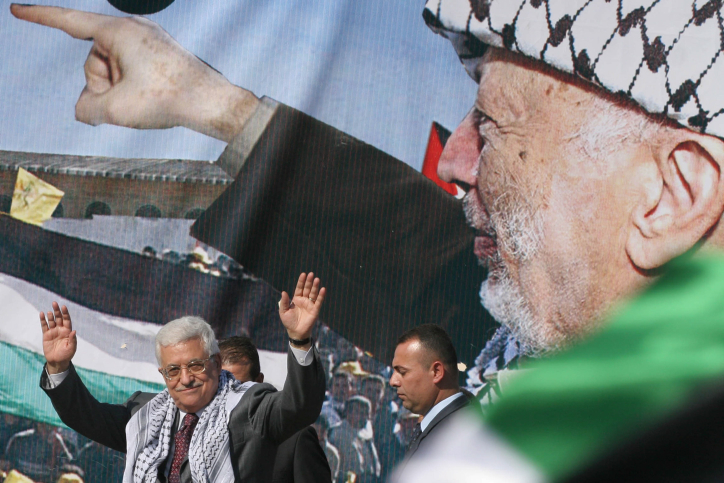
In 2005 Abbas became president of the PA, a semi autonomous body that was established in May 1994 in accordance with the Gaza-Jericho Agreement.
Tibon says it was Hamas’ rise in the 2006 elections — and then the subsequent 2007 coup in Gaza — which really became a breaking point in Abbas’s political career.
“You cannot make the kind of historic decisions that are necessary for a peace agreement when you only control half of the Palestinian Authority’s territory,” says Tibon. “And when you don’t control the parliament, and seem to be lacking some sort of political legitimacy. That really hurt Abbas’s ability to be a successful negotiator.”
While conducting research for his book Tibon spoke to numerous politicos in the West Bank, Gaza, and Washington. The general consensus he gleaned from these interviews, he says, was twofold: Fatah got too cocky and Abbas underestimated Hamas.
Fatah just couldn’t imagine a situation where the people would reject them
“Fatah just couldn’t imagine a situation where the people would reject them,” says Tibon.
“The loss in the [2006 elections] was not because Hamas were so great, but because how stupid and arrogant Fatah were on the local level, when they decided to run six or seven local candidates in each district. This allowed Hamas to win without a clear majority,” Tibon adds.
Tibon says Hamas has strengthened considerably over the last 13 years because, in the eyes of many Palestinians, the organization symbolizes resistance and courage against Israel.
“When Hamas came to power they were able to say, ‘We are the ones who are fighting Israelis and the occupation,’” says Tibon. “And on the other side you have Abbas, who is wearing a suit and glasses trying to talk. This really does make me think of the constraints of having a really moderate leader. And that after Abbas, Fatah [maybe] really need a leader who is more like Arafat.”
Historically — as Tibon’s latest book is so keen to point out — Abbas’s role in the Palestinian movement has always been as a bureaucrat and a money raiser.
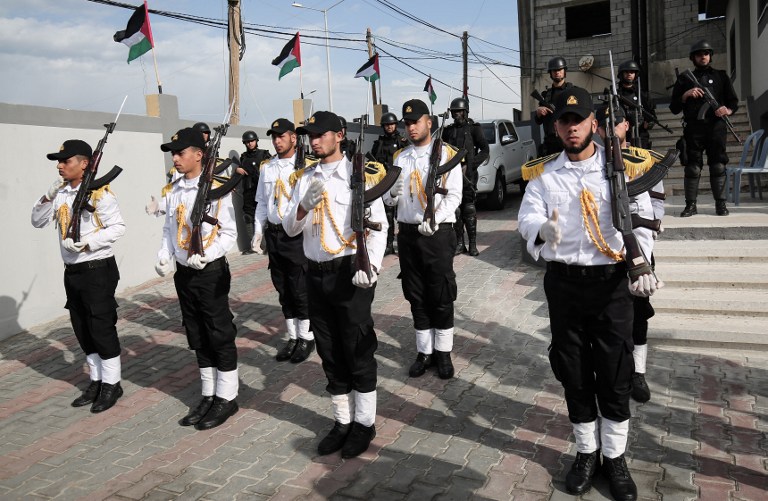
Unlike Arafat, Abbas was never seen as a revolutionary rabble rouser.
“If you ask people in Gaza and the West Bank who grew up in the 1980s — at the time of [the First] Lebanon War, or the First Intifada — who was their source of inspiration, you would obviously hear the name Yasser Arafat. But nobody will mention the name Mahmoud Abbas,” explains Tibon.
“He just wasn’t that kind of figure,” Tibon continues. “He had no military background, he had not taken part in any heroic attacks against Israelis, and he wasn’t a very prominent politician either. He was this bureaucrat, working behind the scenes, and doing diplomat work. That is not somebody who your average Palestinian kid — who has Israeli soldiers and settlers outside his window and wants to fight the occupation — looks up to as a source of inspiration.”
Tibon also points out that Abbas has always purposely chosen — almost entirely throughout his career — to remain in exile from the rest of the Palestinian leadership.
“While Fatah was being created [in the 1960s] by Arafat and others in the Gulf, Abbas was one of their contacts in Qatar. But crucially, most of the organization wasn’t there [with him],” he explains.
“So Fatah was being formed in one country and Abbas was in another,” says Tibon.
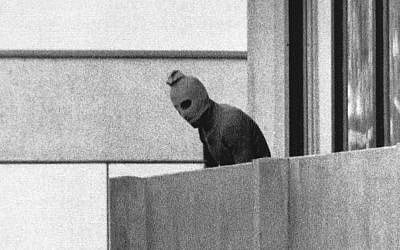
“And that trend repeats itself later. When Fatah went to Beirut in 1970 after what happened to them in Jordan following the Black September fighting, Abbas was in Damascus in Syria at the time. This also happened when Arafat and others moved into Gaza, after the signing of the Oslo Accords [in 1993].”
Abbas has always seen himself as more of a Palestinian political intellectual than a militant fighter, Tibon believes. Consequently, Abbas’s bookish and introspective ways have left him physically and psychologically at a distance from Fatah and the PLO.
The journalist believes this has been detrimental to Abbas’s political career overall.
“Abbas has always done his own thing, whether that is attempting to focus on his research or to engage in negotiations with the Israelis,” says Tibon.
Tibon claims that, ultimately, Abbas will most likely be judged by future historians as a tragic figure.
“Tragic figures have their own place in history though,” says Tibon.
“Abbas is a man who has good intentions most of the time. He wanted to put his people on a track to independence, statehood, and peace. But for reasons that were mostly beyond his control, he couldn’t do it. He has not been able to achieve most of the things he has been pushing for most of his career.”




The Times of Israel Community.