

After airstrikes, the more Assad talks the less he is likely to do
President’s failed bid for support after Israeli jets reportedly hit military sites near Damascus shows opposition loathes him even more than they do Israel

 Add ToI as a Preferred Source on Google
Avi Issacharoff, The Times of Israel's Middle East analyst, fills the same role for Walla, the leading portal in Israel. He is also a guest commentator on many different radio shows and current affairs programs on television. Until 2012, he was a reporter and commentator on Arab affairs for the Haaretz newspaper. He also lectures on modern Palestinian history at Tel Aviv University, and is currently writing a script for an action-drama series for the Israeli satellite Television "YES." Born in Jerusalem, he graduated cum laude from Ben Gurion University with a B.A. in Middle Eastern studies and then earned his M.A. from Tel Aviv University on the same subject, also cum laude. A fluent Arabic speaker, Avi was the Middle East Affairs correspondent for Israeli Public Radio covering the Israeli-Palestinian conflict, the war in Iraq and the Arab countries between the years 2003-2006. Avi directed and edited short documentary films on Israeli television programs dealing with the Middle East. In 2002 he won the "best reporter" award for the "Israel Radio” for his coverage of the second intifada. In 2004, together with Amos Harel, he wrote "The Seventh War - How we won and why we lost the war with the Palestinians." A year later the book won an award from the Institute for Strategic Studies for containing the best research on security affairs in Israel. In 2008, Issacharoff and Harel published their second book, entitled "34 Days - The Story of the Second Lebanon War," which won the same prize.
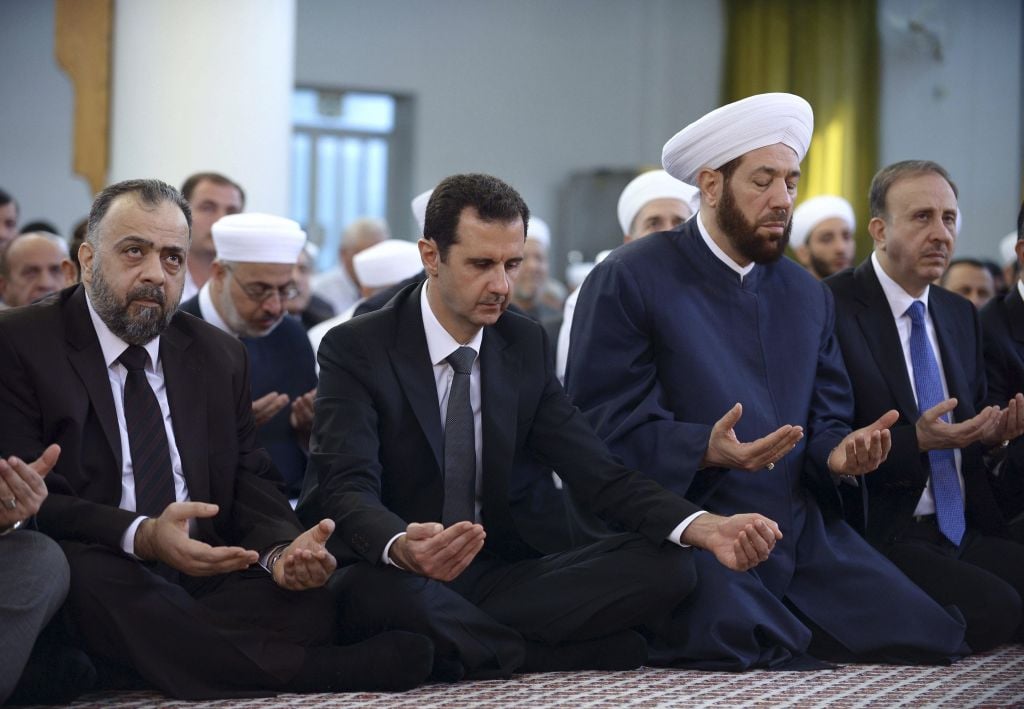
Syrian President Bashar Assad did not even attempt to suppress information on what appeared to be an attack by the Israeli Air Force Sunday on a weapons cache destined for Hezbollah.
In fact, Assad, who is currently in control of only a small portion of his country, spread word of the attack far and wide and officials provided regime-friendly media outlets with plenty of information regarding the strike, in an attempt to garner the support of the Syrian people.
This was reportedly not just a single shot, but a volley of at least 10 different bombardments aimed at destroying two arms warehouses — one near Damascus’s international airport and the other at an additional airport in Dimas, east of the capital.
There were no injuries, according to reports, but nevertheless, Syrian authorities chose to issue speedy verbal responses to the incident, accusing Israel of “aiding terrorists” operating in the country. (Israeli officials declined to respond to the reports.)
Damascus’s pointing finger should be seen in light of recent reports presented to the United Nations Security Council, which reveal numerous interactions between Israeli troops and rebel groups on the Israel-Syrian border over the past year and a half.
The cooperation between the IDF and Syrian opposition forces was well known within Israeli journalist circles, but the local media was prevented from publishing any details on the matter due to military censorship restrictions.
Assad’s almost childish effort to rally the public in his favor, however, is highly unlikely to succeed. An examination of the responses to the airstrike on a variety of Syrian opposition sites, including secular ones, clearly shows that the loathing of the Syrian president is far greater than resentment of Israel.
These sites make fun of Assad for the cowardice he displays in the face of Israeli attacks, which have been reported for years, despite the fact that he has vowed to respond to aggression on Syrian soil.
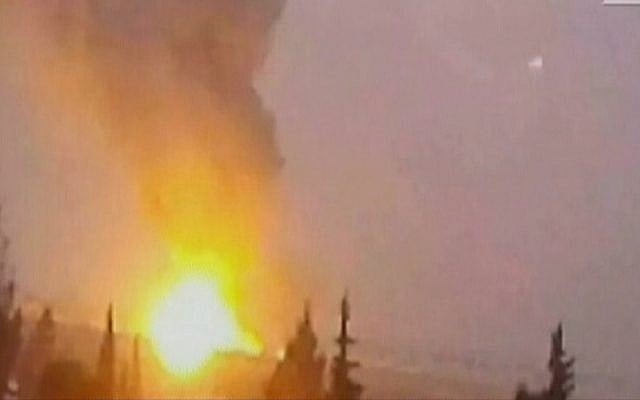
“Not even a single bullet was fired at the Israeli regime,” one of these sites exclaimed in a graphic with a picture of Assad in the background.
And so the question is whether the Syrian president will decline to respond now, as in the past, despite his grotesque portrayal by the opposition.
For now, it seems Assad does not want to — or cannot — act against Israel. It can be assumed that, had the Syrian president been able to respond to the strike, he would have done so already rather than issue harmless statements. So, one can cautiously predict that Assad will once again opt to ignore the alleged Israeli attack and not risk trouble on an additional front.
And yet it should still be noted that in today’s Middle East, it is difficult if not impossible to predict how a leader will react, despite a clear pattern in recent years.
Subcontracting the work
Assad has another option, though.
He can respond to the strike, not directly, but through subcontractors, without leaving any unnecessary fingerprints. In other words, Assad can allow Hezbollah, or any other organization affiliated with him, to launch attacks on Israeli targets in the Syrian Golan Heights.
Following a strike on a Hezbollah convoy in Lebanon in February, the Shiite terror organization responded with a series of detonations of explosive charges along the northern border.
That case was different, though, as the airstrike that prompted that response was carried out on Lebanese soil, a development which Hezbollah has already clarified that it cannot accept.
Regarding attacks on Syrian territory, however, the Lebanese organization would apparently have no obligation to respond, and Hezbollah knows that any action on its part may complicate the security situation within Lebanon.
In addition, Hezbollah Secretary General Hassan Nasrallah has recently been facing immense pressure from Russian officials to lower the flame on tensions in Lebanon.
On Thursday, Nasrallah met with Russian Deputy Foreign Minister Mikhail Bogdanov in Beirut, and the two apparently discussed plans to restore calm in the country.
With this in mind, it’s doubtful that Nasrallah will rush to the aid of Assad and rescue him from Israel.







The Times of Israel Community.