

Cabinet to discuss Gaza humanitarian crisis Sunday, amid ongoing violence
PM, army have said dire economic conditions in Palestinian enclave are fueling clashes along the border; ministers also likely to authorize live fire against terror kite operators
 Add ToI as a Preferred Source on Google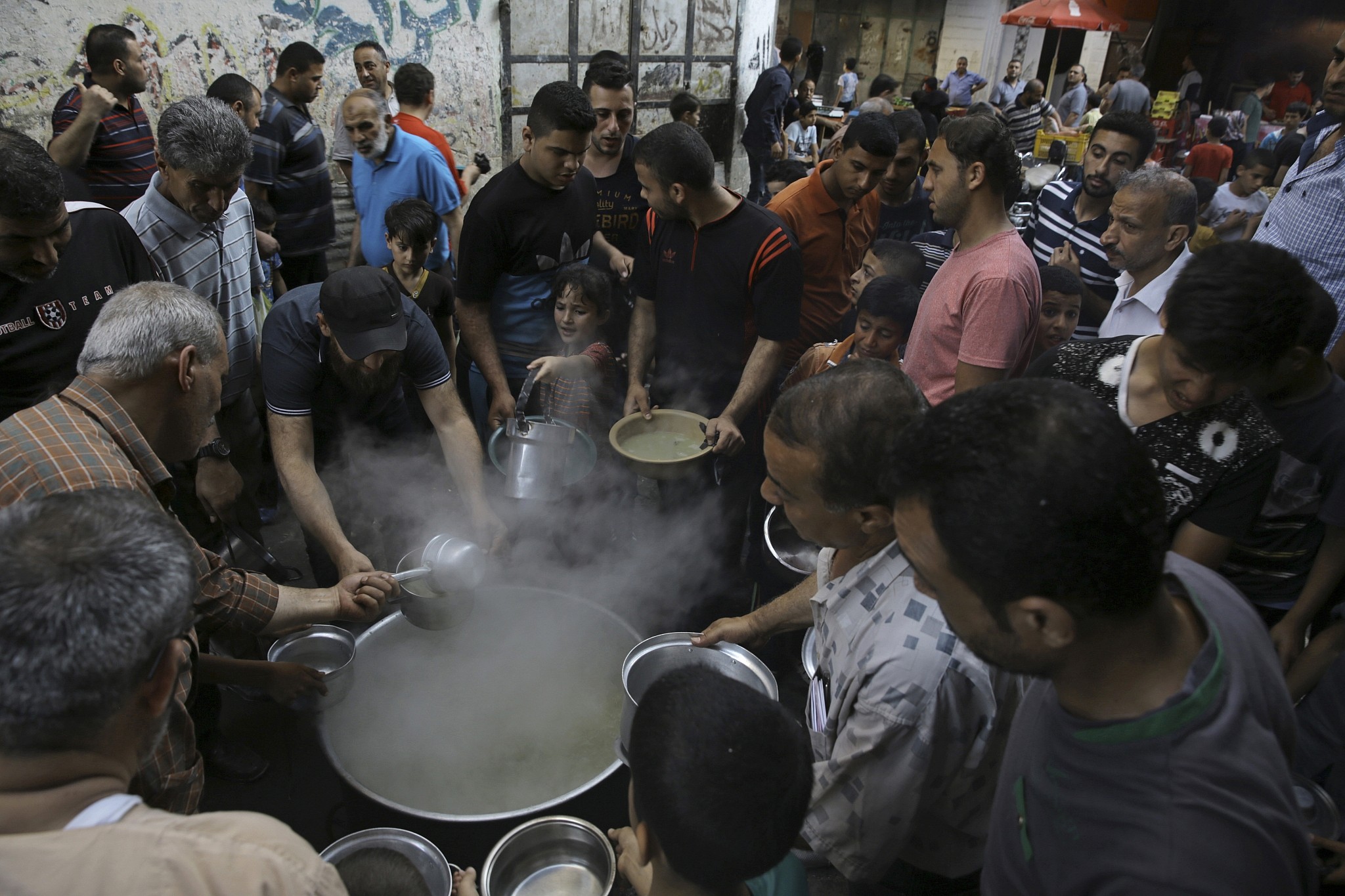
The high-level Israeli security cabinet will on Sunday discuss the humanitarian situation in the Gaza Strip, which has been cited as a major factor fueling violent clashes on Israel’s border with the Hamas-run Palestinian enclave.
This will be the first time the high-level body will discuss the humanitarian crisis in Gaza since the start of the weekly protests at the end of March.
Ministers are also likely to authorize the use of live fire against Palestinians flying incendiary kites and balloons into Israel, Israel Radio quoted Public Security Minister Gilad Erdan as saying.
On Saturday, an IDF aircraft fired warning shots at three Palestinians planning to launch fire balloons. The incendiary devices caused several large blazes in Israel on Saturday.
In Friday’s border violence, Gazans used helium-filled balloons to carry explosives, detonated by remote control, in attempts to attack troops, the IDF said. Officials said no soldiers were hurt in those attempted attacks, but that the tactic constituted a grave new development, Israel Radio reported Saturday, and hence the IDF’s warning shots on Saturday.
Four Gazans were killed in clashes at the border Friday.
Sunday’s cabinet meeting comes after Prime Minister Benjamin Netanyahu said earlier this week that Israel was “examining various possibilities to prevent a humanitarian collapse in Gaza.”
One of the options being explored is allowing some 6,000 workers from Gaza into Israel for the first time since 2007, Ynet reported.
“I spoke with Chancellor [Angela] Merkel about the situation in Gaza and repeated the fact that the entire border situation is due to the economic situation. Plain and simple,” Netanyahu told reporters Monday after meeting with Merkel in Berlin.
He stressed that Israel was the main actor and possibly the only one working to improve life for the Palestinians in the coastal enclave, saying that neither the Palestinian Authority nor Hamas were helping them.
“Regarding Gaza, we are exploring various options to prevent a humanitarian collapse there,” Netanyahu said.
He blamed the humanitarian situation in Gaza on PA President Mahmoud Abbas’s decision to freeze the salaries of PA employees in Gaza, as well as Hamas’s investment in terror.
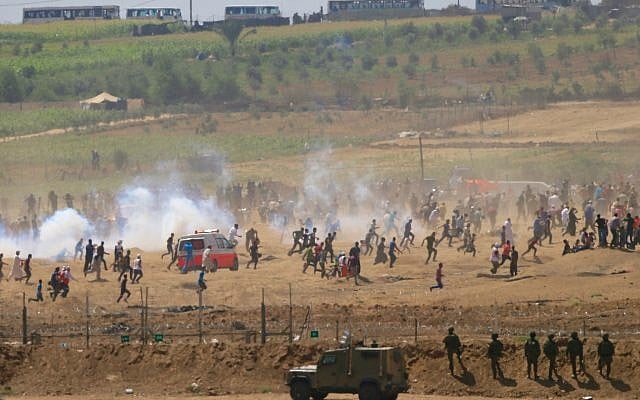
Netanyahu said that he told Merkel that the Palestinian protests and riots adjacent to the Gaza border, which had led to over 100 dead and thousands injured by IDF troops defending the border, were the response to the economic crisis.
“Their converging on the border fence is a result of this financial crisis,” he said. “It is a conscious decision.”
Gaza faces a lack of electricity, drinkable water and food. Israel and Egypt maintain a blockade on the Strip which they say is designed to prevent Hamas from importing weapons and other goods that could be used to build fortifications or tunnels.
Israel has also said the humanitarian situation will not improve until Hamas returns the bodies of two IDF soldiers and the two civilian captives it holds. It blames Hamas for the dire reality, charging the terror group with diverting millions in aid to purchase weapons, dig tunnels, manufacture rockets and train its military wing, instead of using it for the welfare of the people.
Gaza’s woes have been exacerbated by an ongoing dispute between Hamas and the PA, which has cut the salaries it pays to workers in Gaza and imposed various sanctions, including cutting of payments for electricity supplies to the enclave.
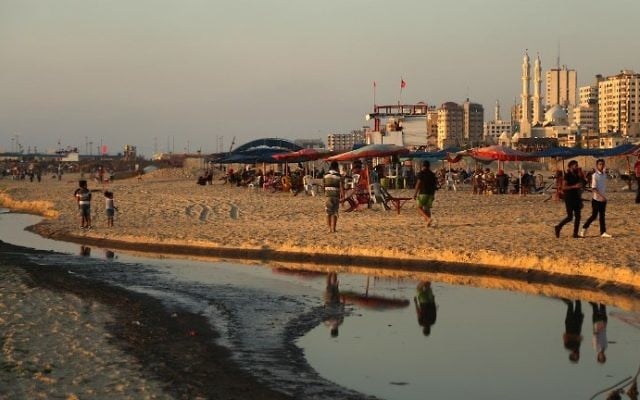
A senior IDF officer said last week that the situation in Gaza was at a nadir.
“Hamas is in its worst situation since it came to power [in 2007], and the same is true of the Gaza Strip. The responsibility for that lies first of all with Hamas, but we can also take steps,” he said. “Hamas is trying to figure out how to save itself from collapse, and it has only two solutions: reaching an arrangement [for quiet with Israel], or turning to military confrontation.”
If the current reality continues, the defense establishment assessment is that there will be more skirmishes like the one last month when Palestinian terrorists fired over 100 rockets and mortars at towns and cities in southern Israel. The Israel Defense Forces responded with dozens of airstrikes on Hamas military targets.
The officer said future conflicts of this kind have the potential to escalate into large military confrontations.
He stressed that the Southern Command was prepared for all scenarios, including a large operation within Gaza if necessary. However, he said, the army had recommended to the political echelon to begin a process of easing the economic pressure on Hamas — for example, by allowing workers from Gaza to enter Israel to work.
But he added that no long-term arrangement was possible without the return to Israel of the bodies of IDF soldiers.








The Times of Israel Community.