

Diane Keaton, Oscar-winning star of ‘Annie Hall’ and ‘The Godfather,’ dies at 79
Across a prolific career, Keaton was known for long-running collaborations with two prominent Jewish filmmakers, Woody Allen and Nancy Meyers
 Add ToI as a Preferred Source on Google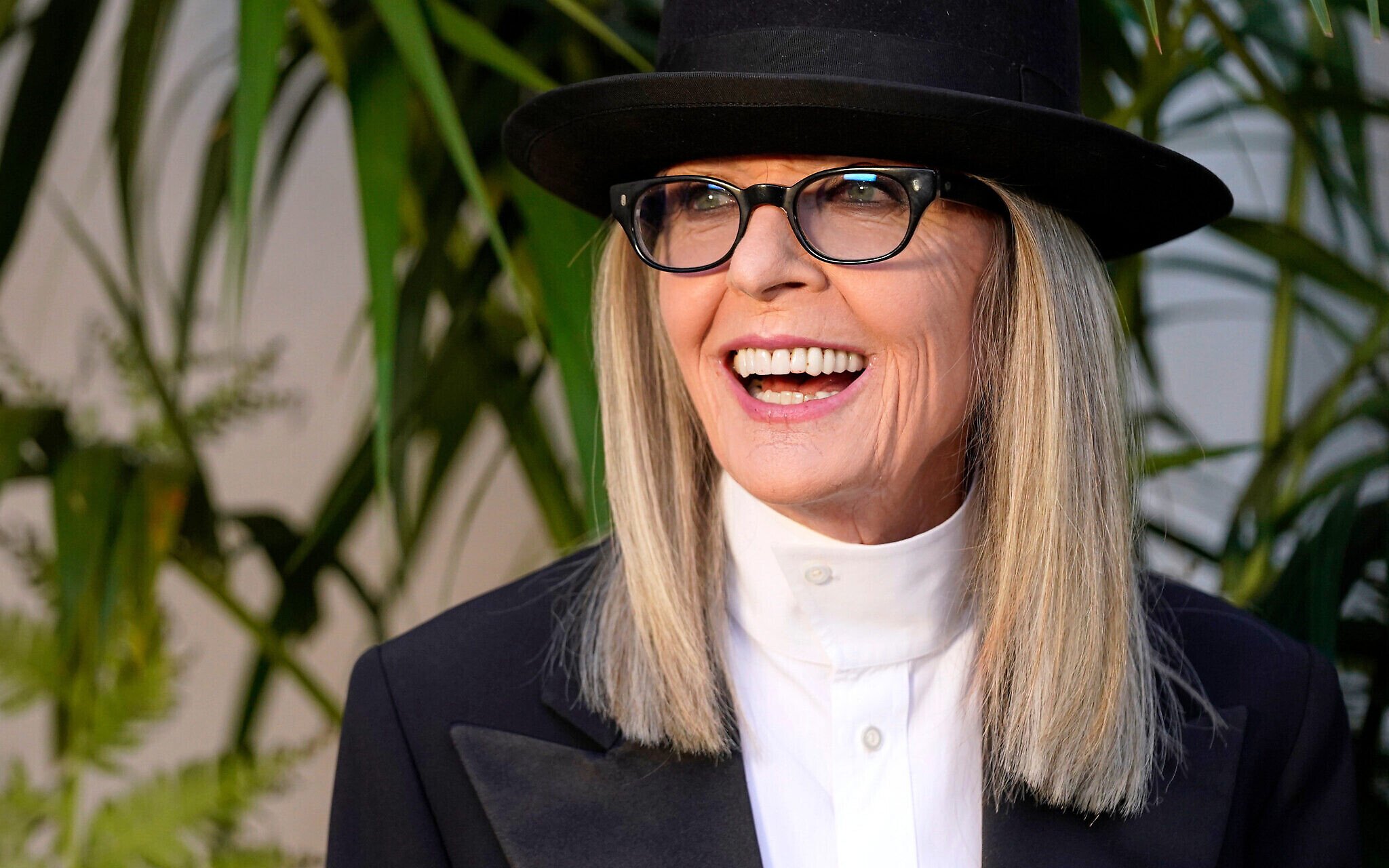
Diane Keaton, the Oscar-winning star of “Annie Hall,” “The Godfather” films and “Father of the Bride,” whose quirky, vibrant manner and depth made her one of the most singular actors of a generation, has died. She was 79.
People Magazine reported Saturday that she died in California with loved ones, citing a family spokesperson. No other details were immediately available, and representatives for Keaton did not immediately respond to inquiries from The Associated Press.
Rizzoli, a publishing company that released several of Keaton’s books, confirmed her death in a statement, calling her an “icon whose influence spanned film, fashion, and design.”
Across a prolific career, Keaton was known for long-running collaborations with two prominent Jewish filmmakers, Woody Allen and Nancy Meyers. 1977’s “Annie Hall,” for which Keaton won an Oscar, is considered a classic of American Jewish humor.
The unexpected news of her death was met with shock around the world.
“She was hilarious, a complete original, and completely without guile, or any of the competitiveness one would have expected from such a star. What you saw was who she was…oh, la, lala!” Bette Midler said in a post on Instagram. She and Keaton co-starred in “The First Wives Club.”
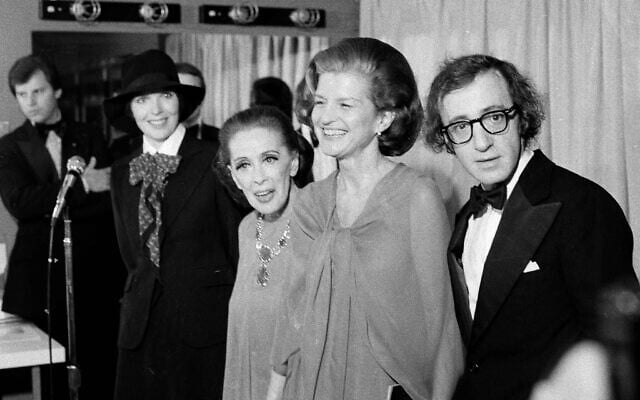
Keaton was the kind of actor who helped make films iconic and timeless, from her “La-dee-da, la-dee-da” phrasing as Annie Hall, bedecked in that necktie, bowler hat, vest, and khakis, to her heartbreaking turn as Kay Adams, the woman unfortunate enough to join the Corleone family in “The Godfather.
Her star-making performances in the 1970s, many of which were in Allen’s films, were not a flash in the pan either, and she would continue to charm new generations for decades thanks in part to her longstanding collaboration with Meyers.
She played a businessperson who unexpectedly inherits an infant in “Baby Boom,” the mother of the bride in the beloved remake of “Father of the Bride,” a newly single woman in “The First Wives Club,” and a divorced playwright who gets involved with Jack Nicholson’s music executive in “Something’s Gotta Give.”
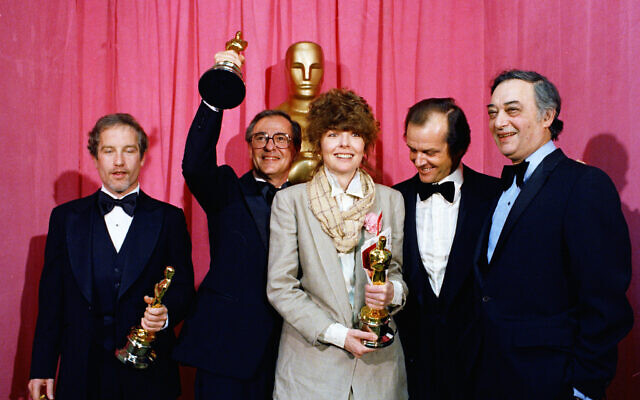
Keaton won her first Oscar for “Annie Hall,” for best actress, and would go on to be nominated three more times, for “Reds,” playing the journalist and suffragist Louise Bryant, “Marvin’s Room,” as a caregiver who suddenly needs care herself, and “Something’s Gotta Give,” as a middle-aged divorcee who is the object of several men’s affections.
In her very Keaton way, upon accepting her Oscar in 1978, she laughed and said, “This is something.”
Keaton was born Diane Hall in January 1946 in Los Angeles, though her family was not part of the film industry. Her mother was a homemaker and photographer, and her father was in real estate and civil engineering, and both would inspire her love of the arts, from fashion to architecture.
Keaton was drawn to theater and singing while in school in Santa Ana, California, and she dropped out of college after a year to make a go of it in Manhattan. Actors’ Equity already had a Diane Hall in their ranks, and she took Keaton, her mother’s maiden name, as her own.
She studied under Sanford Meisner in New York and has credited him with giving her the freedom to “chart the complex terrain of human behavior within the safety of his guidance. It made playing with fire fun.”
She started on the stage as an understudy in the Broadway production of “Hair,” and in Allen’s “Play It Again, Sam” in 1968, for which she would receive a Tony nomination. And yet she remained deeply self-conscious about her appearance and battled bulimia in her 20s.
Keaton made her film debut in the 1970 romantic comedy “Lovers and Other Strangers,” but her big breakthrough would come a few years later when she was cast in Francis Ford Coppola’s “The Godfather,” which won best picture and became one of the most beloved films of all time. And yet even she hesitated to return for the sequel, though after reading the script she decided otherwise.
The 1970s were an incredibly fruitful time for Keaton, thanks in part to her ongoing collaboration with Allen in both comedic and dramatic roles. She appeared in “Sleeper,” “Love and Death,” “Interiors,” Manhattan,” and the film version of “Play it Again, Sam.” The 1977 crime-drama “Looking for Mr. Goodbar” also earned her raves.
Allen and the late Marshall Brickman gave Keaton one of her most iconic roles in “Annie Hall,” the infectious woman from Chippewa Falls whom Allen’s Alvy Singer cannot get over. The film is considered one of the great romantic comedies of all time, with Keaton’s eccentric, self-deprecating Annie at its heart.
She acknowledged parallels between Annie Hall and real life, while also downplaying them.
“My last name is Hall. Woody and I did share a significant romance, according to me, anyway,” she wrote. “I did want to be a singer. I was insecure, and I did grope for words.”
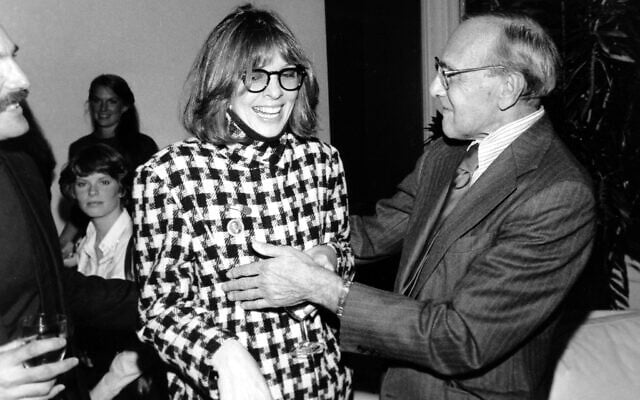
Keaton and Allen were also in a romantic relationship from about 1968, when she met him while auditioning for his play, until about 1974. Afterward, they remained collaborators and friends. She later appeared in “Radio Days,” in 1987, and “Manhattan Murder Mystery,” in 1993.
“He was so hip, with his thick glasses and cool suits,” Keaton wrote in her memoir. “But it was his manner that got me, his way of gesturing, his hands, his coughing and looking down in a self-deprecating way while he told jokes.”
She was also romantically linked to Pacino, who played her husband in “The Godfather,” and Warren Beatty, who directed her and with whom she co-starred in “Reds.” She never married but did adopt two children when she was in her 50s: a daughter, Dexter, and a son, Duke.
In 1987, she’d begin another long-standing collaboration with Nancy Meyers, which would result in four beloved films.
After “Baby Boom,” their next team-up would be in the remake of “Father of the Bride.” She and Steve Martin played the flustered parents to the bride in a film that would become a big hit and spawn a sequel.
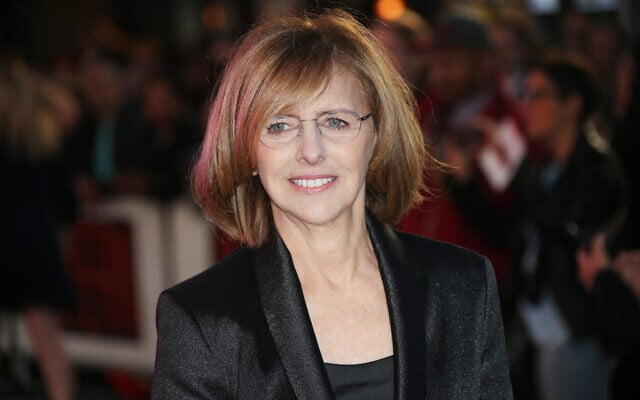
In 2003, Meyers would direct Keaton in “Something’s Gotta Give,” a romantic comedy in which she begins a relationship with a playboy womanizer, played by Jack Nicholson, while also being pursued by a younger doctor, played by Keanu Reeves. It earned her what would be her last Oscar nomination, and, later, she’d call it her favorite film.
She also directed occasionally, with works including an episode of “Twin Peaks,” a Belinda Carlisle music video, and the sister dramedy “Hanging Up,” which Nora Ephron and Delia Ephron co-wrote and in which she starred alongside Meg Ryan and Lisa Kudrow.
Keaton continued working steadily throughout the 2000s, with notable roles in “The Family Stone,” as a dying matriarch reluctant to give her ring to her son, in “Morning Glory,” as a morning news anchor, and in the “Book Club” films.
She wrote several books as well, including memoirs “Then Again” and “Let’s Just Say It Wasn’t Pretty,” and an art and design book, “The House that Pinterest Built.”
Reuters contributed to this report.








The Times of Israel Community.