

Greek silk road town of famed Jewish-owned factory finds itself back in fashion
With the help of haute couture and Chinese investment, the sleepy town of Soulfi and its once booming textile industry are starting to see a revival
 Add ToI as a Preferred Source on Google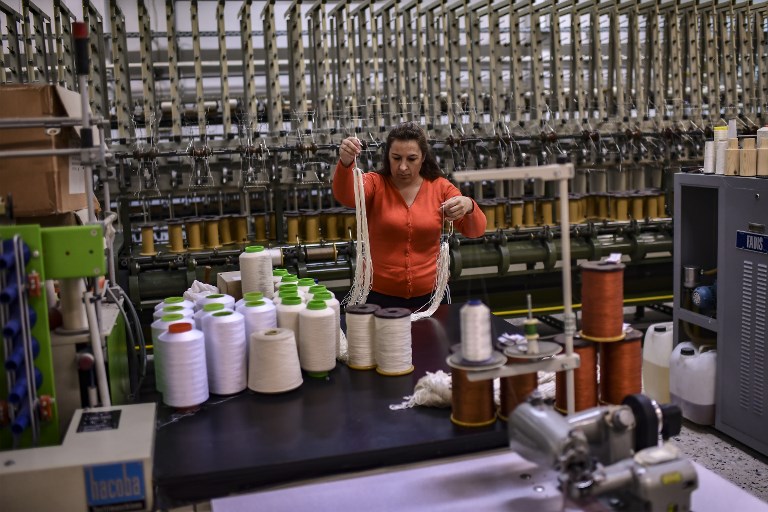
SOUFLI, Greece (AFP) — Silk has played a role in the family history of practically everyone who originates from the dormant, isolated Greek town of Soufli
“Every family grew silk,” says Matina Lekka, a local pensioner, whose mother worked at the Givre factory near the Greek-Turkish border before it closed in the 1960s.
In its heyday, the factory, founded by two Jewish brothers, Bohor and Eliezer Givre, exported silk as far as the French cities of Lyon and Bordeaux.
Soulfi has been a key center for Greek silk production since the 19th century. This was also the first area in Europe to rear silkworms after they were smuggled by Byzantine monks out of India in the 6th century AD.
Silk, much of it homemade, has sustained the town of around 4,000 inhabitants for decades, although the number of factories has fallen.
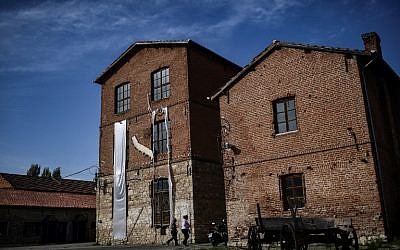
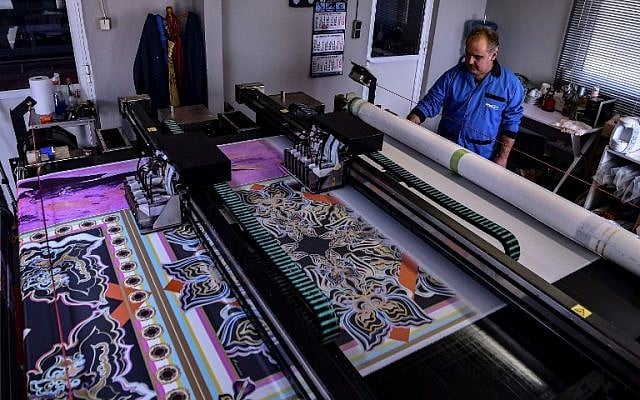
Now though, say the town’s last active producers, silk is again de rigueur on the world’s most prestigious catwalks, and demand from designers for the luxurious fabric is on the up.
“Penetrate into the world of fashion, this is what Soufli is trying to do… there is no haute couture without silk nowadays,” says Yiorgos Tsiakiris, owner of the factory that bears his name.
“The area’s great advantage is its long experience (with sericulture)… This is where silk was first produced in Europe… we should exploit this advantage,” he adds.
His production site is not far from the Mouhtarides factory, where marketing manager Despina Bakarou also talks of concerted action to make the most of current trends.
“Silk is making a comeback. Fashion designers are asking for it. We are trying to maximize the quantity and quality of our production,” she says.
After World War II, textile makers turned to cheaper synthetic materials such as nylon, and the area’s once-prided infrastructure fell into disuse.
A further blow came at the end of the 1990s, with the opening up of the silk market.
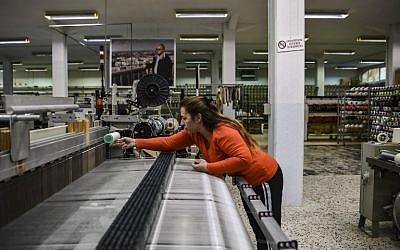
The town’s two factories currently export silk clothes and handicrafts to Bulgaria, Slovakia and Cyprus, and fulfill design orders from British stylists.
While the two factories produce a small amount of silk themselves, most of what they use to make their items comes from China.
Now, says Tsiakiris, there is a real opportunity for European sericulture to bounce back amid China’s increasing industrialization, which has led to a decline in its rurally-based silk production.
“There is great demand for silk. And there is a shortage… China in recent years has given up thousands of hectares of mulberry trees, and people are moving out of rural areas to the cities,” he said.
Soufli is surrounded by 300 hectares (741 acres) of mulberry trees — the leaves of which are eaten by the silkworms –, providing an abundance of a raw material waiting for revival. Each silkworm cocoon can yield a continuous silk strand of up to 2.5 kilometers (1.6 miles) long.
“There are also thousands of mulberry trees still in the area, it’s a basis to build on,” says Tsiakiris.
With enough trees, a reliable crop of silkworms can emerge in about three years, he notes.
“There are European investors standing by, ready to spend up to 20 million euros ($23 million) here,” he adds, declining to divulge names.
“There is major interest, these people are worried about the future of sericulture in China,” the factory owner tells AFP.
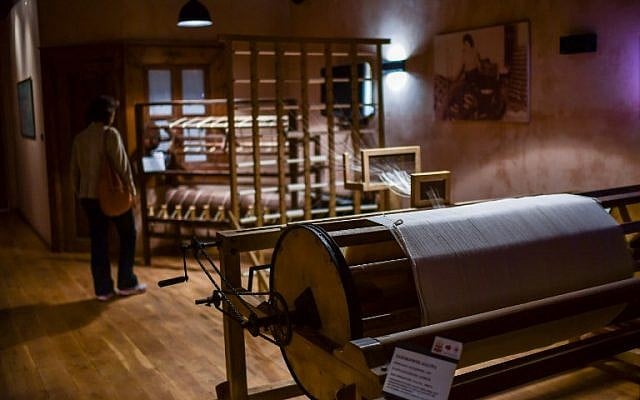
To make it big, the town also needs an industrial-size silk reeling machine.
The Hermes Foundation, the public benefit arm of the global luxury brand, recently financed the purchase of a small reeling unit but it is insufficient to cover mass production. As a result, the cocoons must be sent to Italy for processing.
Chinese investors are also showing an interest. A group visited the area in June alongside Greek Development Minister Stergios Pitsiorlas.
With four local museums already dedicated to the silk industry, the town is also ripe for further development as a tourism destination.
The town municipality plans to renovate an old mansion to be used as a hostel and an area to demonstrate how silkworms are raised.
Times of Israel contributed to this report.










The Times of Israel Community.