

 From the Liveblog of
Wednesday, August 19, 2026
From the Liveblog of
Wednesday, August 19, 2026
Bennett: Israel should attack Iran to retaliate for Hezbollah assaults
 Add ToI as a Preferred Source on Google
Sam Sokol is a former political correspondent at The Times of Israel. He was previously a reporter for the Jerusalem Post, Jewish Telegraphic Agency and Haaretz. He is the author of "Putin’s Hybrid War and the Jews"
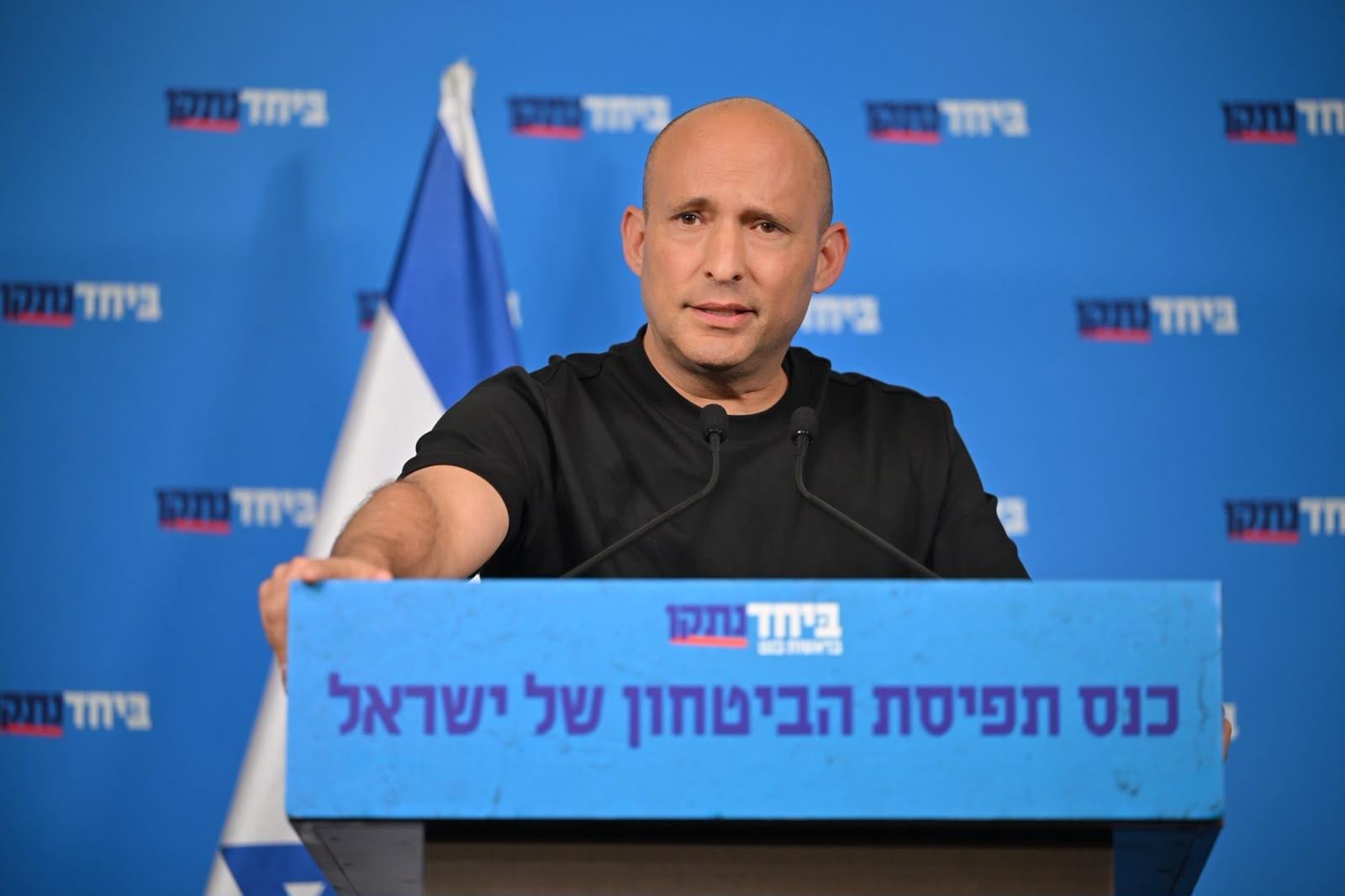
Former prime minister Naftali Bennett and Opposition Leader Yair Lapid say they will push for a hardline deterrence policy against Iran while seeking to rebuild frayed ties with American liberals and the European Union.
Bennett, a security hawk leading the B’Yachad party alongside Lapid, tells party members that attacks from Iranian proxies should be treated as if they came from Iran.
“If Hezbollah fires at us, we strike Iran. A strike by the Iranian octopus’s tentacles inside Israel’s borders will exact a price inside Iran’s borders,” Bennett declares.
While accusing Prime Minister Benjamin Netanyahu’s government of tearing “Israeli society to shreds” and thus being ineffective against foreign enemies, he echoes the premier’s insistence that Israel refuse to pull back in Gaza until Hamas is disarmed.
Bennett also says he will not allow Qatar or Turkey to have any role in postwar Gaza, calling again for Qatar to be labeled an enemy state.
And he backs the redefinition of rampant and deadly crime in the Arab community as a national security threat rather than a criminal one, urging the deployment of the IDF and Shin Bet in the fight against illegal weapons.
Lapid, who has served as both prime minister and foreign minister, says he’ll work to repair ties with the US and bring the relationship back “to the bipartisan status Israel enjoyed until four years ago.”
He slams Netanyahu for giving up American military aid, calling it “a grave mistake” and insisting that “we must fight for it.” Netanyahu has repeatedly said he would seek to end Israel’s reliance on US aid, which has become increasingly unpopular among Americans.
Israel must also focus on “rebuilding ties with the European Union, deepening connections with the NATO alliance, and addressing—despite the difficulty—public opinion in countries like Spain, France, and Ireland” while at the same time strengthen regional integration, including making a peace agreement with Saudi Arabia “a central goal in the coming years” so long as it prevents uranium enrichment by Riyadh, Lapid adds.








The Times of Israel Community.