

 From the Liveblog of
Thursday, December 4, 2025
From the Liveblog of
Thursday, December 4, 2025
Israel seizes dozens of archaeological artifacts from villa in West Bank’s Area B
 Add ToI as a Preferred Source on Google
Rossella Tercatin is The Times of Israel's archaeology and religions reporter.
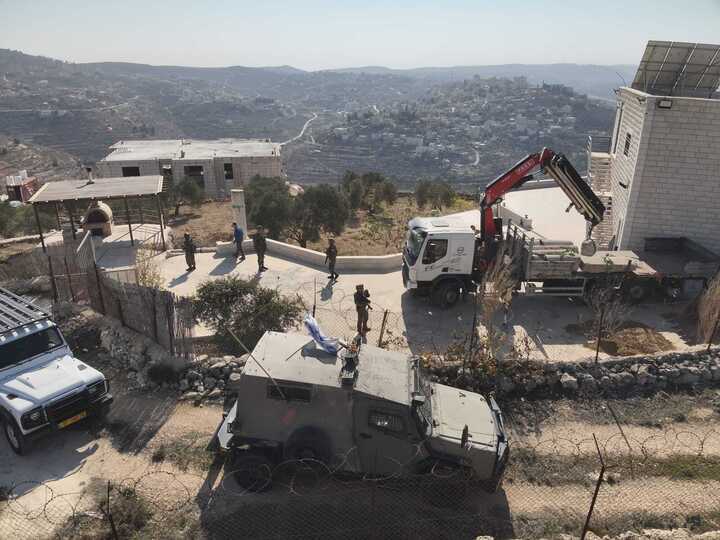
Israel’s Civil Administration says it seized dozens of archaeological artifacts from a site north of Ramallah in Area B today and transferred them to the Museum of the Good Samaritan archaeological site in Area C.
According to the statement, the artifacts were confiscated after Palestinians built a villa on the site of “Burj Lasana,” which was continuously inhabited from the Iron Age (1200-586 BCE) to the Crusaders period (1099-1260 CE). Located on top of a hill, the site include the remains of a a Crusaders’ fortress, a Byzantine church and a ritual bath.
The Civil Administration, a branch of the Defense Ministry’s Coordinator of Government Activities in the Territories (COGAT), is in charge of civilian affairs in the West Bank. Under the Oslo Accords, the Palestinian Authority maintains civilian and security control over Area A of the West Bank, Israel over Area C, while in Area B, Israel maintains security control and the PA maintains civilian control.
According to the statement, the artifacts include coins, stone columns and column capitals. The inspectors also found a metal detector used to identify metal remains underground.
The neglected status of archaeological sites in the West Bank has been denounced by both experts and activists for many years.
The current government has spearheaded an effort to bring control over antiquities in the region under an Israeli civilian body, which critics say Israel has no authority to do, and many charge would represent a step towards a de facto annexation in the field of archaeology.
“Protecting antiquities sites is a central part of our work and of our responsibility to preserve the history of the region,” says a statement from the Enforcement, Investigations and Intelligence Department in the Archaeological Unit of the Civil Administration.
“Any damage to an ancient site harms not only the artifact itself, but also our ability to understand and document the historical narrative it reflects. We will continue to act tirelessly, using all tools at our disposal, to eradicate the destructive phenomenon of antiquities theft and to protect the region’s national heritage assets and historical record.”










The Times of Israel Community.