

 From the Liveblog of
Thursday, October 5, 2023
From the Liveblog of
Thursday, October 5, 2023
Mysterious injury of Iranian teen without headcover in Tehran’s Metro sparks anger
 Add ToI as a Preferred Source on Google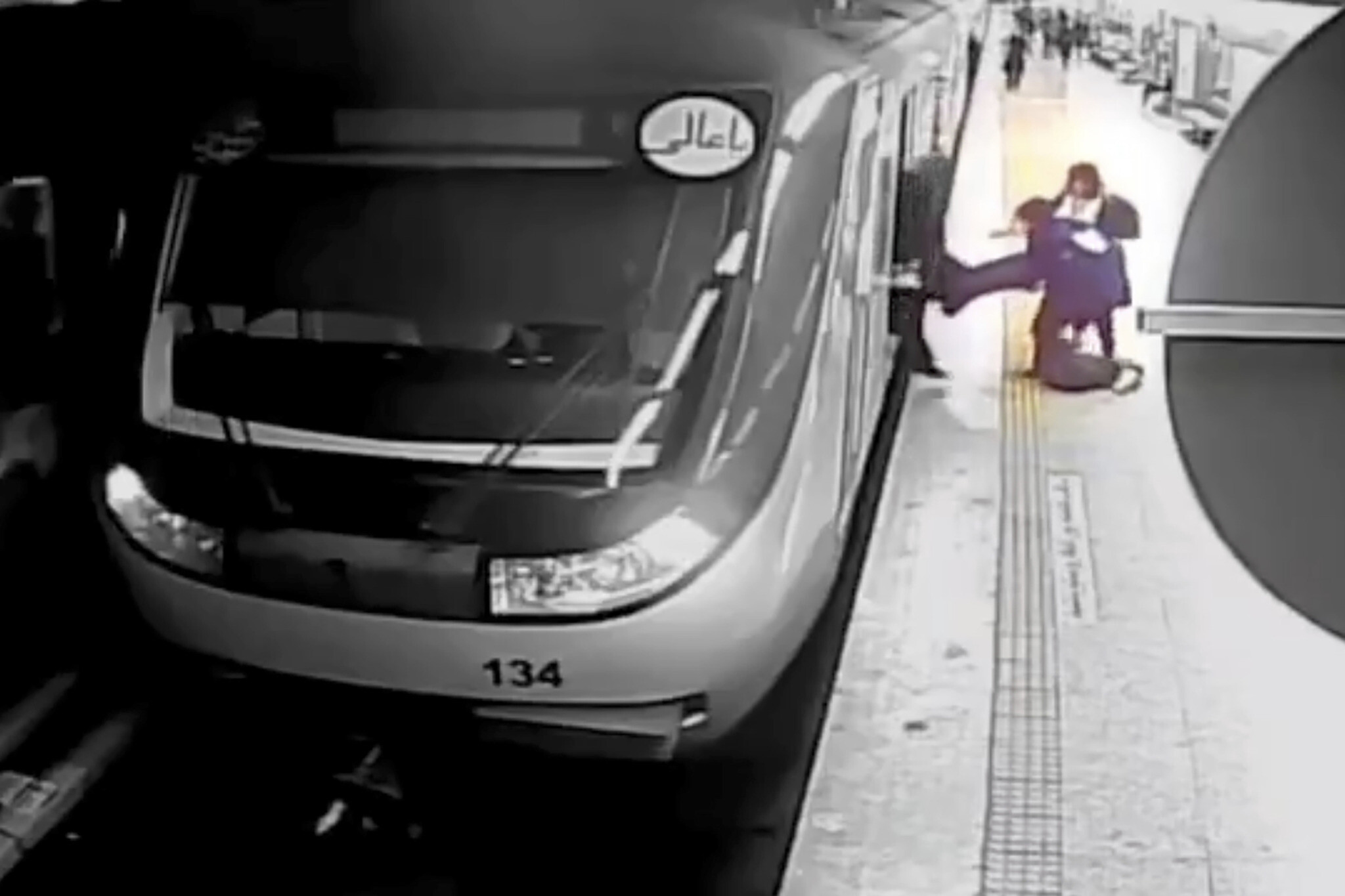
A mysterious injury suffered by a 16-year-old girl who boarded a Metro train in Iran’s capital without a headscarf has reignited anger just after the one-year anniversary of the death of Mahsa Amini and the nationwide protests it sparked.
What happened in the few seconds after Armita Geravand entered the train on Sunday remains in question. While a friend told Iranian state television that she hit her head on the station’s platform, the soundless footage aired by the broadcaster from outside of the car is blocked by a bystander. Just seconds later, her limp body is carried off.
The Hengaw Organization for Human Rights, which reports on abuses in Iran’s western Kurdish region, published a photograph it said showed Geravand at the hospital, her head wrapped in bandages as she remains in a coma.
According to Kurdish NGO Hengaw, Armita Geravand is in a coma after being assaulted by the #Iranian morality police while riding the subway to school, at the Tehran Shohada station.
She is kept under tight security as the Iranian regime fears the similarities with the case of… pic.twitter.com/wSUBLHTzCt
— Michael A. Horowitz (@michaelh992) October 4, 2023
Geravand’s mother and father appeared in state media footage saying a blood pressure issue, a fall or perhaps both contributed to their daughter’s injury.
Activists abroad have alleged Geravand may have been pushed or attacked because she was not wearing the hijab. They demand an independent investigation by the United Nations’ fact-finding mission on Iran, citing the theocracy’s use of pressure on victims’ families and state TV’s history of airing hundreds of coerced confessions.
Geravand’s injury also comes as Iran has put its morality police — whom activists implicate in Amini’s death over her alleged loose hijab — back on the street, and as lawmakers push to enforce even stricter penalties for those flouting the required head covering.
“Girls are subjected to violence on the streets, and then their families are compelled to protect the government responsible for that violence,” says Hadi Ghaemi, the executive director of the New York-based Center for Human Rights in Iran.





The Times of Israel Community.