

Nahalat Shiva, a little kingdom outside the walls
In the 1970’s, when the third Jewish neighborhood outside the Old City was falling apart, the city decided to tear it down. Fortunately Jerusalemites resisted
 Add ToI as a Preferred Source on Google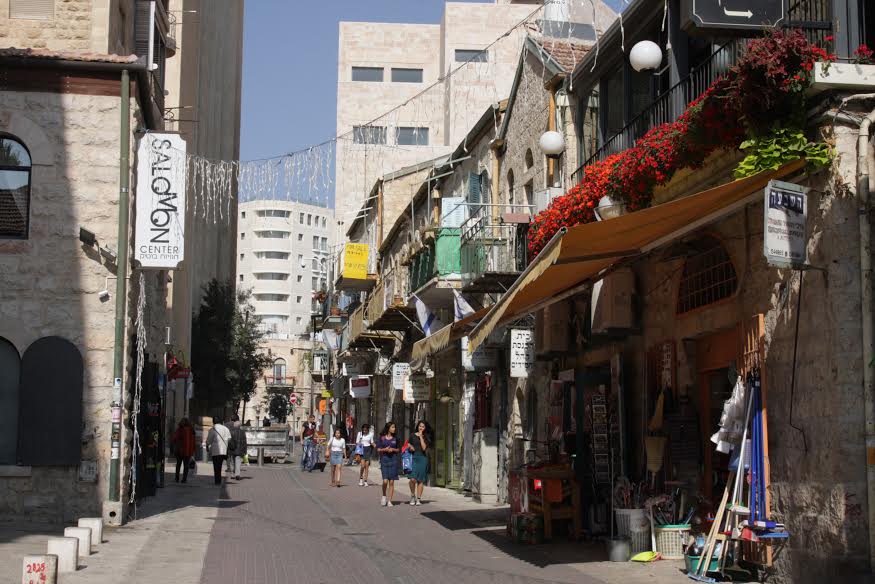
When a cholera epidemic swept through the walled city of Jerusalem in the year 1866, much of the population was wiped out. And no wonder: Inside the walls, residents were crowded together like sardines in a can while sewage and debris flowed freely through the streets.
Like everyone else in Jerusalem, Jews suffered badly from the disease. The only group to escape its wrath had moved outside of the walls six years previously, into the little neighborhood called Mishkenot Sha’ananim.
Obviously, it was time to leave the shelter of the walls, and seven families prepared to do just that. They purchased land adjacent to the road leading from Jaffa to Jerusalem in the hopes that relatively frequent traffic would provide some measure of safety from wild animals and robbers.
Their little kingdom, the third Jewish neighborhood to be founded outside the walls of Jerusalem, was called Nahalat Shiva (Estate or Heritage of the Seven). And by 1869 the first houses were ready for occupation.
But now that the time had come, none of the families felt brave enough to move out of the security of the city walls. Finally, one of the men, Yoseph Rivlin, took the bull by the horns and began sleeping in his new home. So worried was his family that they waited at Jaffa Gate each morning to see if he were still alive.
Rivlin was eager for company. It is said that he opened a coffee shop on the roof of his dwelling, keeping guests happily enjoying the ambiance until the city gates were closed and they were forced to spend the night. Eventually, of course, his family joined him. And soon the rest of his neighbors moved in as well.
Nahalat Shiva sits inside four clear perimeters: Jaffa Road is its northern boundary, Hillel Street lies to the south, it’s eastern edge is narrow Rivlin Street and the pedestrian mall that is Yoel Moshe Solomon Street marks the western border.
Like the neighborhoods its residents had left in the Old City, Nahalat Shiva consisted mainly of one story structures enjoying a common courtyard. These courtyards were wonderful meeting places where children played and women exchanged gossip and recipes.
As time passed, some of the early residents left to establish new neighborhoods while those that remained grew older and were unable to maintain their houses. In the 1970’s, when Nahalat Shiva was completely falling apart, the city decided to tear it down and erect office buildings in its place. Fortunately the initiative was met with massive resistance by Jerusalemites aware of the importance of preserving their heritage. And, in the late 1980’s, Yoel Moshe Solomon Street was beautifully restored.
One of the neighborhood’s first three houses, located on Jaffa Road but no longer standing, belonged to Yoel Moshe Solomon. Here he ran the printing press that he had established inside the Old City walls in 1862 together with Mikhail HaCohen, another of the original settlers. Its earliest publication was a guidebook called HaShoshana (The Rose) – because of its rosy shape. A year later the press published the first Hebrew newspaper in the Land of Israel, Halevanon.
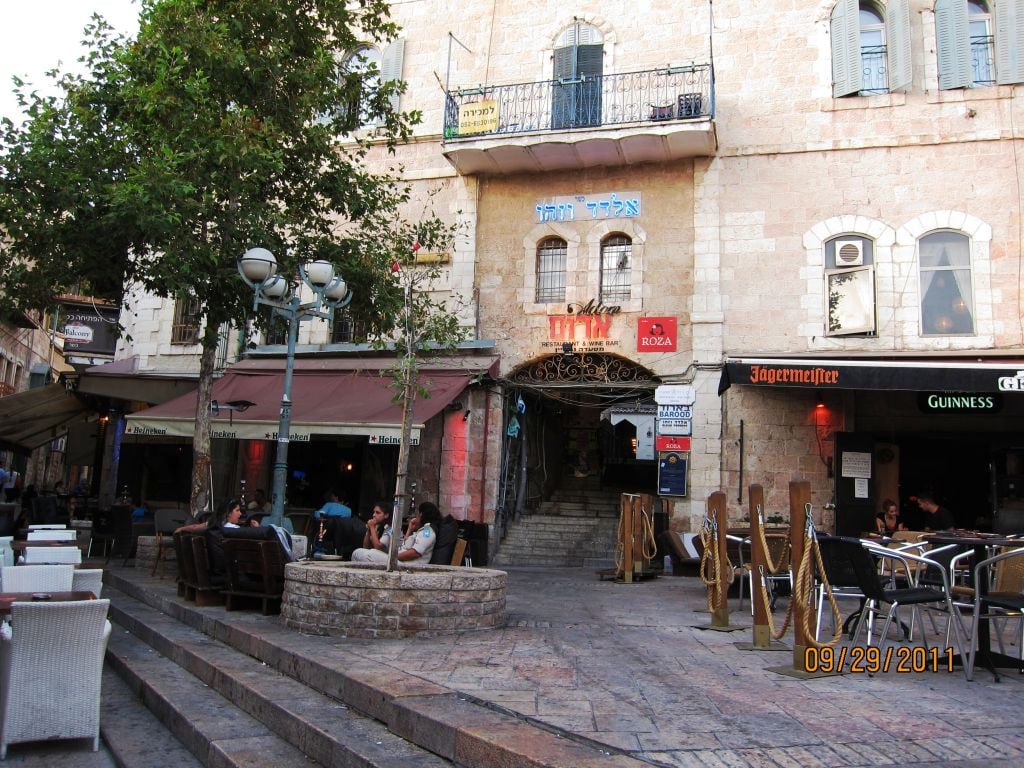
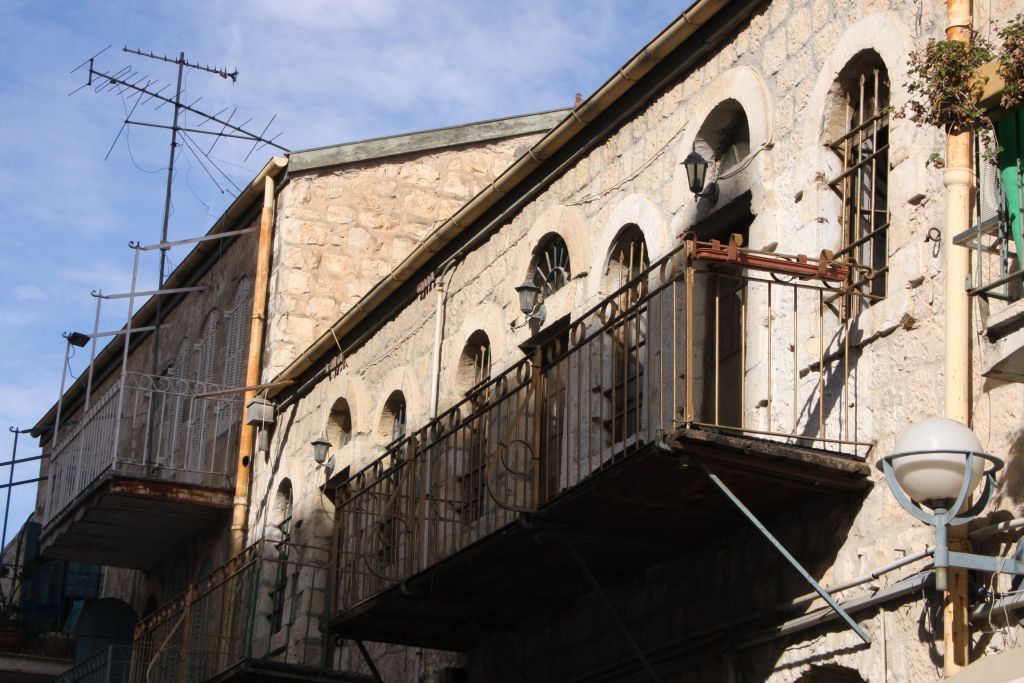
Deep inside Nahalat Shiva, a long staircase leads up to a dairy restaurant featuring literary evenings. It is called Tmol Shilshom, named for the title of a famous book by Nobel Prize winner Shai Agnon that translates as “Only Yesterday” or “Those were the Days.” The restaurant, tastefully preserved, is part of a dilapidated structure from the neighborhood’s early days.
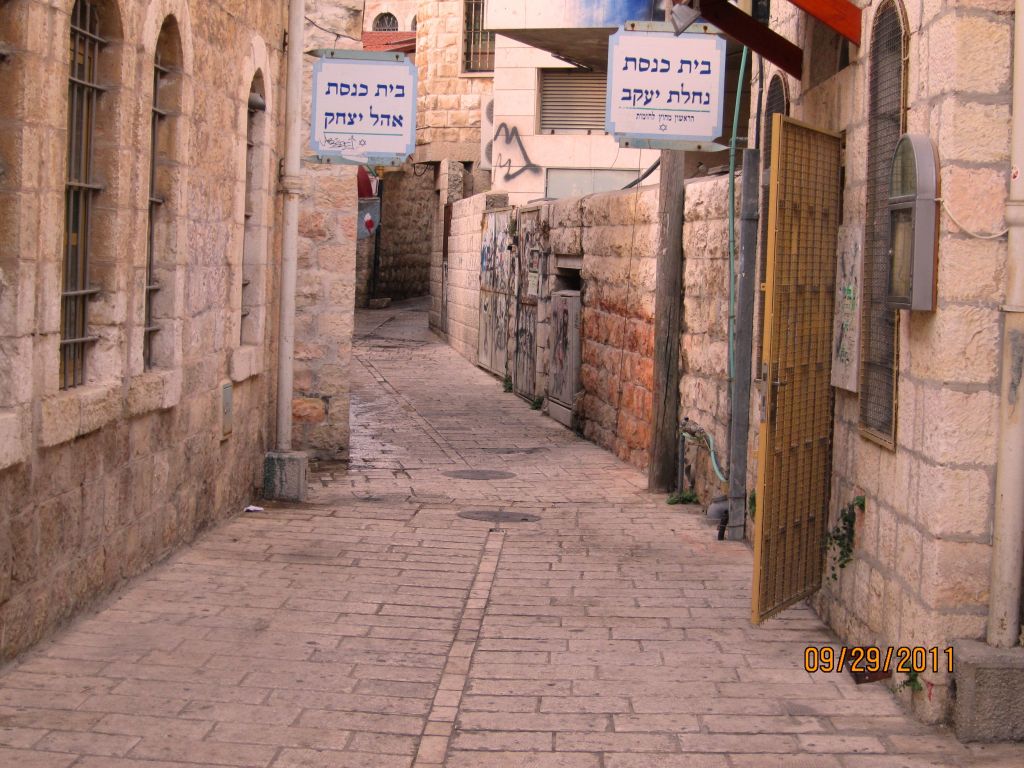
Nearby, the Ohel Yitzhak Sephardi synagogue dates back to 1888. Named for one of its founders, it features a wonderful ironwork gate, and the interior is filled with Old World charm.
Across the lane, the Ashkenazi Nahalat Yaakov synagogue claims to be the first synagogue outside the Old City walls. Indeed, although there were places of worship in the two neighborhoods that preceded Nahalat Shiva — Mishkenot Sha’ananim and Mahane Yisrael — this was built in 1873 as the first to be constructed specifically as a synagogue. Remaining from the early structure are the lovely stone walls and the beautiful stone floor.
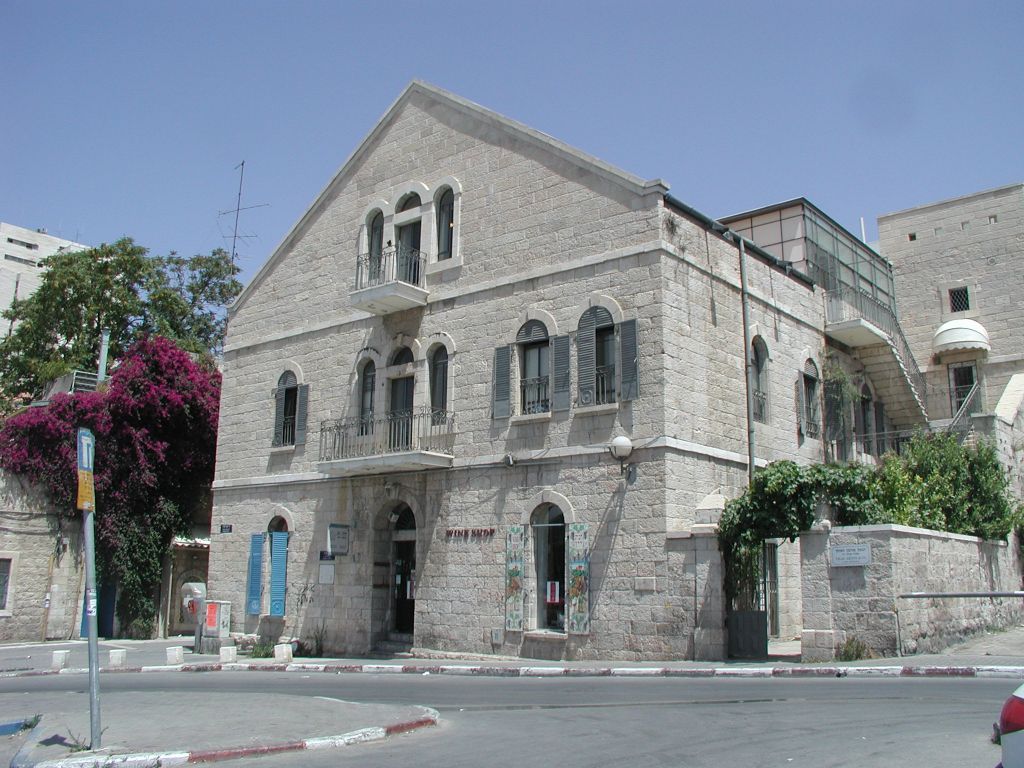
A stunningly restored 1920’s edifice at the edge of the neighborhood boasts an unusually handsome façade. Constructed by a Christian Arab from Bethlehem, it was rented by Zalman Baharav and called the Baharav Hotel. The establishment’s location near Jaffa Road and in the center of town made it a popular venue for British officers.
Kahal Hassidim synagogue, on Yoel Solomon Street, was originally a little carpentry shop. It was operated in the 1940’s by the house’s owners, Meir and Faiga Halevi. Meir liked to invite neighbors and passersby into the shop for daily prayers in the Hassidic style, and the couple bequeathed their home and shop to the community as a synagogue that was officially dedicated in 1954.
The tall Kikar Zion Hotel stands on the original site of the Zion Cinema, the movie theater that gave Zion Square its name. The cinema began operating in 1912 inside a large wooden shed, screening silent movies to a fascinated audience. A few years later, a new owner named the shed Zion Cinema.
After the shed collapsed in 1920, it was replaced by a 600-seat movie house that hosted the city’s first opera performances. Torn down in 1979, it was replaced by a high rise that holds both the hotel and a bank.
In between, during the mid-seventies, the Ministry of Religion housed its Office of Muslim Affairs at the site. Sitting in the office was Yaakov Yehushua, a scholar and the father of famous author A.B. Yehoshua. As there wasn’t a lot of work for him to do, he spent much of his time writing historical tidbits about Jerusalem. Perhaps his most well-known is a slim volume called, not surprisingly, “Childhood in Old Jerusalem.”
A fabulous new structure with rounded corners features a reddish stone that reflects buildings on the other side of the road. Called HaMashbir LeZarchan, it is Jerusalem’s only department store. Its inauguration two years ago took place with enormous fanfare, fountains, and tens of thousands of Jerusalemites pushing to get inside.
Rivlin’s house stood on the corner, at the westernmost edge of Nahalat Shiva’s northern boundary. Upon his engagement in 1856, Rivlin declared that he planned to settle outside the Old City Walls. Rivlin’s family thought a dibbuk had entered his head and tried to remove it — but they were, fortunately, unsuccessful. After Nahalat Shiva, he went on to settle and/or help establish over a dozen other communities, among them Beit David, Mea Shearim, Even Yisrael, and Shaarei Tzedek.
______________________________________________________________
Aviva Bar-Am is the author of seven English-language guides to Israel.
Shmuel Bar-Am is a licensed tour guide who provides private, customized tours in Israel for individuals, families and small groups.










The Times of Israel Community.