

Police chief seeks Netanyahu’s approval to attend Interpol summit amid Ben Gvir feud
From Hong Kong, Danny Levy warns barring him from Interpol assembly would harm Israel’s security and crime-fighting efforts; Ben Gvir approves police appointments after long delays
 Add ToI as a Preferred Source on Google
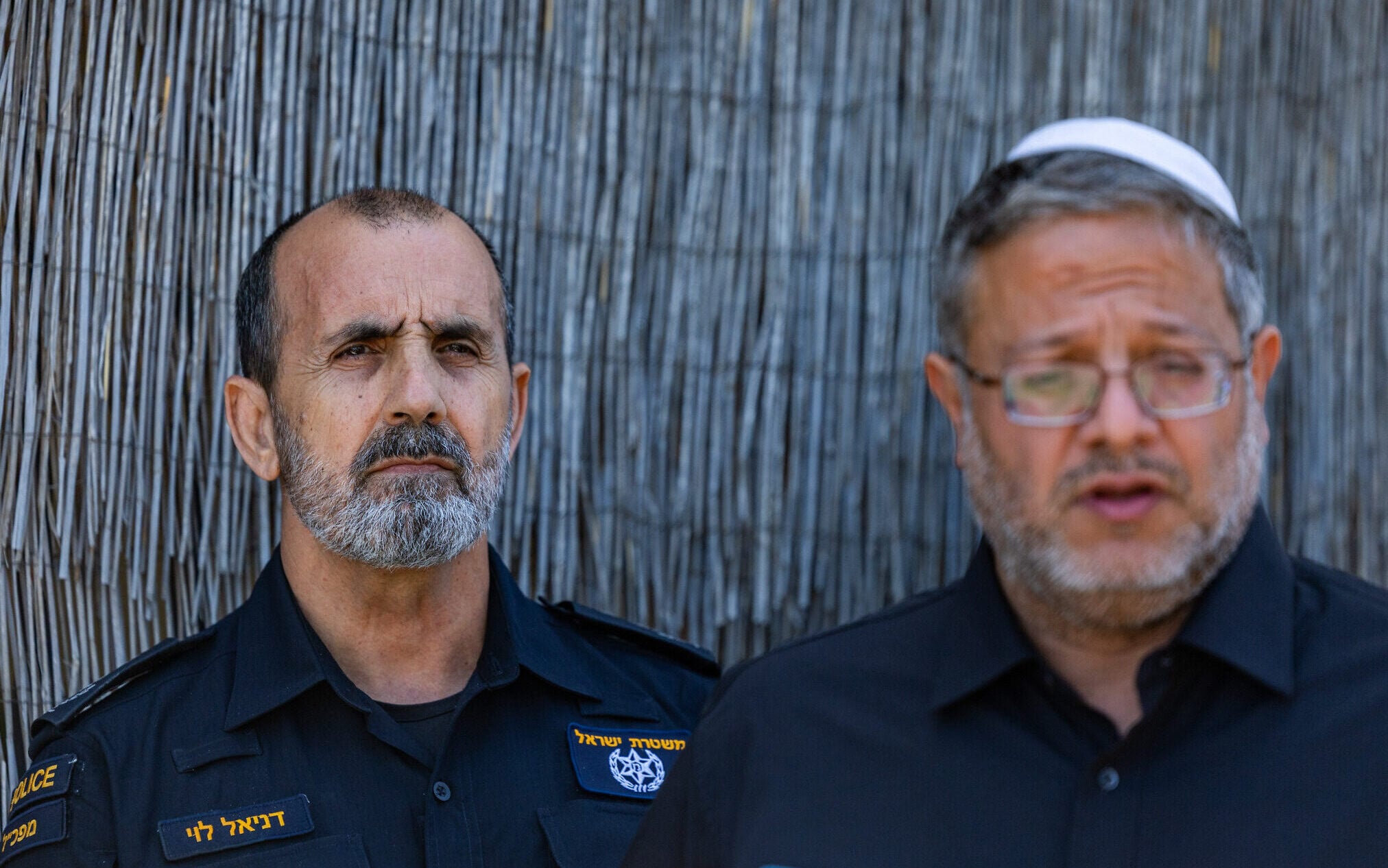
Israel Police chief Danny Levy asked Prime Minister Benjamin Netanyahu on Sunday to authorize his participation in an Interpol General Assembly meeting in Hong Kong, after National Security Minister Itamar Ben Gvir told the organization not to recognize Levy as Israel’s representative because he had not approved the trip.
Levy flew to Hong Kong Saturday night despite Ben Gvir’s opposition to the trip. In his letter to Netanyahu, he warned that preventing him from participating in the conference would harm Israel’s ability to protect its security personnel and combat crime.
Levy wrote he was turning to Netanyahu “out of no choice,” urging the prime minister to back the Israeli delegation and clarify that the police chief was the force’s official professional representative, according to the letter published by Channel 12 news.
Levy also sent a copy of the letter to Ben Gvir, President Isaac Herzog, Foreign Minister Gideon Sa’ar, Attorney General Gali Baharav-Miara, and four other officials.
There was no immediate public response from Netanyahu to Levy’s request.
Interpol, an international organization with 196 member countries, facilitates cooperation between police forces around the world, including efforts to track down fugitives and combat cross-border crime. Its annual General Assembly, the organization’s highest governing body, is set to take place in Hong Kong from Monday through Thursday.
It begins tomorrow: the 94th session of INTERPOL's General Assembly is ready to welcome more than 740 delegates from 163 member countries for the law enforcement event of the year.
➡️ Follow along throughout the week for the latest on resolutions, key discussions and outcomes. pic.twitter.com/gl7Af1TwvB
— INTERPOL (@INTERPOL_HQ) November 29, 2026
Under Interpol’s rules, a country’s president, prime minister or foreign minister, among other officials, can authorize its representatives to attend the assembly, following the country’s own procedures.
Disputes over credentials are decided by Interpol’s president. Delegations whose credentials are rejected may still attend as observers unless the assembly decides otherwise.
In his letter, Levy said he hoped to counter Turkey’s efforts involving 26 international arrest warrants related to flotillas during the war and prevent countries hostile to Israel from being elected to Interpol’s Executive Committee.
He also sought to strengthen cooperation with foreign police forces to combat criminal organizations operating from abroad.
Levy stressed, as well, the importance of his attendance because of the participation of Iran, Israel’s arch-enemy, and Turkey, whose relations with Israel have deteriorated sharply since the outbreak of the Gaza war that followed the Hamas-led onslaught of October 7, 2023.
In August, Turkey announced that it was seeking Interpol Red Notices for Netanyahu and another Israeli, identified by Turkish authorities as Afek Moskovitch, as part of a case involving the interception of a Gaza-bound activist flotilla.
A Red Notice is a request to police forces worldwide to locate and temporarily arrest someone pending extradition, but it is not itself an arrest warrant.
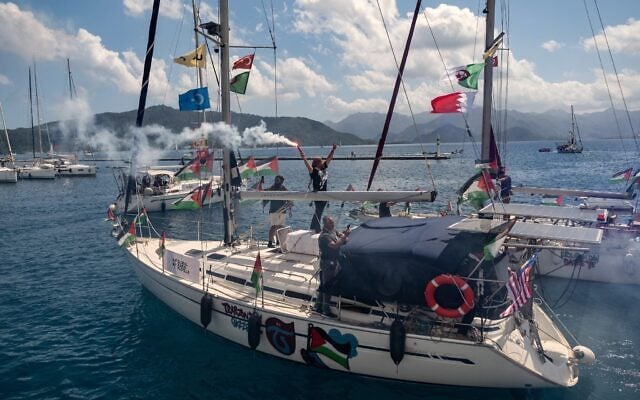
The flotilla was part of a series of attempts by pro-Palestinian activists to break Israel’s naval blockade of Gaza and deliver aid to the Strip. Israel says the blockade is intended to prevent weapons from reaching Hamas and has dismissed the flotillas as publicity stunts, saying activists have rejected offers to transfer aid to Gaza through approved channels.
Levy also warned against weakening Israel’s direct ties with Interpol and foreign police forces.
Ben Gvir, whose ministry oversees the police force, had refused to sign off on the trip and sent a message to organizers calling on them to exclude Levy from the conference, according to Hebrew media reports.
Ben Gvir’s office said in a statement that Levy’s trip was “unacceptable to the minister and not approved by him as required by procedure.”
It was not immediately clear whether Levy was permitted to travel abroad without Ben Gvir’s approval.
Ben Gvir’s office also asserted that an important cabinet meeting scheduled for Sunday required Levy’s attendance and that the security situation in Israel and violent crime necessitated his presence in the country, an apparent reference to deadly crime in the Arab Israeli community.
Last week, Levy had a meeting with Baharav-Miara in an effort to circumvent Ben Gvir and get her approval for him to attend the Interpol General Assembly, the Walla news site reported at the time.

Ben Gvir approves senior police appointments
Meanwhile, Ben Gvir on Sunday approved the appointments of 16 senior police officers recommended by Levy, after holding up senior appointments for more than six months, the Haaretz daily reported.
Ben Gvir had recently argued that he could not approve the promotions because Israel has a caretaker government, though Haaretz attributed the delays to the ongoing dispute between him and Levy.
According to a statement from Ben Gvir’s office cited by the newspaper, the appointments were approved after the minister became convinced that they were urgent.
Senior police officers recently warned Levy that the force was “falling apart,” due to a severe shortage of officers and commanders, Haaretz reported. Even after Sunday’s appointments, the force is still short some 170 officers, including regional and station commanders, according to the report.
Tensions between Levy and Ben Gvir date back months. In September, Ben Gvir reportedly backed out of an agreement on senior police appointments because he opposed Levy’s plans to promote officers seen as allies of Baharav-Miara.
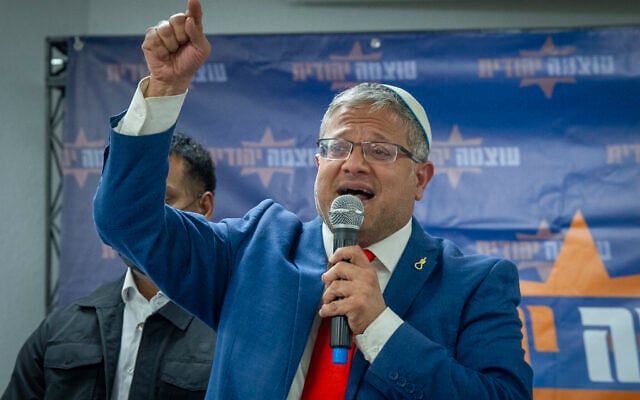
The relationship deteriorated further following the October 27 election, in which Netanyahu’s bloc of right-wing and ultra-Orthodox parties, including Ben Gvir’s far-right Otzma Yehudit party, won 53 seats in the 120-member Knesset, losing its parliamentary majority.
Netanyahu and his ministers remain in office in a caretaker capacity, while Yashar party chairman Gadi Eisenkot, who was tasked by President Isaac Herzog with forming the next government, has until December 6 to do so.
The week after the election, Ben Gvir accused Levy of ordering “harsh violence” against ultra-Orthodox protesters to appease the opposition. He also petitioned the High Court to cancel an April injunction that forbids him from interfering in the police’s use of force.
Ben Gvir also accused Levy of “sucking up to the leftists” after having “carried out my every request” over the previous 18 months.
Levy rejected Ben Gvir’s accusation that he had ordered violence against the protesters, calling it “baseless and outrageous.”


The Times of Israel Community.