

Sudanese in Israel: Ashkelon stabber was mentally ill, not a terrorist
Representatives of the community say Kamel Hassan, who was shot dead Sunday after wounding a soldier, had no political agenda
 Add ToI as a Preferred Source on Google
Judah Ari Gross is The Times of Israel's religions and Diaspora affairs correspondent.
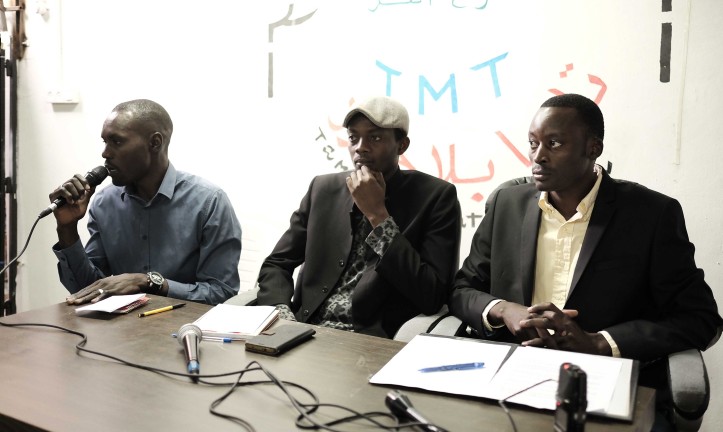
A Sudanese man who stabbed an IDF soldier in Ashkelon on Sunday had been suffering from untreated mental health issues and was not a terrorist, representatives of the Sudanese community said on Monday.
Kamel Hassan, 32, stabbed and lightly injured a 20-year-old soldier near the Ashkelon bus station on Sunday morning and then fled the scene. Another soldier who witnessed the attack gave chase and shot Hassan when he ignored calls to halt. Hassan died a few hours later in the hospital.
Police categorized the attack as “nationalistic,” but according to Mutasim Ali, an activist in the Sudanese community, this was untrue.
“This was a case of a man with mental issues, which went untreated. The man had no political agenda and definitely did not represent the political agenda of our community,” Ali told reporters and members of the local community in south Tel Aviv.
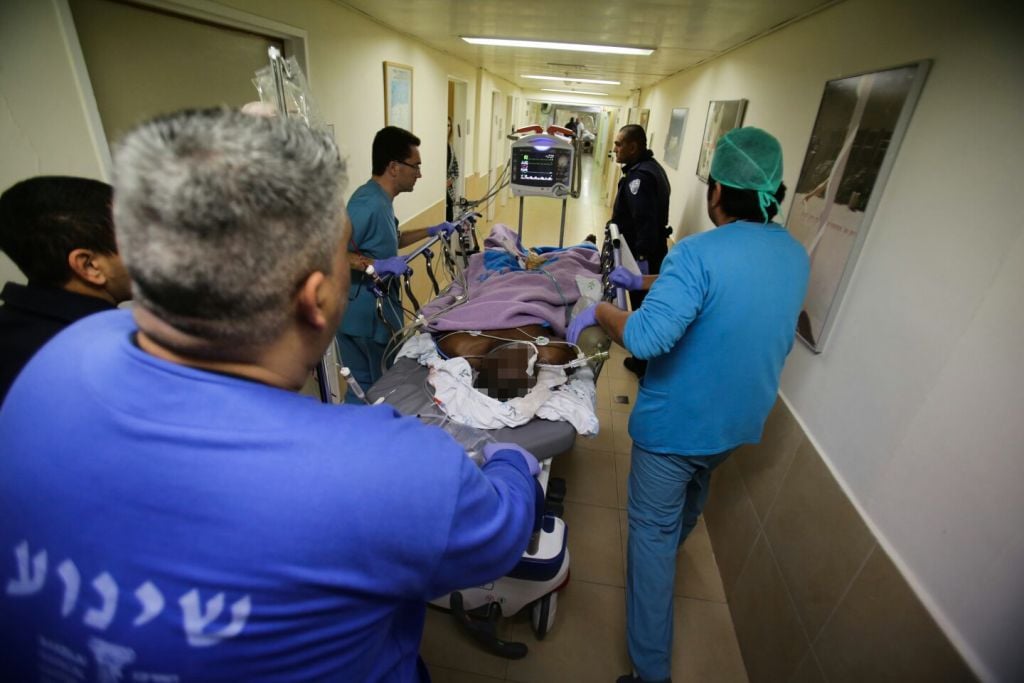
Ali had spoken with friends of Hassan from when he was incarcerated in the Holot detention center in southern Israel. According to Hassan’s friends, he had been suffering from emotional problems for a while, but they had recently become worse.
“We don’t know exactly what his motivations were, or that he for sure was the one who did it,” Ali said. “What we do know is that it wasn’t a nationalist attack.”
The police had no additional information regarding Hassan’s motivation, but were still investigating the issue, a spokesperson said.
Hassan crossed into Israel illegally in 2008. He was picked up by law enforcement officers and taken to Holot in April 2014. He escaped from the open-air detention center in May 2015 and had been moving between different cities ever since, according to Alhaj Tom, another representative from the community.
“During that time, he became a danger to himself and to others,” Ali said.
Ali and two other African migrants spoke in a makeshift auditorium — a small, open space behind an apartment building covered with a tin roof — in southern Tel Aviv. Ali spoke in Hebrew, while the other two spoke in English and Arabic.
A handful of south Tel Aviv residents protested the press conference, telling the Sudanese men to go back to where they came form.
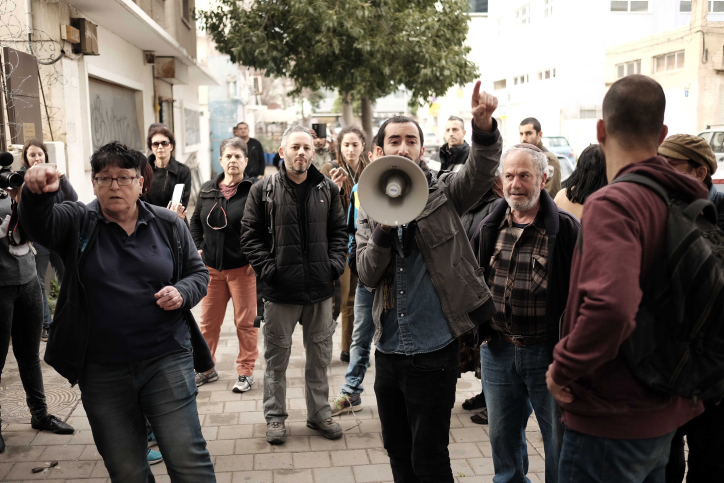
From the sidewalk outside the makeshift auditorium, the small group of Israelis played loud music, shouted slogans and blasted on a siren from an electronic bullhorn throughout the press conference.
Alhaj Tom, who spoke in English, did not directly address the protesters outside, but stressed that Hassan’s actions were not indicative of the African migrant community in Israel and therefore should not be used against them.
“We are here because members of our community are afraid of the consequences of one person’s actions,” Tom said.
Ali and two other Sudanese men said they “fiercely denounce the attack” and wished a speedy recovery to the injured soldier.
“We stand with Israeli society,” Ali said.




The Times of Israel Community.