

Venice entry ‘Rabin, The Last Day’ probes an Israeli trauma
While everyone knows who pulled the trigger, director Amos Gitai’s film on Israeli PM’s murder tackles broader questions of responsiblity
 Add ToI as a Preferred Source on Google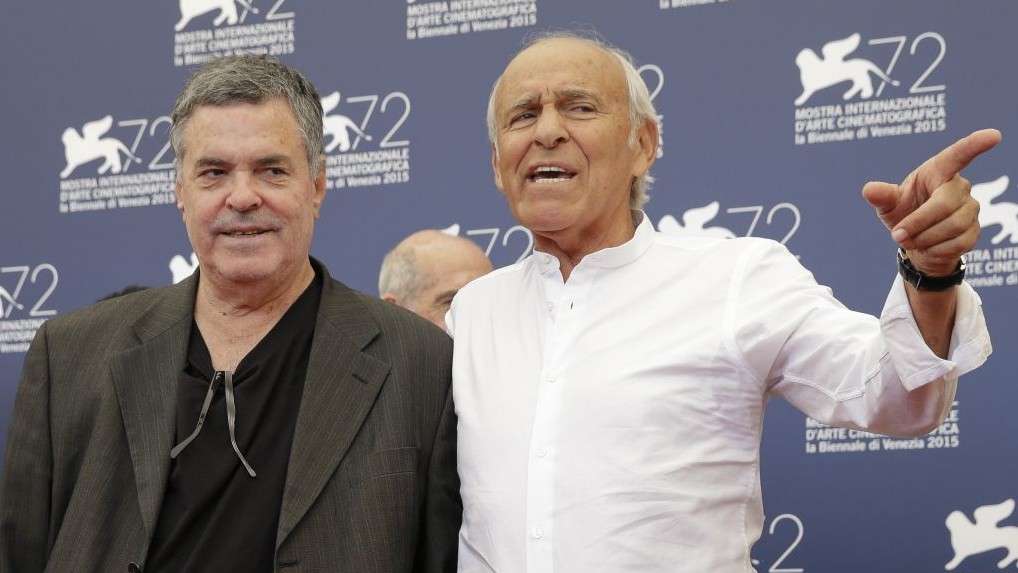
VENICE, Italy (AP) — Who killed Israeli Prime Minister Yitzhak Rabin? A Jewish ultranationalist gunman pulled the trigger. Who was responsible? That’s a bigger question, one asked by Amos Gitai’s film “Rabin: The Last Day.”
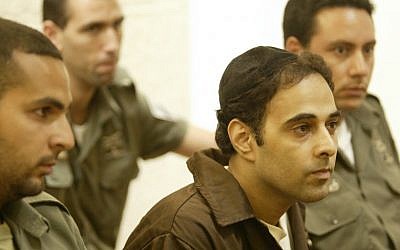
The Israeli leader was gunned down in November 1995 by Yigal Amir, a right-wing student enraged by Rabin’s policy of trading land to the Palestinians for peace.
Gitai’s dramatic dissection of the murder and its aftermath, which premiered Monday at the Venice Film Festival, suggests Israel still hasn’t fully come to grips with a killing that changed the country forever.
Gitai said the assassination snapped shut “maybe the only little window in the very long period of Israeli-Palestinian conflict that there was a sincere effort to recognize the other.”
Now, he said, “we are really 180 degrees from this moment.”
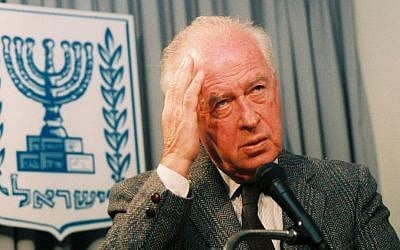
The killing of Rabin shocked not just Israelis but people all over the world who had pinned hopes for Middle East peace on his bold diplomatic moves.
Rabin was a war hero whom many Israelis trusted to negotiate peace, even if that meant conceding land Israel had captured in the 1967 Mideast war. During his tenure, he signed the Oslo accords with the Palestinians and a peace treaty with Jordan.
Gitai said Rabin’s death traumatized Israel as much as President John F. Kennedy’s did the United States: “Everyone of this generation remembers exactly where he was.”
The effects of the killing still ripple through Israeli society. Some, including Gitai, argue that it choked off the peace process between Israelis and Palestinians. The years since have seen several wars and a huge expansion of Israeli settlements in the Palestinian territories.
Gitai has explored Israeli history in previous films including “Kippur,” about the 1973 Yom Kippur war.
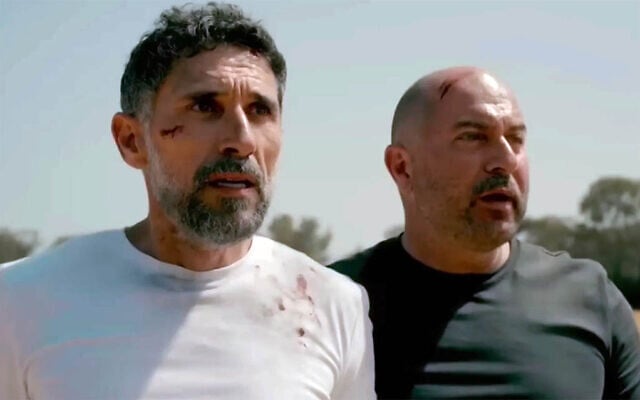
“Rabin” is part political thriller and part docudrama, mixing dramatic reenactment with archive footage and interviews with figures including former president Shimon Peres.
It reconstructs a fact-finding commission’s hearings, police interviews with the killer and the words of extremist rabbis and hard-line politicians who demonized Rabin, calling him a Nazi, a schizophrenic, a Satanist and a traitor.
As with Kennedy’s killing, conspiracy theories still swirl around Rabin’s death. Gitai rejects the idea of a conspiracy, but thinks the hyperbolic rhetoric of some preachers and politicians created a climate of incitement to violence.
“I think they are all responsible,” the 64-year-old director said Monday in an interview beside the Adriatic Sea in Venice.
“I can’t say that they all called to kill Rabin, but they wanted to destabilize a democratically elected government.
“I don’t think there was a conspiracy. I think it was written on the wall.”
“Rabin” is one of 21 films competing for the Golden Lion at the Venice festival. Its commercial premiere will take place November 4 — the 20th anniversary of the slaying — at a Tel Aviv theater 200 meters from the spot where Rabin was shot after attending a peace rally.
Anticipating criticism, the director says every word in the film has been taken from transcripts and other records.
“The film is factual,” he said. “Everything is based on documents.”
He hopes Prime Minister Benjamin Netanyahu, a figurehead of hawkish, right-wing Israeli politics, will come to the premiere.
“I’m not sure he would love the film,” Gitai said. “But let’s see.
“Some people do cinema in order to be loved by everybody,” the director added. “First of all, I don’t love everybody — I love some people, but not everybody. And I think the important thing is to encourage people to think.”
Copyright 2015 The Associated Press.







The Times of Israel Community.