

‘We are collateral damage’: Orthodox Belgian MP set to fight for the Jews of Europe
As the European Jewish Association’s first diplomatic envoy, Michael Freilich will go to battle as Jews’ and Muslims’ religious freedoms are systematically shrunk in the EU
 Add ToI as a Preferred Source on Google
Zev Stub is the Times of Israel's Diaspora Affairs correspondent.
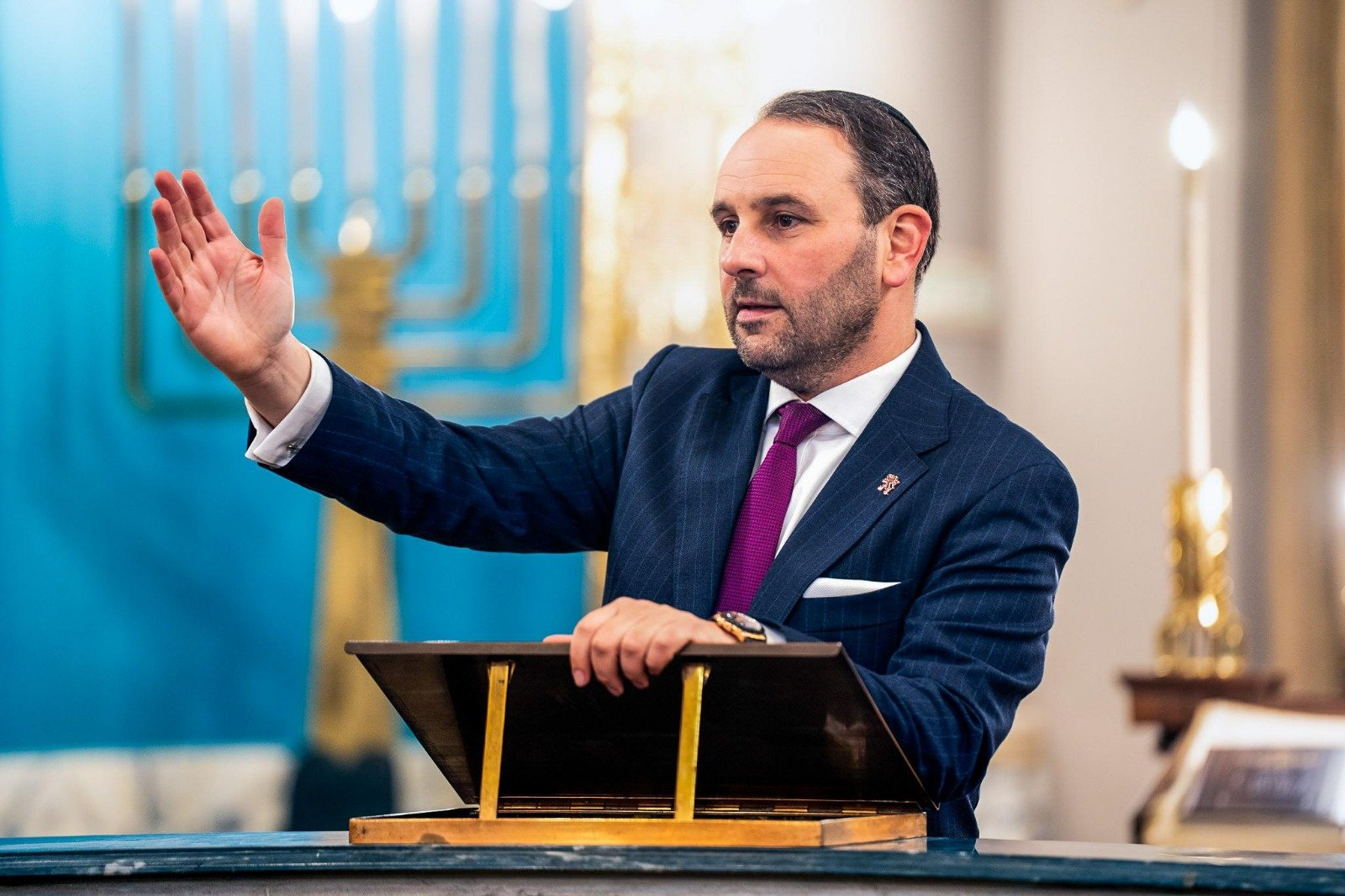
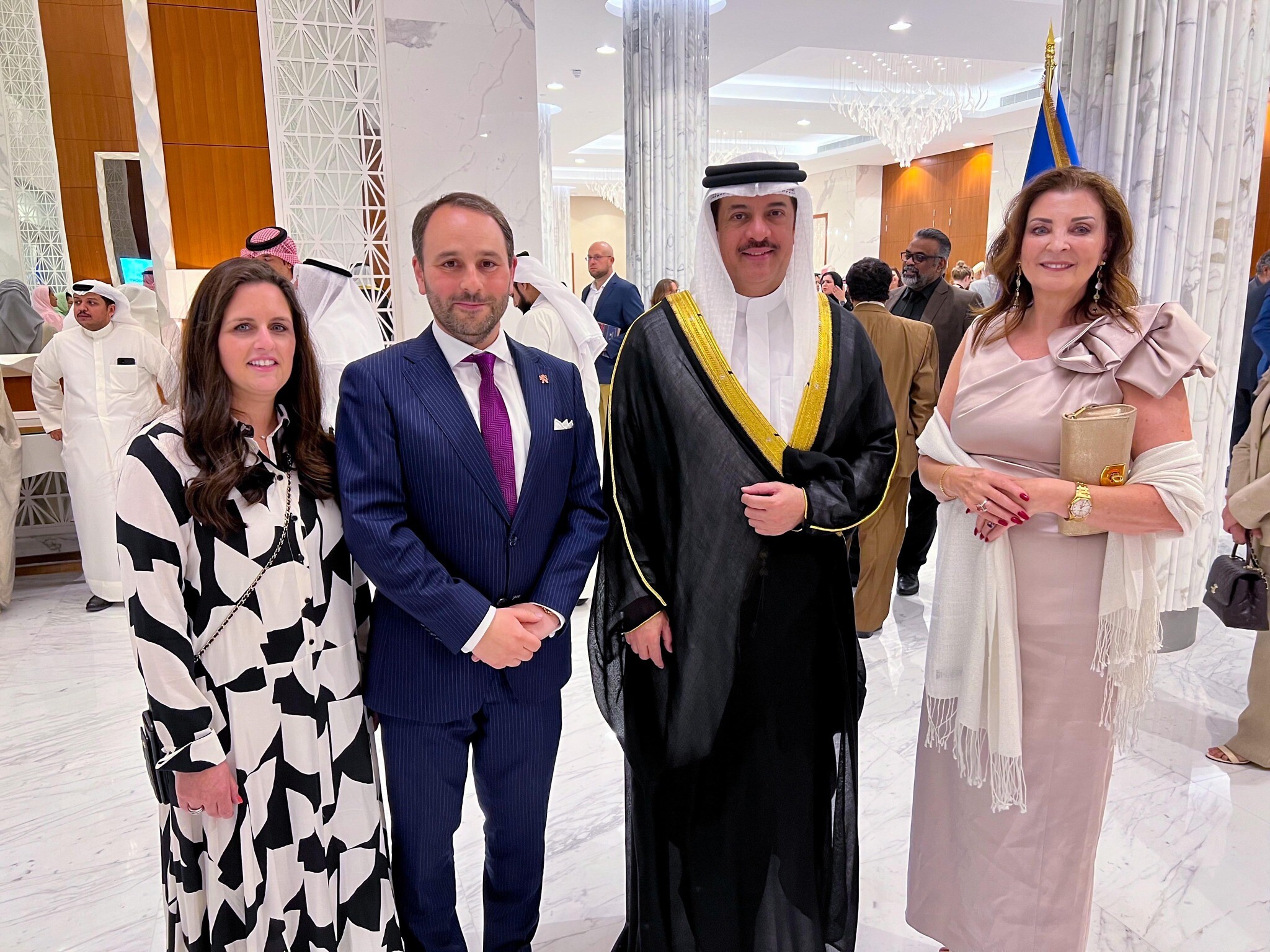
For Michael Freilich, Belgium’s only Orthodox Jewish lawmaker, representing Israel and the Jewish people is a natural part of his job.
“As the only representative of the Jewish community in parliament, it’s obviously high on my agenda when there is a problem with antisemitism or freedom of religion,” the 44-year-old Freilich told the Times of Israel in a phone interview. “I feel that I owe it to my community to fight and advocate for them.”
Now, Freilich is looking to expand his influence to the wider European Jewish community. After being re-elected to the Belgian Chamber of Representatives for a second five-year term earlier this summer, as well as starting a new position as a city councilor in his hometown of Antwerp, the father of four is now taking on an additional new role as the European Jewish Association’s first diplomatic envoy for issues of antisemitism and Holocaust remembrance.
Freilich, who previously founded the country’s leading Jewish news outlet, will work with the EJA to “advance [its] fight against antisemitism, strengthen our community, and champion Jewish life and culture in the European landscape,” EJA Chairman Rabbi Menachem Margolin said in a statement.
Freilich sees the new diplomatic role as an opportunity to take the work he is doing on behalf of the Jews of Belgium to the center stage in Europe.
“I’ve come to realize that the problems my [Jewish] community in Belgium are dealing with are usually not limited to Belgium,” Freilich said. “Being able to speak with other countries not just as a Belgian MP, but as a diplomatic envoy who represents the larger Jewish community, allows me to tackle issues on a much broader level.”
Challenges to tradition
Belgium’s Jewish community is relatively small, with just over 40,000 in a country of some 12 million, but the challenges it faces are some of the most significant in Europe. In addition to rising antisemitism, the country has been on the front line of legal battles over shechita (ritual slaughter) and brit mila (circumcision) that threaten to expand throughout the region.
In 2019, Belgium enacted animal rights legislation in its Flemish and Walloon regions requiring that animals must be stunned before they can be slaughtered for food. The ruling effectively banned shechita and Muslim ritual slaughter for halal products, sparking protests by both groups saying it infringed on their rights to religious freedom. The legality of the decision for those regions of Belgium has since been upheld by the Court of the European Union in 2021 and the European Court of Human Rights in early 2024, dashing hopes of overruling the law.
“The community is still able to get kosher meat, because shechita is still allowed in Brussels, and you are allowed to import kosher meat,” Freilich said. “And at the end of the day, we know that they aren’t targeting the Jews. This is targeting the Muslim community, and we are collateral damage. The issue that is more worrying to me now is calls from within Belgium and around Europe to put limits on circumcision.”
Ritual circumcision has not yet been outlawed in any European country, but there have been attempts in several countries, including Belgium. “Once a serious public debate about that starts, it will be very hard to combat,” Freilich said.
Circumcision is relatively uncommon among the general population of Europe, with only 10-20% of males having gone under the knife, compared to over 70% in the United States.
“People here are not educated about the advantages in terms of reducing cancer and infections, so we need to campaign for greater awareness,” Freilich said.
At the same time, circumcision remains a gray area in terms of legislation in most countries.
“In Germany, they passed a law saying that anyone who is ordained as a rabbi and follows the appropriate medical and hygienic procedures is allowed to do a brit,” Freilich said. “But in other countries, there isn’t any legislation, and Muslims generally get their circumcision done at a hospital, not a religious ceremony, so they don’t have this issue. It’s just a matter of time.”
Freilich hopes to work with other European governments to adopt similar legislation allowing circumcision. He is also trying to encourage the EU to recognize certified mohels (the people who perform the circumcisions).
Earlier this summer, authorities in Ireland arrested a rabbi from London for allegedly performing circumcision without the necessary medical credentials, the first case in years of a rabbi in Europe arrested in connection with a brit milah.
“The problem in that case wasn’t that he performed the operation, it was that he didn’t have certification that was recognized in Ireland,” Freilich noted. He said he was exploring different avenues for creating an accreditation standard for mohels that would be recognized across the EU.
Fighting antisemitism
Freilich’s role as an Orthodox lawmaker has become much more prominent since last October 7, when Hamas terrorists attacked southern Israel and launched the beginning of the current war with Gaza by murdering some 1,200 and taking 251 hostage to Gaza. After years of rising antisemitism in the country, anti-Jewish and anti-Israel activity quadrupled in 2023.
“I’ve experienced very little antisemitism personally during this time, but there is a lot of hatred out there,” Freilich said. “Most Jews in our community are very supportive of Israel, but they are afraid to express it publicly because they are afraid of being targeted.”
In June, a report by the EU’s Fundamental Rights Agency found that 97% of Belgium’s Jews encountered antisemitism in their daily lives and that 70% were hiding their Jewish identities in public to avoid attack.
“One of the things I’ve been focusing on is advocating for greater protection of the Jewish community, including bringing in [Belgian] soldiers to protect community institutions and getting budgets for bulletproof doors and other security measures,” Freilich noted. “After October 7, the interior minister was initially reticent to send in any extra police protection to Jewish areas, so I had to fight with her until she agreed.”
Freilich is also working to encourage cooperation between Jewish and Muslim groups and counter anti-Israel narratives through education.
“Just last night, I did a one-hour live stream with a Muslim TikToker, taking him through the community,” Freilich said. “Seeing our community up close was a shock for him, and it really opened his eyes. I told him, ‘Instead of importing this conflict from the Middle East, let’s export our model of cooperation to the world.'”


The Times of Israel Community.