

X and O mark the spot for veteran industrial designer’s whimsical flower exhibit
‘Similar, but with nuances’: Yaacov Kaufman unveils what he’s made of hundreds of plastic gum containers and dozens of folding chairs, on display at Tel Aviv’s Liebling House
 Add ToI as a Preferred Source on Google
Jessica Steinberg, The Times of Israel's culture and lifestyles editor, covers the Sabra scene from south to north and back to the center
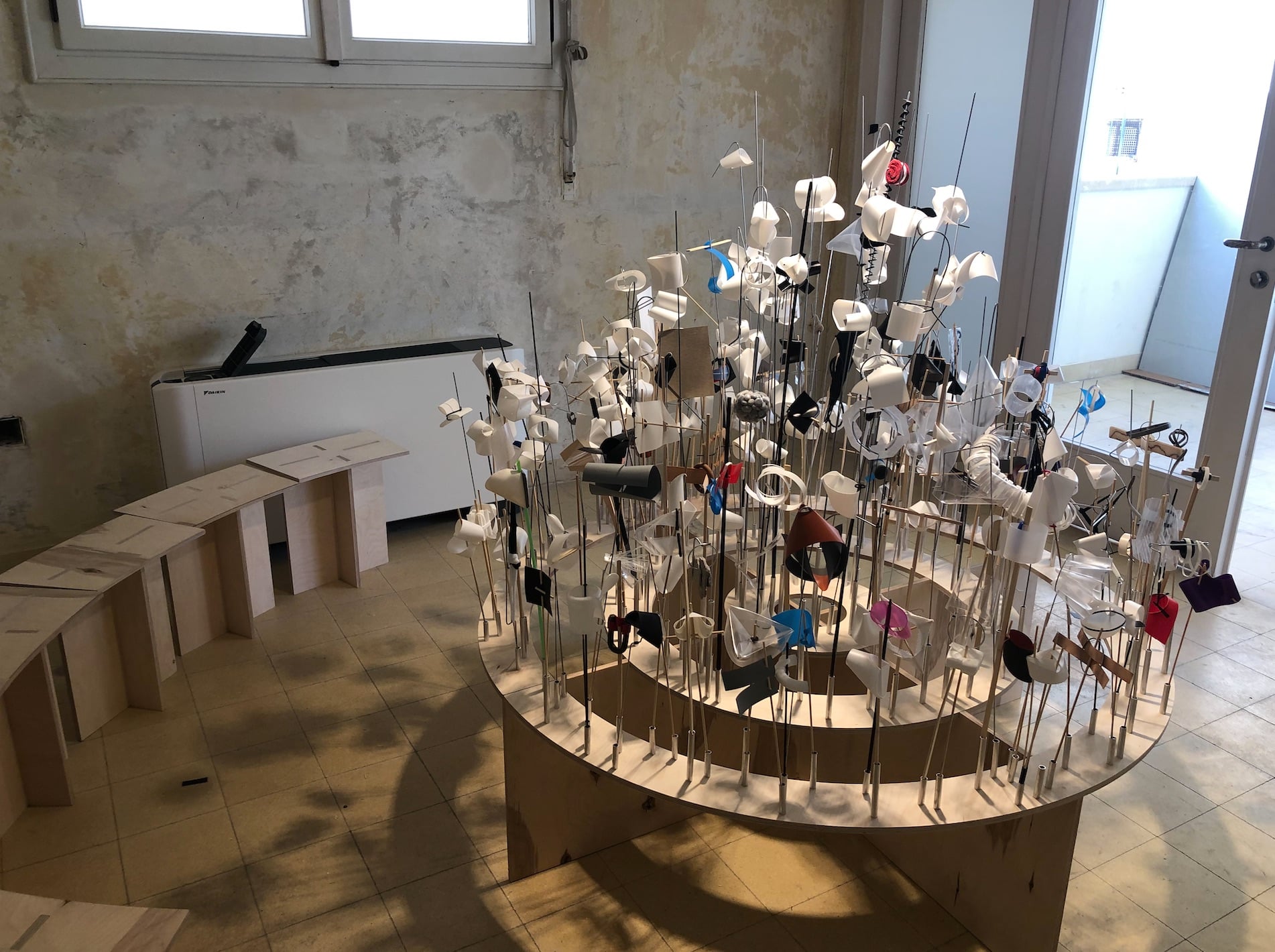
There’s a whimsical sensibility to “XO Yaacov Kaufman,” an exhibit of colorful plastic flowers shaped every which way by industrial artist Yaacov Kaufman, considered the elder statesman of Israeli design.
Exhibited in Liebling House in Tel Aviv — the Bauhaus home designed by architect Dov Karmi in 1936 for Max and Tony Liebling, and restored by the German government as a museum — “XO” opened October 28, and will remain through February 1.
O is one half of the exhibit. It’s a field of plastic flowers that Kaufman created throughout one year of the pandemic, made primarily from the containers of gum that he and his wife chew daily.
(This is not meant to be a recycling project, warned Kaufman; he simply utilized a material at his fingertips.)
The X is for Kaufman’s folding chair collection, initially brought to Liebling House for use in a conference planned for 2020, though it ended up taking place online.
At that point, the chairs were delivered to more than 40 homes for use during the virtual gathering. Now the chairs are back at Liebling, primarily in the café on the first floor.
The focus, however, is on hundreds of mostly white plastic cylinders, each about the size of a toilet paper roll.
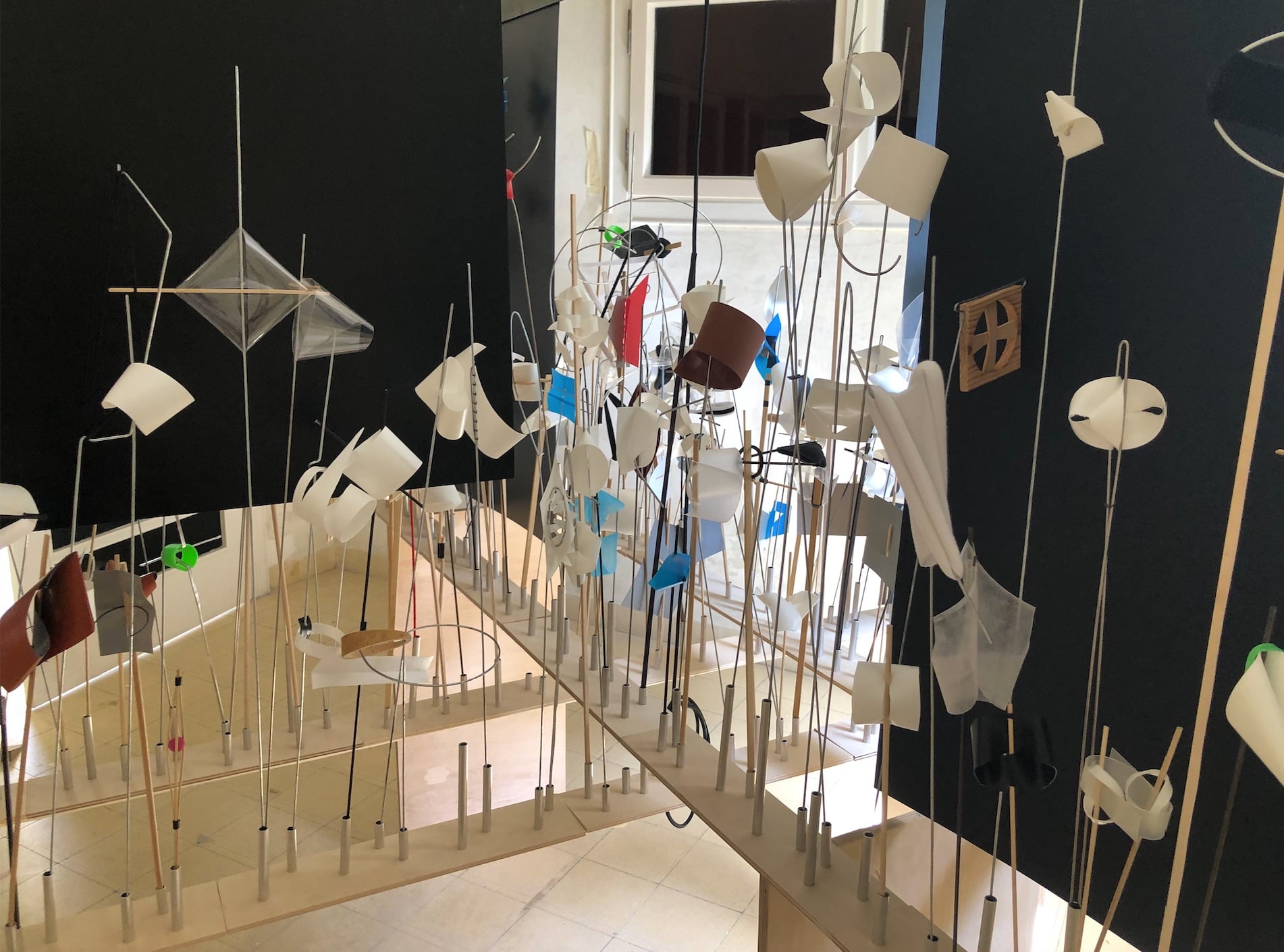
Many are curled into shapes, some adorned with a bit of fabric or string, others cut into ribbony strands or circles, and all are affixed to wooden skewers — the kind used for a barbecue — and placed inside metal tubes attached to simple wooden planks, a display decision made by curator Anat Eran Eizehamer, who also founded and directs Liebling House.
When Kaufman notes that he designed lighting fixtures for many years — “that’s how I earned a living,” said the longtime Bezalel Academy of Arts and Design professor — another glance at these plastic cylinders reminds viewers of miniature lighting fixtures, with contemporary bends and twists to the plastic shades.
That wasn’t Kaufman’s intention, however.
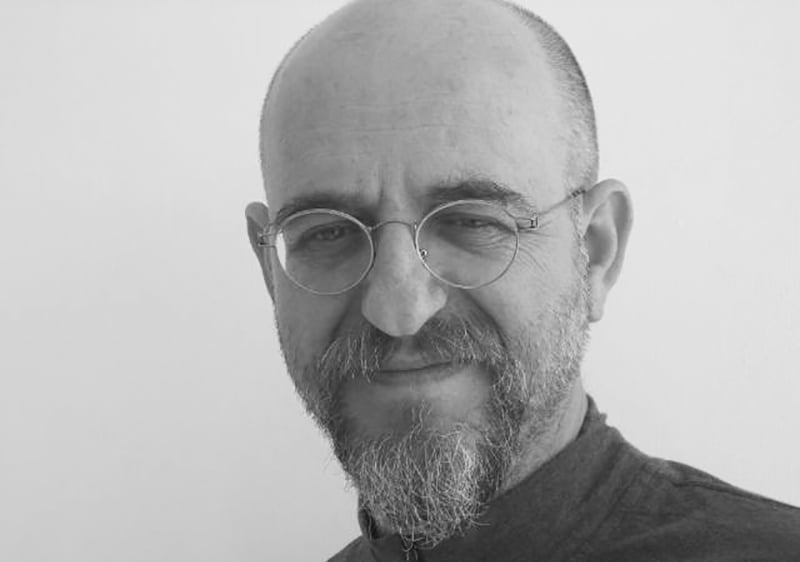
At the time, when he began twisting these plastic tubes, he was stuck at home, during the first lockdown of the pandemic, unable to get to his Bat Yam studio.
He began playing with the white plastic cylinders because “that’s what I do, I take an idea and work on it,” he said.
The process of shaping the plastic pieces began as a kind of pandemic therapy, said Kaufman.
“You make one, and then another one and then another one, and you discover something,” he said. “It’s like writing, you write something that isn’t so great and hope something good eventually comes out.”
“Here too, there’s a lot of nonsense, but I’m not afraid of making nonsense,” he added.
Over the course of the next year, along with other projects, Kaufman played with the cylinders, creating variations that aren’t always visible to the eye, but which are there.
He pulled one out, pointing at a circular opening with a cover that he compared to the lid of a teakettle, but which was clearly taken from another circle cut on the other side.
There are cylinders twisted into the shape of a flag, one with blue stripes that make it look like an Israeli flag — unintentional — others stretched with black fabric, and another in which the plastic was baked in the oven, offering a different take on the shape.
“It’s like typography,” said Kaufman. “The shapes are similar, but with nuances. Sometimes you see the differences, sometimes you don’t, but the variations are there. Everyone comes in and sees what they see.”
These days, Kaufman values the ability to make whatever he wants, freed from the constraints of lighting, which has to be a functional design object.
“This is, for the most part, a dysfunction of the idea,” he said. “There’s rules and regulations that you have to follow with lighting and here everything is free to be whatever you want.”









The Times of Israel Community.