

300-year-old Nazi-looted Stradivarius said to reappear in France
Experts believe violin made by iconic Italian luthier in 1719 was stolen by German soldiers from Warsaw museum in 1944
 Add ToI as a Preferred Source on Google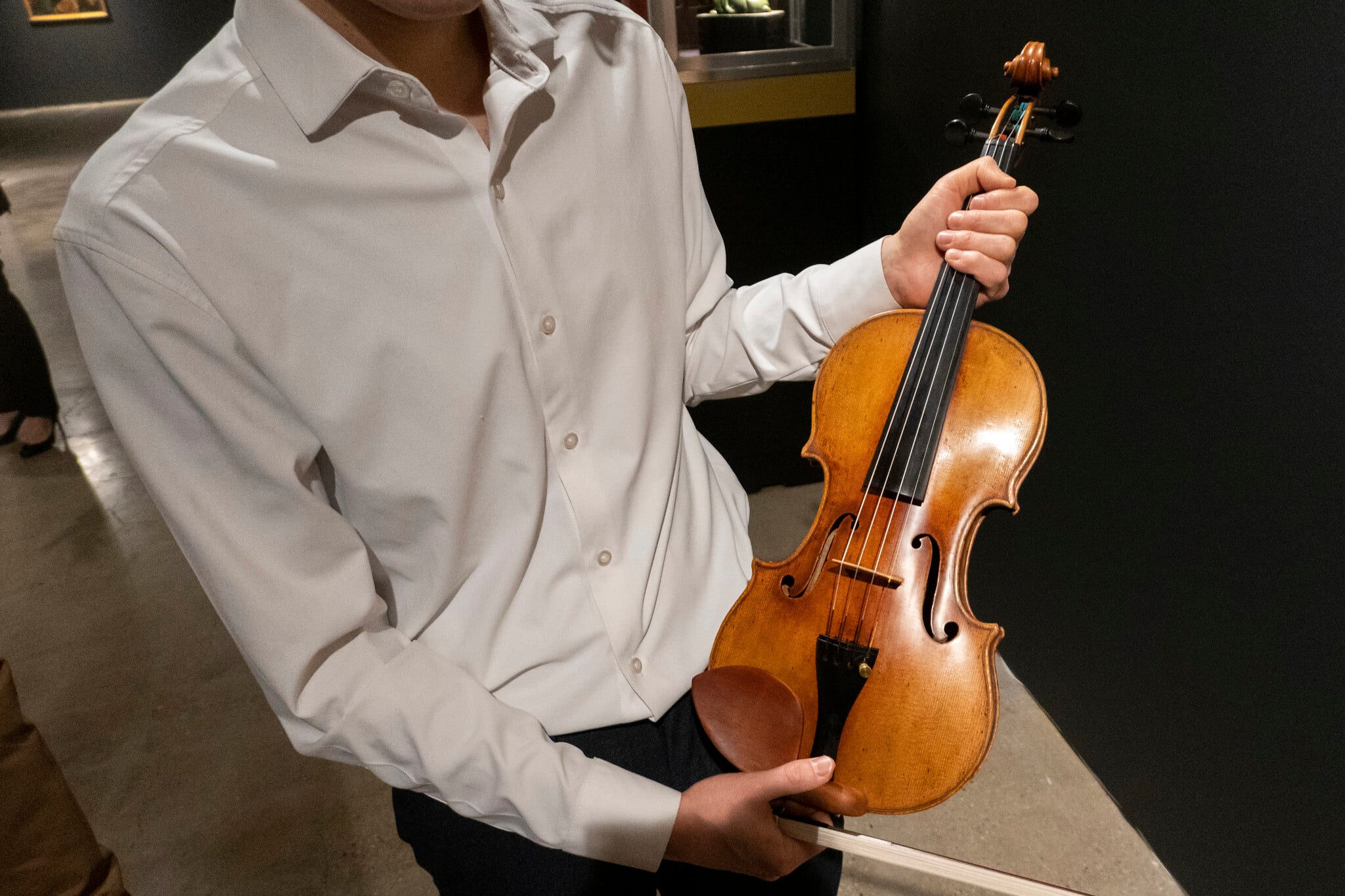
AFP — Has a 300-year-old Stradivarius violin worth $10 million and stolen by the Nazis during World War II turned up in France?
Pascale Bernheim, an expert on looted musical instruments, thinks so.
The first clue was an article in a local newspaper.
It reported that violinist Emmanuel Coppey had demonstrated his talent on several old violins during an evening of wine and music in the city of Colmar in the Alsace region near the German border.
Luthier Nicolo Amati had made the first in 1624, and Antonio Guarneri crafted the second in 1735, Les Dernieres nouvelles d’Alsace said.
The third was made by fellow Italian luthier Antonio Stradivari back to 1719.
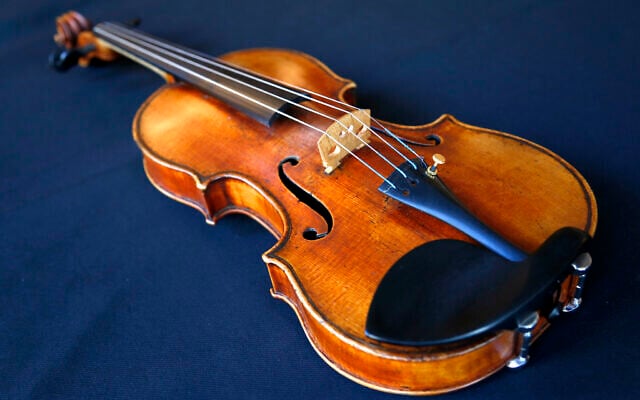
“I am absolutely convinced that it is the Lauterbach,” named after one of its first owners, Bernheim told AFP.
Nazi soldiers stole the violin from a museum in the Polish capital, Warsaw, in 1944, according to French newspaper Le Parisien, which investigated the story.
The string instrument survived years in East Germany during the Cold War, then was last seen in France in the early 1990s.
Stradivari made only nine violins in 1719, two of which are missing — the “Lauterbach” and the “Lautenschlager.”
But the “Lautenschlager” has a back made of two pieces of wood — not one, like the “Lauterbach,” the Parisien says.
A classical concert producer named Emmanuel Jaeger organized the wine and music evening in Colmar on March 31.
He had contacted Bernheim in 2017 to trace the origin of a violin owned by Jean-Christophe Graff, a luthier from Strasbourg, she said.
But when late British luthier Charles Beare examined it before he died last year, he said it was a Stradivarius from the luthier’s so-called golden period, Bernheim said.
He was worried he was holding a stolen instrument, she added.
‘Which one is it?’
The French expert started digging and found that Polish industrialist Henryk Grohman had owned the instrument before World War II, then handed it over to the Polish museum before his death.

She found he had descendants in Austria and Argentina.
But the instrument’s origin still needs to be confirmed with certainty.
“To my knowledge, Beare twice examined the violin, then it underwent a dendrochronological analysis,” to determine the age of wooden objects, Bernheim said.
Neither the concert producer Jaeger nor the luthier Graff responded to an AFP request for comment.
But Jaeger has said Bernheim was wrong.
“To the best of my knowledge, this isn’t the stolen violin,” he told the Alsace newspaper on Thursday.
He says the violin that starred at the concert was another of those made in 1719.
Bernheim was adamant.
“If it really is a Stradivarius from 1719, and not the Lauterbach, then which one is it?” she asked.
A rare Stradivarius violin, the “Joachim-Ma Stradivarius,” fetched $11.3 million at auction in New York in February.
The most-expensive record belongs to another Stradivarius, the “Lady Blunt,” which went in 2011 for $15.9 million.










The Times of Israel Community.