

Counting the days: How Jews clung to the Hebrew calendar as Nazis tried to erase it
A new exhibition at Yad Vashem highlights the extraordinary efforts made, often at risk of death, to preserve and mark the Jewish holidays during the darkest of times
 Add ToI as a Preferred Source on Google
Zev Stub is the Times of Israel's Diaspora Affairs correspondent.
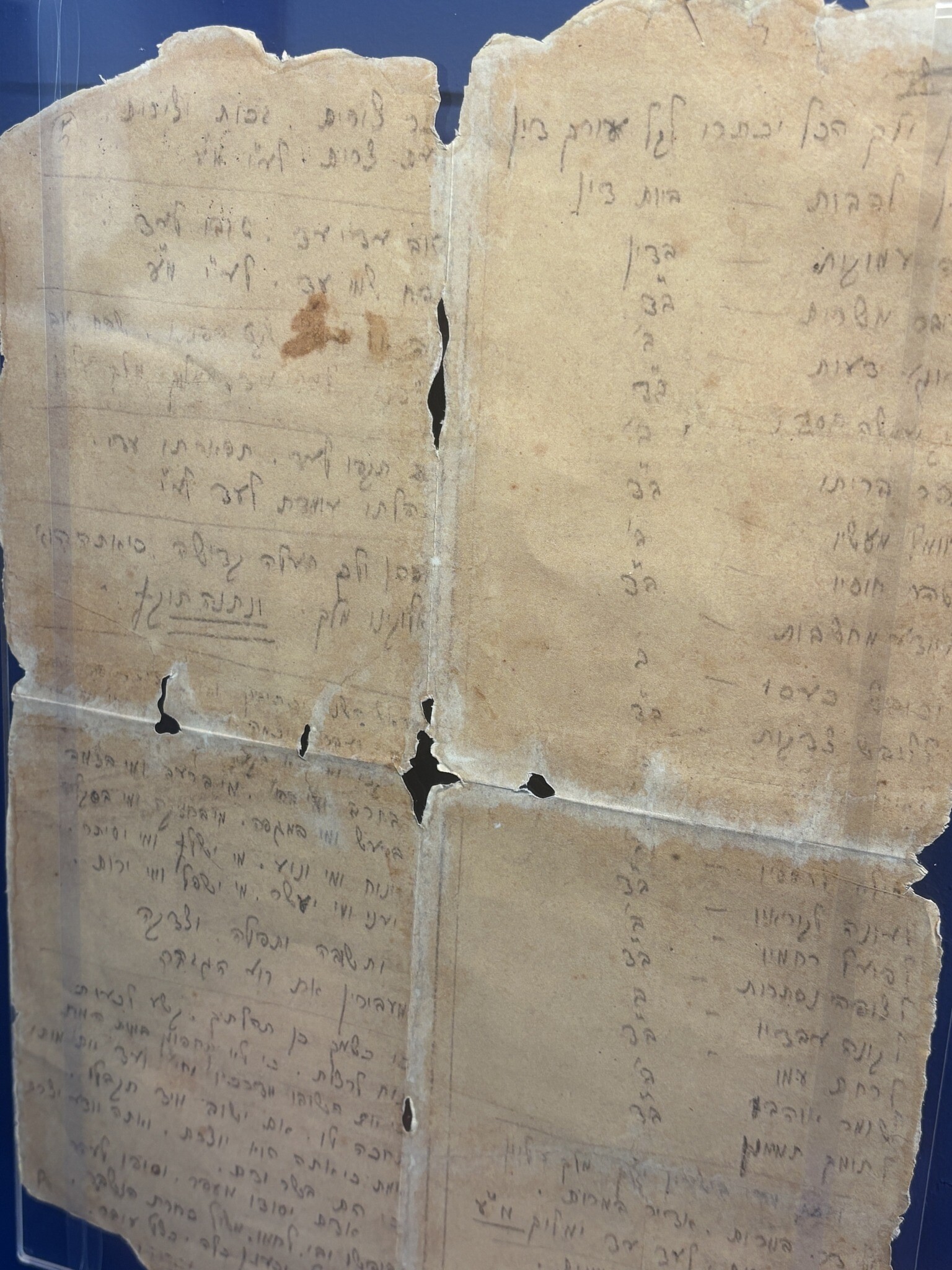
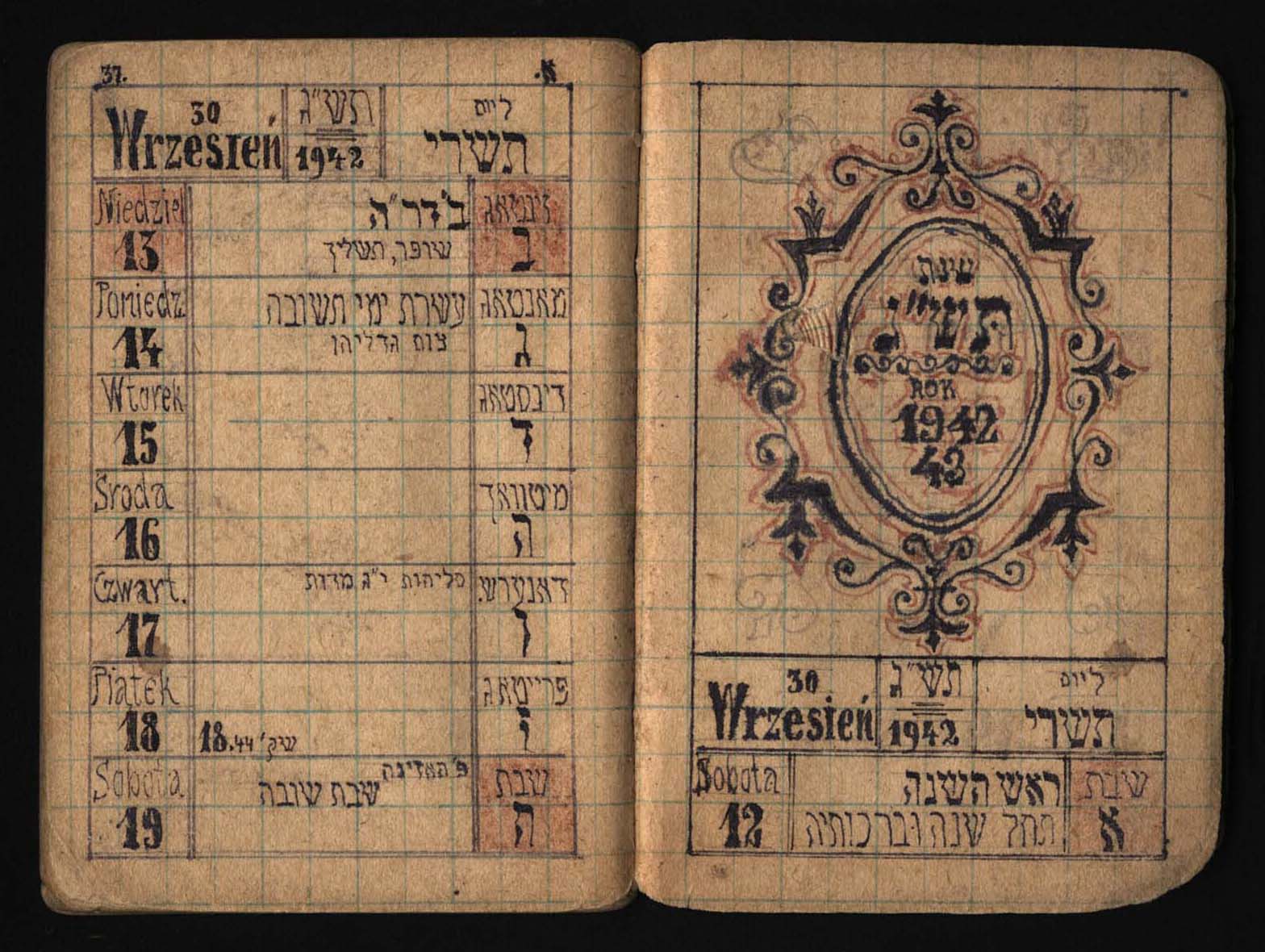
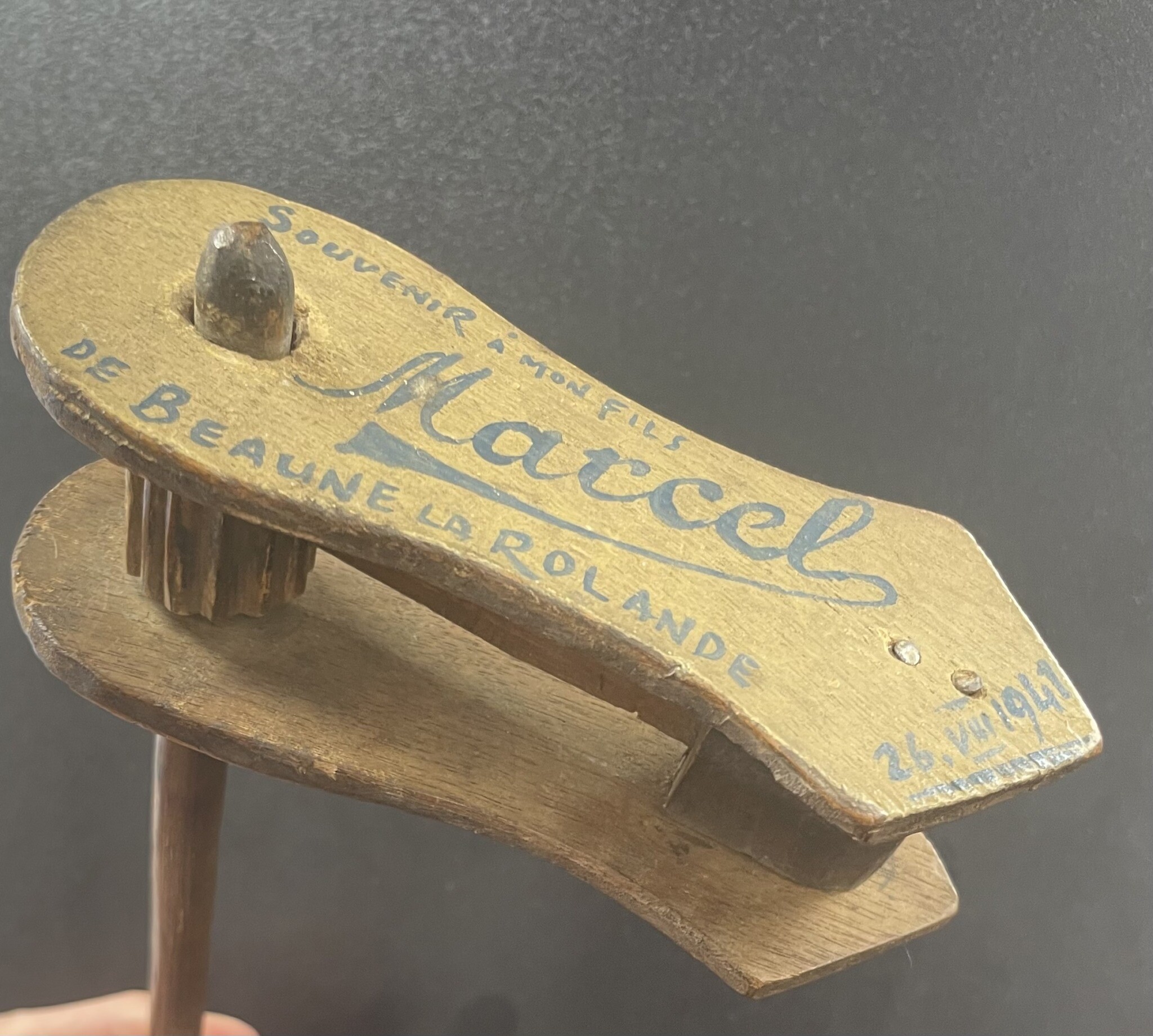
While hiding from the Nazis for more than two years, Israel Sheiner came up with a creative solution to ensure that his family would be able to observe Shabbat and the Jewish holidays properly: He calculated the dates from memory and wrote a makeshift Hebrew calendar.
Finding refuge in the home of Matjas Franciszek, a Polish farmer who agreed to take Sheiner in along with his wife and four children, Sheiner used paper and ink provided by Franciszek to design an exquisite calendar that would guide them through the Hebrew years of 5703-5704 (1942-1944).
His family would pray and say psalms using books that he had also handwritten from memory.
In October 1944, Sheiner suddenly felt unsure about whether his calculation for the day of the Yom Kippur fast was accurate or off by a day. After some consideration, he made a decision: His children would fast on the day he thought was more likely to be the “real” Yom Kippur, while he would fast for two days to cover both possibilities.
“After the war, they were able to check, and it turned out that the day his family had fasted was correct,” said Michael Tal, head of artifacts at Yad Vashem, Israel’s national Holocaust museum and memorial.
“Hiding in the home of this farmer, one of the Righteous Among the Nations, this was how the family survived and maintained its identity during this impossible time.”
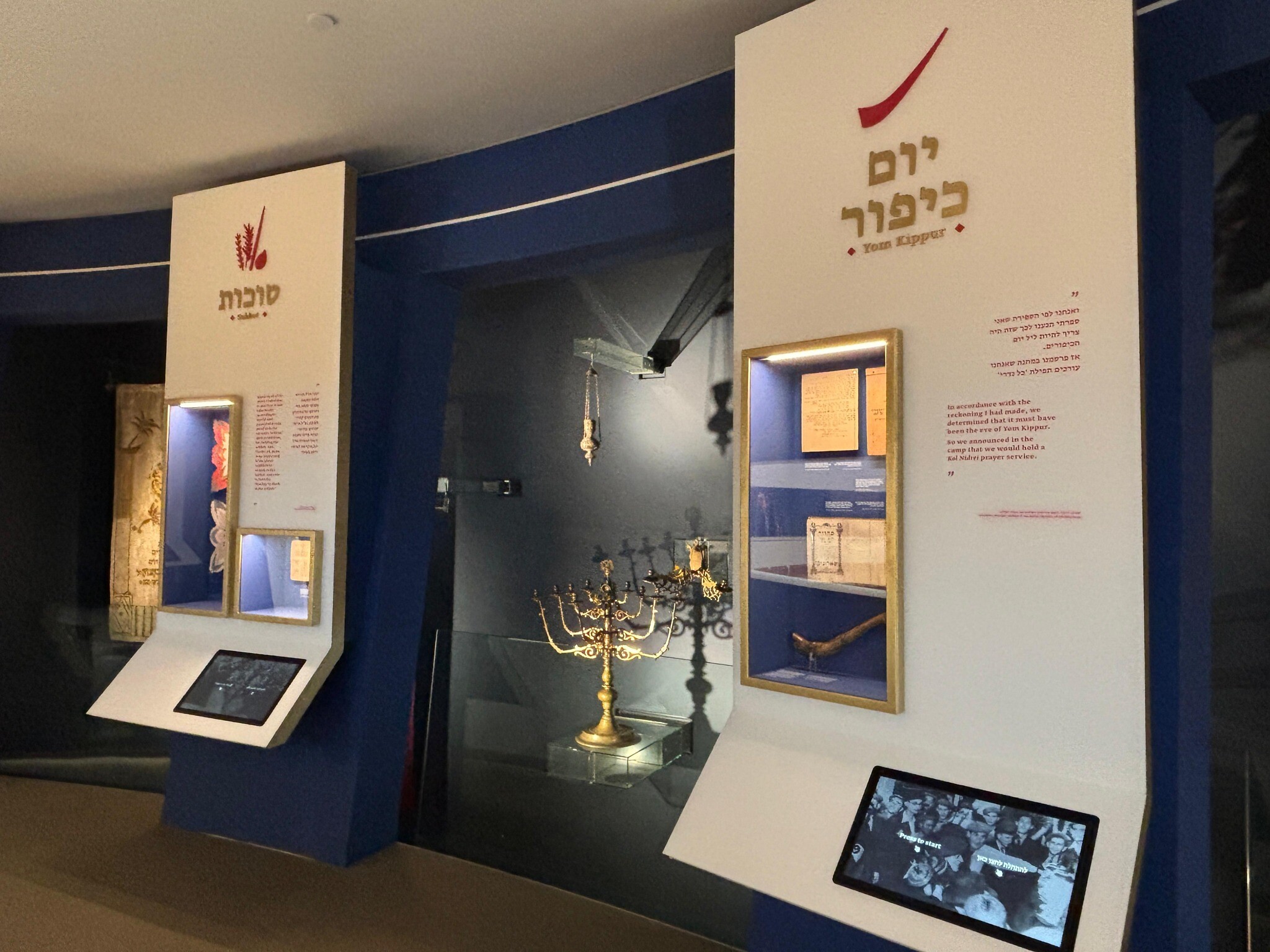
Tal is the curator of a new exhibition in Yad Vashem’s synagogue that highlights some of the courageous and ingenious ways Jews were able to preserve the calendar and celebrate holidays as they endured Nazi persecution.
“I’ve always been fascinated with the challenges that Jews in the ghettos and camps faced as they struggled to continue their religious existence,” Tal said. “Connecting to the Hebrew calendar is something that connected them to their families, to their identities as human beings, and to the long history of the Jewish people. It had the power to give them strength for a moment amidst all the chaos and difficulties.”
The new exhibition is designed to complement a display of synagogue artifacts from destroyed European communities that already exists in Yad Vashem’s synagogue. It bridges the story of Jewish life in Europe before the Holocaust — told through Torah ornaments, ark fragments and sacred vessels — with the tale of how religious life continued after those communities were annihilated, Tal said.
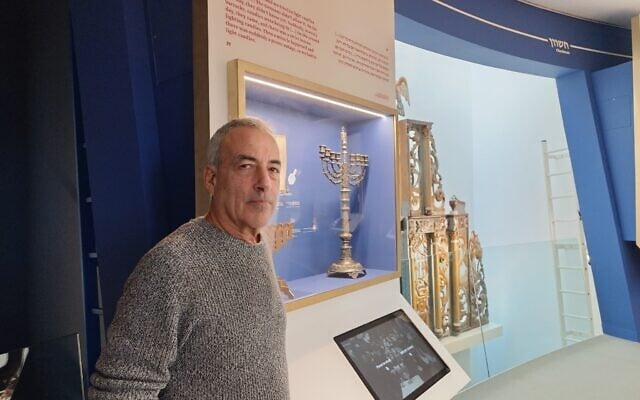
The exhibit follows a number of other installations that Yad Vashem has unveiled in recent months, including a new outdoor audiovisual show and a display of personal possessions from Holocaust survivors. Items were curated from Yad Vashem’s vast collections center, which includes a five-story building housing millions of pages of documentation and tens of thousands of artifacts gathered over the years, including artwork, photographs, and family heirlooms.
“There’s a new energy here lately, after years when relatively few new exhibits were launched,” Tal noted.
Timeless artifacts
The exhibit opens with several calendars collected from ghettos and camps across Europe. One was written in the Theresienstadt Ghetto by Avraham Hellmann, a cantor who made extensive efforts to bury the dead according to Jewish law. Another, written by Mordechai Weiss in Siberia, tracks important events in Jewish history alongside the dates in 5705 (1944-1945). A third display shows the last calendar written from memory by Rabbi Yaakov Avigdor in the Buchenwald concentration camp, after SS guards repeatedly confiscated and destroyed previous versions.
Avigdor’s son later explained why his father put so much emphasis on maintaining the calendar.
“Even the Muselmann on the verge of death would muster the strength to keep living when he was told in whispers about an approaching holiday, like Purim or Yom Kippur,” Rabbi Isaac Avigdor said, employing a term used among the prisoners for their fellow inmates. “Only a Holocaust survivor can appreciate that.”
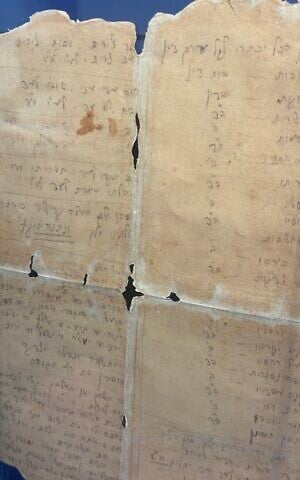
The exhibition moves on to document stories from the Jewish holidays. For Rosh Hashanah, the Jewish New Year, Naftali Stern wrote a mahzor, or High Holiday prayer book, from memory on pieces of cement bags, which he acquired in exchange for valuable bread rations at the Wolfsberg labor camp. After he was liberated, he continued to use it for prayers every year until the pages crumbled, Tal said. He later donated it to Yad Vashem.
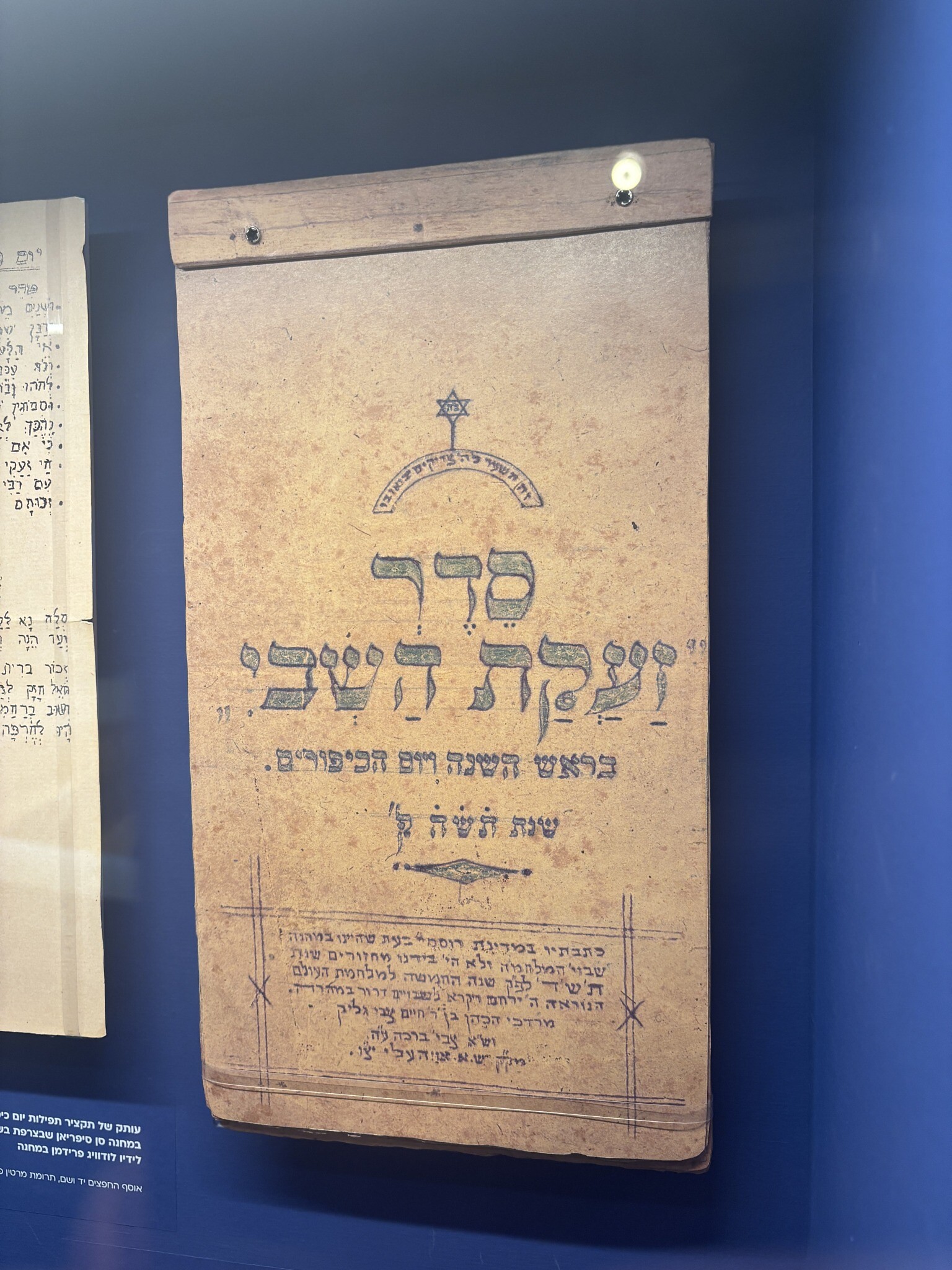
Other items from the High Holidays include a shofar sounded at great personal risk in the Theresienstadt ghetto, and a beautifully designed prayer book, entitled “The Cry of Captivity,” written from memory by Mordecai Glick and Shlomo Ullman at a POW camp in Siberia, using cardboard from soldiers’ tobacco packages.
For Sukkot, the exhibit gathers testimonies from Yad Vashem’s archives about Jews who risked their lives to perform the commandment to sit in a Sukkah booth during the holiday. In one case, the Talmudic prohibition against using a stolen Sukkah led to a question asked of a rabbi in the Kovno Ghetto: Could wood salvaged from Nazi builders be used to construct one? A leading authority in the ghetto, Rabbi Ephraim Oshry, ruled that it could.
Hanukkah, marking the victory of the Maccabees with the symbolism of light defeating darkness, was a particularly meaningful holiday for Jews during the war, Tal noted. Alongside several menorahs lit in the ghettos, a quote on the wall tells the story of what happened in one camp when Nazi guards didn’t allow the Jews to light fires on the night of the holiday. “On the second day… a miracle happened, and there was a sudden power outage,” the statement reads. “So we had to light candles.”
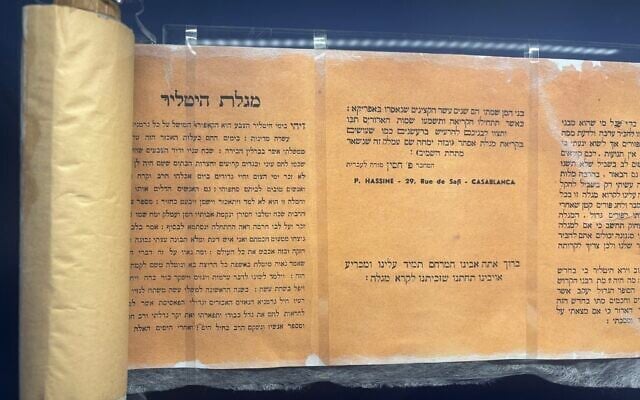
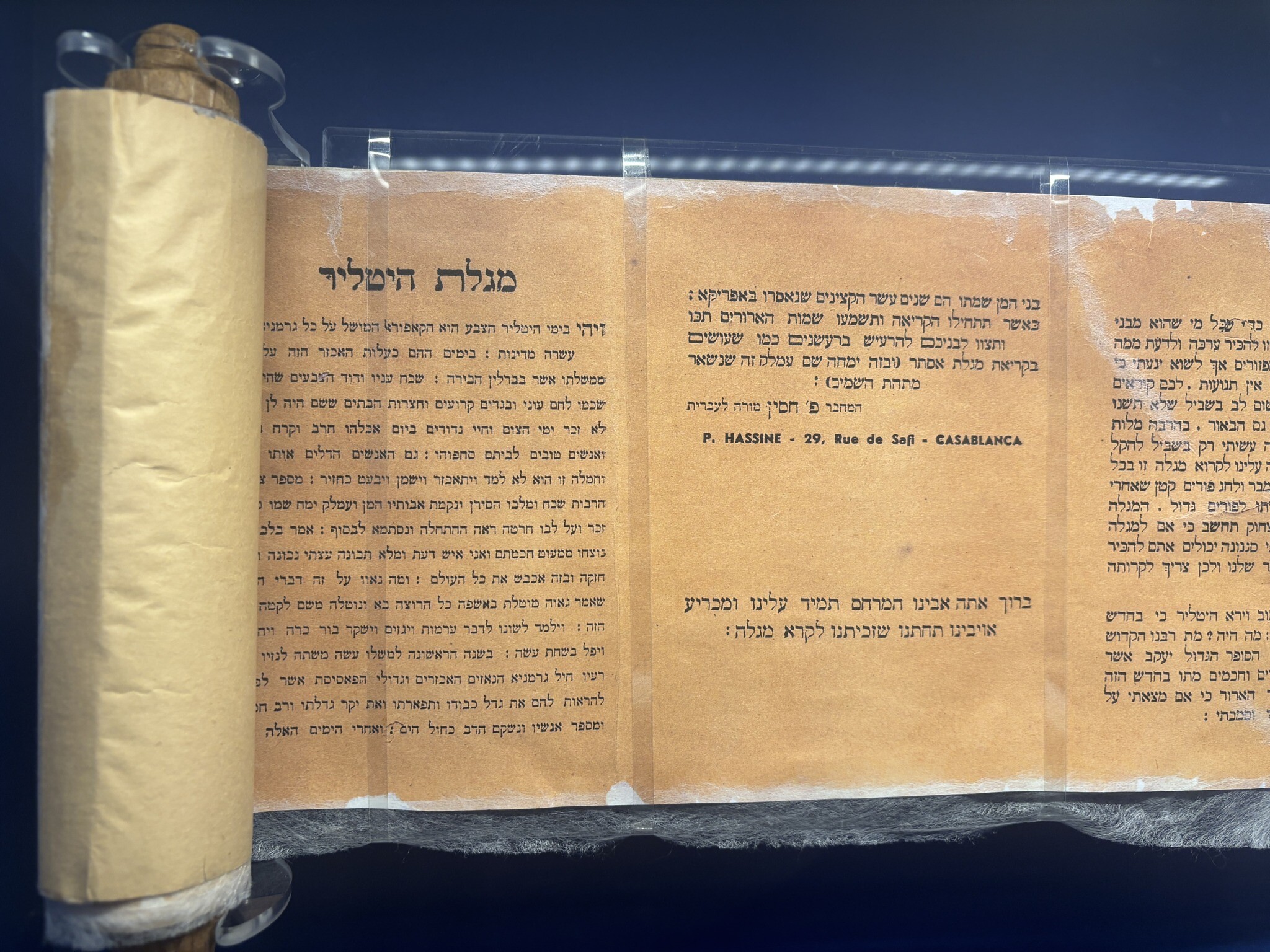
For the Purim holiday, a seven-chapter “Scroll of Hitler,” written by a teacher in Casablanca in 1944, told the story of Hitler’s rise to power and the Final Solution in the style of the Scroll of Esther.
At the Passover exhibit, a quote on the wall by Rachel Auerbach describes how Jews in the Warsaw Ghetto gathered for the Seder right before launching their famous uprising against the Nazis in April 1943.
“She described how, just like the rabbis in the Haggadah gathered in Bnei Brak to discuss the Exodus from Egypt, they were gathering to discuss their rebellion, making the analogy of their story with the ancient Hebrews,” Tal noted.
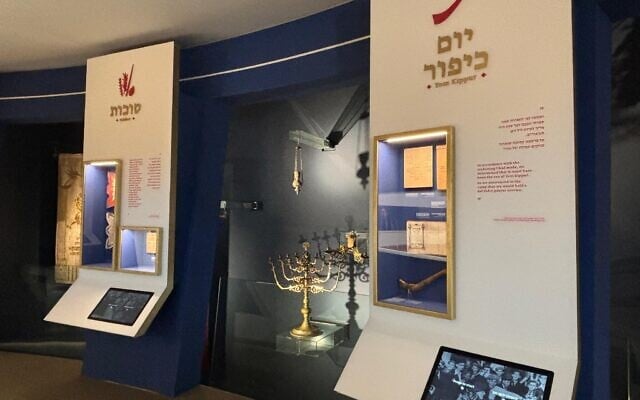
The exhibit, on permanent display at Yad Vashem, offers a glimpse into Holocaust life at a time when weeks and months lost their meaning amidst death and hunger, Tal said.
“These efforts to hold on to time during the war were, in themselves, acts of preserving humanity,” Tal said. “These stories show how Jewish life and tradition continued to endure even during those terrible times.”










The Times of Israel Community.