

‘Have tefillin, will travel’ motto of Jewish in-joke comedy maven
About to set off on a world tour with his family, Joel Chasnoff is prepared to be asked by dirty minded airport security about his phylactery use
 Add ToI as a Preferred Source on Google
Reporter at The Times of Israel
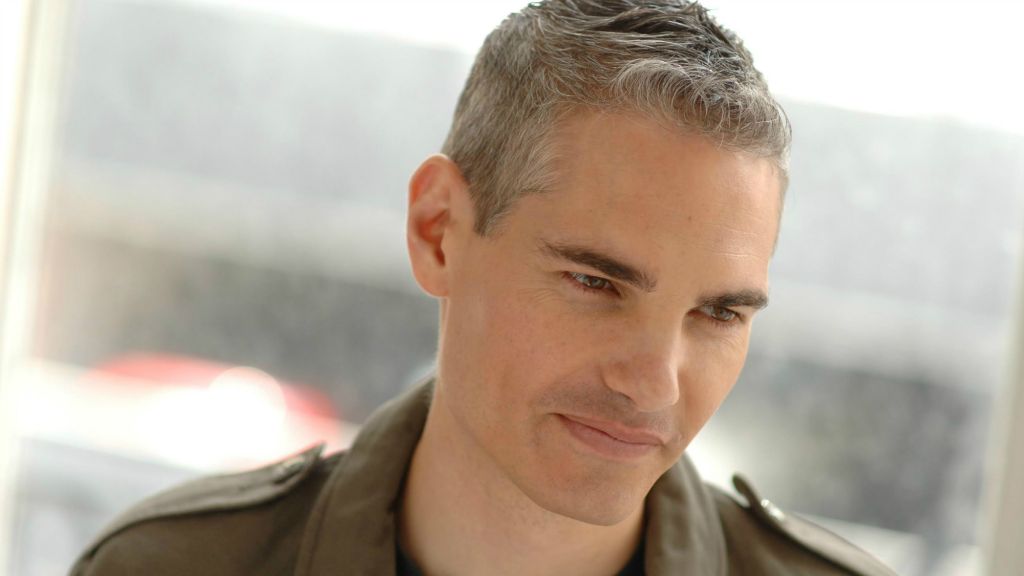
GREENWICH, Connecticut — As a stand-up comedian, Joel Chasnoff frequently takes to the friendly skies. One night it’s Miami, two days later it’s Boston. So packing tefillin in his carry-on bag is as normal as tucking in a toothbrush and the approved 3 oz. bottle of shampoo. But in a post-9/11 world, particularly during the Bush years, it raised more than a few TSA eyebrows.
“How do you even explain tefillin 8-foot-long leather straps to people who believe in moral values? Like, they asked, ‘Do you use this in the bedroom?’” Chasnoff asks audiences during on routine. “Only if I can’t find 9 other men.”
At 41, Chasnoff finds humor in all things Jewish: mothers, keeping kosher, bar mitzvahs, Israel, and of course, the aforementioned tefillin. Unlike Jewish comedians of years past (think Mel Brooks and George Burns) who played on their “otherness” for laughs, Chasnoff’s humor comes from Judaism’s quotidian quirkiness.
“For me it’s about being Jewish, it’s about the observations of leading a semi-traditional life, the quirks in Judaism,” Chasnoff said over a mint tea. “Comedy in general is taking a step back from the ordinary and seeing the small things for what they really are, Seinfeld did that wonderfully. I like to think my Jewish comedy is like that.”
‘Comedy in general is taking a step back from the ordinary and seeing the small things for what they really are’
Of course just as the style of jokes has changed, so have the venues. With Borscht Belt resorts such as Kutshers and the Concord gone the way of Streit’s Matzoh, Chasnoff performs in schools, summer camps and synagogues across the United States. And nostalgic for his days in a tank unit, he particularly enjoys riffing with lone soldiers who are newly arrived in Israel.
Chasnoff grew up just outside of Chicago in Evanston, Illinois. His father was a pediatrician, his mother a teacher and they sent their three sons to a Solomon Schechter Jewish day school. While Chasnoff remembers watching “The Muppet Show” and laughing at that wild and crazy guy Steve Martin, the performing bug didn’t really bite until the fourth grade.
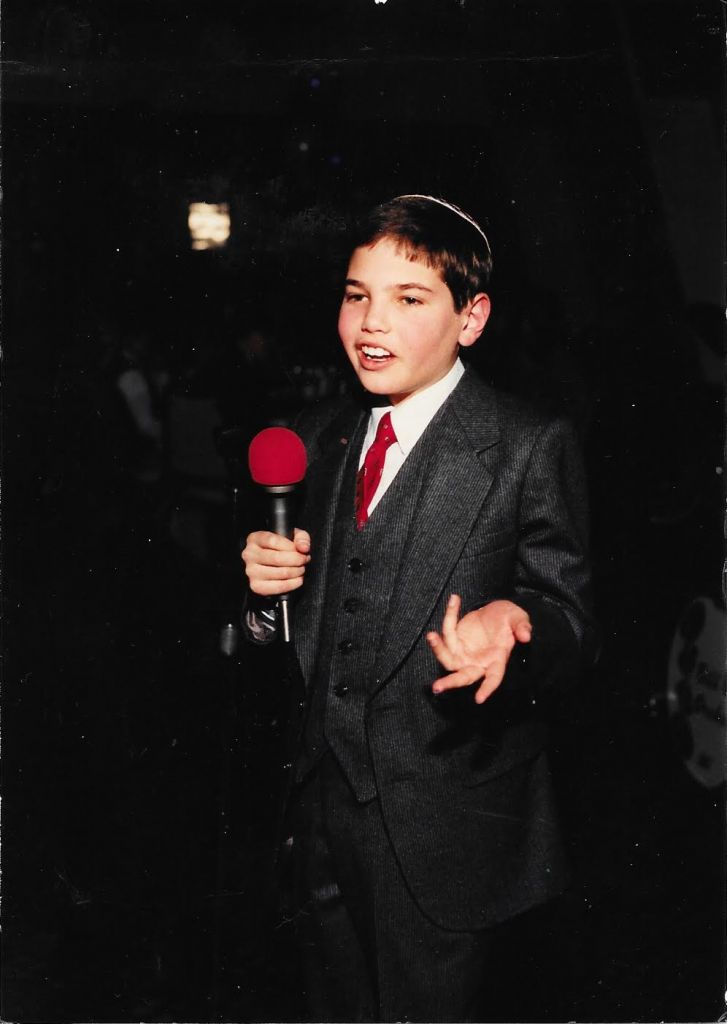
That year Chasnoff auditioned for the role of the King in the school’s all-Hebrew production of “The King & I.” Landing a part was a big deal; it was the kind milestone that could catapult a kid to the top of the lunch table hierarchy.
“I remember practicing in my living room with my father, he taught me that I could move around, move my arms. Not just stand there and sing,” Chasnoff said.
Being in that play, belting out “A Puzzlement” in Hebrew, was definitely a watershed moment for the then nine-year-old, said his mother Carol Chasnoff.
“He loved it,” she said. “He was always doing something to make people happy, he’d make balloon animals for his younger brothers’ birthday parties and always tell jokes.”
Aside from being a self-described class clown, with a healthy fear of authority – he remembers being “devastated” when sent to the principal’s office in seventh grade — Chasnoff was also the starting center on school’s basketball team.
‘When you go to a Jewish school and you are on the sports team, you aren’t just playing for your school, you are playing for the entire Jewish people’
It was a position of enormous responsibility and stress because “when you go to a Jewish school and you are on the sports team, you aren’t just playing for your school, you are playing for the entire Jewish people,” said Chasnoff in one stand-up routine.
Like many of his classmates Chasnoff spent summers at Camp Ramah. After visiting Israel on a teen-tour when he was 17, joining the IDF became a question of when, not if. Chasnoff attended the University of Pennsylvania, where he studied math and psychology and joined the Mask and Wig Club, the country’s oldest all-male comedy troupe.
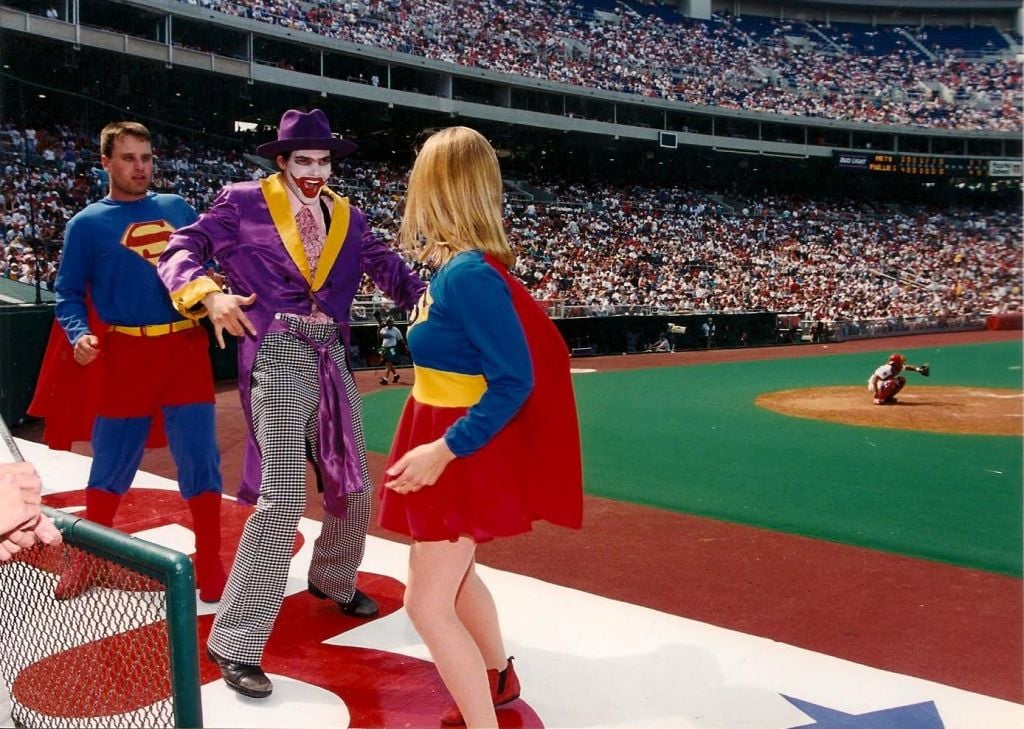
His first professional acting job was as an on-field and in-the-stands entertainer at Philadelphia Phillies home games between 1995 and 1996.
“It was great training before brutal audiences who did not want a troupe of comedy improvisers interrupting their viewing of the game,” he said. “Old women cursed me, children threw pretzels, and Fireman Night was the worst. But like I said, it was fantastic training that taught me how to handle any audience.”
‘Old women cursed me, children threw pretzels, and Fireman Night was the worst’
During his time at Penn he further tested the standup waters with a performance at Hillel on campus. He made a tape of his show, sent it out to other Hillels and “it took a life of its own,” he said.
Graduation came and went. Chasnoff still wasn’t ready to dive into a life devoted to the performing arts. And, in all honesty, he wasn’t quite ready to join the IDF. So he spent a year taking one temporary job after another.
He worked at financial institutions where he communicated with his boss via hand signals. He worked at “Dressings and Sauces,” a trade magazine where staff hotly debated whether mustard was a dressing or a sauce.
“They were terrible temping jobs but it was ultimately a good experience. You see what can happen if you don’t take your own initiative and just go after the money,” he said. “It really pushed me to take initiative. It’s why I created this Jewish comedy career.”
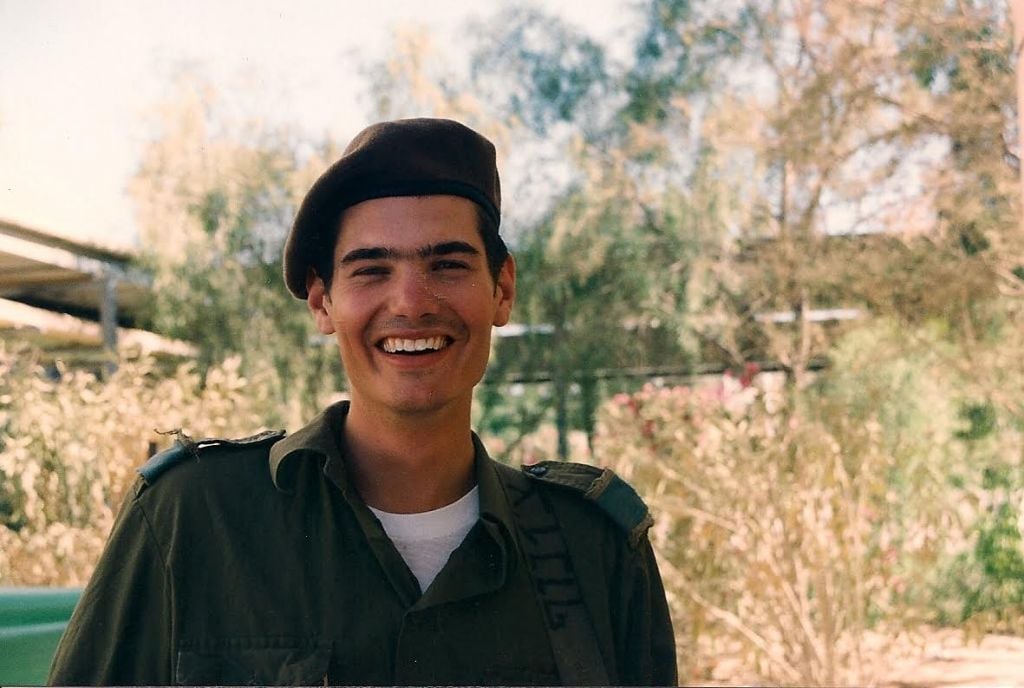
Finally, in 1997 he was ready. Chasnoff made aliyah and joined the IDF. He was assigned to the 188th Armored Brigade. In 1998 he deployed to Lebanon for operations against Hezbollah. His army experience provided ample fodder for his 2010 memoir “The 188th Crybaby Brigade.”
“Despite being about military life and a war of attrition in Lebanon, it is comedic. I waited six years until after my service to write the book, because I needed time to process the experience and figure out the narrative,” he said.
After his discharge Chasnoff returned to New York City to pursue his career. He approached his work, from shaping a routine to hitting the right comedic notes, with rigor.
“He always was determined. When he was younger if something wasn’t quite right he’d crumple it up and start again,” his mother said.
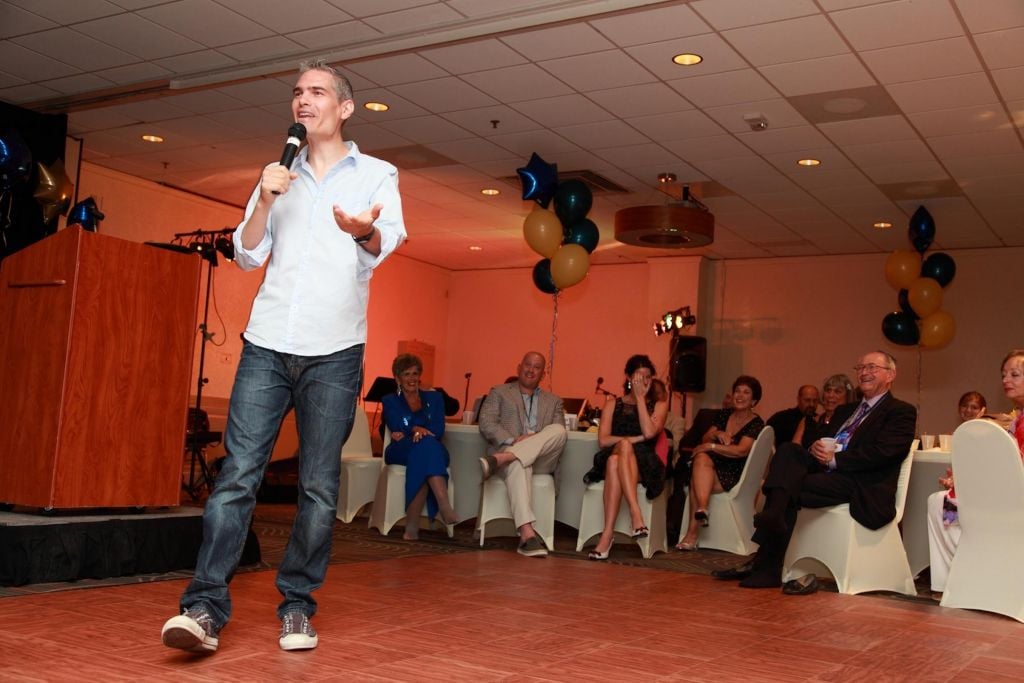
In recent years he’s performed before Friends of IDF, most recently he was the MC at the FIDF Central Region’s Annual gala.
“Joel made the absolute perfect MC,” said Michelle Cohen, senior director for programs and operations for the FIDF central region. “His entire act was a hit for our audience. It’s not easy keeping a large room of 800 dinner guests entertained, especially when the theme of the dinner honoring IDF heroes was a very important and serious topic to Jews and non-Jews everywhere who recognize FIDF’s mission.”
Married to Dorit Admony, the couple has four children, including teenage twins. His routines now reflect life as a husband, father and son.
‘Anything is grounds for comedy as long as the facts are right’
In one bit he talks about driving south on Highway One along the Pacific coast from Los Angeles to San Diego. He tells audiences how his mother offered to pay for the family’s airfare if he reversed the trip – she worried driving south, on the lane closest to the ocean, could mean careening off the cliff into the water below.
“I always keep in mind that it’s comedy and it’s not the absolute truth, but I was laughing about that because mothers do worry and do plan ahead and I saw a lot of other women nodding their heads. I thought ‘I’m vindicated,’” Carol Chasnoff said.
During last summer’s war with Gaza, Chasnoff started touring Jewish camps with two new programs designed for staff and older campers.
“Israel — What’s the Story?” examines what it means to be Zionist in today’s world. And “Israel — Where Do We Draw the Line?” addresses the recent demand by some organizations that the Green Line appear on maps of Israel used for educational purposes. The shows combine humor, characters and interactive-theater to “spark debate about Israel’s future — and our role in determining it,” according to Chasnoff’s website.
This August the Chasnoffs will decamp from Westchester, New York, for a yearlong trip around the world
“Anything is grounds for comedy as long as the facts are right. A lot of the Daily Show comedy [last summer] shows a lack of depth,” Chasnoff said. “They went for the easy story, the easy joke – presenting the war as a David and Goliath situation. A lot of the comedy about Israel is not accurate. If you really dig deeper, and you have to, there is no one-minute summary that can explain it and that’s why Israel struggles so much with PR.”
This August the Chasnoffs will decamp from Westchester, New York, for a yearlong trip around the world.
They have one-way tickets to Peru. From there it’s a bus across South America and then on to India, Thailand, and points in between. He plans to return to North America three times during the year to perform, speak, and teach. His first trip back is scheduled for October 22 through November 5.
“The point? To meet fascinating people, introduce our kids (and ourselves) to exotic cultures, and — most importantly — allow the time and space to properly examine our lives,” Chasnoff said. “It’s a sabbatical in the purest sense of the word.”





The Times of Israel Community.