

 From the Liveblog of
Friday, July 18, 2014
From the Liveblog of
Friday, July 18, 2014
‘Tunnels can only be dealt with on the ground’
 Add ToI as a Preferred Source on Google
Mitch Ginsburg explains the goals and challenges of the Gaza ground operation:
Addressing the tunnel threat, which Israel’s technology has yet to credibly counter, is only one part of the mission launched Thursday night. The other goal is to do that which was not achieved from the air — thinning Hamas’s ranks, depleting its rockets stores and, most significantly, squeezing the Islamist organization so that it comes back to the ceasefire talks with more reasonable demands.
The soldiers and commanders on the western side of the border, inside the Strip, though, cannot consider the application of political pressure and the nature of negotiations among their goals. They need concrete aims.
The first and likely most significant of these is the subterranean threat.
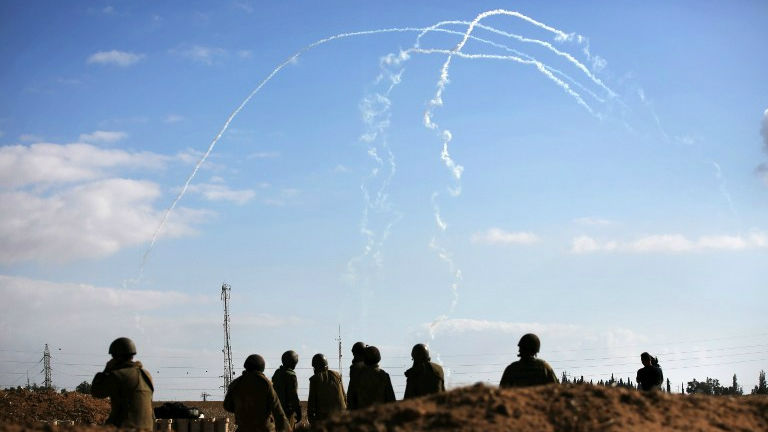
Unlike the rocket threat, which has been largely defanged by Iron Dome and early-warning systems, the ancient threat of tunnels has no technological solution as of yet. “We have no advantage in the underground realm,” says Brig. Gen. (res) Moshe Sheli, the former commander of the IDF’s combat engineering corps. On the ground, in the air, in the sea, he continues, technology offers the Israeli army a distinct edge. Underground, Israel employs a variety of means, “but they don’t give us a dramatic advantage, and that’s why this is such a hard challenge to crack,” he says.
Maj. Gen. (res) Israel Ziv, a former commander of the Gaza division and an officer who has argued against the re-occupation of Gaza, said Thursday that operating on the ground on the Gazan side of the border allows access to the entrance of a tunnel. “Around it there is a whole system,” he said. “Energy, oxygen, logistics — once you control the ground, you can fight in a more efficient way.”








The Times of Israel Community.