

Jerusalem mayor meets hostages’ families, agrees on changes to Purim parade
Critics said it was inappropriate to hold celebrations while people remain captive in Gaza and country is at war; Tel Aviv and Holon blowouts nixed
 Add ToI as a Preferred Source on Google
Jessica Steinberg, The Times of Israel's culture and lifestyles editor, covers the Sabra scene from south to north and back to the center
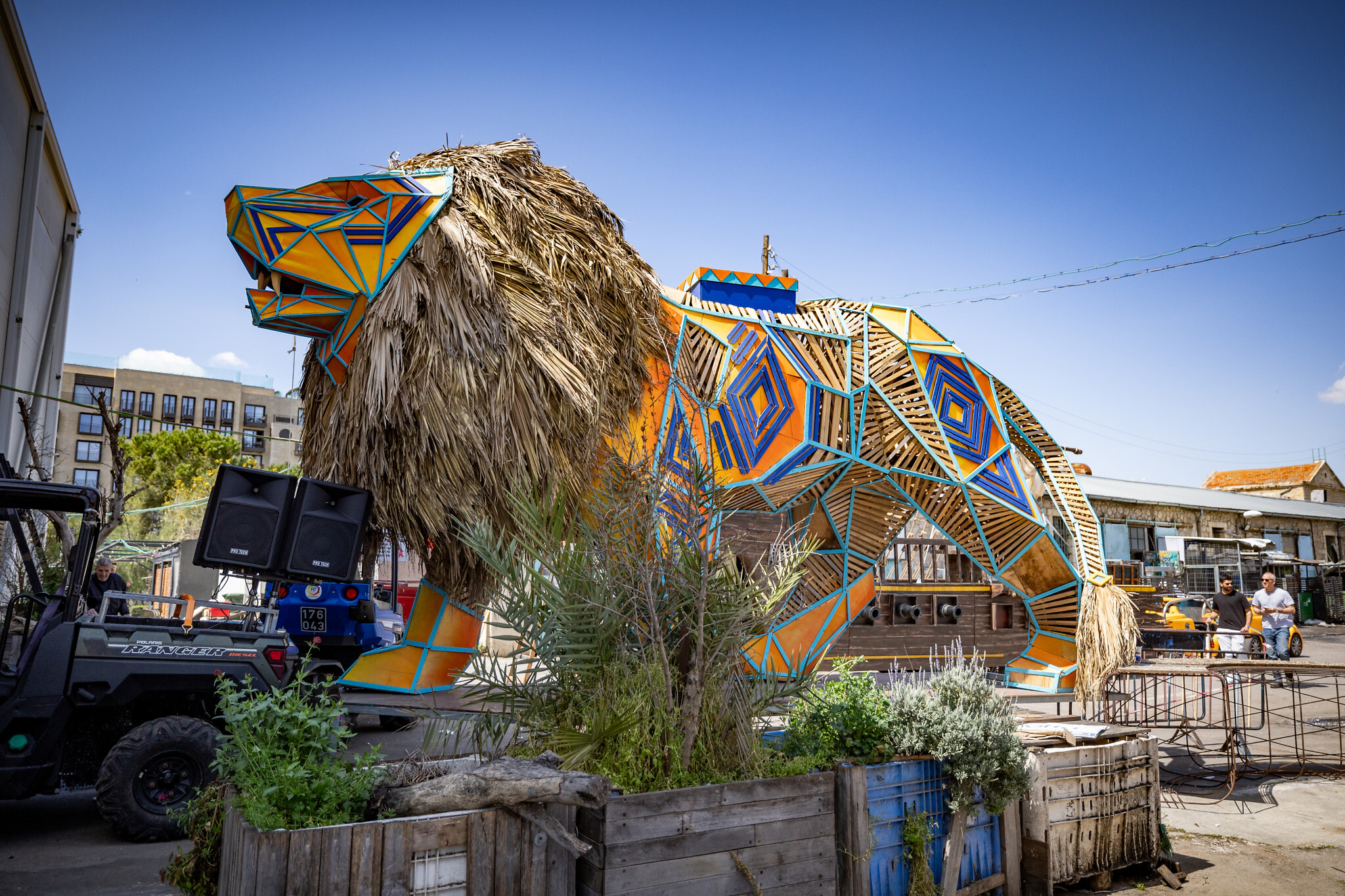
After plans for Jerusalem’s first Purim parade in 42 years raised ire among city residents, relatives of hostages held in Gaza and others directly affected by October 7 and the Gaza war, Mayor Moshe Lion met with representatives of hostage families Thursday and agreed to some changes to the event.
During the meeting, the mayor and families agreed that the parade will now be called United Purim rather than Adloyada (shorthand for an Aramaic phrase in the Talmud describing the commandment to drink oneself into a stupor as part of the holiday celebration).
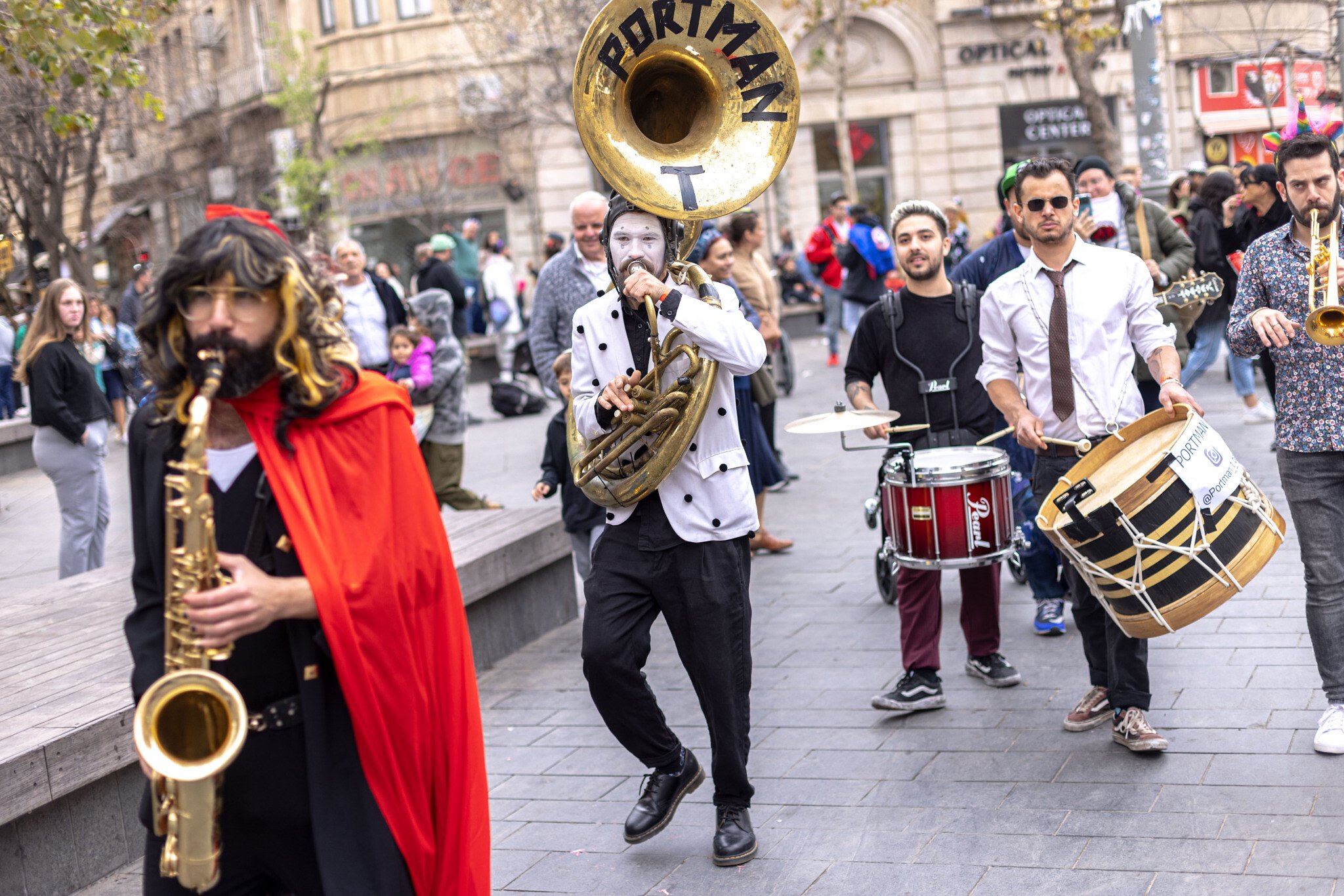
There will also be fewer musical performances along the one-kilometer route of the parade in downtown Jerusalem, and all the musical performances will be lower in volume, said a spokesperson for the hostage families.
The Adloyada, a carnivalesque parade of costumed dancers, music and more celebrating the Jewish holiday of Purim, is an annual mainstay of many Israeli cities, though Jerusalem has not held one since 1982.
This year, Holon and Tel Aviv both canceled their wildly popular parades out of deference to families of hostages, evacuees, bereaved families, parents of combat soldiers and a melancholic national mood.
Critics of the Jerusalem parade said the public display of holiday mirth was inappropriate in wartime.
An online petition asking Mayor Moshe Lion and the city council to reconsider holding the Monday event had gathered over 6,500 signatures as of Thursday afternoon.
The petition called Jerusalem’s decision to renew the event “a rowdy, expensive parade in a time of war and destruction.”
“All the arguments of ‘this is what we fight for, this is the only way to live and we bring hope to our children’ are a mask for insensitivity and lack of solidarity in the face of a reality that has fundamentally gone wrong,” the petition reads.
In an op-ed for local paper Kol Hair, Jerusalemite Dikla Alon called on the mayor and city council to cancel the parade and use its budget for helping families affected by the war, and the elderly, “instead of a flamboyant waste of money.”
Another petition signatory wrote, “How is it possible to abandon the families like this, and everyone who cares about them… and pretend that everything is fine. This is not the time for celebrations.”
Outside the capital as well, families of hostages have been speaking out against the insensitivity of holding Purim parties and events while 134 people remain captive in Gaza and the nation is at war.
“It’s hard because I’m usually the one planning the fun, the costumes, the parties,” said Shai Benjamin, an events coordinator for a tech company whose father, Ron Benjamin, was taken hostage on October 7 while biking near Kibbutz Be’eri.

“How can anyone enjoy life right now?” said Benjamin to The Times of Israel. “No one can celebrate this year because we’re in mourning. And it’s not just 134 people, it’s their families and friends. There are soldiers in Gaza. I just can’t understand how people are celebrating this year.”
Like others, Benjamin felt it was fine for children to dress up and to have small Purim events at home, “but no carnivals.”
Jerusalem celebrates Purim one day after most of the rest of the world does. The capital city last held Adloyada parades in 1957 and then in 1982, said Tamar Berliner, who heads arts and cultural events for Jerusalem and planned the parade.
“I’m proud that Jerusalem is going ahead with this,” said Berliner, speaking to The Times of Israel earlier this week. “Canceling anything cultural during a war is easy. It’s challenging to carefully plan an event like this when Purim is draped in sadness.”
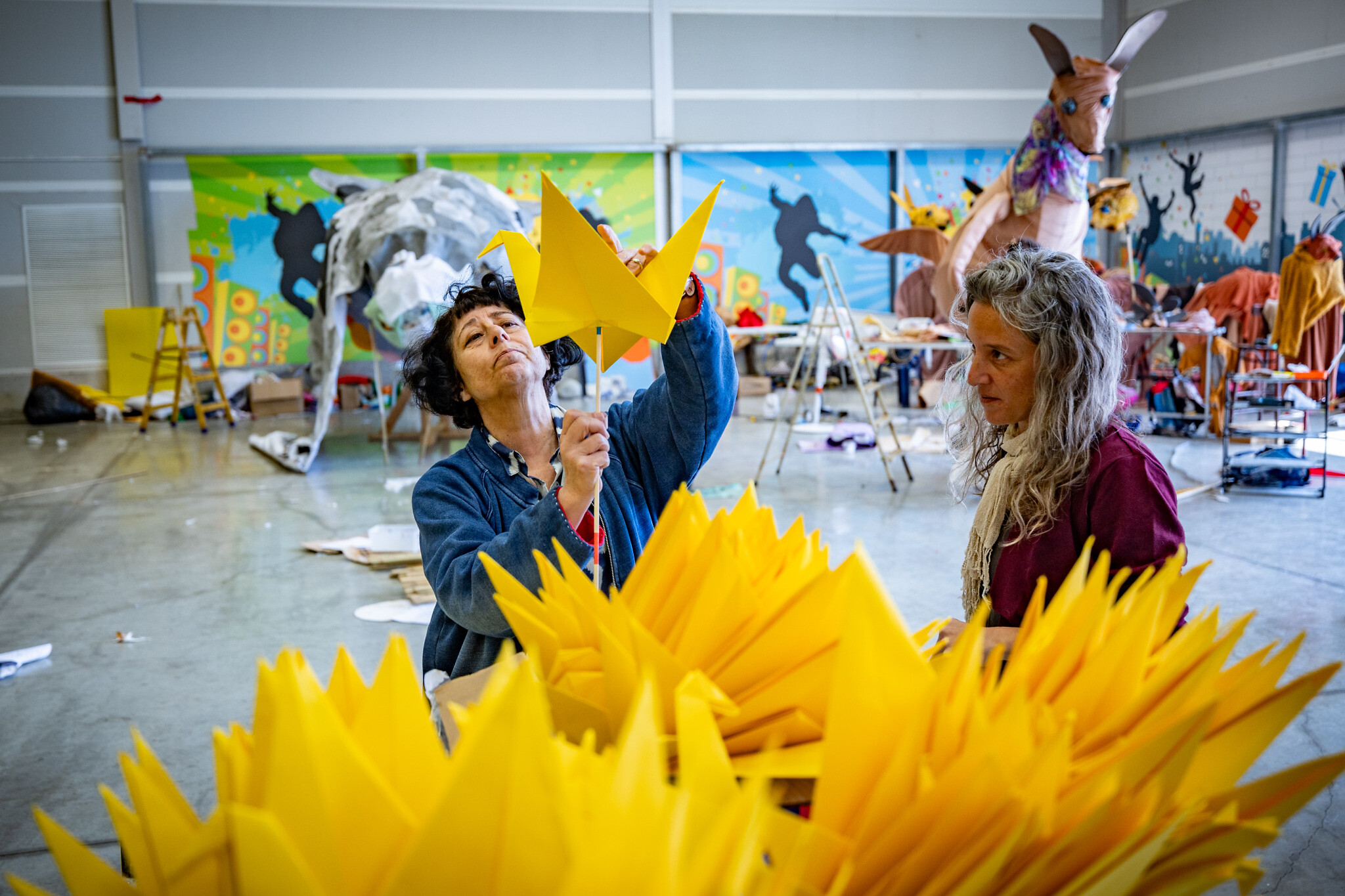
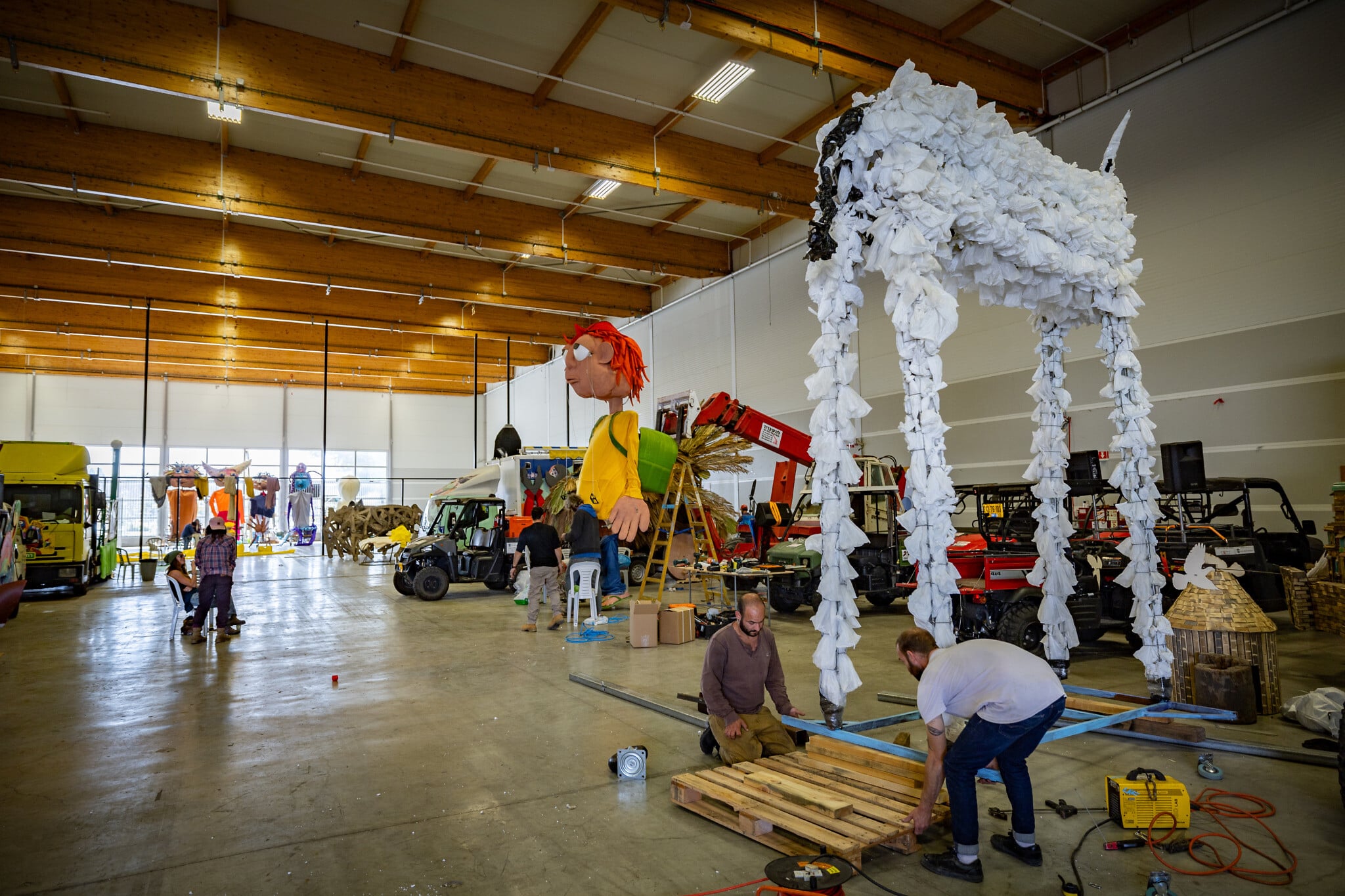
The city is calling the event Adloyada for the Children of Israel, emphasizing the floats designed and built by local artists and staff from local cultural centers with the help of local students and residents as well as reservists’ families and evacuees staying in Jerusalem. The lead float is meant to symbolize the hostages.
Jerusalem councilmember Laura Wharton said there are clearly tensions between children and young people who want to enjoy the holiday and return to a semblance of routine, and those who are experiencing the pain of the war and its tragedies.
“All the outcry has been reaching them,” said Wharton, referring to City Hall. Wharton said she was told that 70% of the initial plan for the parade had been scrapped, adding that there “should be more of a dialogue, there are compromises that could be found.”
The details don’t matter to families of hostages, who feel it just isn’t the year for a big parade.
Ayala Metzger, whose father-in-law Yoram Metzger was taken hostage from his Kibbutz Nir Oz home along with his wife, Tamar, who was released at the end of November, called upon the city of Jerusalem “to dismantle” the event into smaller events held around the city.
“It’s not fitting this year,” Metzger told Ynet. “There are many families around us who are in mourning, bereaved, who are dealing with the fact that it’s nearly six months that their loved ones are held captive.”
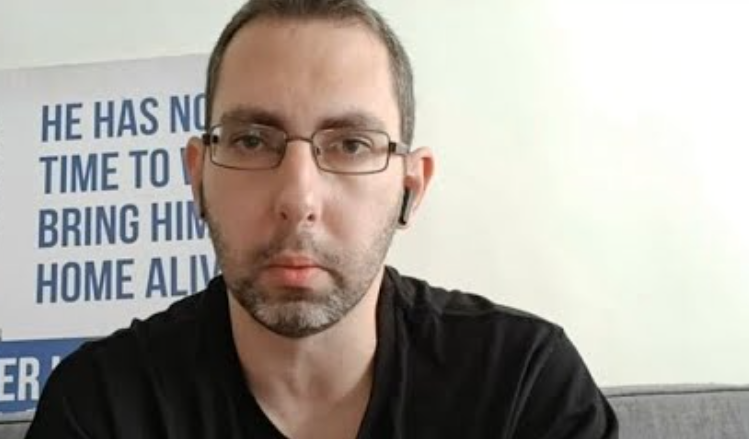
Eyal Kalderon, whose cousin Ofer Kalderon is held hostage in Gaza, said his young children were dressing up, “but we, of course, are not going to celebrate.”
“We’re not going to celebrate and we’re against celebrations for adults of any kind. We think it’s inappropriate and shameful, actually,” said Carmit Palty Katzir, whose brother Elad Katzir is still held hostage after their mother, Hanna Katzir, was released at the end of November during the first day of a seven-day truce.
She told The Times of Israel that her three children, ages 11, 9 and 4, will dress up, because “it’s important to keep this joy and tradition and not to ruin this holiday for them.”
The city of Holon, known for its giant annual Adloyada, canceled the parade in December after discussing it in the weeks after October 7.
“It was very, very clear that no one could see how to do the country’s biggest Adloyada when the nation is in a state of pain,” said Haim Mesika, who directs Holon’s arts and culture department. “The State of Israel isn’t happy. We waited to see if there was any optimism to be had, but by December we said, ‘This is not the year.'”
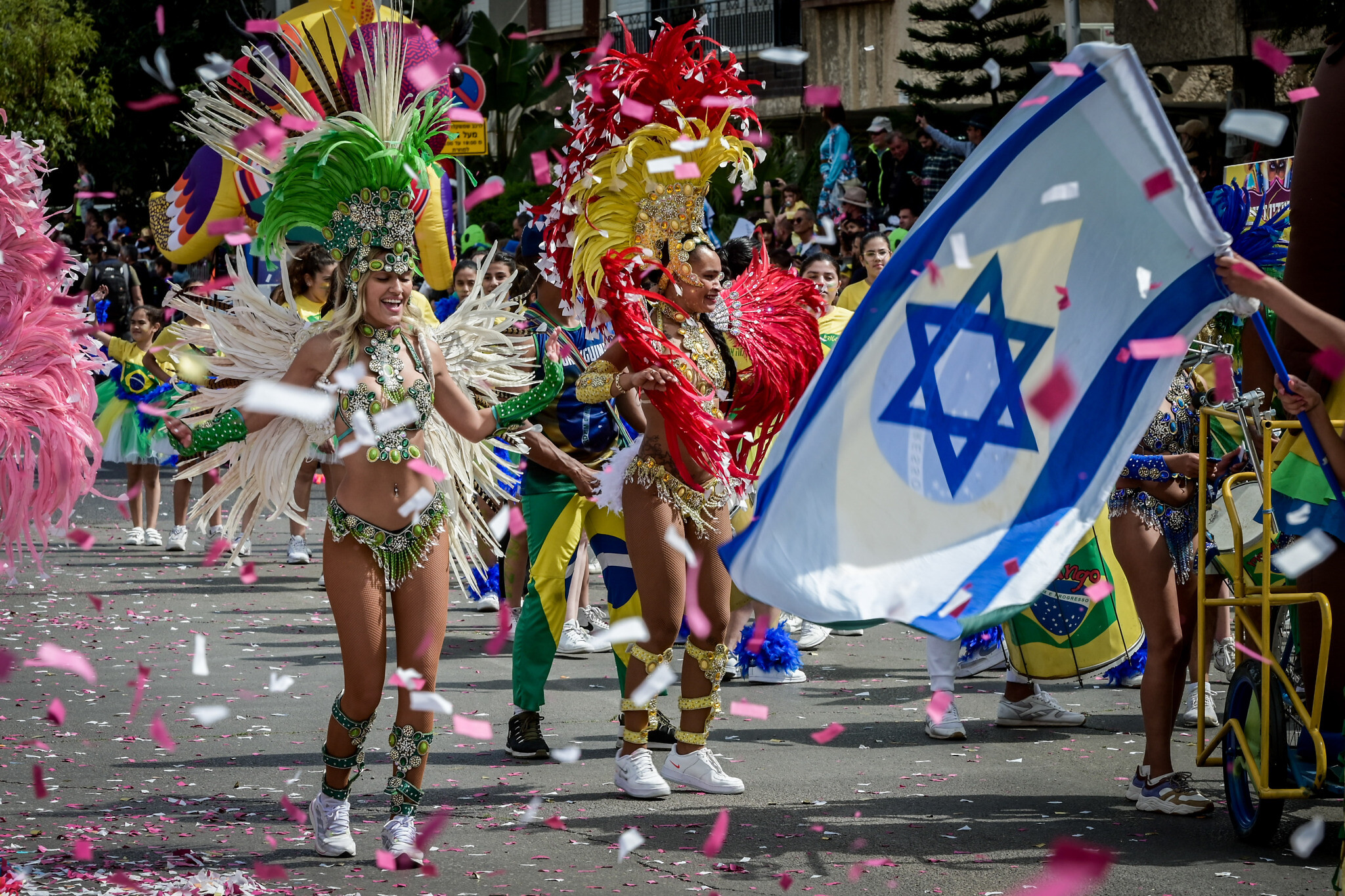
Instead, Holon is holding events in five separate locations for children, “because it’s still a holiday, but more minor than usual this year,” he said.
As for Jerusalem’s decision to organize an Adloyada parade this year, after 42 years of celebrating Purim without it, Mesika said, “I believe our dilemmas were the same as Jerusalem’s. This just isn’t the year for it.”








The Times of Israel Community.