

Soldiers claim lack of proper shelters leaves them exposed to missile attacks
Troops describe damaged, overcrowded protected spaces, with pictures showing groups of troops taking cover in open areas; IDF says additional solutions being deployed
 Add ToI as a Preferred Source on Google
Stav Levaton is a military reporter for The Times of Israel
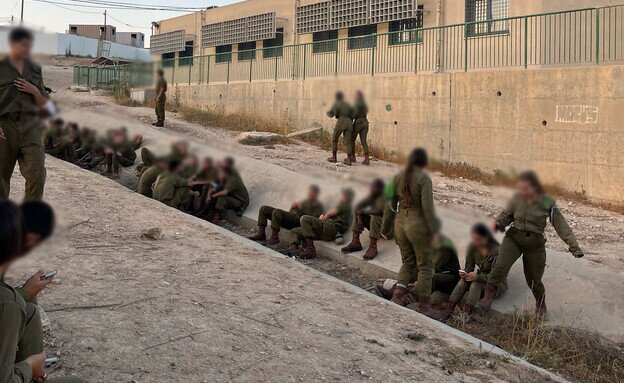
As Iranian missile salvos send Israelis running for safe rooms and other protected spaces, some soldiers say that on they are being left without adequate bomb shelters on military bases, leaving them defenseless as they serve to defend the rest of the nation.
When “Leah,” a reservist combat medic who requested anonymity, woke on the morning of February 28 to the sound of sirens, her first instinct was to run to the nearest bomb shelter on her base near the Gaza border.
But when she and several other soldiers crowded inside, they quickly noticed that a window in the shelter designed to close with a protective plate was broken and could not be shut, leaving a gaping hole that compromised the entire fortification.
“We realized it’s not really safe,” she told The Times of Israel.
The soldiers rushed to another nearby shelter, only to find it already filled to capacity.
“It was too small — there wasn’t enough room for all of us,” Leah recalled
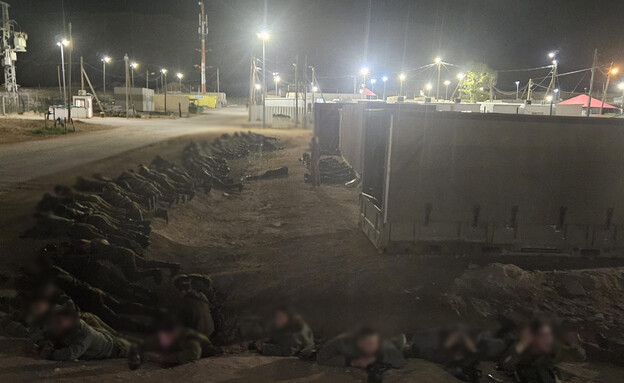
With nowhere else to go, Leah and the other soldiers left outside were forced to stand next to the shelter, exposed to potential shrapnel, with only their prayers to protect them.
Later that day, she was transferred to central Israel to join a rapid deployment team tasked with responding to missile impacts in densely populated areas. With no available army accommodations, the unit was sent to sleep at a nearby school, where classes had been suspended due to the war.
For the first time that day, the reservist said she felt safe.
Despite the more frequent sirens in central Israel, Leah said she felt “more relieved” knowing there was an adequate bomb shelter nearby.
But she is scheduled to return to her base next week, leaving her uncertain about how protected she will be when the next siren sounds.
Leah’s story is far from unique. Since Israel launched Operation Roaring Lion against Iran on February 28, and Iran responded with ballistic missile fire, soldiers across the country have raised complaints about bases lacking adequate — or in some cases any — bomb shelters.
Another reservist stationed in the Hebron area told The Times of Israel of similar conditions, saying there was only a single bomb shelter that also doubled as a storage room for the hundreds of men in his battalion. He estimated that only around 30 can fit inside at any given time.
“We basically don’t even go to the shelter anymore,” he said.
Images circulating online show groups of soldiers at several bases across the country taking cover in open areas, with some seen lying on their stomachs in trenches.
Similar complaints were reported during the June 2025 war with Iran. At the time, soldiers told Hebrew media outlets that some bases lacked sufficient shelters, leaving them exposed. It is unclear what steps, if any, were taken afterward to remedy the situation.
In response, the IDF said it was “advancing a broad plan to improve protection for its forces, in accordance with the situational assessment and operational priorities,” adding that “additional protective solutions” have been deployed at bases during the ongoing fighting, though it did not provide details.
בלעדי: בסיס עם מאות חיילים – ואפס מיגוניות: "תחושה של ברווזים במטווח" | תיעוד >>> https://t.co/DMTK4qQz8v@roysharon11
— כאן חדשות (@kann_news) March 2, 2026
Unlike civilian shelters, which fall under the responsibility of the Home Front Command, protective infrastructure on IDF bases is overseen by the military’s Technological and Logistics Directorate, which is tasked with maintaining facilities and infrastructure across the army.
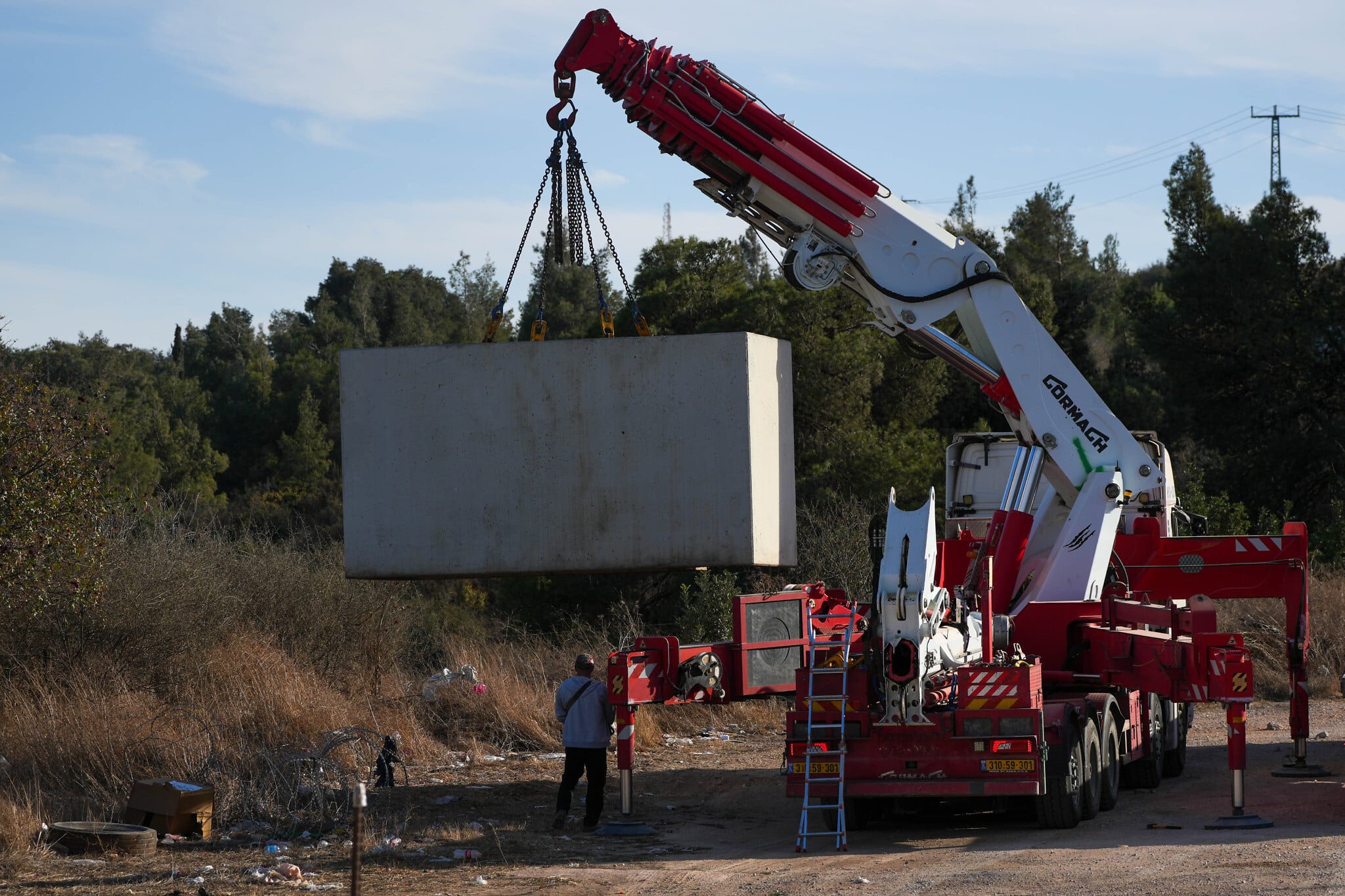
In general, these include reinforced concrete safe rooms, mobile shelters and improvised concrete structures, which can be installed quickly but provide minimal cover as a last resort. While none of the shelters can withstand direct hits from massive warheads attached to Iran’s ballistic missiles, they are generally adequate against falling shrapnel, which remains a danger even when air defenses intercept incoming missiles.
Protection gaps have also been documented on the civilian side. A report by the Knesset Research and Information Center published last week found that more than three million Israelis — roughly one-third of the population — lack adequate protection, with particularly large gaps in Arab communities.
The military also emphasized that soldiers are trained to seek shelter in “the most protected space available.”
In some cases, soldiers cannot leave their positions even when sirens sound. Troops engaged in operational duties — such as guard posts securing bases — are generally required to remain at their stations for broader security reasons.
During Hamas’s October 7, 2023, onslaught, there were several cases in which soldiers left their posts to take shelter following incoming rocket sirens, leaving bases along the Gaza border exposed to infiltration.







The Times of Israel Community.