

Netanyahu to be questioned by lawmakers on Gaza war report
State Control Committee head Karin Elharar says PM will have to answer to the families of fallen soldiers for operation’s shortcomings
 Add ToI as a Preferred Source on Google
Judah Ari Gross is The Times of Israel's religions and Diaspora affairs correspondent.
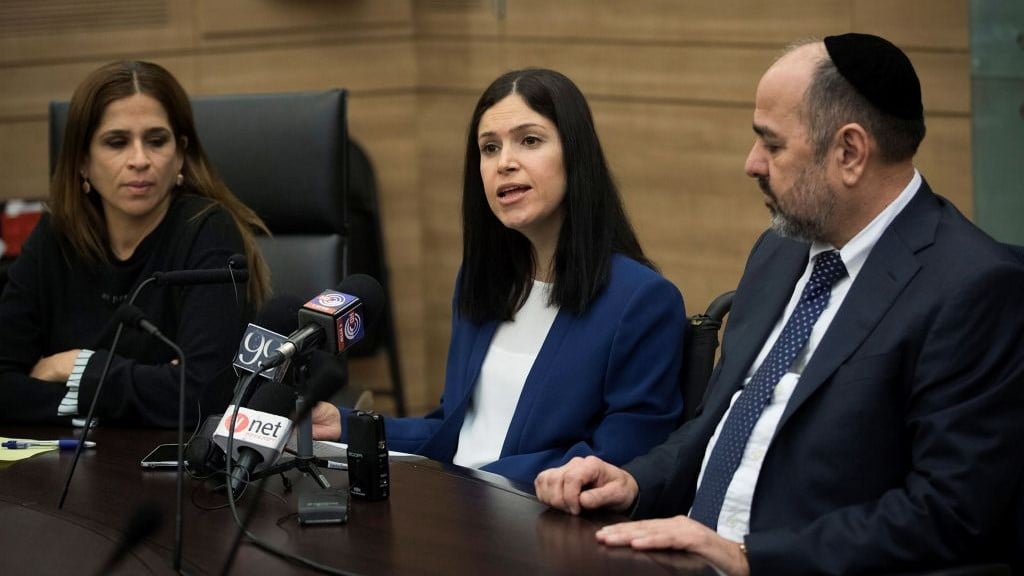
The Knesset’s State Control Committee will host a special meeting with Prime Minister Benjamin Netanyahu in April to discuss the findings of a comptroller report on the 2014 Gaza war, committee head MK Karin Elharar announced on Tuesday morning.
The scathing report, prepared by State Comptroller Yosef Shapira, was released Tuesday afternoon.
The probe criticized the prime minister, defense minister and military for failing to adequately prepare for the Hamas attack tunnels used during the conflict, known in Israel as Operation Protective Edge.
“The prime minister will come to the State Control Committee because he must give answers to the bereaved families, to the fighters preparing for the next war and to the entire nation of Israel,” Elharar said in a statement.
According to the Yesh Atid Knesset member, she had been trying for an “endless amount of time” to set up such a meeting on the Gaza war, but Netanyahu “did everything he could to avoid it.”
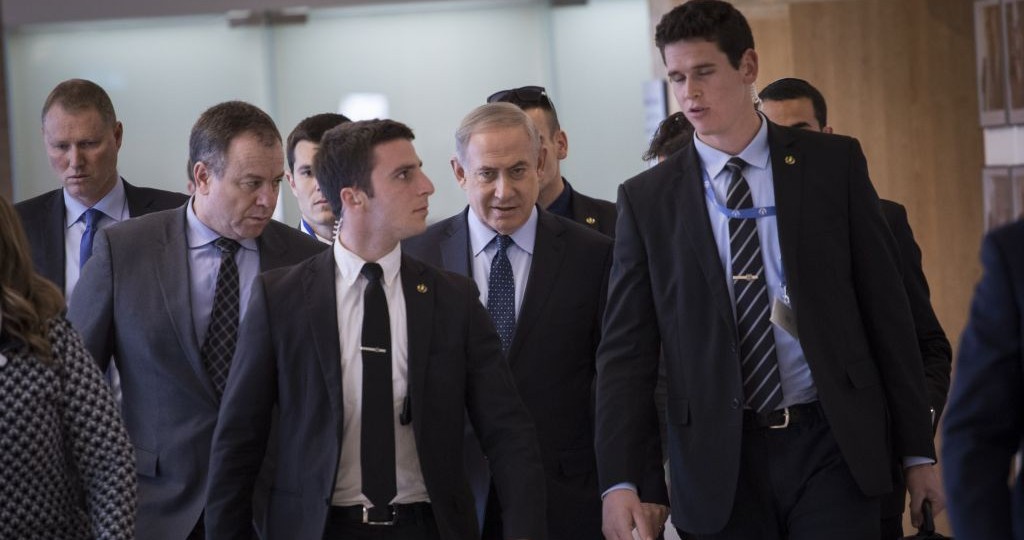
As the report on the operation was due to be published, Elharar said she finally received a request from Netanyahu to hold the meeting.
“I will not allow the prime minister or anyone else to avoid giving answers on being better prepared for the next conflict,” she added.
The meeting is scheduled for April 19, her office said.
“But if it were up to me, this meeting would be held next week,” she said.
Earlier this month, Elharar’s committee granted the report its final approvals, though it will not be published in full. Elharar said some parts of the section on the tunnels would still be redacted as it contained “information that can be used against us.”
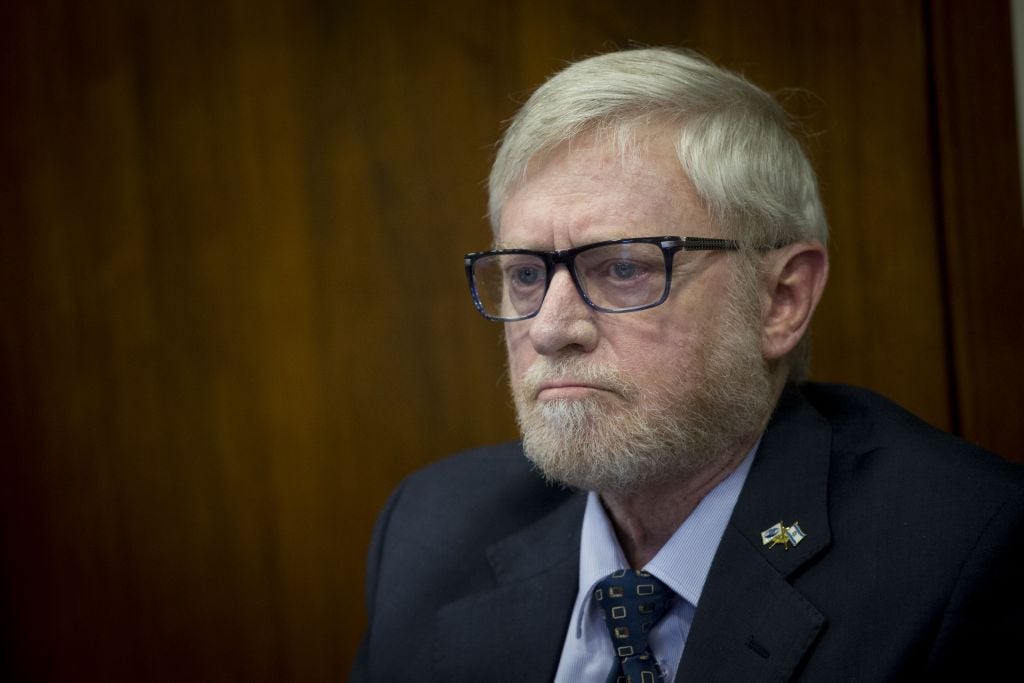
Leaked copies of the long-awaited report by State Comptroller Yosef Shapira indicate that it will criticize the army’s failures to prepare adequately for the threat of Hamas tunnels during the war, and chastise the political leadership for improperly managing the war effort.
According to some reports, Shapira is said to show bitter infighting among members of the security cabinet, especially between then-defense minister Moshe Ya’alon and then-economy minister Naftali Bennett.
As so much of it has been leaked ahead of its release, very little is likely to be shocking in the report, but its publication will allow politicians to discuss the topic more freely in public.
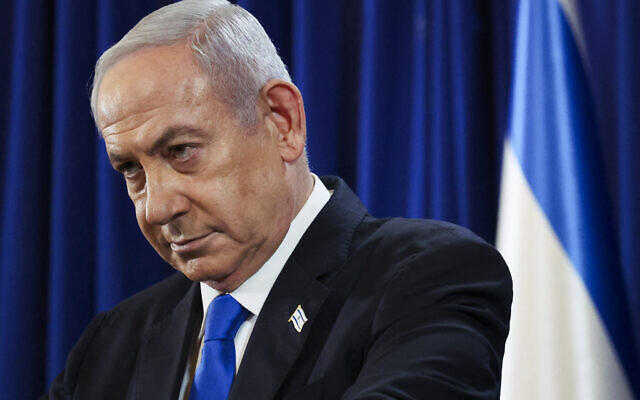
Speaking at his weekly Likud faction meeting, Prime Minister Benjamin Netanyahu rejected the claim that the military operation had been a failure, asserting instead it was in fact a resounding success.
“We hit Hamas with the hardest blow it has ever received. We killed around 1,000 Hamas terrorists, their senior officers. We took down the terror towers,” Netanyahu said. “We acted responsibly and with full coordination between the military and political echelons.”
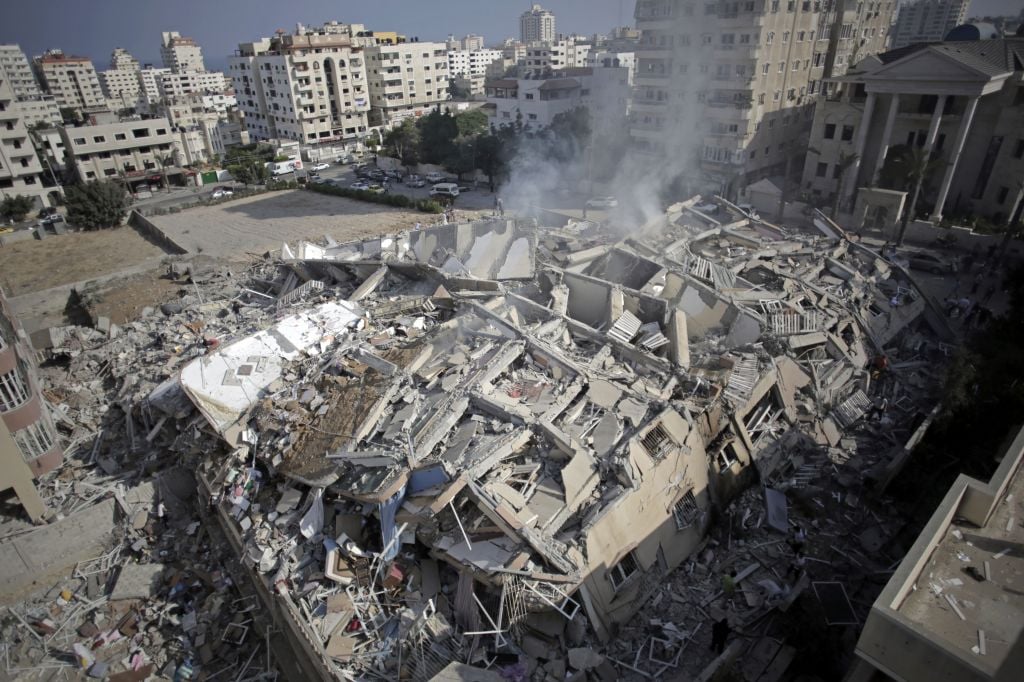
The 50-day Operation Protective Edge began on July 7, coming on the heels of a large-scale terrorism crackdown operation in the West Bank that was prompted by the kidnapping and murder of three Israeli teenagers by Hamas terrorists the month before.
Throughout June and July, Gaza-based terrorist groups began firing missiles at Israel’s southern communities. The IDF responded to these rocket and mortar attacks with limited air and artillery strikes on launch sites, weapons caches and tunnel openings.
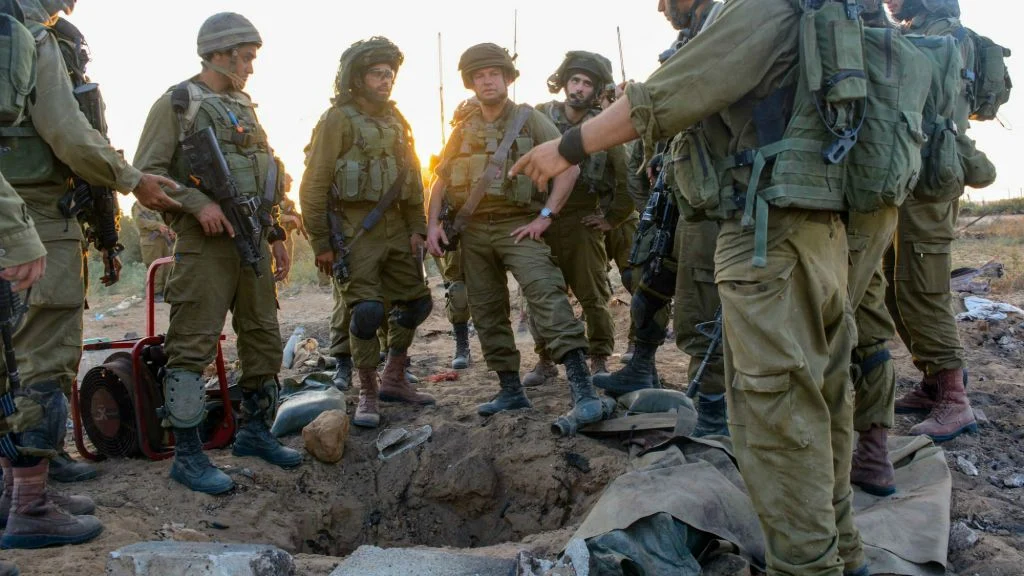
Following a number of attacks on Israeli soldiers that used border-crossing Hamas tunnels, Protective Edge, which began as a response to rocket fire, became instead a tunnel-demolition mission.
By the war’s end on August 26, 2014, the IDF had targeted over 30 tunnels, 14 of which crossed into Israel. A total of 73 people — 67 soldiers, six civilians — died on the Israeli side of the conflict. In Gaza, more than 2,000 people were killed, with Israel putting the percentage of civilians killed at approximately 50 percent and Palestinians estimating it to be closer to 70%.
Israel said the high proportion of civilian Gazan deaths was the fault of Hamas, which squarely embedded its military infrastructure, including tunnel entrances and rocket launchers, in residential neighborhoods.
The military is said to be criticized in the report for failing to adequately prepare for the threat of Hamas tunnels and for not being forthright with the security cabinet about its “intelligence gaps,” a former top minister told The Times of Israel, on condition of anonymity.
Responding to questions from reporters on Monday, Defense Minister Avigdor Liberman declined to comment on the content of the report, saying he would do so after the embargo was lifted Tuesday afternoon.
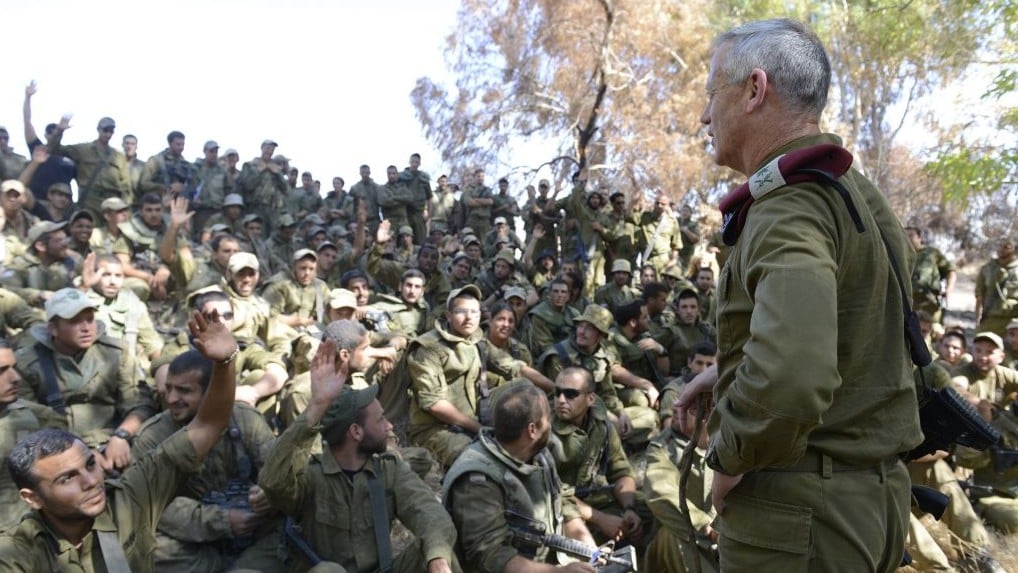
Benny Gantz, who was the IDF chief of staff during the war, stood up for Military Intelligence and its conduct during the war, at a conference for veterans of “Havatzalot,” an elite intelligence program, on Friday.
“During Protective Edge, there was intelligence that was excellent, terrific, accessible, but not always perfect. I am ready to go to the next campaign with the same intelligence that we had in the last one,” Gantz said, according to a report Sunday in the Yedioth Ahronoth daily.
On the attack side, opposition leader Isaac Herzog said Monday the report was an “indictment” against the political leadership during the military operation.
“This indictment doesn’t deal with receiving illicit gifts or with inappropriate personal behavior,” Herzog told his Zionist Union faction meeting, referring to the ongoing criminal investigations into the prime minister, “but rather with the failure of the country’s leadership, the disregard for human life, the abandonment of soldiers and officers and the citizens of the south.”
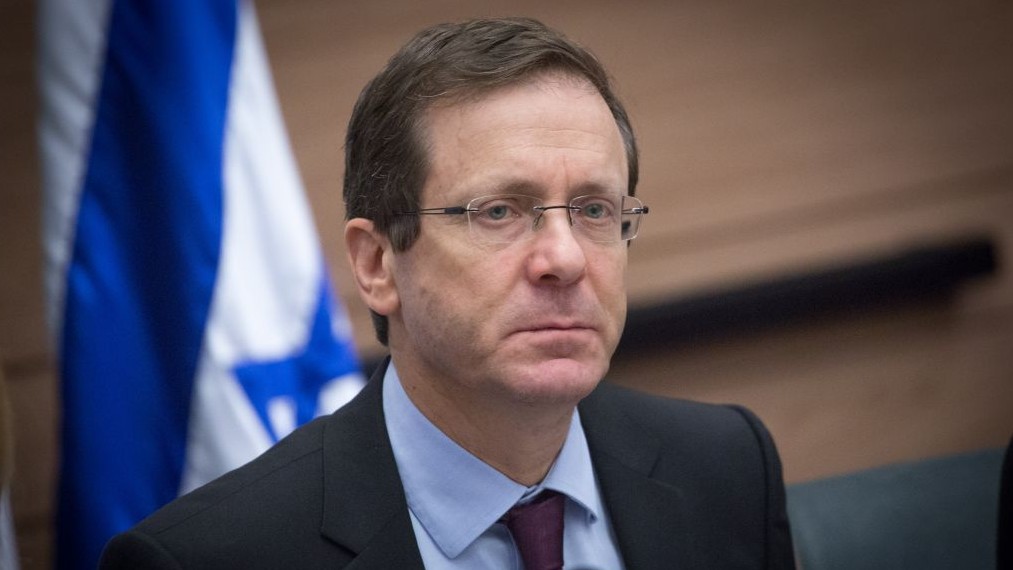
He added: “This indictment reveals how the prime minister and his security cabinet failed to understand the threats, to set a strategy to deal with them and to prepare the operation.”
According to Herzog, the only member of the security cabinet who acted appropriately during the war was Tzipi Livni, his number two in the Zionist Union faction, who sat next to him in the meeting. During the war, Livni served as justice minister.
Speaking to reporters earlier Monday, Livni said that the political brouhaha over the tunnel threat and the cabinet briefings was a distraction from the spectacular lack of strategy.
“We should have solved the problem [of Hamas’s terror tunnels] ahead of time. The fact that this wasn’t done by the time the operation began is a great failure,” Livni said.

“Israel doesn’t have a strategy vis-à-vis the Palestinians generally or Gaza specifically,” she cautioned. “We don’t have to reach an agreement with Hamas, but we need to rally the world against Hamas so Israel has the legitimacy to act against the tunnels in any future operation.”
Yesh Atid chairman Yair Lapid on Monday accused Netanyahu of trying to cover up mistakes he had made rather than fixing them.
“What is more worrying than the mistakes is the denial,” Lapid said at the start of the Yesh Atid faction meeting. “The attempt to deal with public perception and politics and media spin comes at the expense of national security. That’s not how to run a country.”
Asked if, as a senior minister and member of the security cabinet at the time, he also bears responsibility. Lapid said that “the buck stops” with the prime minister, but added he didn’t think Netanyahu need resign over the report.
Raoul Wootliff and Marissa Newman contributed to this report.








The Times of Israel Community.