

On the Syrian Golan, unlike in Yemen, an Iranian offensive fails
Joint operation by Hezbollah, Revolutionary Guards and Syrian forces, designed to clear opposition near Israel’s border, grinds to halt

 Add ToI as a Preferred Source on Google
Avi Issacharoff, The Times of Israel's Middle East analyst, fills the same role for Walla, the leading portal in Israel. He is also a guest commentator on many different radio shows and current affairs programs on television. Until 2012, he was a reporter and commentator on Arab affairs for the Haaretz newspaper. He also lectures on modern Palestinian history at Tel Aviv University, and is currently writing a script for an action-drama series for the Israeli satellite Television "YES." Born in Jerusalem, he graduated cum laude from Ben Gurion University with a B.A. in Middle Eastern studies and then earned his M.A. from Tel Aviv University on the same subject, also cum laude. A fluent Arabic speaker, Avi was the Middle East Affairs correspondent for Israeli Public Radio covering the Israeli-Palestinian conflict, the war in Iraq and the Arab countries between the years 2003-2006. Avi directed and edited short documentary films on Israeli television programs dealing with the Middle East. In 2002 he won the "best reporter" award for the "Israel Radio” for his coverage of the second intifada. In 2004, together with Amos Harel, he wrote "The Seventh War - How we won and why we lost the war with the Palestinians." A year later the book won an award from the Institute for Strategic Studies for containing the best research on security affairs in Israel. In 2008, Issacharoff and Harel published their second book, entitled "34 Days - The Story of the Second Lebanon War," which won the same prize.
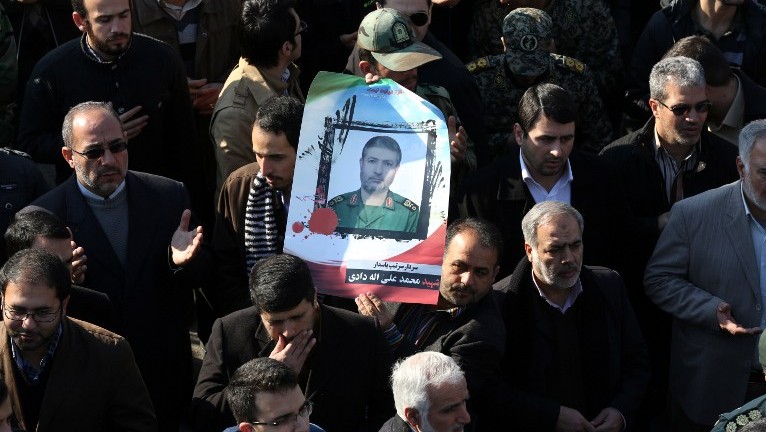
The operation began with a blast. Hezbollah media and those affiliated with the Syrian regime described the military offensive that began in January as “the mother of all operations.” Reports spoke of around 3,000 soldiers, including Bashar Assad’s forces and Hezbollah fighters (they didn’t talk about the Iranian advisors taking part) working to clear the Syrian Golan Heights of opposition forces. The goal was also to secure the route from Dara’a, capital of the Huran area and nerve center of opposition activities, to Damascus.
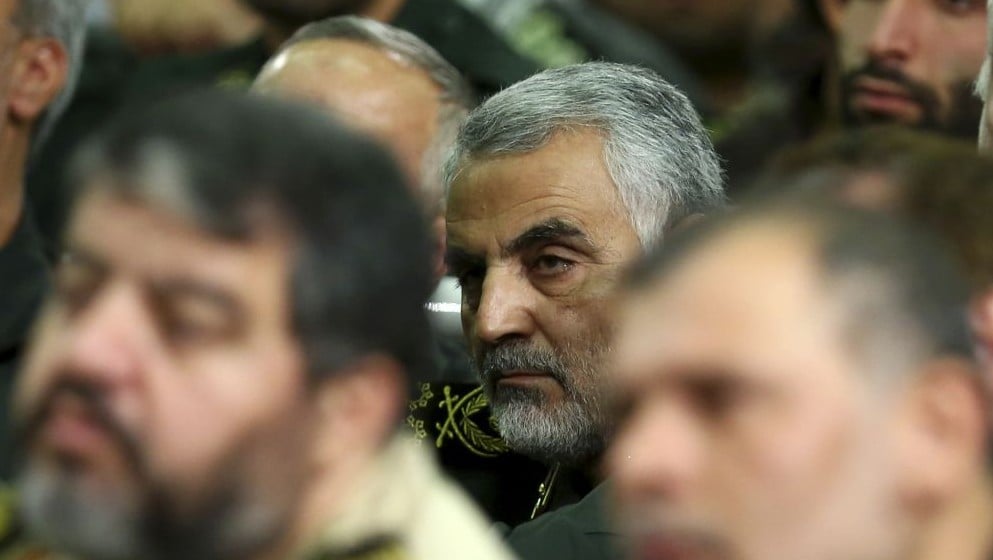
The same month Qassem Soleimani, commander of the Al-Qods force of the Iranian Revolutionary Guards, toured the theater in order to run the operation from up close. Soleimani was even documented taking pictures with the fighters. The Hezbollah-affiliated al-Midian channel described the operation’s impressive military achievements, and said that at any moment, the Syrian regime along with its support forces would succeed in wiping out the central opposition stronghold in the country today, with the exception of the Islamic State.
But in reality, the achievements are minimal. After three months of fighting, the Hezbollah operation can be called a failure. Many in Israel describe it as exactly that.
Success has many fathers, but this failure is certainly no orphan: Assad, Hezbollah, and above all, Iran, can claim parentage. The same regional powerhouse racking up stunning military successes in Iraq and Yemen was stopped by paramilitary forces in southern Syria.
It may be, of course, that the failure is temporary, and in a few months, the soldiers of the “axis of evil” will renew their offensive, and with greater success. But for now, the facts on the ground speak for themselves: Iran’s attempts, along with Hezbollah, to change the face of Israel’s northern front, using Assad’s soldiers as cannon fodder, have not succeeded.
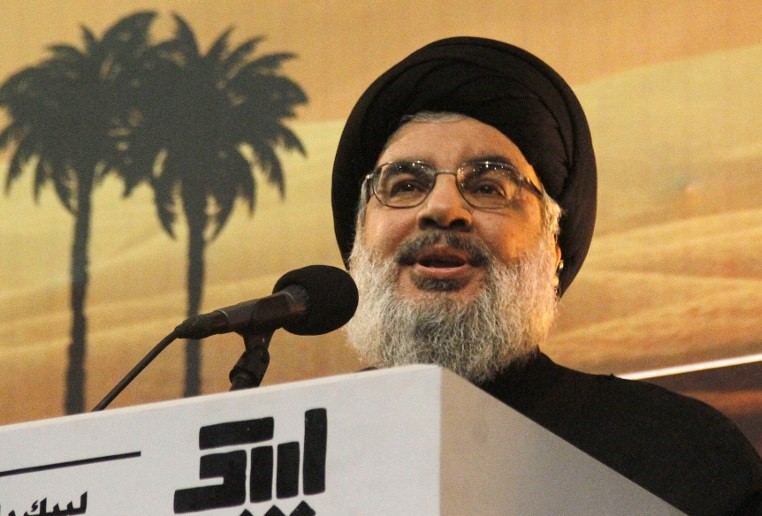
The Iranian strategy is to combine the Lebanese and Syrian fronts against Israel. If Hezbollah is struggling to operate against the Zionist enemy from Lebanese soil, since Israeli counterstrikes could hurt Hezbollah politically in Lebanon, the chaotic Golan Heights is much less problematic for the Shiite organization and for its Iranian masters. In this area, the Iranians wanted to establish territory under their control with no Syrian opposition presence, which would give them a double achievement: seriously harming Jubhat al-Nusra, so dominant in southern Syria, and creating a forward headquarters from which to direct attacks against Israel and drag it into a war of attrition. Hezbollah Secretary-General Hassan Nasrallah himself said in an interview that the Golan and southern Lebanon have become one front.
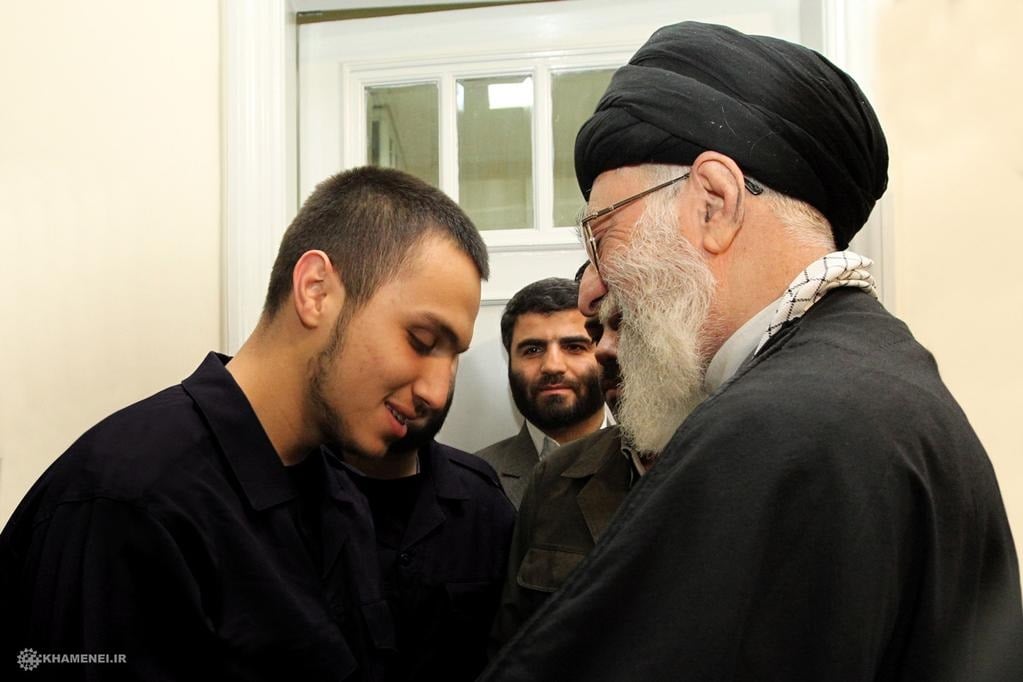
The alleged Israeli strike on the Golan on January 18, during which a Revolutionary Guards general, Muhammad Ali Allahdadi, and six Hezbollah operatives (five of whom were senior) were killed, further underlined the effort Iran is putting into the front. It was reported that the attack foiled the creation of a major military infrastructure that Hezbollah and Iran wanted to use against Israel, under the command of slain Hezbollah commander Imad Mughniyeh’s son, Jihad.
The Iranian effort didn’t begin in January, but many months before. Initially, the Iranians wanted to use Palestinian groups in Syria as proxies, but their abilities were less than impressive. Then the Revolutionary Guards tried to use cells commanded by the released terrorist Samir Kuntar. But his organization had also been damaged by Israeli attacks.
So Iran decided to increase its investment. It created an elite unit which trained over the course of a year, from basic training to advanced exercises. An entire logistical network supported the unit, commanded by Jihad Mughniyeh. Dozens went through selection and enlistment, and learned a variety of skills to allow them operated covertly. The new unit was made up of Hezbollah veterans, pro-Assad Palestinians, and Syrians. It became Nasrallah and Soleimani’s “baby,” and prepared intensely for sniper attacks and anti-tank missile fire against Israeli targets across the border. The Israeli airstrike near Quneitra, according to senior Israeli sources, hit an advance patrol before the unit began its operations.
The Iranian effort didn’t only founder against Israel. The advance of Syrian and Hezbollah forces was stopped quickly by opposition fighters inside Syria. In Nawa, Sheikh Maskin, and Tel Mar’I, opposition forces managed to drive back the Iranian-backed forces. Same in Dara’a.
What are the reasons for this defeat? Hezbollah blames the weather – the heavy snow that fell when the advance was stopped. It could also be that Hezbollah did not send its best fighters, or that the resistance put up by the Free Syrian Army and Jubhat al-Nusra was too stiff.
At the same time, Hezbollah is fighting on other fronts that are no less dangerous. Lebanese media reported recently on bitter fighting in the Baalbek area, near the Syrian border. And though Hezbollah captured the Kalmoun ridge, the fighting never stopped there, and in Aleppo the Syrian army has not managed to defeat the radical Sunni opposition. Neighborhoods of Damascus, mainly in the area of the Shiite holy site Sayyida Zayneb mosque, are shelled almost daily.
By all indications, the civil war in Syria is far from over.



The Times of Israel Community.