

In first, US drops weapons to Kurds in Syria’s Kobani
Arms, ammunition and medical supplies sent by US and allies to fighters defending embattled border town in operation against Islamic State
 Add ToI as a Preferred Source on Google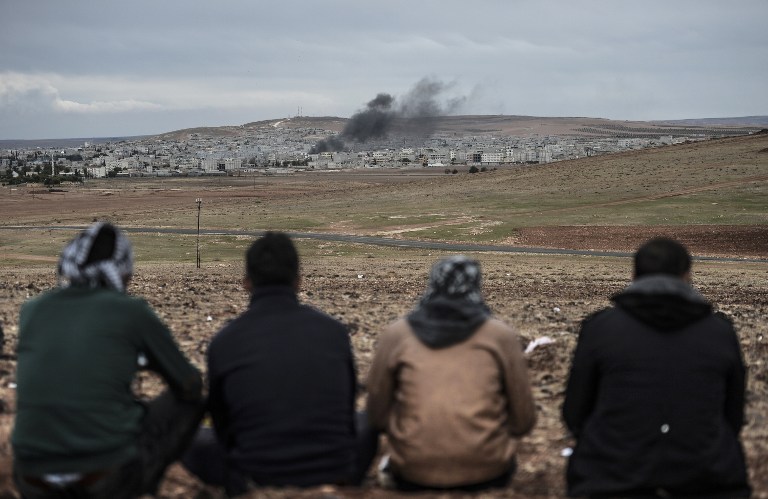
WASHINGTON — The US military said Sunday it had airdropped weapons, ammunition and medical supplies to Kurdish forces defending the Syrian city of Kobani against Islamic State militants.
Three C-130 cargo aircraft carried out what US Central Command called “multiple” successful airdrops of supplies in the vicinity of Kobani, including small-arms weapons, provided by Kurdish authorities in Iraq.
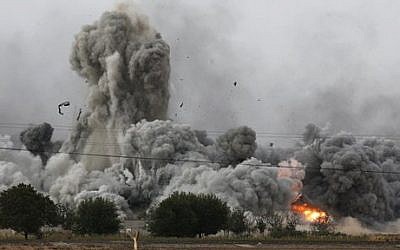
The airdrops Sunday were the first of their kind and followed weeks of US and coalition airstrikes in and near Kobani, near the Turkish border. The US said earlier Sunday that it had launched 11 airstrikes overnight in the Kobani area.
In a statement Sunday night, US Central Command said the drops were intended to enable continued resistance to Islamic State efforts to take full control of Kobani.
The aircraft faced no resistance from the air or the ground, were not accompanied by fighter jets and exited the area safely, a senior Obama administration official said, refusing to rule out a repeat of the action if needed, possibly in the near future.
The airdrops are almost certain to anger the Turkish government, which has said it would oppose any US arms transfers to the Kurdish rebels in Syria. Turkey views the main Kurdish group in Syria as an extension of the Turkish Kurd group known as the PKK, which has waged a 30-year insurgency in Turkey and is designated a terror group by the US and by NATO.
In a written statement, Central Command said its forces have conducted more than 135 airstrikes against Islamic State forces in Kobani.
Using an acronym for the Islamic State group, Central Command said, “Combined with continued resistance to ISIL on the ground, indications are that these strikes have slowed ISIL advances into the city, killed hundreds of their fighters and destroyed or damaged scores of pieces of ISIL combat equipment and fighting positions.”
“However, the security situation in Kobane remains fragile as ISIL continues to threaten the city and Kurdish forces continue to resist,” the statement continued.
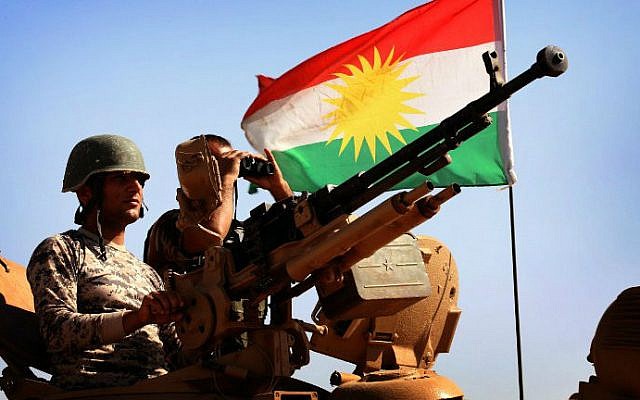
One senior Obama administration official said that Kurdish fighters had put up an “impressive” effort in the face of the emboldened IS organization, but cautioned that Kobani could still fall to the IS and the security situation was “fluid.”
Nevertheless, “hundreds” of IS fighters had been killed in the escalating campaign in Kobani.
Washington and its Western allies have been pressing Turkey to take a more direct role in taking on the IS group in Kobane, but Ankara is reluctant to arm Kurds and intervene militarily against the militants, fearing an effective fighting force from its historic foes on its border.
On the prickly subject of whether the Turkish government has been informed beforehand of the resupply drop, a senior administration official in Washington said President Barack Obama spoke to his counterpart Recep Tayyip Erdogan on Saturday “and was able to notify him of our intent to do this and importance we put on it”.
The official added: “We understand the longstanding Turkish concern with the range of groups, including Kurdish groups, they have been engaged in conflict with and in peace talks with.”
However, the official said, Islamic State was “a common enemy” for the United States and Turkey.
Washington had been in contact with Ankara in recent days to stress the “urgency” of the need to resupply Kurdish fighters in Kobani.
The airdrops were the fastest way to get supplies to Kurdish fighters, one senior administration official said, “and an opportunity to strike a blow against ISIL. When we see an opportunity to target ISIL we will take them”.
Separately, American-led warplanes launched 11 air strikes near Kobani on Saturday and Sunday, Central Command said, helping Kurdish fighters repulse a new IS attempt to cut their supply lines from Turkey.
Kobani’s Kurdish defenders have been under IS assault for more than a month.
From Saturday into Sunday morning, 31 IS fighters died in the battle, said the Syrian Observatory for Human Rights.



The Times of Israel Community.