

UN ‘shocked’ by images of ‘deliberately starved’ Syrian children
UN human rights chief says starving civilians as a method of warfare is a clear violation of international law
 Add ToI as a Preferred Source on Google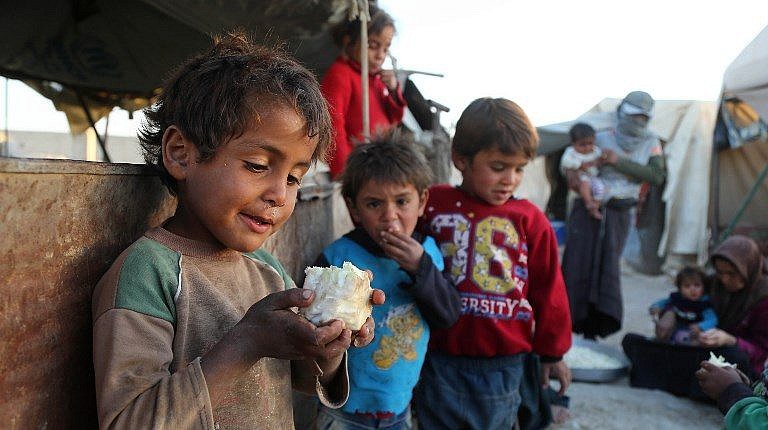
GENEVA, Switzerland — The United Nations condemned Friday the “deliberate starvation of civilians” as a war tactic following the release of “shocking” images showing severely malnourished children in an area near Damascus besieged by Syria’s military.
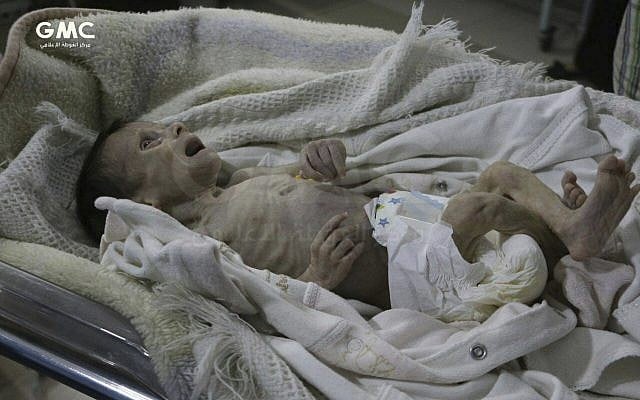
UN human rights chief Zeid Ra’ad Al Hussein said the pictures were “a frightening indication of the plight of people in Eastern Ghouta”, which has been under siege by government forces for more than four years.
AFP on October 21 published a picture of an infant suffering from severe malnutrition at a clinic in the rebel-controlled town of Hamouria, in Eastern Ghouta.
“The deliberate starvation of civilians as a method of warfare constitutes a clear violation of international humanitarian law,” Zeid said in a statement.
Asked if the rights chief was accusing President Bashar al-Assad’s regime of deliberately starving non-combatants, Zeid’s spokesman Rupert Colville said: “He is raising the possibility that that is what’s happening.”
Eastern Ghouta is one of the areas covered in a deal between rebel backer Turkey and regime allies Russia and Iran earlier this year to create “de-escalation zones.”
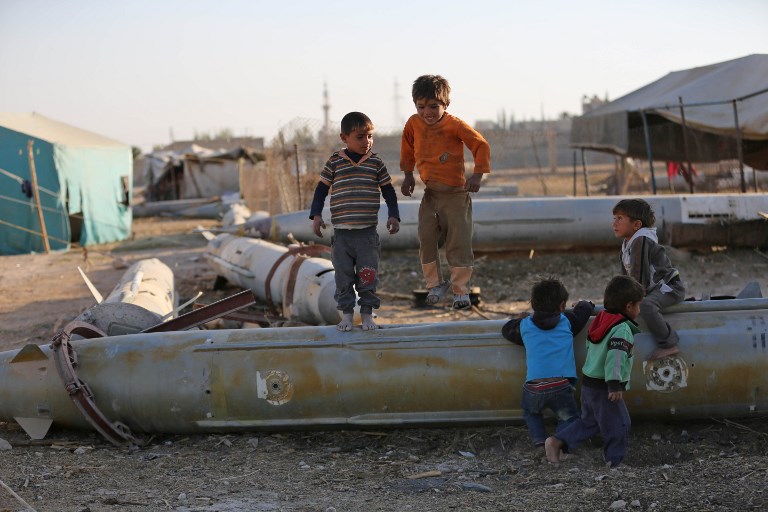
One of the aims was to facilitate aid access to besieged areas but humanitarian conditions remain dire in Eastern Ghouta.
Zeid called the suffering of civilians in the region “an outrage.”
He also accused armed rebel groups in Eastern Ghouta of restricting the work of humanitarian organizations.
Eastern Ghouta, which lies outside the capital Damascus, was once a prime agricultural region.
But the rebel stronghold has been under a tight government siege since 2013, causing shortages of food and medicine.
The region has been devastated by years of fighting, with government air strikes and shelling bringing down multi-story buildings and rendering whole streets uninhabitable.
Basic services for the region’s estimated 400,000 residents are virtually non-existent, with electricity produced only by generators and the water available often dirty and a vector for illness.








The Times of Israel Community.