

 From
Background: Case against Netanyahu has been going on for a decade
 Add ToI as a Preferred Source on Google
David Horovitz is the founding editor of The Times of Israel. He is the author of "Still Life with Bombers" (2004) and "A Little Too Close to God" (2000), and co-author of "Shalom Friend: The Life and Legacy of Yitzhak Rabin" (1996). He previously edited The Jerusalem Post (2004-2011) and The Jerusalem Report (1998-2004).
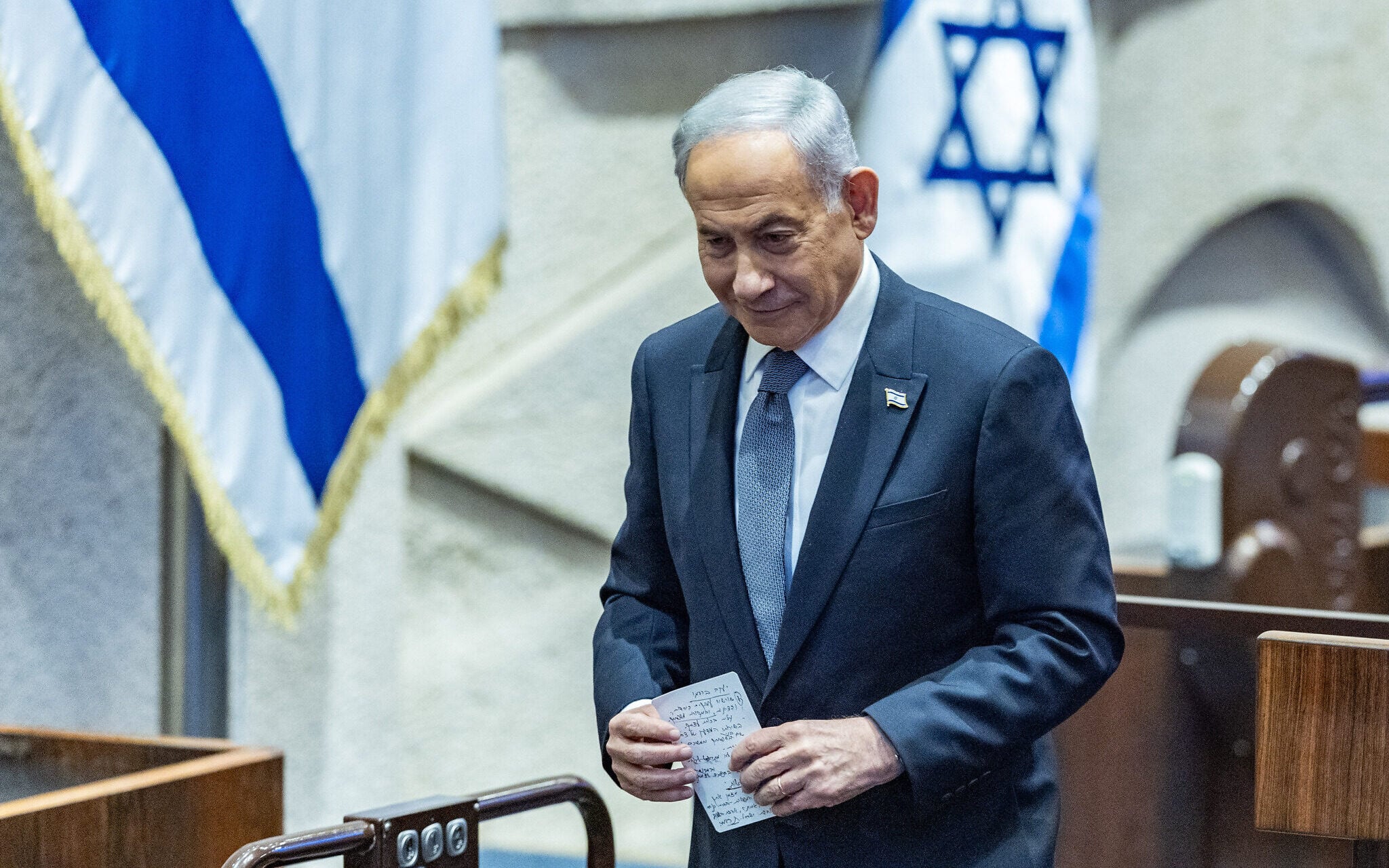
Prime Minister Benjamin Netanyahu was in the Knesset when the Jerusalem District Court convened this morning and recommended the dropping of the most serious case in his criminal trial, the reconsidering of a second, and that the sides seek a deal on the third.
In an address from the podium, Netanyahu spoke, among other things, about the evolution of democracy in the US, and the importance of the balance of power between the branches of government, but did not directly address developments in the court.
Crucial to any agreed-upon arrangement regarding Case 1000, the only case where the court indicated the charges hold water, will be the question of whether a deal would see Netanyahu convicted of an offense carrying the designation of “moral turpitude,” which would require him to absent himself from public life for seven years. Substantially, though he is not completely vindicated by the court’s stated position today, it would seem unlikely that Netanyahu would agree to such a deal.
Netanyahu has always denied any wrongdoing in the three cases against him, and alleged that he was the victim of a witch hunt by police, law enforcement and political rivals aimed at removing him from power.
The case against Netanyahu has been going on for a decade.
Then-attorney general Avichai Mandelblit first ordered a “probe” into Netanyahu in June 2016, after he was presented with information by the Lahav 433 unit that included “a long list of allegations that the prime minister had carried out apparent crimes crossing ethical norms.” The prime minister was first questioned in January 2017.
Mandelblit announced in November 2019 that he had decided to press charges against Netanyahu in three corruption cases, and the indictment was filed in January 2020, after Netanyahu abandoned an effort to secure parliamentary immunity from prosecution.
The trial began in May 2020, with Netanyahu becoming the first serving Israeli premier to stand trial.





The Times of Israel Community.