

Mikvah immersion makes a Reform woman feel ‘whole’
After settling her late father’s affairs, a daughter finds a healing ceremony in the ritual bath she’d shied from for years
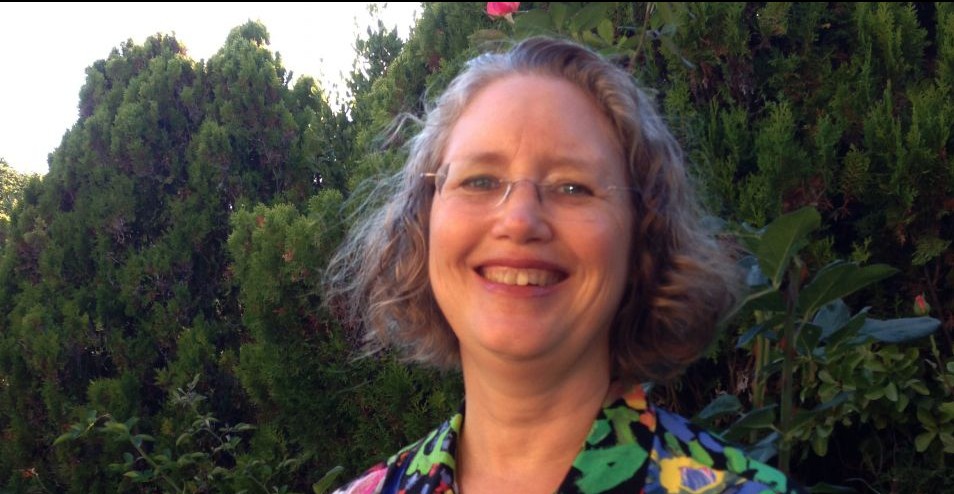
JTA — Susan Esther Barnes had had a rough two years. Her father’s death in April 2011 came as a shock; she hadn’t even known he had been hospitalized. And his widow’s leaving town for a week complicated plans for his funeral and burial.
As executor of his will, Barnes discovered that the money in bank accounts that were to go to her and her sister had been transferred to someone else.
All in all, it was an extraordinarily difficult ordeal, says Barnes, who wrote about the experience on her Religious and Reform blog.
When she received a letter in May telling her that her duties as executor were completed, the Novato, Calif., resident was relieved.
“It felt like such a point of transition,” Barnes, a consultant for public agencies, told JTA. “When I got that letter, I wanted to mark the occasion.”
Mikvah sprang to mind.
The daughter of a Jewish father and non-Jewish mother, Barnes had converted to Judaism about two decades ago but had never dipped in the ritual waters. “Twenty years ago, it wasn’t really something that came up in Reform conversions,” she says.
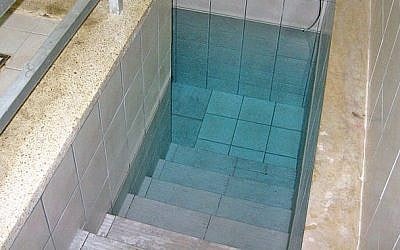
Nor had she visited the mikvah when her rabbi suggested it prior to her Jewish wedding in 2008 (she and her husband were married civilly in 2003).
“I don’t want some stranger seeing me naked,” Barnes, 49, remembers thinking.
But her rabbi, Michael Lezak of Rodef Sholom in San Rafael, Calif., often encourages people who are facing a transition or traumatic time to visit the mikvah. It helps them “to realize they’re not alone, that the Holy One walks them into the water,” Lezak says. “The water has transformational power.”
Barnes emailed Lezak and told him of her plans. She also decided she wanted to say the blessing for a new convert, although Lezak told her that wasn’t necessary, that “she is 100 percent Jewish in my eyes.” But Barnes says “it seemed silly not to fill in that hole as long as I was going.”
Lezak accompanied her to The Mikvah Society in San Francisco July 19. Standing behind a slightly ajar door, Lezak talked to her prior to each blessing that accompanied her three immersions into the water.
‘Look at the stairs leading out of the mikvah and to see them as stairs leading to the next chapter of my life’
He reminded her of their congregational visit to Israel, where they saw the mikvah at Masada, telling her she was connected to thousands of years of history. He emphasized that she was doing the conversion blessing solely for herself, since she was “already unquestionably Jewish.” He also asked her “to look at the stairs leading out of the mikvah and to see them as stairs leading to the next chapter of my life.”
The mikvah attendant stood by, declaring “kasher” after each dunk.
For Barnes, the immersion marked an end to dealing with the knowledge that she had missed her father’s final days and the ensuing difficulties involving his estate. “There’s definitely a clear line between then and now; I’m whole now,” she says, adding that she plans to visit the mikvah to mark future life passages.
“I cried through the whole thing. I didn’t feel sad. It just felt powerful,” she says. “I felt connected to an ancient tradition.”








The Times of Israel Community.