

‘No evidence’ German knife attack was Islamist terrorism
Assault near Munich by stabber who may have suffered from psychological problems killed 1 person and wounded 3
 Add ToI as a Preferred Source on Google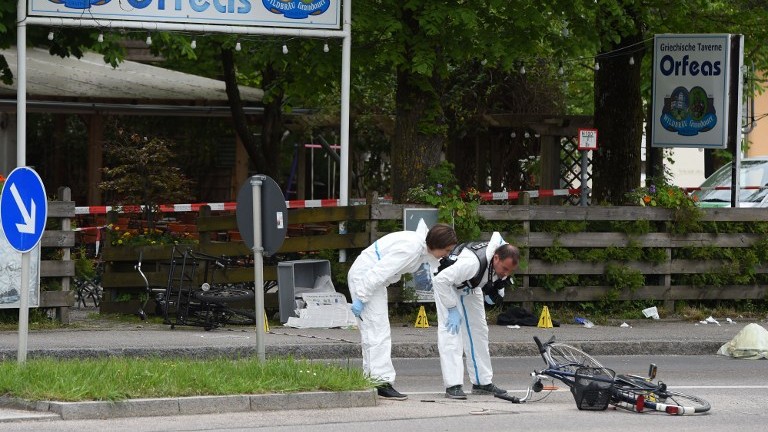
GRAFING, Germany (AFP) — A German man who officials said had drug and psychological problems stabbed to death one person and slashed three more in a bloody dawn attack at a railway station Tuesday.
Police arrested the 27-year-old after the apparently random assault around 5:00 a.m. at the commuter railway station of the small town of Grafing, east of Munich.
One of the victims, a 56-year-old man, later died of his wounds in hospital. Authorities had earlier wrongly given his age as 50.
The others injured were men aged 43, 55 and 58. One of the victims was seriously hurt, the other two more lightly wounded.
Police and prosecutors initially said the attack appeared to be “politically motivated” and with an apparent Islamist motive after eyewitnesses had reported hearing him scream “Allahu akbar” (God is greatest).
However, hours later, Bavaria state’s interior ministry said that “so far we have no evidence for an Islamist motive, but the investigation continues.”
“We have found the man had psychological and drug problems,” ministry spokesman Oliver Platzer told AFP.
Federal Interior Minister Thomas de Maiziere said that “from Berlin I don’t want to feed and evaluate speculation about the motive.”
Bavaria’s interior minister Joachim Herrmann said the attacker, named locally as Paul H., was a German national, as authorities said he hailed from central Hesse state and did not have a migrant background.
“As to what extent there were other background factors, or whether this is more about questions of mental instability or drug addiction, still needs to be investigated,” Herrmann said on BR24 television.
Earlier Ken Heidenreich, spokesman for the prosecutor’s office, had said that the “assailant made remarks at the scene of the crime that indicate a political motive — apparently an Islamist motive… We are still determining what the exact remarks were.”
Bloody footsteps
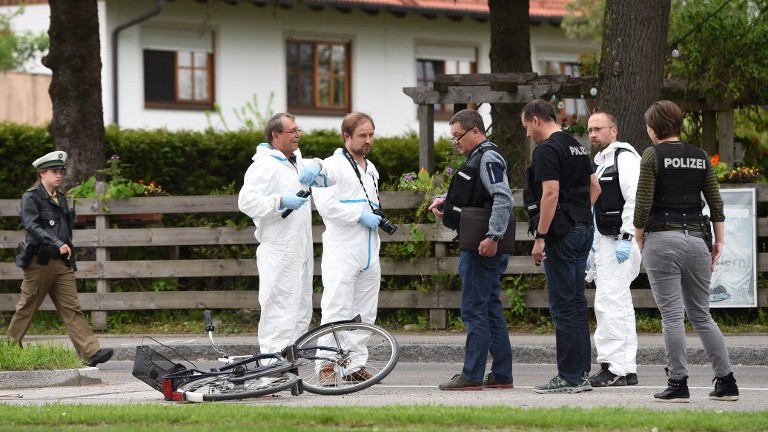
In the dawn attack, the assailant stabbed one man aboard a train, another on the platform, then left the station and slashed two more men on bicycles outside, said Bavarian police spokesman Karl-Heinz Segerer.
“In the meantime local police received an emergency call, and the officers quickly arrived at the scene and were able to detain the man,” said Segerer on NTV news channel.
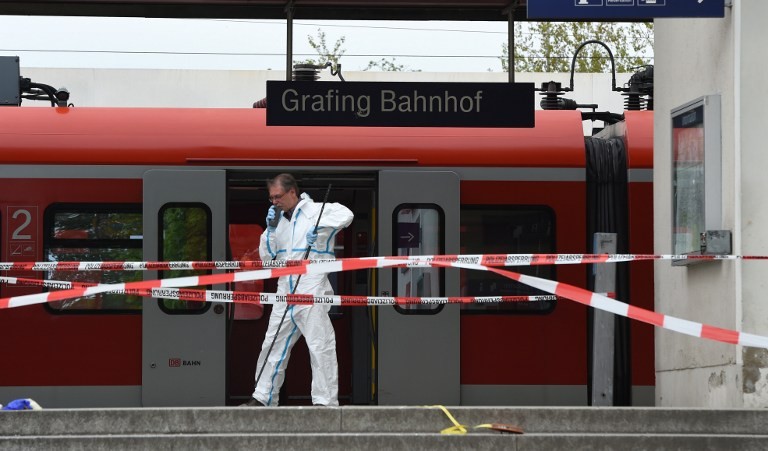
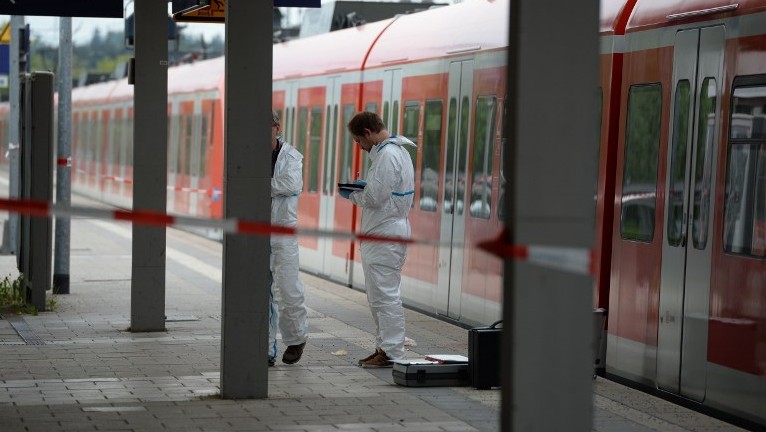
Bloody footsteps and police forensic officers in white plastic suits could be seen at the cordoned-off railway station in video footage from Grafing, 30 kilometers (20 miles) east of the Bavarian capital.
Town mayor Angelika Obermayr expressed shock at the bloody crime in the sleepy town of 13,000 people.
“We are an absolutely peaceful Bavarian small town in the greater Munich region,” she said on NTV. “Something like this is absolutely new and has deeply shocked the people here who only know things like that from television.
“That something like that happened here is absolutely unbelievable.”
The violence came at a time of heightened public fears about jihadist attacks.
Last August, the Islamic State group threatened Germany with attacks in an online execution video.
In the rare German-language video, two jihadists urged their “brothers and sisters” in Germany and Austria to commit attacks against “unbelievers” at home.
Since then Germany had seen at least two bloody knife assaults blamed on Islamists.
In February a 15-year-old girl identified as Safia S. stabbed a policeman in the neck with a kitchen knife at Hanover train station in what prosecutors later said was an IS-inspired attack.
Last September, a 41-year-old Iraqi man identified as Rafik Y. stabbed and seriously wounded a policewoman in Berlin before another officer shot him dead.
The man had previously spent time in jail for membership of a banned Islamist group and had been convicted in 2008 of planning an attack in Berlin against former Iraqi prime minister Iyad Allawi.
According to the German domestic intelligence agency, some 740 people have left Germany to join jihadist groups in Syria or Iraq. About 120 of them have been killed, while about one-third have returned to Germany.








The Times of Israel Community.