

Rare proof of Galilee’s forgotten 4th-century Jewish Revolt revealed in hidden coin hoard
22 bronze coins found secreted in Huqoq near the Sea of Galilee show Jews used subterranean hideaways during the little-known Gallus Revolt of 351 CE
 Add ToI as a Preferred Source on Google
Rossella Tercatin is The Times of Israel's archaeology and religions reporter.
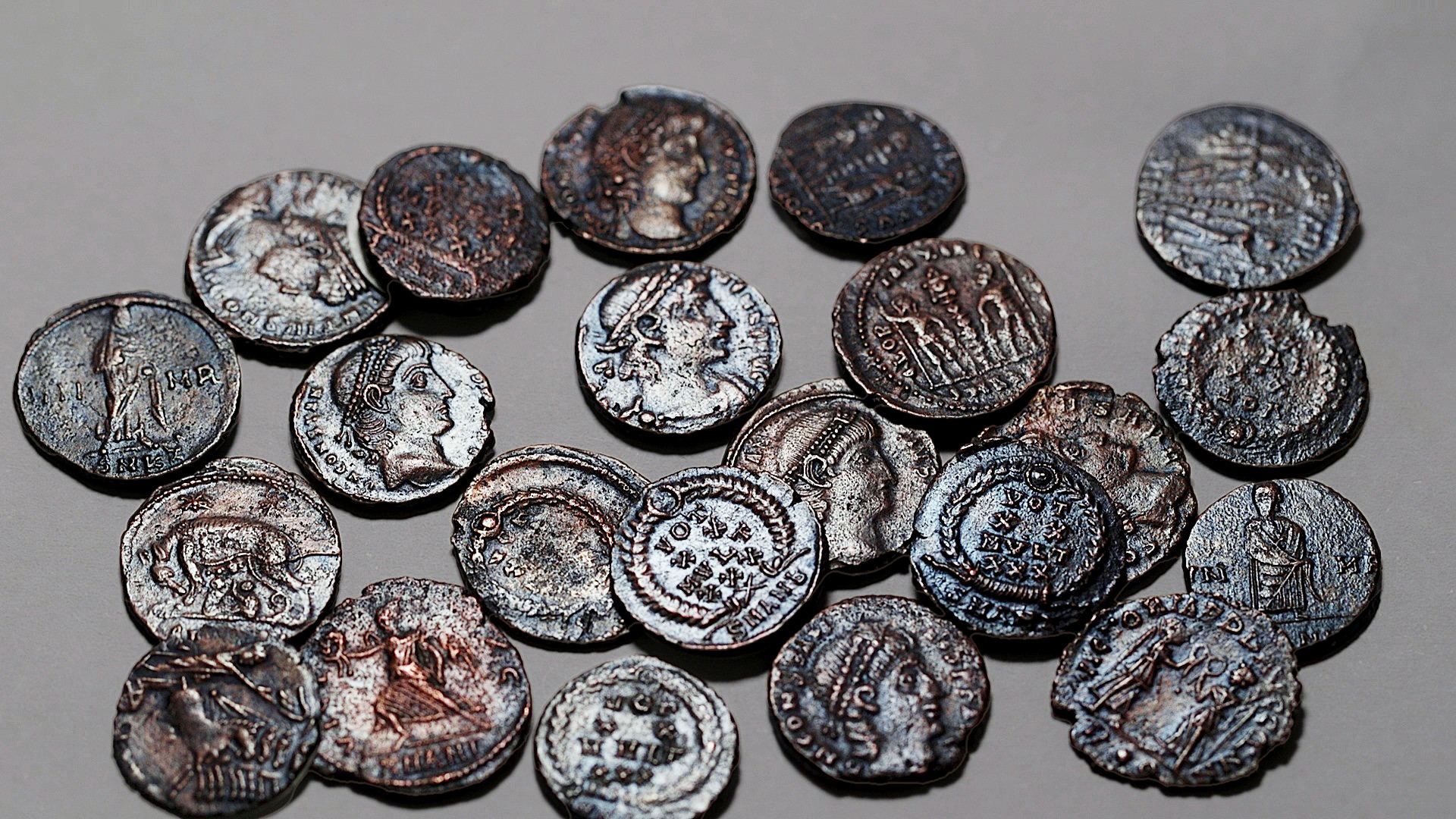
A rare hoard of 22 bronze coins dating to the 4th century CE has been uncovered deep underground in a hiding complex beneath the ancient settlement of Huqqoq in the Lower Galilee, the Israel Antiquities Authority (IAA) announced Thursday. The discovery offers an unprecedented glimpse into the little-known Third Jewish Revolt against the Romans, which erupted in the region in 351 CE, according to Prof. Yinon Shivtiel of Zefat Academic College. Shivtiel co-directs the excavations at the site alongside IAA archaeologist Uri Berger.
Researchers were able to date the coins precisely because they bear the effigies of Emperors Constantius II and Constans I, two of Constantine the Great’s three sons who divided the empire after his death in 337 CE.
The coins’ location provides groundbreaking evidence that Galilean Jews involved in the Gallus Revolt used underground hiding complexes — much like their ancestors had during the Great Revolt (66–70 CE) and the Bar Kochba Revolt (132–136 CE).
When Shivtiel and Berger uncovered the hoard, they initially expected it to date to one of the two better-known revolts.
“A few months ago, as we were excavating the hiding complex in Huqoq, uncovering evidence from the First Jewish Revolt and the Bar Kochba Revolt, and we found the coins,” Shivtiel told The Times of Israel over the phone. “When we checked who the emperors appearing on them were, we realized that the coins were from the period of the rebellion that started in Tzippori [in the Galilee] in 351 CE.”
The Gallus Revolt was named by historians after Constantius Gallus, who ruled the eastern provinces on behalf of the emperor during that period. Very little is known about how the events unfolded, as the revolt is only briefly mentioned by some Roman authors.
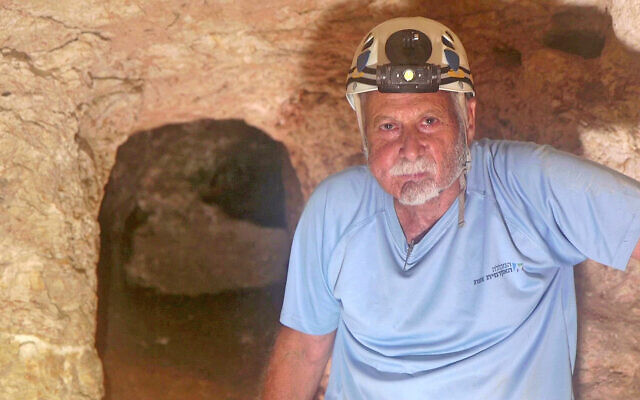
“A priest named Hieronymus wrote briefly about the revolt, saying the Jews began their rebellion in Tzipori but were quickly crushed by the Romans,” Shivtiel said. “Now we can see that the Jews of the Galilee followed the path of their forefathers, retreating into the hiding complexes with their possessions — including this hoard of coins.”
According to the researcher, there is almost no archaeological evidence for the rebellion.
“There is a specific reason for this,” Shivtiel explained. “About a decade after the revolt, in 363 CE, a massive earthquake struck the land of Israel, devastating many towns and villages. As a result, it is often difficult to determine what was destroyed by the revolt and what by the earthquake [in archaeological sites from this period].”
A history of hideaways
Hiding complexes became widespread in the 1st and 2nd centuries CE, as Jews sought to restore their sovereignty over Jerusalem and the land of Israel.
“We are talking about a well-known defensive system carved deep into the earth directly beneath people’s homes,” Shivtiel said. “These complexes of chambers and tunnels were dug in all the areas where the fighting took place.”
These areas included the region of the biblical kingdom of Judah (Jerusalem and the surrounding areas to the south and west), as well as the Galilee.
“[Roman-Jewish historian] Josephus described how Jews hid in the complexes in his work,” Shivtiel noted.
After the Temple in Jerusalem was destroyed in 70 CE, Galilee became the new center of Jewish life in the Land of Israel.
Some 60 years later, the Jews in Judah who had avoided exile, led by Simon Bar Kochba, once again rose up against the Romans, retreating to the underground systems.
“In Judah, [the rebels] expanded the hiding complexes from the previous revolt, carved new chambers and sometimes dug completely new systems,” Shivtiel said. “They had time to prepare and ensure that Roman soldiers could not enter the caves and reach those hiding there.”
The role of the Galilee in the Bar Kochba Revolt remains disputed among scholars, as no evidence shows that its inhabitants actively joined the fighting.
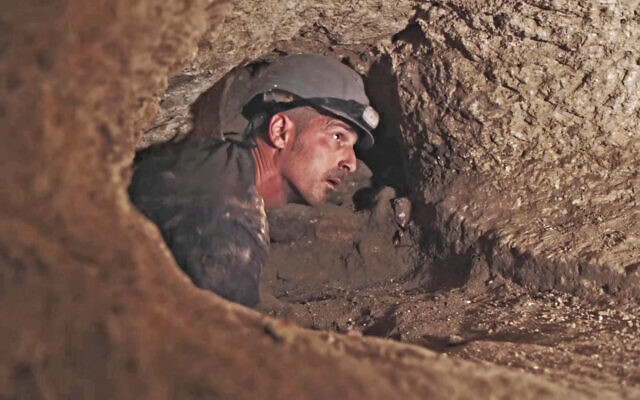
In recent years, however, an increasing number of hiding complexes have been identified in the region through work that Shivtiel has spearheaded for three decades — findings that suggest the local population is at least prepared for the possibility of revolt.
“We have very limited evidence about the Bar Kochba Revolt,” Shivtiel said. “Most of what we know comes from the hiding complexes we uncovered, first in Judah and more recently in the Galilee.”
“Even though historical sources do not indicate that the Bar Kochba Revolt extended to the Galilee, Jews here did not simply sit on the shores of the Sea of Galilee and enjoy life,” he added. “They prepared, carving new hiding complexes or reusing older ones.”
Thanks to the newly discovered hoard, researchers now believe a similar scenario unfolded in the 4th century. The coins had been stashed in a pit dug into one of the chambers and carefully covered with earth — likely by owners who hoped to one day return and reclaim them.
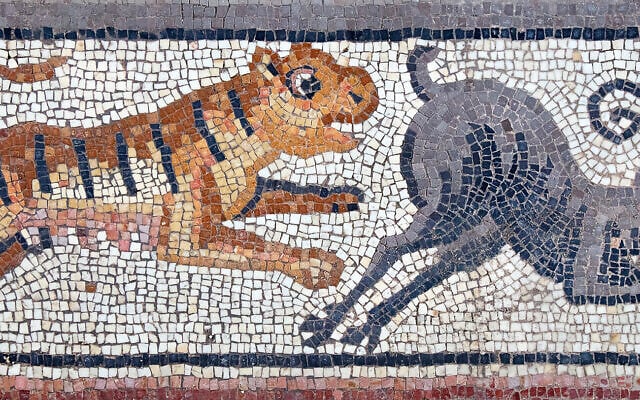
While it is impossible to know the fate of those who hid the coins, the revolt did not mark the final chapter of Jewish life in Huqoq.
“We must end on an optimistic note,” Shivtiel said. “Just a few decades later, the Jews of Huqoq built one of the most elaborate synagogues ever constructed, adorned with intricate mosaic floors.”
“This shows that the community not only recovered, but flourished,” he added. “They left the rebellions behind and embraced a new chapter of life — prosperous enough to create such a magnificent synagogue.”
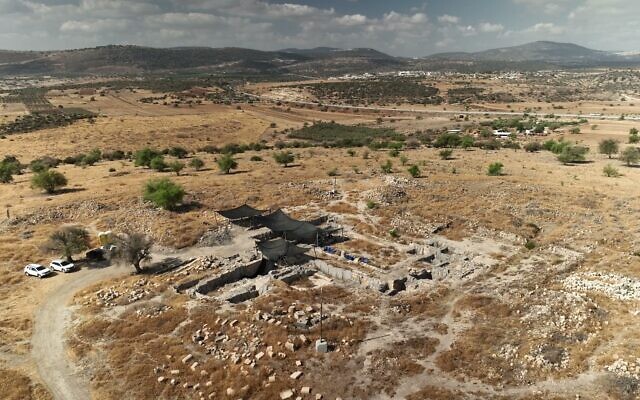
The Huqoq site, which includes the remains of both the synagogue and the hiding complex, is currently being developed by Keren Kayemeth LeIsrael–Jewish National Fund and is expected to open to the public in the coming years.










The Times of Israel Community.