

Turkey arrests over 500 for suspected ties to alleged leader of failed 2016 coup
Suspects accused of handling cash from supporters of US-based preacher Fethullah Gulen; fearing clampdown on critics, opposition parties seek suspension of new fake news law
 Add ToI as a Preferred Source on Google
ISTANBUL, Turkey — Turkish authorities announced the arrests of more than 500 people on Tuesday who are suspected of links with a preacher accused of having plotted a failed coup in 2016.
Turkish Interior Minister Suleyman Soylu said just over 700 arrest warrants had been issued, with 543 people detained.
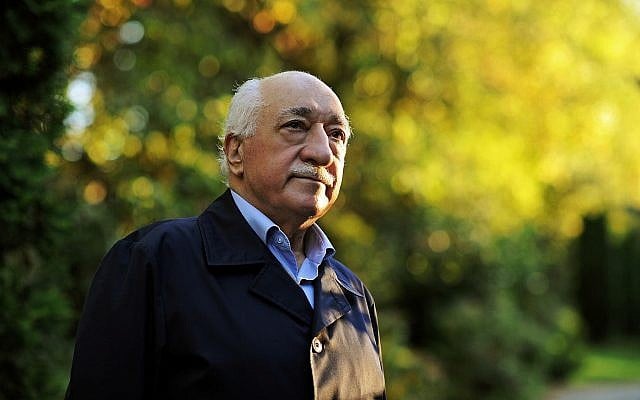
They are suspected of having collected or redistributed money sent from abroad by supporters of US-based preacher Fethullah Gulen.
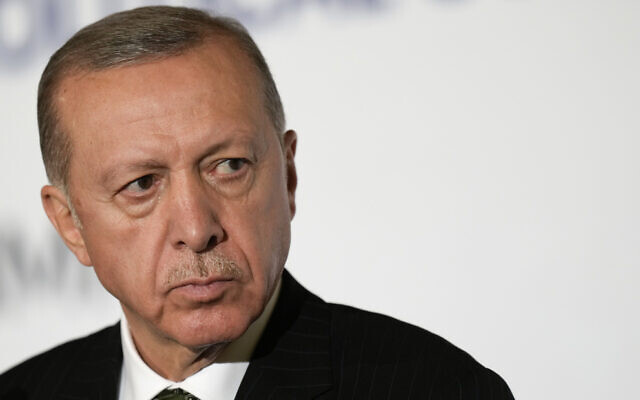
Turkish President Recep Tayyip Erdogan, once an ally of Gulen, accuses him of having been behind the failed coup against him in July 2016.
Gulen, a Muslim cleric, has repeatedly denied any involvement and the United States has denied Turkey’s requests for his extradition.
Since the failed putsch, more than 300,000 people have been arrested in Turkey over suspected ties to Gulen. Tuesday’s operation was carried out in 59 of the country’s 81 provinces.
The arrests came as Turkey’s main opposition party applied to the country’s supreme court on Tuesday seeking a suspension of the enforcement of a newly-approved media law that mandates prison terms for people deemed to be spreading “disinformation.”
Last week, parliament approved a 40-article legislation that amends press and social media laws with the stated aim of combating fake news. Critics fear that the measure will be used to further crackdown on social media and independent reporting as the country heads toward elections.
The legislation, which was approved with the votes of Erdogan’s ruling party and its nationalist allies, came into effect with its publication in the Official Gazette earlier on Tuesday.
The most controversial provision, Article 29, foresees up to three years in prison for spreading information that is “contrary to the truth” about Turkey’s domestic and international security, public order and health for the alleged purpose of causing “public worry, fear and panic.”
Engin Altay, a senior member of the main opposition Republican People’s Party, applied to the Constitutional Court for the suspension of the implementation of Article 29.
“This is a law that [aims to] present [the government’s] lies as the truth, and the truth as lies, and can’t be accepted,” Altay told reporters after submitting the plea.
The party would seek the annulment of the entire legislation at a later date, he said.
Erdogan argued for a law to combat disinformation and fake news, saying false news and rising “digital fascism” are national and global security threats.
His Justice and Development Party and nationalist allies say disinformation prevents people from accessing the truth, undermining freedom of expression.
The ruling party denies that the legislation aims to silence critics.






The Times of Israel Community.