

Are Jewish outliers the only hope for rejuvenation?
A new documentary explores three groups of very different Jews living alternative, but joyously meaningful lives
 Add ToI as a Preferred Source on Google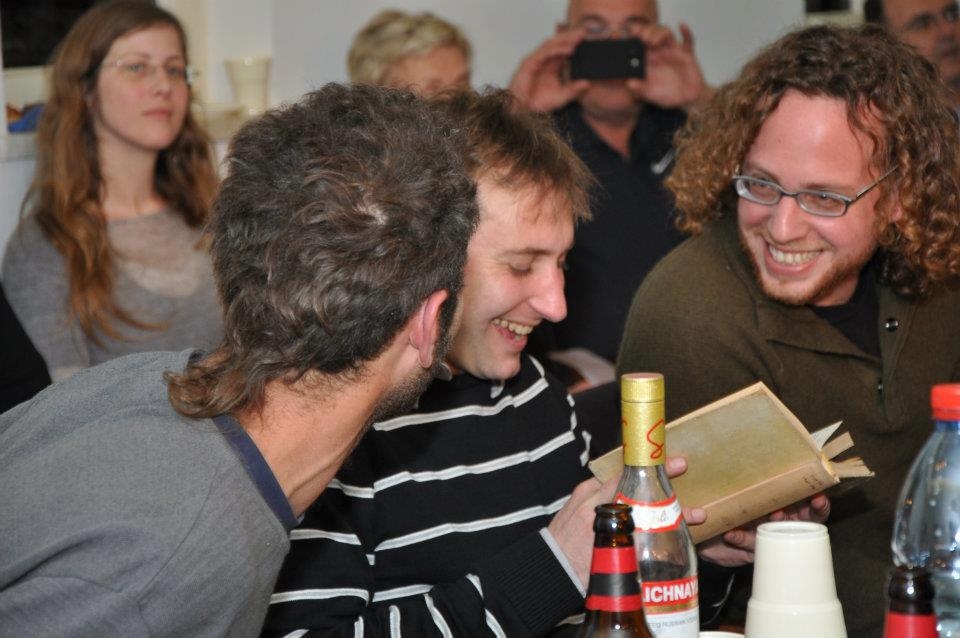
NEW YORK — The recent Pew study found high rates of disengagement and intermarriage among non-Orthodox American Jews, low birth rates, and a general hollowing out of hallowed communal structures.
In other words, the end of Jewish life as we know it
But new verve can be found in the lives of several outliers, young individuals around the globe, where Judaism is evolving in fresh, surprising and touchingly personal ways.
This is the subject of “Fringes: New Adventures in Jewish Living,” a documentary by Not-So-Simple-Productions which premiered last week at the Manhattan JCC.
“We felt that for a lot of people, the denominational boxes that we grew up in no longer fit that well,” says producer Jonathan Lopatin. “So we found people who were very much out of the box, but nonetheless made the commitment to incorporate Judaism in their lives… which they do in ways that are both unexpected and profoundly meaningful.”
The film follows the paths of three groups towards a self-forged Jewish identity. Ester and Pablo, farmers in Gainesville, Virginia, observe Jewish traditions despite their isolation from other Jews — and the fact neither was technically born Jewish. Leibish and Dena, an Orthodox rabbi and his wife, bring a community center and music venue into their Montreal shul. And in Jerusalem, a group of ex-Orthodox youngsters form the first secular yeshiva.

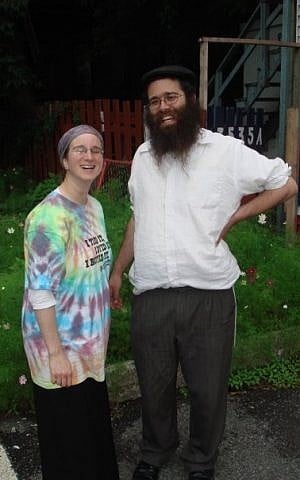
Ester and Pablo, “two Jewish farmers out in the boonies of Virginia” as they put it, are unconventional in more than one way. First, they are both Jews by choice: though Ester was raised in the former Soviet Union as an observant Jew, her grandmother was not of the tribe, and Ester had to convert to be halachically accepted. Her husband Pablo, born and raised a Christian, converted at her behest.
The two are also unique in the depth of their commitment.
“For me, I’m a Jew above all,” remarks Ester in the film, and this remains true even as the inconveniences of keeping a traditional Jewish household in rural isolation mount. In the end the two do not only persevere, but gather a fledgling Jewish community around them.
Rabbi Leibish’s uniqueness is in the cross-denominational character of his enterprise. A secular Jew turned Orthodox, Leibish became a rabbi to surround himself with a like-minded community, one centered on the study of Torah. But fearing stagnation — “I fear becoming a rabbi with a limited bag of tricks, that has stopped actually being a student of Torah” — he adds an espresso bar and live music stage to his shul (called Ghetto Shul in Montreal) ensuring a fresh flow of people, art, and ideas into his house of study, as well as seemingly infinite challenges.
Perhaps the most fascinating example of the breaking down of traditional boundaries is the Jerusalem Secular Yeshiva. Three young Israelis — two formerly Orthodox, one formerly secular — come up with the idea of engaging young secular Israelis in a 24/7 yeshiva-style house of Jewish study. Yet unlike any existing yeshiva, the studies are conducted with no religious drive or pressure, and the canon includes secular thought and philosophy.
The collapse of traditional Jewish structures, manifested in the Pew survey as widespread disengagement, can also facilitate new ways of Jewish involvement, says Professor Steven M. Cohen, a sociologist of American Jewry at Hebrew Union College-Jewish Institute of Religion, and a consultant on the Pew poll.
“Most publicly cited parts of the study pointed to what I would call unhealthy developments to American Jewry, of people becoming less cohesive, less attached,” he explains. “But at the same time, there’s movement in all directions. ‘Fringes’ illustrates a side of creativity, of people forming new configurations of deep attachment to Judaism, and to other Jews.”
In the 1950s, he adds, ideas such as a secular yeshiva, or the creation of a Jewish community on a farm in Virginia “would be absurd, and nearly impossible to carry out.” But “today such ideas are much more widespread… ‘Fringes’ speaks of three, but there are many more out there.”
Director Paula Weiman-Kelman and producer Lopatin have also followed fairly unconventional paths.
Weiman-Kelman is a Jerusalem-based documentary filmmaker and a partner in Not-So-Simple Production’s. Born in Philadelphia to secular socialist Zionist parents, she became active in the Jewish Labor Zionist youth movement Habonim while growing up, and at age 23 moved to Kibbutz Gezer in Israel.
She worked as a curator of Jewish and Israeli Film at the Jerusalem Cinematheque until 1993, when she discovered the thrill of shooting video on high 8, and became an independent filmmaker. Since then she has traveled the world, documenting people whose lives reflect divergent, complex and intriguing ways of being Jewish. “Eyes Wide Open,” Not-So-Simple Production’s first film from 2010, followed the journeys of different Jewish-American families to Israel.
‘”Fringes” illustrates a side of creativity, of people forming new configurations of deep attachment to Judaism, and to other Jews’
Lopatin was a partner and managing director at The Goldman Sachs Group, but left his prominent position to get a master’s degree in Talmud from the Jewish Theological Seminary in 2000.
“My parents were secular. I like to say they were atheists for all the right reasons. At the same time they also had a strong Jewish identity,” he says. “I think I’ll be trying to fit those two things together for the rest of my life.”
Lopatin hopes “Fringes” will reawaken spectators’ affinity to Judaism and encourage them to “find ways to take Jewish identity and tradition seriously in their lives. That may sound pat, but looking at the Pew survey, it’s not a small thing.”
Cohen predicts the film would affect Jewish spectators in different ways. Young spiritual searchers may find it inspiring; parents and families might see the more far-out approaches as a threat; and for established Jewish leaders grasping for the Pew study’s silver lining, it provides hope.
“It suggests that rebirth, in different forms, is entirely possible.”










The Times of Israel Community.