

Ethiopian chief rabbi given 6 month reprieve from pending firing
Religious Affairs Ministry says Yosef Hadane to stay in office till February but his position still to be discussed
 Add ToI as a Preferred Source on Google
Stuart Winer is a breaking news editor at The Times of Israel.
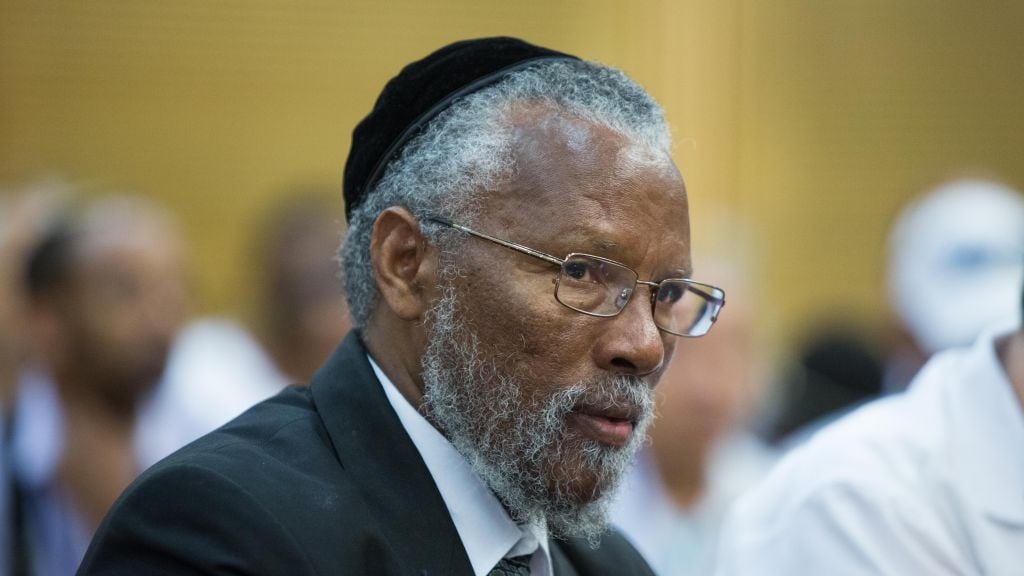
The Religious Affairs Ministry on Tuesday temporarily extended the tenure of the chief rabbi of Israel’s Ethiopian community after he was said to be facing dismissal over having protested the Chief Rabbinate’s alleged racial discrimination against Jews of Ethiopian descent.
Religious Affairs Ministry CEO Oded Fluss wrote to Rabbi Yosef Hadane telling him that, in accordance with the wishes of Religious Affairs Minister David Azoulay, he will continue to serve in his position as head of the Ethiopian department for another six months until February 28, 2017, Army Radio reported.
Fluss stressed that the reprieve was to enable the continued provision of services by the department and that a separate meeting would be held to review “the events of the past few days” — apparently a reference to reports of the circumstances surrounding Hadane’s forced retirement next week.
Education Minister Naftali Bennett tweeted a call for the situation to be resolved.
“I spoke last night with Rabbi Hadane, the rabbi of the Ethiopian community in Israel,” he wrote. “I call on all sides to quickly reach a solution and not, God forbid, allow the pushing out of the rabbi because of his campaign on behalf of his community.”
The extension came the day after media reports said that Hadane’s contract would not be renewed at the end July.
Senior officials in the Religious Affairs Ministry said the decision to end his service came in response to criticism Hadane had expressed against the rabbinate over the marriage registration woes of Ethiopian couples in the central city of Petah Tikva, Army Radio reported Monday.
The timing was ostensibly connected to Hadane reaching the retirement age of 67. Other rabbis, however, have been automatically granted an extension when they reach 67, with many municipal rabbis employed by the Religious Affairs Ministry serving into their 80s and beyond.
Ethiopian Israelis in Petah Tikva allege that they are regularly denied marriage licenses by the city’s rabbinate, whose employees question their Jewishness.
Under the auspices of the city’s Sephardic chief rabbi Binyamin Atias, members of Petah Tikva’s 10,000-strong Ethiopian community say, the rabbinical authority routinely demands that they submit paperwork proving their conversion, produce assurances from a rabbi that they are practicing Orthodox Jews, and investigate the couple’s backgrounds before ultimately turning them away.
While Ethiopian Jewish immigrants from the Beta Israel community are recognized as fully Jewish and did not need to undergo conversion upon arriving in Israel, immigrants from Ethiopia belonging to the Falash Mura community, which converted from Judaism to Christianity in the 19th century, are required to undergo Orthodox conversion after immigrating.
In 2014, Ethiopian Israelis in Petah Tikva leveled similar complaints of discrimination against the city’s rabbinate and Attias.
Times of Israel staff contributed to this report.










The Times of Israel Community.