

Extramarital affair makes Jewish boy a man in ‘5 to 7’
Love story set in New York tenderly reevaluates societal mores. As film opens, an interview with writer/director Victor Levin of ‘Mad Men’ fame
 Add ToI as a Preferred Source on Google
Jordan Hoffman, a member of the New York Film Critics Circle, is The Times of Israel's long-time film reviewer and the co-host of The Reel Schmooze.
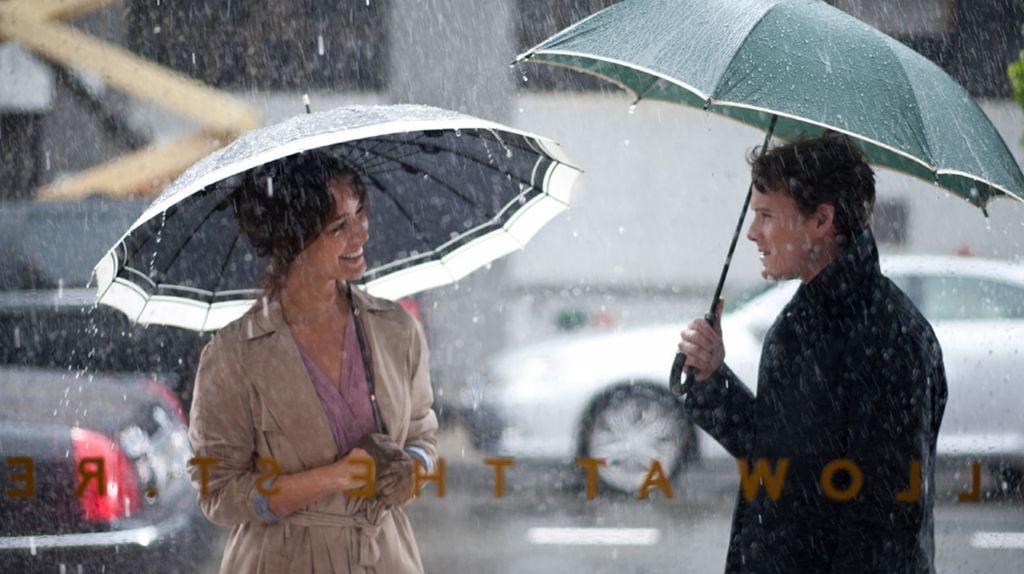
What’s a nice Jewish boy to do when he meets an intelligent, beautiful older woman who suggests they meet up some late afternoon? He meets her, obviously, and probably does this with an obliviousness to the code words “from five to seven.”
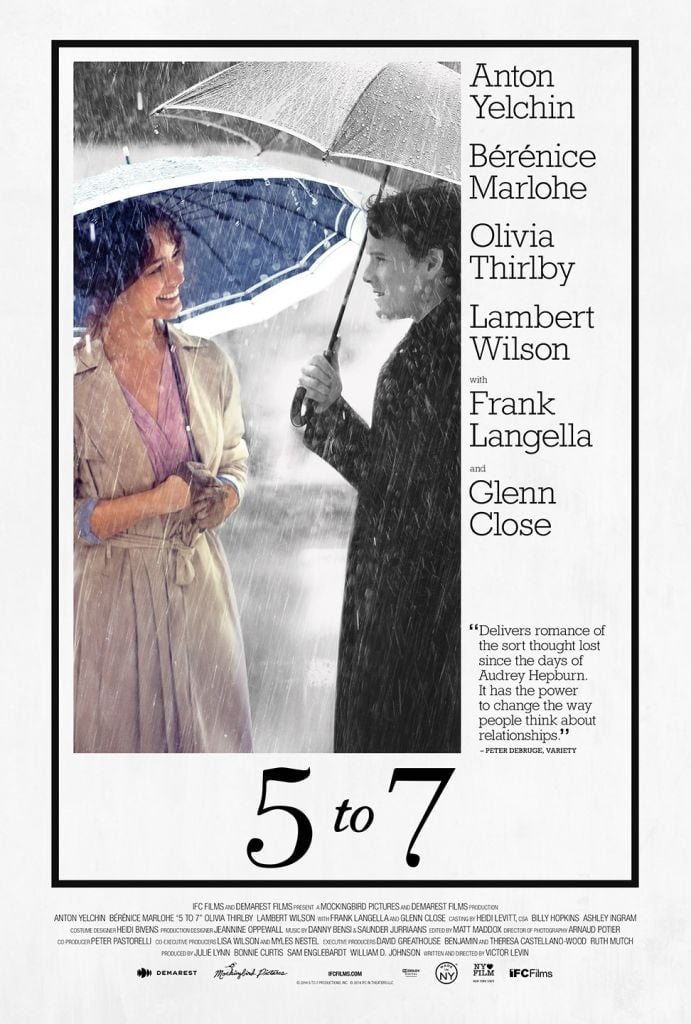
Cinq à sept, I now know, is when dignified French people have their tasteful, private but altogether accepted extramarital affairs. The très drôle and strangely sweet new movie “5 To 7,” written and directed by Victor Levin, is a charming and bittersweet new film starring Anton Yelchin (yes, Chekov from the new “Star Trek” films) as Brian Bloom, a 24-year-old would-be writer who basically walked out of a Philip Roth novella. (He wanders Manhattan in a tan blazer.) Bérénice Marlohe’s Arielle is nine years his senior, and absolutely stunning when first seen smoking a cigarette outside the St. Regis Hotel.
She’s witty and alluring… and is married to a French diplomat. Not to worry, he has his own mistress, who is practically a part of the extended family. Not to generalize about the upmarket French, but the basic philosophy is that everyone loves their spouse and stays together to raise their children, but part of the glue is making sure everyone has a beautiful twenty-something on the side. (The implication is that these twenty-somethings will one day grow to have affairs of their own.)
As our elders are wont to ask: is this right? Well, seems to work for them. Naturally, this being a movie, there needs to be some conflict, and it comes from trying to work an American into the picture. (There also needs to be comedy, and that comes from Brian’s Jewish parents, played rather unexpectedly by two non-Jews, Frank Langella and Glenn Close.)
I had the good fortune to speak with writer/director Victor Levin, also one of the writers for “Mad Men” and “Mad About You.” An abridged conversation of our discussion is below.
Let’s not beat around the bush. This happened to you, right?
The inciting incident was a real one, which was that in the late ’80s I was traveling in France with my girlfriend at the time, and we stayed at the home of friends of hers who were older and were married and had this kind of a relationship. Now, I’m a middle class kid from the New York suburbs. This was not on the menu when I was growing up. I had absolutely no idea what to make of it. It was holiday time, and the boyfriend’s there and the girlfriend’s there and the husband is there and the wife is there. My head was going to explode. She said, “Look, just calm down and keep your eyes open and your mouth shut and maybe you’ll learn something.”
I have to tell you that I did. They were very respectful and they were very kind. There really were boundaries and rules about how one was to behave and to whom one owed allegiance in the moment, and no one really ever was embarrassed. I thought, “Well, it’s not for me in my life, but it’s certainly a very interesting obstacle for a love story.”
There’s a larger question, which is one about morality. Is morality subjective to the setting it’s in, or is it objective?
I feel that my job is to articulate both sides of the argument and let the audience decide. I’m certainly not smart enough nor wise enough to be able to tell you or anybody else how you should live your life, and I don’t want the movie to do that. What I do want to do is articulate both sides of the argument and hopefully have you and whoever you saw the movie with arguing about it yourselves in the taxi on the way home.
The movie has a bit of a old-school vibe. An uptown, adult sensibility. Everyone wears a tie.
It was never a conscious effort, but it’s how I believe these characters would go through life, so I guess it’s how the movie came out. In terms of influences, certainly François Truffaut. You saw the clips from “Jules et Jim” in the movie. That movie completely changed my life — it’s the father of all romances. I was influenced by that but also Lina Wertmüller. The original “Swept Away” was an incredibly powerful movie for me. “The Garden of the Finzi-Continis.” Woody Allen. Whit Stillman’s movie “Metropolitan,” which I adored. Bill Forsyth’s movie “Local Hero” with Peter Riegert.
Well, since you brought up Woody Allen yourself … a lesser critic would say, “Oh, heavily influenced by Woody Allen.” Sure, every movie set in New York that is philosophical and romantic is influenced by Woody Allen, but you do get your one explicit reference in fairly early. It’s when they leave the Guggenheim and there’s the long shot along the sidewalk. You don’t see them at first, and then they sort of emerge into frame. That was a direct homage to “Annie Hall,” correct?
Well, a lot of people have done that.
Come on! Don’t mess around – it’s a direct homage!
Listen, that was not on my mind, that was not in my thinking. I was thinking more about “The Graduate,” to tell you the truth, the Dustin Hoffman running at the camera and long lens shot.
If you say so …

I don’t think it’s possible to shoot a long walk and talk in New York without making people think of Mr. Allen, and that’s a tribute to him and to his enormous influence as a filmmaker and the overwhelming success and popularity of his work, but it wasn’t a conscious homage, honestly.
I think it’s always a good idea to give the city that you’re in as much of an opportunity to be a presence. In this case it is New York, obviously, but that shot, that canopy of trees, the way the light hits the leaves, the way you have the sense of life in the background without it overwhelming the foreground, that’s a very New York moment to me. Woody Allen also loves to stay in a master shot. He’ll move the camera, but he’ll have actors leave frame and come back into frame. You see this in “Hannah and Her Sisters” particularly. I love the idea that the camera is an observer and that the real people are walking through the picture and living their lives.
Not a lot of close-ups during the hotel scenes in this movie.
It is principally to let them have their privacy. In fact, in the script it actually says “We remain politely at the door.” The camera has manners, too. The audience is smart. They have eyes, they’ll look where they want to look.
Frank Langella and Glenn Close as Jewish parents – what a terrific idea. They are hilarious, and very Jewish, but not in a typical way. They aren’t Seinfeld’s parents in their delivery, but the conversation – worrying about parking, or arguing over a meal – very funny and real.
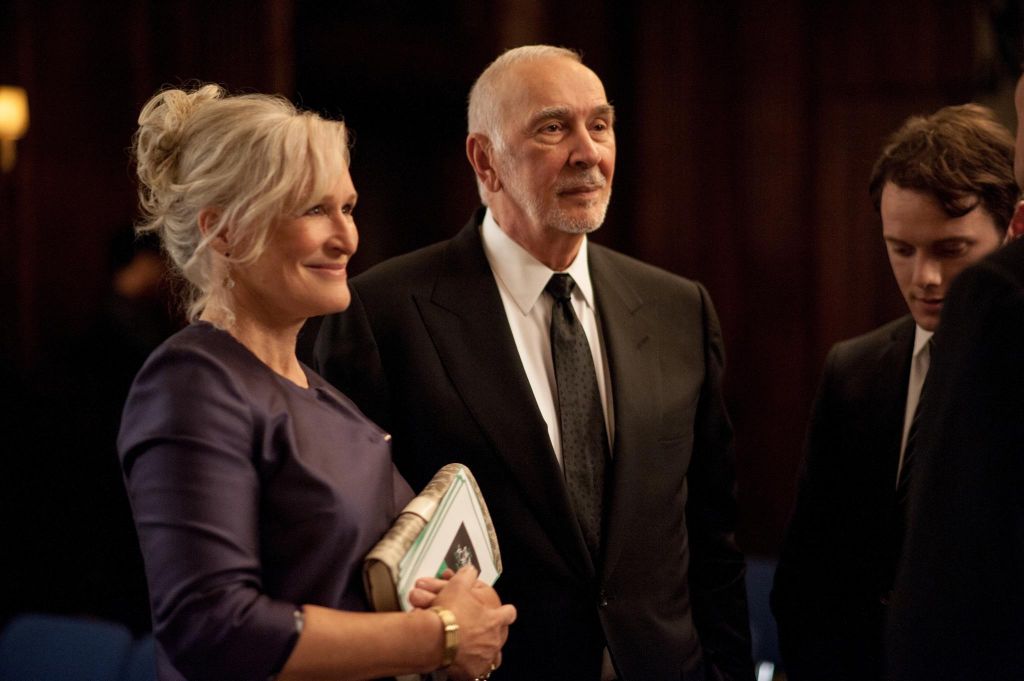
I felt that I had seen a shrill take on this kind of character before plenty of times in movies, and I didn’t want to do that again. I wanted to go, let’s not say against type, but let’s say through the side door instead of through the front door in terms of casting. I wanted somebody who had a slightly different rhythm, a slightly different cadence, a slightly different register. Frank’s got that fantastic baritone, and Glenn, her delivery is also so sonorous. That really appealed to me. It’s all about the rhythm, it’s all about the melody in those scenes. It’s all about the sort of comic music, and you don’t have to have people yelling and screaming in order to get those laughs.
My mom really stood up in a restaurant and ate her meal when she didn’t like the chair. At the 2nd Ave Deli she ate it, in the Molly Picon room. An entire corned beef sandwich in the standing position. She denies it now, by the way.
Those scenes were first drafts. Those scenes were the easiest ones to write.
Were they concerned at all as non-Jews. Did they come to you and say, “Look, I don’t want to Yiddish this up too much?”
It didn’t come up. I loved what they were doing, because I wanted them to be Frank and Glenn. I think it’s graceful. My parents were not screamers, they were not spouting Yiddish all that much. Well, occasionally. But they were like that. My mom is still with us. She’s well-spoken and she’s like Glenn, really. My dad was like Frank. He was a very soft-spoken guy, but he was funny in the way that Frank is funny in the movie. It felt true to me. It seemed like the right level of Jewish and, most important, the right level of a real person.
The character is 24. You are not 24. I don’t know how old you are, but you’re older, reflecting. It’s not too much of a spoiler to say at the end you learn that we’re watching the movie from the point of view of a man who’s looking back as well, he’s X amount of years old or there’s a little bit of gray in his hair. Could you have written this when you were 24, or is this something that only an older person can create?

I could not have written it when I was 24. The reason is that when I was 24 I didn’t have the perspective that you needed to consider the question of memory. The question of memory, of the life un-lived, of the door you didn’t go through that you might have gone through, or the door that you did go through that perhaps you shouldn’t have, these things did not resonate with me as a 24 year old. I needed to have a few laps around the block before I understood how I felt about these things, before I understand the idea that just because something is not currently still going on doesn’t mean it isn’t still alive. It is.
There’s a phrase Jean-Luc Godard took from Henri Bergson and put in “In Praise of Love” that talks about “the rights and privileges of memory.”
I loved this movie so now I need to go back and think about “Mad Men” knowing you were involved. What did you do on the show exactly?
I’m not involved with the show anymore. Season 5 of the show I was co-executive producer, which is a fancy title, it just means you’re a writer.
Just Season 5?
Yes.
Which episodes did you have your fingers in the most in that season?
My name is on two episodes. The first one is called “Mystery Date.”
You gotta give me a little more. You gotta say “the one where Peggy does blah blah blah.”
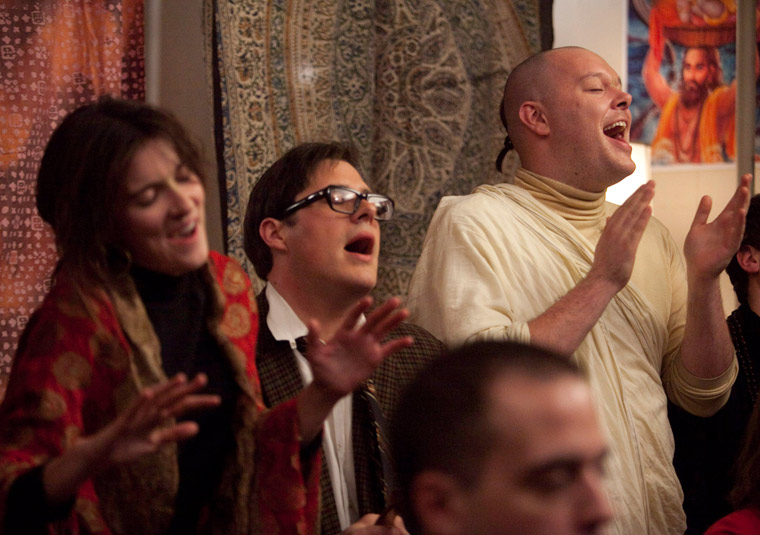
There’s the one where Don Draper hallucinates that he has strangled someone. And the second one was called “Christmas Waltz,” and that’s the one where an old office-mate turns out to have joined the Hare Krishna cult.
Oh my God, the “Star Trek” episode?!? That was you???! That’s the best episode in the entire series!
Oh, thank you so much.
[At this point in the conversation Levin and I just yapped about Star Trek for a really long time.]
‘5 To 7’ opens in theaters and will be on VOD on April 3.









The Times of Israel Community.