

First Temple-era mold offers clues to mystery of ‘pagan’ female figurines in Holy City
First mold discovery in Jerusalem provides evidence that enigmatic clay artifacts — possibly linked to the goddess Asherah— were manufactured in biblical capital
 Add ToI as a Preferred Source on Google
Zev Stub is the Times of Israel's Diaspora Affairs correspondent.
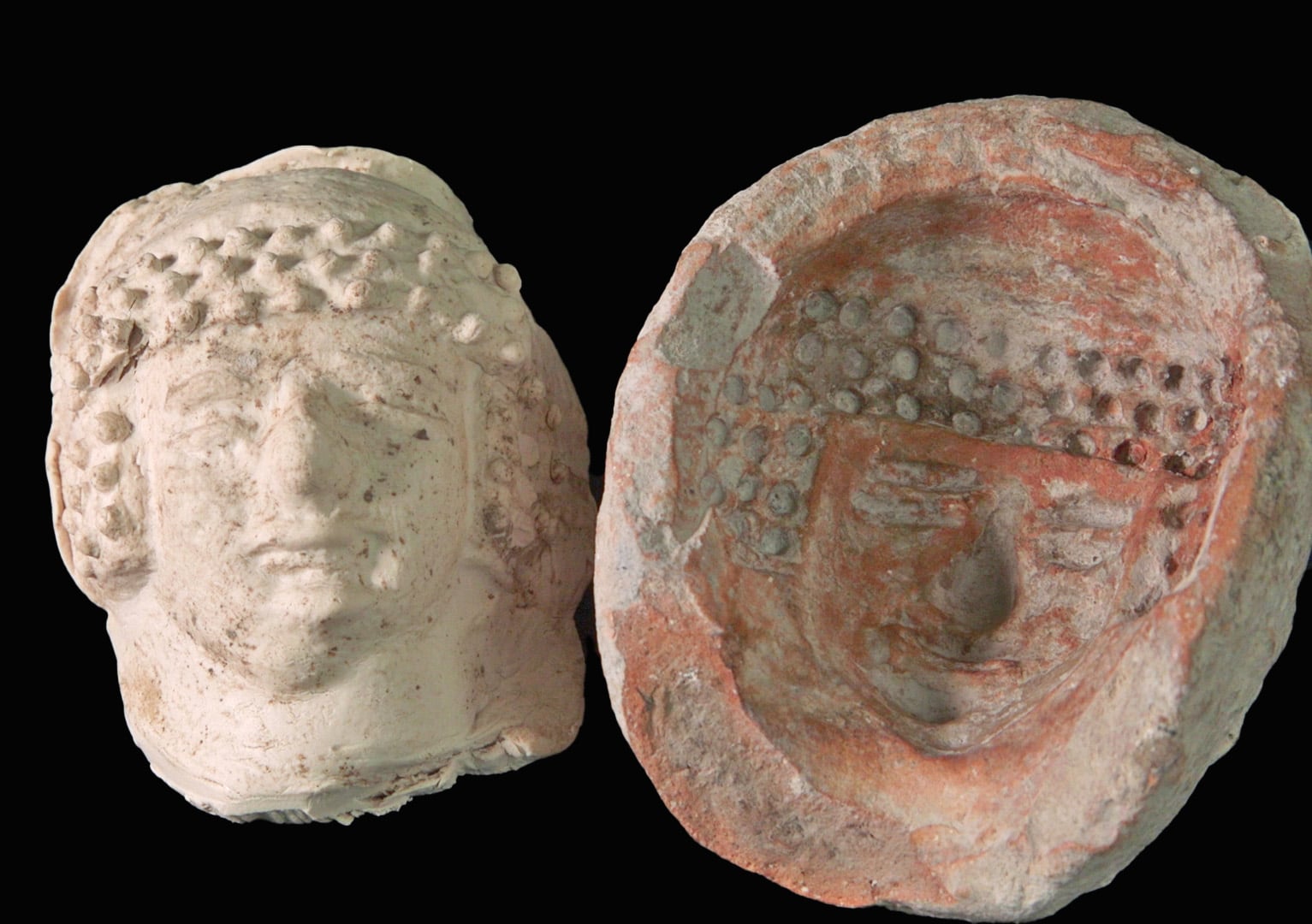
A mold that was used to cast the face of a female clay figurine during the First Temple period may shed new light on similar figurines found in almost every archaeological excavation in the region, researchers from the Israel Antiquities Authority said Monday.
The 2,600-year-old artifact, discovered in Jerusalem’s Old City, may provide new insights into the challenges Judean kings faced when a previously polytheistic Israelite society began to profess its belief in one God, Eilat Lieber, director and chief curator of the Tower of David Museum in Jerusalem, told The Times of Israel.
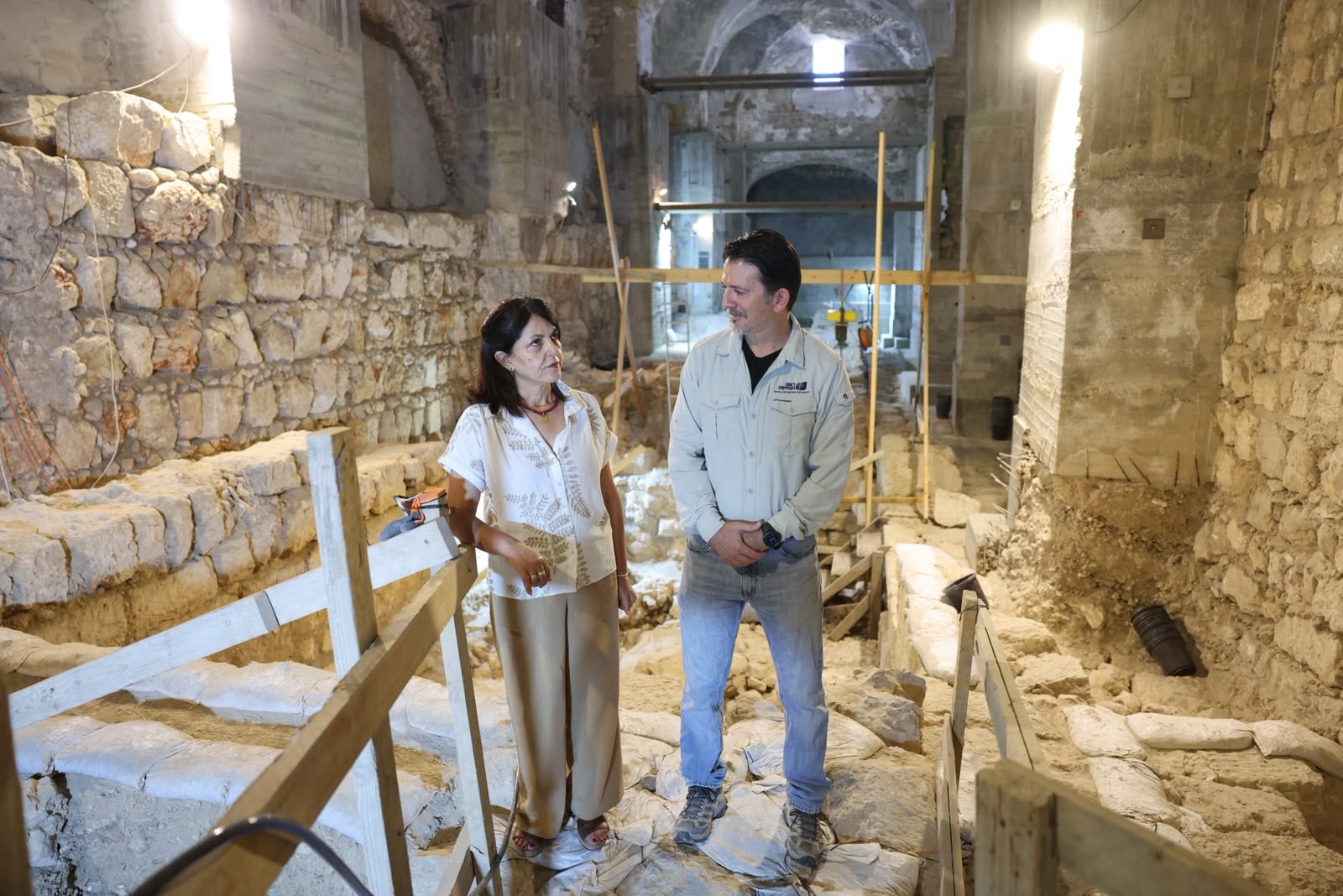
The mold, which stands 7.5 centimeters tall and 6 centimeters wide, was found several months ago, at the end of an excavation conducted at the Kishle, a former Ottoman-era prison located near the Tower of David Museum. The excavations are part of the construction of a new archaeology, art, and innovation wing under development at the museum, funded by Canada’s Schulich Foundation.
Cult figurines are found at virtually every dig in the Jerusalem area, but until now, their molds have never been discovered within the city, Amit Re’em, one of the IAA’s directors of the Kishle excavation, told The Times of Israel.
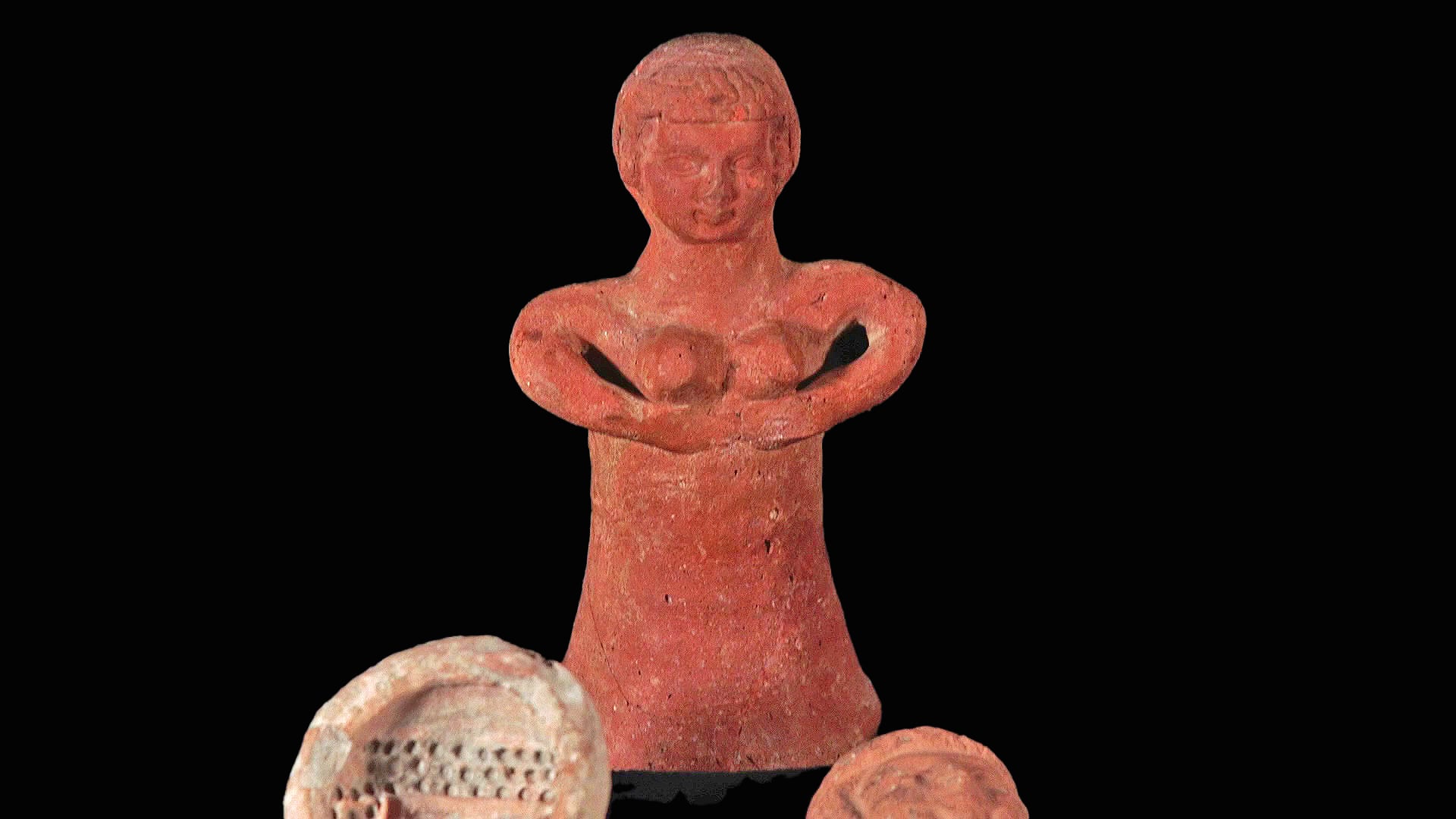
Usually, Re’em said, these figurines are found in two parts: a clay body shaped crudely by hand, and a head and face designed with great detail and accuracy. Often, the two parts are found detached from one another, indicating that they were probably created separately and then joined together later.
“The emphasis on the face has led researchers to conclude that it probably had an important cultural or religious significance, but it is not clear what it is,” Re’em said. Most likely, they served as private idols — perhaps the fertility goddess Asherah — or household amulets intended to bring blessing, protection or fertility, similar in purpose to a Hamsa symbol.
Others have suggested these may have been common as toys, “but I don’t accept that theory,” Re’em said.
The mold was found just before the excavation was completed, as researchers sifted through the last section of soil and debris dating to the First Temple period, Lieber noted. “You always find the most exciting things at the very end,” she said.
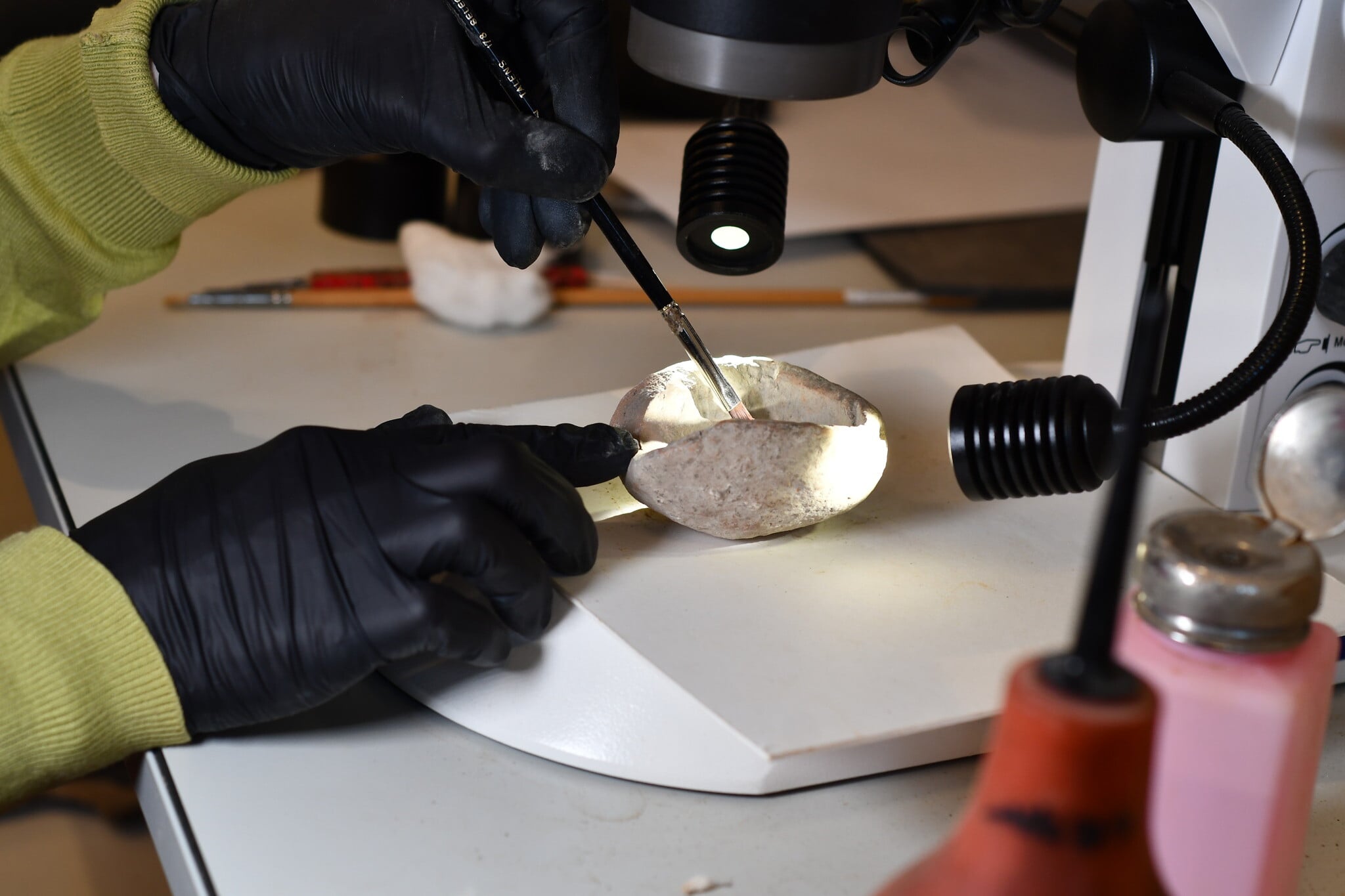
After the mold was discovered, it was transferred to Tamar Gonen, a ceramics conservation and restoration specialist at IAA, who carefully cleaned it to reveal its delicate details. Then, Sviatoslav Klindukhov, a conservation and restoration specialist, created a cast from it, revealing the face of a female figurine with clearly defined features and an elaborate curly hairstyle.
The clay figurines generally stand approximately 10 to 20 centimeters high, with surviving traces of pigment indicating that they were originally painted in yellow, red, and black. Other figurines of animals and a horse-and-rider image are also common.
More than a thousand such figurines have been located in the area around Jerusalem, including digs in Lachish or Beit Shemesh, noted Debbi Ben-Ami, Iron Age curator at the IAA. It is not clear whether they were made and used primarily by women, or whether they served entire households, she added.
Until now, molds for these figurines have never been discovered in Jerusalem, raising the question of whether they were manufactured locally or imported from elsewhere, Ben-Ami said. The discovery of the mold provides the first direct evidence that at least some were produced within Jerusalem.
Researchers believe the mold, and other artifacts found near it, likely dates to the time of the Judean King Uzziah in the 8th century BCE, Lieber said. Uzziah is believed to have launched a construction project in the spot that King Hezekiah continued several decades later, she said.
The figurines likely illustrate a central theme of the challenges to ritual worship in the Temple highlighted in biblical writings from that time, Lieber said.
“We know about the struggles of Judean kings to enforce the Israelite belief in one God instead of the Canaanite worship practices that still appeared at that time,” Lieber said. “On the one hand, the Temple service was very central, but we see that people were continuing these rituals, and this is what the Judean kings were talking about. These finds show the real history of Jerusalem and the different layers within society at that time.”
Nonetheless, the meaning and function of these figurines are still not fully understood, and remain the subject of scholarly debate, noted Ben-Ami. The discovery of the mold may eventually help answer some of the questions that have plagued researchers for years, she said.
“The Kishle excavation, which has been ongoing for several years, continues to surprise us time and again,” said Re’em and Ayala Zilberstein, the IAA’s directors of the Kishle excavation, in a statement. “It is one of the most significant archaeological excavations conducted in Jerusalem in recent decades, presenting the city’s history in a clear and continuous sequence — from the days of the Kings of Judah, through the many periods that shaped Jerusalem, and up to the British Mandate.”
The public is invited to help sift through additional dirt and debris taken from the excavation site throughout the summer.
“Each bag is full of shards of pottery and other postcards from the past, and there may be other significant finds waiting,” Lieber said.










The Times of Israel Community.