

In Senegalese bush, Bani Israel tribe claims Jewish heritage
Proud Muslims, the villagers must change the name of their birthplace to enter Mecca, but still do not deny Jewish ancestry
 Add ToI as a Preferred Source on Google
Cnaan Liphshiz was a Jewish World reporter at The Times of Israel
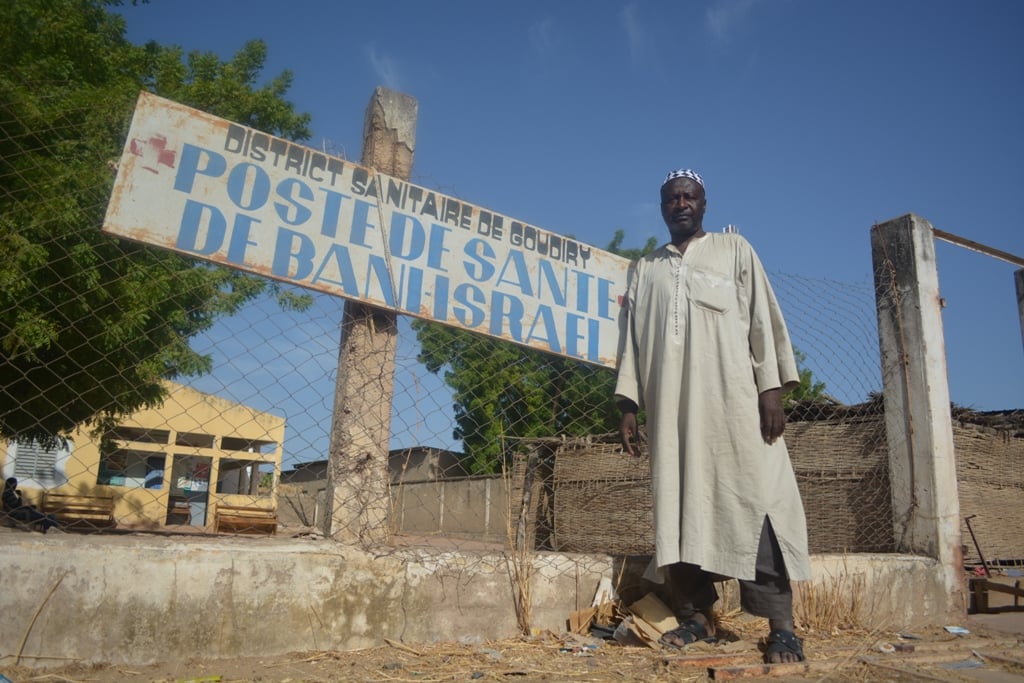
BANI ISRAEL, Senegal (JTA) — He will welcome you into his earthen-floor home, introduce you to his three wives, and let you sample their cooking. But Dougoutigo Fadiga does not want foreigners to come near the sacred tree of his village deep in the Senegalese bush.
“The tree is holy grounds,” says Fadiga, president of this remote settlement of 4,000 souls. “Our Jewish ancestor, Jacob, planted it when his people first settled here 1,000 years ago.”
The lush kapok tree towers over the parched shrubbery at the edge of Bani Israel, a dusty community in eastern Senegal near the border with Mali. The residents, all Muslims, are members of a tribe whose name means “sons of Israel,” and they trace their lineage to two clans — Sylla and Drame — they say are descended from Egyptian Jews.
“We are all practicing Muslims and we don’t want to become Jewish,” Fadiga says. “In fact, we don’t like to talk too much about our Jewish background, but we don’t hide it either. We know our people came from Egypt to Somalia, and from there to Nigeria, where they split about 1,000 years ago. One branch of the two families went to Mali, another to Guinea, and we settled here.”
‘We are all practicing Muslims and we don’t want to become Jewish’
The truth of such claims is difficult to establish, but West Africa has had a documented Jewish presence since at least the 14th century, when several Jewish merchants set up shop in Timbuktu, in western Mali. Jews kept trickling in from Spain and Portugal during the Inquisition of the 15th and 16th centuries, and later from Morocco.
Gideon Behar, Israel’s former ambassador to Senegal, says Jews maintained a constant presence in the area until 1943, when the last Jewish settlement was uprooted from Guinea-Bissau, Senegal’s southern neighbor, then a Portuguese colony under the rule of pro-fascist dictator Antonio de Oliveira Salazar.
“Bani Israel is a striking example because of its name, but there are many, many other ways in which this area’s little-known but rich Jewish presence has influenced it,” says Behar, one of the few Westerners to have visited Bani Israel.
Behar believes the historic presence is responsible for some of the faint Jewish traces still visible in the region. West African musicians often decorate the traditional, 21-string bridge-harp known as kora with Jewish symbols, including the Star of David. And some words in Wolof, a widely spoken language in Senegal, bear more resemblance to Hebrew pronunciation than Arabic, which is spoken in neighboring countries.
The Wolof word for cheek is pronounced “lekhi,” as in Hebrew. One of Wolof’s words for wise is pronounced the same as the Hebrew word “chacham.” A weaver or fabric merchant is called “rab,” similar to rabbi.
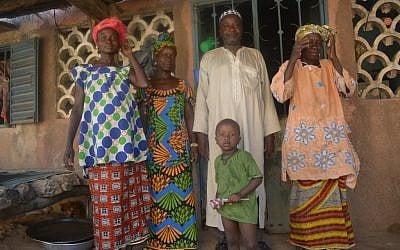
The Bani Israel also have a cultural trait in common with Jews: an aversion to intermarriage. According to Fadiga, the community tries not to assimilate, preferring to wed with members of the tribe who live in neighboring villages.
“I believe there is an element of truth to the tradition of the Bani Israel, especially since they have nothing to gain from pretending,” says Behar, who returned from Senegal in 2011. “They’re not seeking Israeli citizenship, nor are they claiming to be Jewish. In fact, their Jewish ancestry and name can only give them problems.”
Though their Jewish association is potentially problematic in a Muslim country — according to Behar, some residents have sought to change the village name in their passports to permit travel to Mecca — the story of Bani Israel’s origin is not universally accepted in Senegal. Abdoul Kader Taslimanka, a Senegalese writer who published a book last year about the community, “Bani Israel of Senegal,” says the name has nothing to do with Jews and in fact is taken from the title of a chapter of the Koran.
Some accounts do, however, support the last leg of the journey that Fadiga describes. Bani Israel are speakers of the Jahanke dialect, the language of the Diakhanke tribe, which the International Journal of African Historical Studies says migrated down the Niger River, settling in Mali, Guinea, Gambia and Senegal.
‘They’re not seeking Israeli citizenship, nor are they claiming to be Jewish. In fact, their Jewish ancestry and name can only give them problems’
In his village, Fadiga is known as the marabou, the local equivalent of a shaman or bush doctor. Samba Diop, a villager in his 40s, says Fadiga has special healing powers that allow him to cure snake and scorpion bites with his hands. Children who suffer from epilepsy are encouraged to bite on amulets made by Fadiga’s younger wives from goat skin.
“When a snake bites one of us, we go to him and then the snake dies,” Diop says.
Unlike most villages in the area, the Bani Israel live in houses made of brick instead of mud and thatch huts. It also was the first village in the area to have a clinic and electrical generators, according to Fadiga.
The school in Bani Israel is surrounded by a tall brick wall. Inside, teachers give lessons in French, math and science. The school day begins at 5:30 a.m. and finishes by noon, when the asbestos-roofed classrooms become as hot as ovens.
Such relative luxuries are financed by about 1,000 Bani Israel who live in the Senegalese capital of Dakar or in France, sending monthly donations back to the village. Unusually for the region, the money is not sent directly to relatives but is placed in a communal trust that pays for health services and schools, which in turn service not only the village but the entire remote region.
“This place is blessed and its people are chosen,” Fadiga says. “But some people resent us for it, so it’s best not to talk too much about it.”






The Times of Israel Community.